

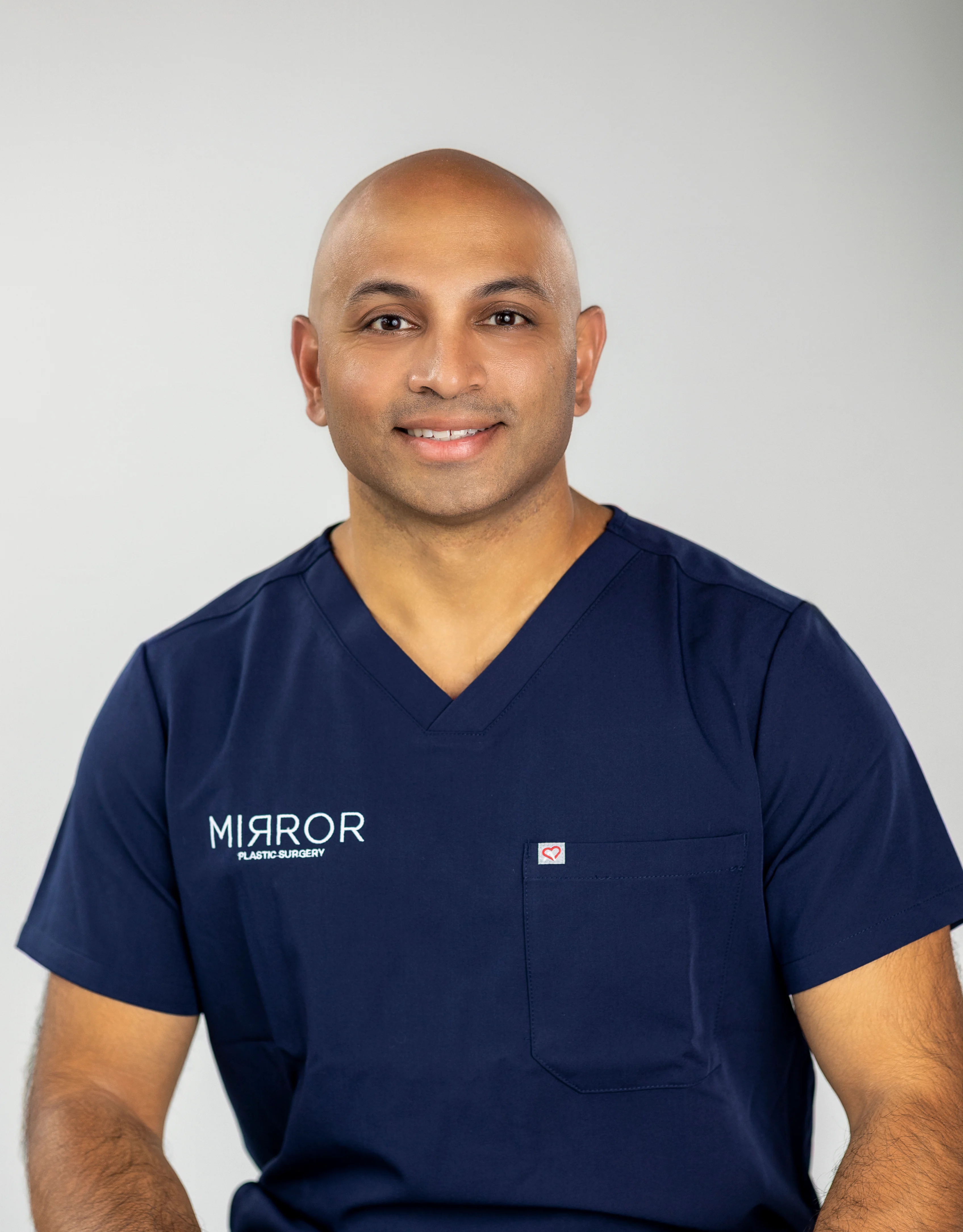
Written by: Dr. Akash Chandawarkar, Board Certified Plastic Surgeon, Mirror Plastic Surgery | Last updated: September 9, 2026
Key Takeaways
- FDA-approved dermal fillers are Class III medical devices that undergo rigorous clinical testing for specific cosmetic uses.
- Four main filler categories exist: hyaluronic acid (HA), calcium hydroxylapatite (CaHA), poly-L-lactic acid (PLLA), and polymethylmethacrylate (PMMA).
- Each filler type has its own longevity, reversibility, and risk profile, so product choice should match your anatomy and goals.
- Approved uses are indication-specific, and off-label applications such as body contouring carry higher and often serious safety risks.
- Minor side effects like bruising and swelling are common, while serious vascular complications remain rare (under 0.3 percent) with skilled injectors.1
- Choosing a board-certified plastic surgeon who personally performs every injection is the most important safety decision you can make.
What FDA Approval Means For Dermal Fillers
FDA-approved dermal fillers are injectable gels or substances that the U.S. Food and Drug Administration has evaluated for safety and effectiveness in specific cosmetic applications, such as smoothing wrinkles or adding volume.
The FDA classifies dermal fillers as Class III medical devices, the highest-risk category. These products must go through the Premarket Approval (PMA) pathway, which requires clinical trial data showing safety and effectiveness for each indication. This standard is higher than the simpler 510(k) clearance used for many aesthetic energy-based devices.
PMA approval is always indication-specific. A filler approved for nasolabial folds does not automatically have approval for lips, cheeks, or the under-eye area. Each new indication needs its own supplemental application and supporting data. Since the first collagen-based filler Zyderm was approved in 1981, the FDA has granted only 20 original PMA approvals for new dermal filler products. Every syringe in a U.S. provider’s office traces back to one of those 20 regulatory lineages.
FDA approval signals an acceptable, regulated level of risk rather than a promise of zero complications. Rare or delayed issues may appear only after widespread use, so the FDA also monitors fillers through post-market surveillance in the MAUDE database. Approval for one product or formulation does not extend to others in the same brand line, and off-label use rests on a thinner evidence base.
Once you understand how approval works, the next step is learning how different filler categories behave in real patients.
Types Of FDA-Approved Dermal Fillers And How They Differ
FDA-approved fillers fall into four main categories, each with distinct composition, longevity, and reversibility. The table below summarizes the key differences.
| Filler Type | Brand Examples | Duration | Reversible? |
|---|---|---|---|
| Hyaluronic Acid (HA) | Juvederm, Restylane, RHA, Versa, Belotero, Evolysse | 6–18 months | Yes (hyaluronidase) |
| Calcium Hydroxylapatite (CaHA) | Radiesse | 12–18 months | No |
| Poly-L-lactic Acid (PLLA) | Sculptra | Up to 2 years | No |
| Polymethylmethacrylate (PMMA) | Bellafill | Permanent (microspheres do not dissolve) | No |
Each category has a distinct profile that shapes how it is used in practice.
- Hyaluronic Acid (HA) Fillers: This is the most widely used category. HA is a naturally occurring sugar molecule that attracts water, providing volume and hydration. The Juvederm collection alone includes six HA formulations approved for 10 distinct indications. These cover the cheeks, chin, temples, jawline, nasolabial folds, lips, perioral lines, and under-eye hollows. Other approved HA brands include Restylane, RHA, Versa, Belotero, and the newly approved Evolysse (approved February 2025). A key safety advantage of HA fillers is reversibility. Hyaluronidase reversal has been documented in 11 published case series involving 341 patients, with significant degradation within hours.
- Calcium Hydroxylapatite (CaHA) – Radiesse: This biostimulatory filler contains calcium microspheres in a gel carrier. It provides immediate volume and stimulates your own collagen production for continued improvement. Radiesse received its first FDA approval in 2006 for nasolabial folds, then hand augmentation in 2015, and in March 2026 for moderate to severe décolletage wrinkles in patients 22 and older. It does not dissolve with hyaluronidase.
- Poly-L-lactic Acid (PLLA) – Sculptra: This biostimulatory filler works gradually by stimulating collagen production over multiple sessions. Results build over two to three months and can last up to two years.1 It is not reversible with hyaluronidase.
- Polymethylmethacrylate (PMMA) – Bellafill: Bellafill is the only FDA-approved permanent filler in the U.S. and contains non-dissolvable PMMA microspheres that remain in tissue as a collagen scaffold. It carries two FDA-approved indications: nasolabial folds and moderate to severe atrophic, distensible facial acne scars on the cheek. Because it cannot be dissolved, patient selection and counseling are especially critical. A skin test is required before treatment due to its bovine collagen carrier.
Two recent approvals expand options for patients seeking targeted treatments. In June 2026, SKINVIVE by Juvederm received FDA approval for improving horizontal neck lines in adults over 21, the first filler with that indication. Mirror Plastic Surgery offers Evolysse among its HA options, reflecting Dr. Chandawarkar’s focus on rigorously evaluated products.
Approved And Off-Label Uses: Safety Implications
FDA approval always ties to specific indications, and the gap between approved and off-label use has real safety consequences. A filler approved for smile lines does not automatically have data supporting use in lips or cheeks, and the strength of evidence for off-label applications varies.
Body contouring represents the most significant off-label risk. The FDA states that no dermal filler is approved for body contouring or breast augmentation. Unapproved use in body areas can cause long-term pain, infection, permanent scarring or disfigurement, and even death. HA fillers do not represent safe practice for buttock augmentation. For non-surgical body contouring such as a non-surgical BBL, biostimulatory fillers like Radiesse and AlloClae are the evidence-supported options, and only in the hands of providers with deep anatomical knowledge of those regions.
A board-certified plastic surgeon with surgical-level understanding of vascular and subdermal anatomy can navigate these nuances more safely. Providers without that training may not fully appreciate the vascular architecture of different facial zones or body regions, which increases the risk of serious complications.
Once you understand where fillers should and should not be used, it becomes easier to interpret their real-world safety profile.
The Real Safety Profile Of FDA-Approved Fillers
A clear view of dermal filler risk helps you make confident, informed decisions.
Minor, transient side effects are common and predictable. Bruising and swelling are the most frequent adverse events after HA filler injections, especially in highly vascularized areas such as the lips and under-eye region.1 Swelling usually peaks within one to two days and fades over several days.1 Redness, tenderness, and firmness at injection sites are also typical. These symptoms usually resolve within about one week, although some patients notice swelling or firmness for up to two weeks.1
Serious complications are rare but documented. Vascular complications from HA and CaHA fillers occur infrequently, with reported incidences below 0.1 percent in some studies.1 A 2026 review in the Journal of Cosmetic Dermatology cites a systematic review with serious complication rates up to 0.27 percent.1 Risk is higher in anatomically risky regions such as the glabella, forehead, and nose, where direct connections with the ophthalmic artery can lead to skin necrosis or permanent vision loss.
Reversibility offers a meaningful safety advantage for HA fillers. The 2025 EYE-CODE protocol and ASDS guidance recommend immediate hyaluronidase injection when HA-related vascular compromise or vision loss is suspected. Biostimulatory and permanent fillers cannot be dissolved, which makes complication management more complex. At Mirror Plastic Surgery, Dr. Chandawarkar weighs reversibility as a core safety variable when selecting products.
To discuss which filler type fits your anatomy, goals, and risk tolerance, schedule a personalized consultation at Mirror Plastic Surgery.
How To Choose A Safe Dermal Filler Provider
FDA approval confirms that a product is safe and effective in studied populations for defined indications. Your outcome still depends on who injects it, how they inject it, and how well they understand your anatomy. The checklist below reflects the standard every patient deserves.
- Verify Board Certification. Confirm your provider is board-certified by the American Board of Plastic Surgery or the American Board of Dermatology. This training includes facial anatomy and complication management, not just injection technique.
- Ask Who Performs The Injections. At many high-volume clinics, injections are delegated to staff with limited training. At Mirror Plastic Surgery, Dr. Akash Chandawarkar, a board-certified plastic surgeon, personally performs every injection and brings a surgeon’s command of facial and subdermal anatomy to each treatment.
- Expect A Thorough Consultation. A safe provider spends meaningful time understanding your goals, medical history, and anatomy before recommending any product. Consultations at Mirror Plastic Surgery can extend up to an hour and include a top-to-bottom assessment of facial structure and the physiological reasoning behind any plan.
- Recognize And Avoid Mill Practices. Be cautious of clinics that schedule multiple patients per hour, push unnecessary treatments, or offer aggressive discounts without individualized assessment. These environments prioritize volume over safety.
- Request Area-Specific Photos. Ask to see real patient results for the exact area you are considering, such as lips, cheeks, under-eye, or jawline, rather than only general portfolio images.
- Confirm Product Authenticity. Ensure your provider uses FDA-approved products from authorized, reputable distributors. The FDA warns against fillers sourced outside regulated channels or sold directly to consumers.
- Ask About Reversibility And Emergency Protocols. Your provider should stock hyaluronidase and follow a clear protocol for vascular compromise. They should explain whether your chosen filler can be dissolved and how they would respond to a complication.
Dr. Chandawarkar serves on advisory boards for Merz Aesthetics, the manufacturer of Radiesse, and Tiger Aesthetics, the company behind AlloClae. These roles keep him close to injectable innovation while he maintains an evidence-based, patient-first practice. His philosophy aligns with the checklist above: safety first, function second, aesthetics third.
Ready to explore which FDA-approved filler matches your goals? Talk with Ellie at Mirror Plastic Surgery for a detailed, honest assessment from a board-certified plastic surgeon who performs every injection himself.
Frequently Asked Questions About FDA-Approved Fillers
Disclaimer: Results may vary from person to person. Editorial content, before and after images, and patient testimonials do not constitute a guarantee of specific results.
Which Dermal Fillers Are FDA-Approved?
The main FDA-approved dermal fillers include hyaluronic acid brands Juvederm (Voluma XC, Volux XC, Vollure XC, Ultra XC, Ultra Plus XC, Volbella XC), Restylane, RHA, Versa, Belotero, Evolysse, and SKINVIVE by Juvederm. Other approved fillers include calcium hydroxylapatite filler Radiesse, poly-L-lactic acid filler Sculptra, and the permanent PMMA filler Bellafill. Each product carries specific FDA-approved indications for defined facial or body areas and age groups. No single filler is approved for every use, and approval for one formulation in a brand line does not extend to others.
Are Dermal Fillers Safer Than Botox?
Botox and other neuromodulators belong to a different product class from dermal fillers. They work by temporarily relaxing muscles instead of adding volume. Both categories have strong safety records when qualified providers administer them. Fillers carry a unique risk of vascular occlusion, which can cause skin necrosis or, in rare cases, vision loss. Injector expertise in facial vascular anatomy is therefore a primary safety factor. Neuromodulators do not carry this specific risk, but they address different concerns and do not replace fillers.
What Is The Least Toxic Filler?
“Toxicity” is not the right framework for FDA-approved fillers, because all approved products are biocompatible and have undergone rigorous clinical evaluation. Hyaluronic acid fillers are generally considered the most conservative first choice. The body naturally breaks them down over time, and they are fully reversible with hyaluronidase if a complication occurs. That reversibility provides a meaningful safety margin, especially for first-time patients or higher-risk anatomical zones. The right filler for any person depends on anatomy, goals, and treatment area, which requires an in-person assessment.
How Long Do FDA-Approved Fillers Last?
Duration varies by filler type and individual factors such as metabolism, treatment area, and injection technique.1 Hyaluronic acid fillers usually last 6 to 18 months, depending on the product and location.1 Radiesse (calcium hydroxylapatite) lasts about 12 to 18 months.1 Sculptra (poly-L-lactic acid) can last up to two years as collagen builds gradually over several sessions.1 Bellafill (PMMA) is considered permanent, with effects lasting five years or more.1 Maintenance treatments are typically needed to sustain results over time.
Are Fillers Safe For Lips?
Lip augmentation with fillers is safe when an experienced injector with detailed knowledge of perioral vascular anatomy performs the treatment. Hyaluronic acid fillers are the only filler type with FDA approval for lip augmentation. Their reversibility with hyaluronidase adds a safety margin in this area. The lips are highly vascular, so injector skill and anatomical knowledge matter more than the brand itself. A rushed or inexperienced injector in this region carries significantly higher risk than a carefully chosen product.
Disclaimer: Results may vary from person to person. Editorial content, before and after images, and patient testimonials do not constitute a guarantee of specific results.
1 Results may vary from person to person. Editorial content, before and after images, and patient testimonials do not constitute a guarantee of specific results.


