

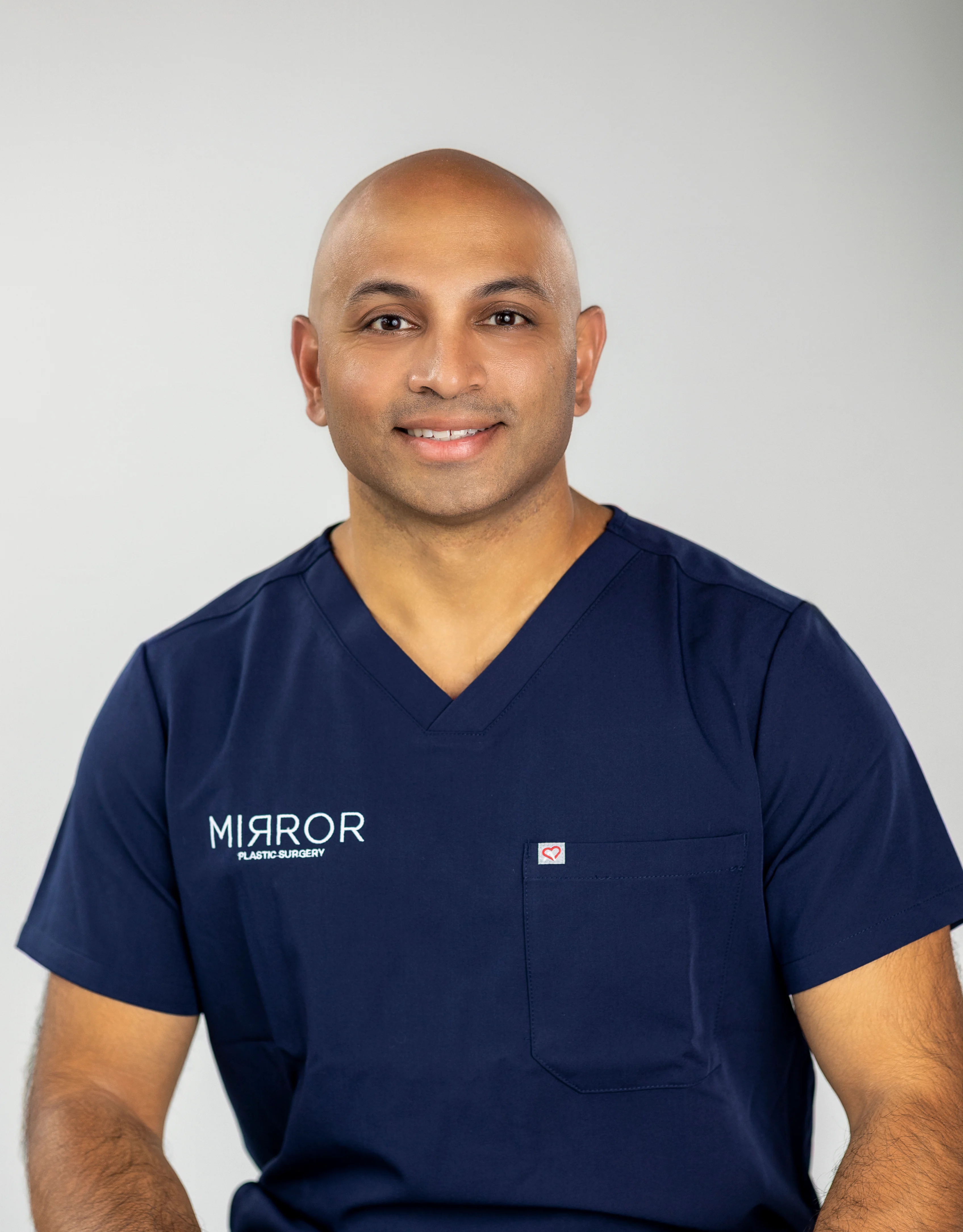
Written by: Dr. Akash Chandawarkar, Board Certified Plastic Surgeon, Mirror Plastic Surgery | Last updated: September 9, 2026
Key Takeaways
- Absolute contraindications for dermal fillers include active infection at the injection site, known allergies to filler ingredients, and pregnancy or breastfeeding.
- Relative precautions such as autoimmune diseases, bleeding disorders, and certain medications require individualized evaluation rather than automatic exclusion.
- Full disclosure of medical history, medications, supplements, and previous treatments supports safe filler administration.
- Choosing a board-certified plastic surgeon with deep anatomical expertise improves safety and helps achieve natural-looking results.1
- Book a consultation at Mirror Plastic Surgery to receive a personalized assessment and determine if dermal fillers are right for you.
Your Safety Comes First
Dermal fillers rank among the most popular minimally invasive cosmetic treatments in the United States. The American Society of Plastic Surgeons reported over 5.3 million hyaluronic acid filler procedures in 2024. Fillers remain medical procedures with real risks, so careful patient selection matters. Some people are not appropriate candidates.
At Mirror Plastic Surgery in St. Petersburg, FL, Dr. Akash Chandawarkar is a board-certified plastic surgeon with training at Harvard and Johns Hopkins and a fellowship in aesthetic surgery. He follows a “safety first, function second, aesthetics third” philosophy. Every injectable treatment he performs draws on a surgeon’s command of facial and subdermal anatomy, which often makes the difference between a safe outcome and a preventable complication.
Schedule a consultation to find out whether dermal fillers are right for you.
What Are Dermal Fillers? A Brief Overview
Dermal fillers are injectable substances that restore facial volume, smooth wrinkles, and enhance contours. The most common category is hyaluronic acid (HA) fillers, including Juvederm, RHA, Versa, and Restylane. These products can be dissolved with the enzyme hyaluronidase if needed.
Biostimulatory fillers like Radiesse (calcium hydroxylapatite) and Sculptra (poly-L-lactic acid) stimulate the body’s own collagen production and last longer. They cannot be dissolved enzymatically. Each filler type has its own risk profile, approved uses, and contraindications.
Absolute Contraindications: Who Should Avoid Dermal Fillers
Absolute contraindications are firm medical exclusions based on FDA guidelines and manufacturer labeling. A responsible provider screens for each of these before treatment.
- Active infection, inflammation, or lesion at the injection site: Conditions such as herpes simplex labialis (cold sores), active impetigo, cystic acne, and bacterial folliculitis increase the risk of abscess formation, cellulitis, or herpes reactivation if needled. Treatment should wait until the area fully resolves.
- Known allergy or hypersensitivity to any filler component: Allergy or hypersensitivity to filler ingredients, including hyaluronic acid or lidocaine, or a previous anaphylactic reaction to dermal fillers, is an absolute contraindication. Reactions can range from localized dermatitis to life-threatening anaphylaxis.
- Pregnancy and breastfeeding: A 2026 narrative review in the International Journal of Dermatology recommends deferring elective dermal filler procedures during pregnancy because of limited safety data and the elective nature of treatment. All major filler manufacturers share this position.
- History of severe allergies or anaphylaxis (for specific products): JUVÉDERM® labeling advises against use in patients with multiple severe allergies or anaphylaxis, allergy to lidocaine, or allergy to Gram-positive bacterial proteins used in the products.
- Autoimmune or connective tissue disorders in active flare: Active, uncontrolled autoimmune or connective tissue disease may trigger inflammatory nodules and abnormal immune responses. Providers generally defer filler until the disease is stable.
These conditions rule out fillers until they resolve or stabilize. Other situations call for a more nuanced approach.
Relative Precautions: When Fillers Require Extra Care
Relative precautions describe situations where fillers may still be possible but need careful evaluation and specialist input. Providers weigh risks and benefits for each person.
- Autoimmune diseases (for example, lupus, rheumatoid arthritis, scleroderma): A 2023 study in the Journal of Cosmetic Dermatology found no clinical study that formally contraindicates HA-based fillers in patients with autoimmune inflammatory diseases when the disease is controlled. Disease activity, rather than the diagnosis alone, guides decisions.
- Bleeding disorders or anticoagulant and antiplatelet medications: These medications increase bruising and ecchymosis but do not automatically make filler unsafe. The prescribing physician should decide whether any medication pause is appropriate.
- History of keloid or hypertrophic scarring: Revanesse Versa Instructions for Use advise against use in patients with hypertrophic scarring or keloid formation, visible scars at the intended treatment sites, or active inflammatory skin diseases such as acne, rosacea, seborrheic dermatitis, and psoriasis.
- Immunocompromised status (for example, from chemotherapy or HIV): In one study, 8.6% of HIV-positive patients developed granulomatous nodules after poly-L-lactic acid injections, a higher rate than in the general population. This finding suggests increased risk for immunocompromised individuals.
- Recent dental work, vaccination, or illness: Dental procedures within 2 weeks of filler can cause transient bacteremia that seeds bacteria onto HA filler and forms a biofilm infection, which may appear weeks to months later as swelling, firmness, or pain. Vaccinations within 2 weeks can also trigger delayed inflammatory reactions at filler sites.
- Blood-thinning supplements: Many supplements increase bruising risk. Your provider may ask you to pause the blood-thinning supplements listed later in the blood thinners section, if your physician agrees.
Fillers During Pregnancy and Breastfeeding
Dermal fillers have not been studied in pregnancy, and all major filler manufacturers advise against their use during pregnancy. Pregnancy also increases blood volume and vascular permeability, which can heighten swelling and bruising risk. Hormonal shifts change facial volume, and filler would further alter those changes.
During lactation, recommendations vary slightly. Hyaluronic acid fillers are considered “acceptable with caution” during breastfeeding, while calcium hydroxylapatite and poly-L-lactic acid fillers should be deferred during both pregnancy and lactation because of limited data. The most conservative plan is to wait until breastfeeding ends before starting filler treatment.
Fillers and Autoimmune Disease
An autoimmune diagnosis calls for a more detailed evaluation rather than an automatic “no.” A 2022 cross-sectional study of 194 patients with autoimmune and inflammatory rheumatic diseases found that non-permanent dermal fillers were safe in well-controlled disease, while permanent fillers were avoided in active disease.
A survey of nearly 500 patients with inflammatory rheumatic diseases reported that HA injections, mostly performed during remission, caused only mild, short-lived side effects with high satisfaction. Disease stability and coordination with your rheumatologist or specialist remain central.
For autoimmune patients, Dr. Akash performs a detailed medical history review, coordinates with the managing physician, and favors reversible hyaluronic acid products. He also explains the possibility of delayed reactions. In uncertain cases, a small intradermal test injection of the planned product may be placed and observed for about a month before treating the face.
Discuss your medical history with Dr. Chandawarkar to see whether fillers fit your situation.
Blood Thinners and Dermal Fillers
Several prescription medications and over-the-counter supplements significantly increase bruising and bleeding risk with filler injections. Always disclose the following before treatment:
- Prescription anticoagulants: warfarin (Coumadin), apixaban (Eliquis), rivaroxaban (Xarelto)
- Antiplatelet medications: aspirin, clopidogrel (Plavix)
- Over-the-counter NSAIDs: ibuprofen (Advil, Motrin), naproxen (Aleve)
- Supplements: fish oil, omega-3, vitamin E, ginkgo biloba, garlic supplements, St. John’s Wort, evening primrose oil
Blood thinners such as aspirin, antiplatelet drugs, and anticoagulants are often prescribed for cardiac or vascular disease, and stopping them without medical advice carries greater risk than bruising. Never discontinue a prescription blood thinner for a cosmetic procedure without explicit guidance from your prescribing physician. Many supplements can be paused 7–10 days before treatment with physician approval.
Beyond medication, age also plays a key role in candidacy and expected results.
Age Considerations for Dermal Fillers
The FDA has approved dermal fillers for cosmetic use in adults aged 22 and older. For patients under 22, the FDA states that product safety remains unknown. Facial bones and soft tissues continue developing through the late teens and early twenties, so injecting filler into a face that has not finished growing introduces unstudied variables.
The American Society of Plastic Surgeons notes that younger patients should show emotional maturity, realistic expectations, and key milestones in physical development before any cosmetic procedure. At the other end of the spectrum, older patients with significant skin laxity may see better results from surgical options such as a facelift. Fillers add volume and smooth static wrinkles but do not significantly lift drooping tissue. A candid provider will explain when surgery offers a more appropriate solution.
Psychological Readiness and Body Dysmorphic Disorder
Psychological readiness forms an essential part of patient selection. Revanesse Versa Instructions for Use specifically contraindicate treatment in patients with “unattainable expectations.” Patients with body dysmorphic disorder or fundamentally unrealistic goals are not good candidates for dermal fillers, even when they are physically suitable.
Dr. Akash is known for his transparency and often advises clients when an expensive service is unnecessary for them at that time. This honesty builds long-term trust and sets Mirror Plastic Surgery apart from high-volume practices that focus on sales. The limitation of fillers in addressing ptotic tissue, as discussed earlier, means that using filler when a patient truly needs surgery can create an unnatural look.1
Once you and your provider agree that fillers make sense, a thorough consultation prepares you for safe treatment.
How to Prepare for Your Consultation
A detailed consultation forms the base of safe filler treatment. At Mirror Plastic Surgery, consultations can last up to an hour and cover both aesthetic goals and your full medical picture. Share the following information at every filler consultation:
- Complete medical history, including chronic conditions such as autoimmune diseases, bleeding disorders, or diabetes
- All medications, supplements, and herbal remedies, ideally with photos of the packaging
- Any previous filler or injectable treatments, including the product used and injection sites
- Allergies, especially to lidocaine, hyaluronic acid, or previous fillers
- Pregnancy, breastfeeding, or plans to become pregnant
- History of cold sores for lip or perioral fillers, since prophylactic antiviral therapy such as valacyclovir can prevent herpes simplex virus reactivation
- Recent skin treatments such as laser procedures or chemical peels, and any dental procedures within the past two weeks
- Recent vaccinations, because delayed inflammatory reactions at prior filler sites have been reported after vaccination, particularly during COVID-19 programs
- Any upcoming CT scans or MRIs, since CaHA products such as Radiesse appear white on CT scans and can be mistaken for a lesion or foreign body
Red Flags: Signs of an Unsafe Provider
Choosing the right provider is as important as understanding your own health. Provider selection is central to filler safety, so patients should verify credentials, ask about complication management, and confirm that the provider keeps an emergency kit with hyaluronidase. To help you spot a provider who may not prioritize safety, watch for these warning signs:
- Rushed consultations without a full medical history review
- Inability to clearly explain risks, contraindications, and emergency protocols
- Pressure to book immediately or upsell unnecessary treatments
- Lack of board certification or proper medical credentials
- Treatment in non-medical settings such as “filler parties”
- No hyaluronidase on site for hyaluronic acid fillers
- Use of non-FDA-approved fillers or products from unauthorized distributors, which may be counterfeit, contaminated, or contain dangerous unapproved substances
Frequently Asked Questions
What Are the Downsides of Dermal Fillers?
Common side effects include bruising, swelling, redness, and tenderness at the injection site, which usually resolve within one to two weeks. More serious but rare complications include vascular occlusion, infection, nodules, granulomas, and allergic reactions. Hyaluronic acid fillers can be dissolved with hyaluronidase if complications occur, which makes them a frequent choice for first-time patients. Non-hyaluronic acid fillers such as Radiesse and Sculptra cannot be enzymatically reversed, so prevention and precise technique become especially important.
What Is the Safest Type of Dermal Filler?
Hyaluronic acid fillers are generally considered the safest because they are reversible with hyaluronidase and have been studied extensively across millions of treatments. The FDA has approved multiple HA fillers for cosmetic use. Biostimulatory fillers like Radiesse (calcium hydroxylapatite) and Sculptra (poly-L-lactic acid) are also safe and FDA-approved. However, they cannot be dissolved with an enzyme, so early recognition and prevention of complications are especially important. The safest filler for any individual patient depends on anatomy, goals, and medical history, which a board-certified plastic surgeon can evaluate during consultation.
Can Dermal Fillers Make You Look Older?
Poorly placed or excessive fillers can create an overfilled, unnatural appearance that may age the face instead of rejuvenating it.1 This pattern, sometimes called “facial overfilled syndrome,” often reflects limited anatomical knowledge, poor technique, or cumulative over-treatment. Choosing an experienced, board-certified plastic surgeon who prioritizes natural results offers strong protection. At Mirror Plastic Surgery, Dr. Akash’s approach focuses on restoring balance and harmony rather than adding volume for its own sake, and he starts by revitalizing your inherent facial characteristics before considering augmentation.
How Long Do Dermal Fillers Last?
Hyaluronic acid fillers typically last 6–18 months, depending on the product and treatment area.1 Calcium hydroxylapatite (Radiesse) often lasts 12–18 months, and poly-L-lactic acid (Sculptra) can produce results for up to two years as it gradually stimulates collagen.1 Results vary with individual metabolism, lifestyle, and the specific area treated.1 Imaging studies have detected filler material in tissue beyond the expected clinical duration, so always share your full treatment history with your injector.
Can I Get Fillers If I Have a Cold Sore?
An active cold sore (herpes simplex outbreak) is an absolute contraindication for filler injection, especially in or around the lips. Injecting into or near an active lesion can spread the virus deeper into tissue and trigger a severe outbreak. If you have a history of cold sores, disclose this before any lip or perioral filler appointment. Your provider may prescribe prophylactic antiviral medication such as acyclovir or valacyclovir, usually started two to three days before treatment, to prevent reactivation. Treatment should always be postponed if an active lesion is present on the day of your appointment.
Choose Safety, Choose Expertise
Dermal fillers are safe and effective for many people when used thoughtfully. A thorough consultation with a board-certified plastic surgeon who reviews your full medical picture sets the stage for a safe, successful outcome. Dr. Akash Chandawarkar’s Harvard and Johns Hopkins training, fellowship in aesthetic surgery at the Manhattan Eye Ear & Throat Hospital, and commitment to evidence-based, supplier-neutral recommendations make Mirror Plastic Surgery a trusted choice for injectable treatments in the St. Petersburg and Tampa Bay area.
Every patient deserves honest, expert guidance from a provider who places safety first, whether fillers are appropriate now or a different approach would serve better. At Mirror Plastic Surgery, this principle guides every consultation.
Schedule your personalized assessment at Mirror Plastic Surgery in St. Petersburg, FL, and receive a comprehensive evaluation from a board-certified plastic surgeon who explains exactly where you stand and why.
Disclaimer: Results may vary from person to person. Editorial content, before and after images, and patient testimonials do not constitute a guarantee of specific results.
1 Results may vary from person to person. Editorial content, before and after images, and patient testimonials do not constitute a guarantee of specific results.


