
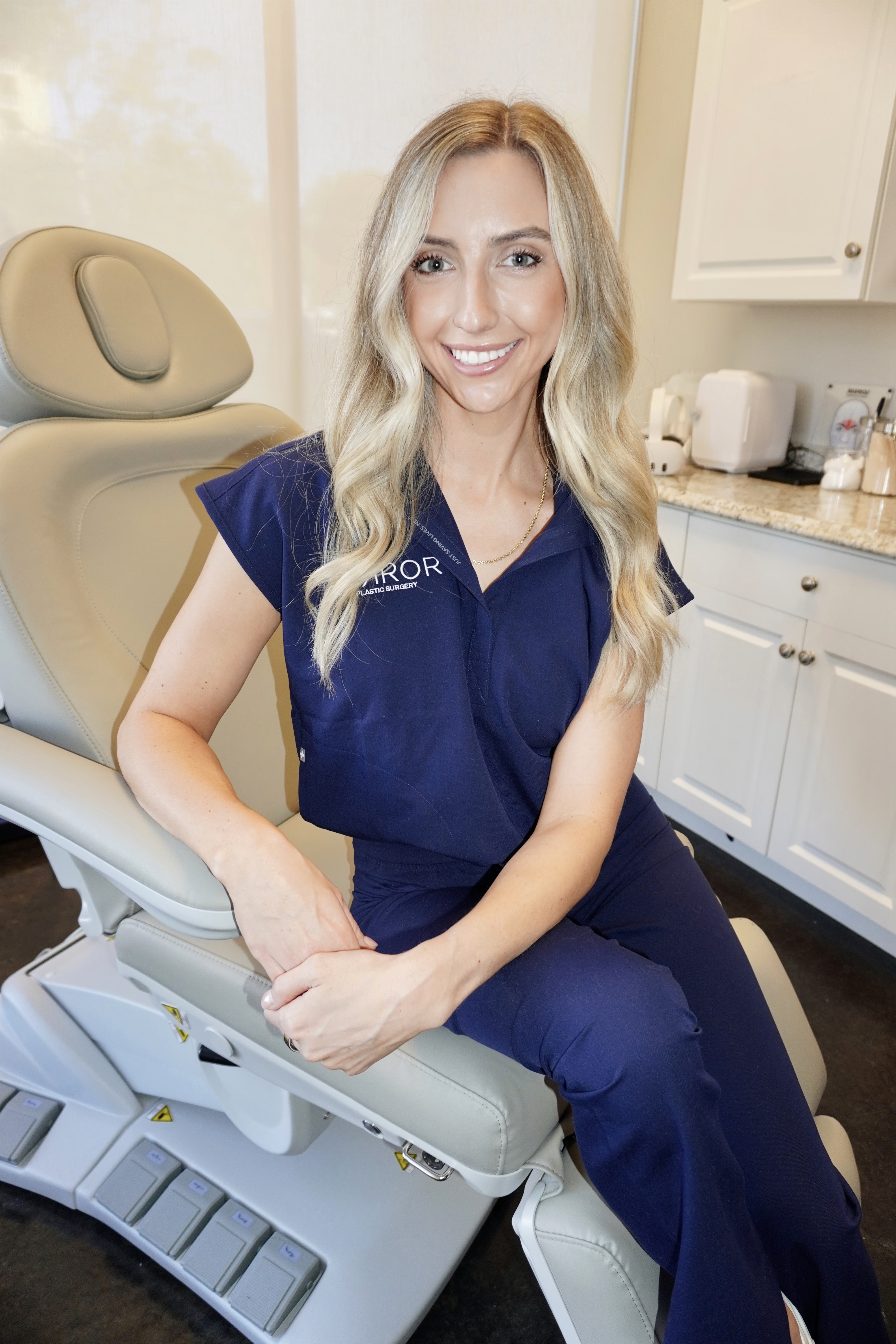
Written by: Ellie Pranckevicius, FNP-BC, Aesthetic Nurse Practitioner & Aesthetic Injector | Facial Restoration & Regenerative Injectable Specialist, Mirror Plastic Surgery
Key Safety Takeaways for Dermal Fillers
- Dermal fillers are not suitable for everyone. Pregnancy, breastfeeding, active infections, bleeding disorders, severe allergies, keloid scarring, and autoimmune flares all require individualized clinical evaluation.
- Patients on blood thinners or with bleeding disorders face higher risks of bruising and hematoma. Any prescription medication changes must be coordinated with the prescribing physician, not the injector.
- Active skin infections, cold sores, recent dental work, or vaccinations within two weeks of treatment increase complication risks. These issues should be cleared before moving forward with filler injections.
- Unrealistic expectations, such as dramatic lifting or jowl reduction that fillers cannot achieve, act as a soft contraindication. Long-term filler accumulation or migration can also complicate future reversal efforts.
- At Mirror Plastic Surgery, every filler evaluation starts with safety. Schedule a personalized consultation with Ellie for a thorough safety assessment before any treatment plan is created.
FDA-Aligned Dermal Filler Contraindications
The U.S. Food and Drug Administration product labeling highlights several conditions that may preclude or complicate dermal filler treatment. Patients with any of the following need individualized clinical evaluation before injections are considered:
- Pregnancy or active breastfeeding
- Active skin infection, open wound, or cold sore at or near the intended injection site
- Severe or multiple allergies, including known hypersensitivity to filler components or lidocaine
- Bleeding disorders or current use of anticoagulant or antiplatelet medications
- Active flare of an autoimmune or inflammatory condition
- History of keloid scarring
- Unrealistic expectations that exceed what injectable treatment can anatomically achieve
This list offers a starting point rather than a complete clinical picture. The U.S. Food and Drug Administration does not identify bleeding disorders or current anticoagulant or antiplatelet use as contraindications or complicating factors in its approved dermal filler product labeling. Each condition carries its own nuance, and only a thorough one-on-one evaluation can determine individual candidacy.
Schedule your one-on-one evaluation with Ellie to determine your individual candidacy before any filler plan is developed.
Bleeding Disorders, Blood Thinners, and Bruising Risk
Patients with diagnosed bleeding disorders or those taking anticoagulant or antiplatelet medications face a meaningfully elevated risk of hematoma and ecchymosis after filler injection. Bleeding disorders or concurrent anticoagulant therapy significantly increase the risk of severe hematoma and ecchymosis after dermal filler procedures.
Anticoagulants and antiplatelet agents do not make filler categorically unsafe. However, any decision to pause prescription blood thinners must be made by the prescribing physician, not the injector. Supplements such as high-dose fish oil, vitamin E, and NSAIDs are typically paused seven to ten days before treatment when clinically appropriate.
A complete filler consultation at Mirror Plastic Surgery includes a detailed medication and supplement review to manage bleeding and bruising risk. Ellie Pranckevicius works with a patient’s prescribing physician when needed before finalizing any plan, so vascular risk is evaluated from every angle.
Pregnancy, Breastfeeding, and Filler Deferral
Major dermal filler manufacturers state that the safety of their products for use during pregnancy has not been studied, so population-level complication rates are not well established. A 2022 review in the Journal of Cutaneous and Aesthetic Surgery discusses considerations for the use of dermal fillers during pregnancy.
Beyond the absence of safety data, pregnancy-related physiological changes, including hormonal fluctuations causing facial volume shifts, increased blood volume and vascular permeability, and altered immune response, create additional practical reasons to defer treatment. Biostimulatory fillers such as Radiesse require even greater caution because of their inflammatory mechanism of action and complete lack of reproductive safety data.
The clinical standard remains clear. Dermal fillers are deferred until after pregnancy and the completion of breastfeeding.
Active Infections, Cold Sores, and Timing Around Procedures
Patients with a personal history of herpes labialis who want lip or perioral filler are candidates for prophylactic antiviral therapy. Acyclovir or valacyclovir started two to three days before the procedure reduces reactivation risk and forms a standard part of the pre-treatment protocol at Mirror Plastic Surgery. Treatment proceeds only after the infection has fully cleared and an appropriate recovery window has passed.
The two-week clearance windows for dental work and vaccinations mentioned earlier apply here as well, reducing the risk of bacteremia and immune-triggered inflammation at filler sites.
Severe Allergies, Keloids, and Florida-Specific Aftercare
Allergy screening forms a non-negotiable part of every filler consultation. A 2026 case report in Aesthetic Medicine described recurrent localized angioedema in a patient with nickel hypersensitivity after multiple lip filler procedures performed by different clinicians using various products, with episodes recurring even after corticosteroid premedication. The authors concluded that this case highlights the need for thorough allergy screening and multidisciplinary management in aesthetic practice.
Patients with a history of keloid scarring require particular caution. Dermal fillers are generally not recommended for injection into active keloids because they are biologically risky and can worsen raised scar tissue. Patients with a history of keloids may also form abnormal scar tissue at injection sites after the minor trauma of filler injections.
In Florida’s climate, keloid-prone patients face an added concern. Prolonged sun exposure and heat can intensify inflammatory skin responses during the healing window. Mirror Plastic Surgery provides Florida-specific aftercare guidance that accounts for Tampa Bay’s year-round UV intensity and humidity, rather than relying on generic post-procedure instructions.
Autoimmune Conditions, Flares, and Hypersensitivity Testing
Autoimmune disease requires especially careful filler candidacy assessment. Disease activity, not diagnosis alone, serves as the primary determinant of risk.
A 2026 systematic review on fillers in patients with systemic sclerosis or morphea found mild adverse events and no disease flares, concluding that stable autoimmune or connective-tissue disease is not an automatic contraindication when careful patient selection occurs. Separately, a study in individuals with systemic autoimmune disease undergoing minimally invasive procedures, including fillers, reported no disease exacerbation and no changes in antibody titers or inflammatory markers.
Active flares present a different picture. Injections are not advised during an active flare of an autoimmune disease because this period is not appropriate for adding an immune stimulus, and delayed inflammatory reactions such as nodules or swelling occur slightly more often when the immune system is imbalanced.
No 2026 Cureus case report described a 35-year-old woman developing multisystem autoimmune or inflammatory syndrome induced by adjuvants after lip filler; reports instead addressed venous drainage obstruction, angioedema, and neuralgia-like pain.
For patients with a family history of autoimmunity or prior adjuvant exposure, a thorough medical history focusing on immune competence is essential. Some practitioners also recommend a forearm hypersensitivity test, which involves a small test injection that is evaluated after 15 days to check for delayed inflammatory reactions. This test can help identify patients whose immune systems may mount an exaggerated response to filler components before full facial treatment is considered.
Unrealistic Expectations and Long-Term Filler Changes
Long-term filler accumulation has become a documented clinical concern. Growing awareness of filler migration, where product moves from the injection site and creates distortions such as a filler mustache above the lip border, has become a mainstream patient concern, and dissolving accumulated filler has emerged as its own trend. Patients now book appointments specifically to remove years of product. Reversal does not always restore a prior baseline, and the belief that fillers are reversible for everyone oversimplifies clinical reality.
Ellie Pranckevicius addresses expectation alignment directly during every consultation. Her philosophy centers on restoration and harmony rather than transformation, and she will clearly explain when a requested outcome exceeds what injectable treatment can safely deliver.
DIY Filler Risks and High-Volume Med-Spa Limitations
DIY filler kits and unregulated online products create risks that no aftercare protocol can fix. The vascular anatomy of the face is complex and highly variable. A 2026 morphometric CT angiography study found that misplaced injections into the superficial temporal artery or zygomatico-orbital artery can cause retrograde embolization and blindness, while injection into the middle temporal vein can cause non-thrombotic pulmonary embolism.
Even in clinical settings, vascular occlusion demands immediate, skilled intervention. A 2026 case report described vascular occlusion of the angular and superior labial arteries after filler injection to the nasolabial fold and upper lip, where ultrasound with color Doppler confirmed segmental flow reduction and enabled targeted hyaluronidase injection that restored vascular flow when blind high-dose treatment had failed.
High-volume clinics that prioritize speed over individualized anatomical assessment cannot reliably identify or manage these risks. Clinical evidence on vascular complications does not support the idea that any trained injector in any setting will produce equivalent outcomes.
How Mirror Plastic Surgery Plans Safe Filler Treatments
Treatment planning at Mirror Plastic Surgery starts long before any product is chosen. Ellie Pranckevicius conducts a comprehensive, top-to-bottom assessment that often lasts up to an hour. The consultation explores the emotional reasons behind a patient’s interest in treatment, evaluates surface and subdermal anatomy, reviews full medical and medication history, and identifies any contraindications that call for physician coordination or deferral.
Product selection remains supplier-neutral. Mirror Plastic Surgery works with a range of filler brands, including Juvederm, RHA, Versa, Restylane, Radiesse, and Evolysse, and recommends options based on individual anatomy, skin quality, and treatment goals rather than inventory quotas. Vascular safety protocols, including hyaluronidase availability and detailed anatomical injection planning, form standard components of every procedure.
Patients who are not candidates at the time of consultation receive an honest explanation and, when appropriate, a realistic timeline for when treatment may become suitable. This approach reflects the standard of care rather than a limitation of the practice.
Start your safety-first evaluation and receive a thorough, individualized assessment grounded in anatomy and evidence.
Frequently Asked Questions
Can I get dermal fillers if I have an autoimmune condition?
Having an autoimmune condition does not automatically disqualify someone from dermal filler treatment. Disease activity remains the primary clinical factor. Patients whose condition is stable and well controlled under physician supervision may be appropriate candidates, while those experiencing an active flare are not. A thorough consultation that includes a review of current medications, inflammatory markers, and rheumatologist input when needed is essential before any treatment is planned. At Mirror Plastic Surgery, this evaluation is built into every initial assessment.
How long should I wait after a cold sore or dental procedure before getting fillers?
Active cold sores act as an absolute contraindication for lip and perioral filler. Treatment is deferred until the lesion has fully resolved. Patients with a history of herpes labialis are typically prescribed prophylactic antiviral medication beginning two to three days before the procedure. For dental work, including cleanings, restorations, and extractions, a two-week clearance window before and after filler is recommended to reduce the risk of transient bacteremia reaching filler deposits. The same two-week window applies to vaccinations, which can trigger delayed inflammatory reactions at filler sites.
Is filler reversal always possible if I change my mind or have a complication?
Fillers can often be dissolved with hyaluronidase, but reversal does not guarantee a complete reset. The outcome depends on how long the filler has been in place, how much product has accumulated, the specific product used, and the nature of the complication. Vascular occlusion, for example, requires immediate and precise intervention. Blind high-dose hyaluronidase is not always sufficient, and ultrasound guidance may be necessary. Biostimulatory fillers such as Radiesse are not reversible with hyaluronidase. Understanding these limitations before treatment forms part of the informed consent process at Mirror Plastic Surgery.
When is professional evaluation essential rather than optional?
Professional evaluation is essential for anyone with a bleeding disorder, autoimmune condition, history of keloid scarring, active or recurrent skin infections, current pregnancy or breastfeeding status, or prior filler complications. It also matters for patients who have received filler at multiple clinics over time and are unsure which products remain in their tissue. A thorough assessment protects against compounding risks and ensures that any new treatment plan accounts for the full clinical picture. At Mirror Plastic Surgery, this evaluation serves as the starting point for every patient relationship, not a formality.
Conclusion: Safety-First Filler Care in St. Petersburg
Dermal fillers can be safe and effective for the right candidates under the right clinical conditions.1 Clear understanding of contraindications, from bleeding disorders and autoimmune flares to active infections, keloid history, and unrealistic expectations, forms the foundation of treatment that delivers natural-looking results without compromising long-term health.1
Mirror Plastic Surgery’s concierge approach ensures that every patient receives the time, anatomical expertise, and honest communication needed for fully informed decisions. Ellie Pranckevicius and Dr. Akash Chandawarkar bring a depth of clinical knowledge that high-volume settings rarely match, and their shared commitment to safety first means that no treatment is proposed until candidacy is confirmed.
Begin your personalized safety evaluation at Mirror Plastic Surgery in St. Petersburg, Florida, designed around your anatomy, your history, and your goals.
Disclaimer: Results may vary from person to person. Editorial content, before and after images, and patient testimonials do not constitute a guarantee of specific results.
1 Results may vary from person to person. Editorial content, before and after images, and patient testimonials do not constitute a guarantee of specific results.