
Written by: Dr. Akash Chandawarkar, Board Certified Plastic Surgeon, Mirror Plastic Surgery | Last updated: September 9, 2026
Key Takeaways
- Dermal filler timing depends on your facial anatomy, skin quality, and goals more than your exact age.
- Facial structure and collagen change over time, so filler strategy shifts from enhancement to prevention to structural support.
- Starting too early can cause over-treatment and higher lifetime cost, while starting very late may limit what fillers can achieve.
- A full-face, anatomy-based plan reduces the risk of looking overfilled and supports natural, long-lasting results.
- Schedule a personalized consultation with Ellie at Mirror Plastic Surgery to map out the right timing and approach for you.
How Age Shapes Your Filler Plan
There is no single best age for dermal fillers. The right time depends on your goals, anatomy, and skin changes. In your 20s, fillers usually support subtle enhancement. In your 30s and 40s, they address early volume loss and etched lines. In your 50s and beyond, they reinforce structure and restore support. A board-certified specialist can help you decide when fillers make sense for your face.
Age works as a loose guideline rather than a strict rule. Bone structure, skin thickness, genetics, lifestyle, and sun exposure often matter more than your birth year. Two people at the same age can need very different plans. As Dr. Akash explains, “Your face does not age according to a calendar. It ages according to your unique anatomy, genetics, and history.”
A 2026 review in the Journal of Cosmetic Dermatology supports this approach. The authors recommend choosing fillers based on the cause of contour change, such as true volume loss, support failure, fat displacement, or laxity. Younger patients with early contour changes and good elasticity often respond to small, support-focused treatments. Older patients with advanced laxity may need larger structural correction or a combination of treatments.
Fast Facts: Dermal Fillers by the Numbers
Before looking at each decade, these key numbers help frame how fillers fit into the aging process.
- FDA approval: FDA approval ages for dermal fillers vary: some are approved for adults over 21 and others for adults aged 22 and older. Safety in patients under 21 has not been established for many products.
- Collagen decline: Collagen production decreases approximately 1% per year starting in the mid-20s, with accelerated loss around menopause. Research in the British Journal of Dermatology found skin collagen content decreases by approximately 30% in the first five years following menopause.
- Most common age group: Patients aged 40–54 account for 50% of filler procedures, according to the American Society of Plastic Surgeons 2024 statistics report.
- Procedure volume: An estimated 5,331,426 filler procedures were performed in the US in 2024.
- Filler types: Fillers such as Juvéderm, Restylane, and RHA provide immediate, reversible results.1 Biostimulatory fillers such as Radiesse stimulate collagen over time and are approved for adults 22 and older.1
With this context in mind, you can see how filler use evolves across the decades.
Fillers in Your 20s: Subtle Enhancement
Fillers in your 20s usually focus on enhancement, not anti-aging. Common goals include lip augmentation, chin definition, and minor asymmetry correction. Most people in this decade do not yet need fillers for true volume loss. Collagen decline begins in the mid-20s, but prevention with fillers at this stage remains controversial. A consistent skincare routine with SPF and retinoids should come first.
As Dr. Akash notes, “In your 20s, the goal is enhancement, not correction. We often advise patients to wait until they see early signs of volume loss before starting fillers. Starting too early can lead to unnecessary expense and an overdone look.”
Here are key considerations for patients in their 20s:
- Most common treatments: lip augmentation, chin definition, non-surgical nose reshaping
- Typical volume: 1 syringe or less
- Foundation first: SPF, retinoids, and hydration create meaningful change at this stage
- Long-term cost: starting at 18 means decades of maintenance, which increases lifetime product exposure
As you move into your 30s, the focus gradually shifts from pure enhancement to early correction and prevention.
Fillers in Your 30s and 40s: Early Volume Loss and Prevention
The 30s and 40s often mark the most active decade for starting fillers. Early volume loss becomes visible through nasolabial folds, marionette lines, cheek deflation, and temple hollowing. This period usually brings a shift from simple enhancement to prevention and subtle correction. Dynamic lines can remain etched at rest, and volume changes often appear around the temples and tear troughs.
A full-face approach helps avoid an overdone or unbalanced look. As Dr. Akash explains, “Treating one area in isolation can create imbalance. The face ages as a connected structure. Cheeks, temples, jawline, and lips all work together. A comprehensive assessment ensures harmony.”
Here are key considerations for patients in their 30s and 40s:
- Most common treatments: cheek volume restoration, temple hollowing, nasolabial fold softening, lip definition, jawline sculpting
- Typical volume: 1–3 syringes across carefully selected areas
- Collagen loss accelerates, so biostimulatory fillers may support longer-term collagen remodeling
- Focus on prevention and early correction with natural, incremental changes
Schedule your personalized assessment with Ellie to design a plan that fits your anatomy and goals.
Fillers in Your 50s and Beyond: Rebuilding Support
Fillers in your 50s and later focus on structural support and restoring volume lost through bone resorption and fat atrophy. Skin quality and medical history guide treatment more than age alone. Cumulative collagen deficit leads to thinner skin, gravitational descent, jowling, and deeper folds by the 40s and 50s. For women, the sharp decline in oestrogen around menopause directly accelerates collagen breakdown.
Biostimulatory fillers such as Radiesse often play a larger role at this stage. As Dr. Akash explains, “In your 50s and beyond, we focus on rebuilding structure rather than merely filling lines. The goal is to restore what time has taken away and maintain a natural look. Biostimulatory fillers can be valuable because they work with your body’s own collagen production.”
Here are key considerations for patients 50 and older:
- Most common treatments: full-face volume restoration, deep fold softening, jawline and chin definition, cheek augmentation
- Typical volume: staged over multiple sessions with a conservative, less-is-more approach
- Combination plans with neuromodulators, skin boosters, and energy-based treatments are often recommended
- Realistic expectations: significant laxity may respond better to surgical options than fillers alone
The Risks of Starting Too Early or Too Late
Timing affects both safety and satisfaction. Starting fillers very early can create unnatural results, higher long-term costs, and a higher chance of over-treatment. A 2026 systematic review in Aesthetic Plastic Surgery described facial overfilled syndrome as a complication of excessive filler use. This syndrome can cause distorted appearances such as “pillow face” or “chipmunk cheeks” and is best prevented through customized, conservative planning. The same 2026 Journal of Cosmetic Dermatology review links overfilled syndrome to inappropriate indications, excessive medial filling, and poor analysis of the facial support system.
Waiting until changes are very advanced can also limit options. More product and more extensive correction may be needed, and reduced elasticity can cap the results fillers can deliver. As Dr. Akash notes, “Starting too early can lead to an overdone look and unnecessary costs. Waiting too long may require more product. The right time is when you have a specific concern that fillers can safely address.”
Risks of starting too early:
- Unnatural results from over-treatment
- Financial burden from decades of maintenance
- Psychological dependence on injectables
- Cumulative exposure to filler materials, including delayed inflammatory reactions such as granulomas that can appear months or years later
Risks of starting very late:
- More extensive correction required
- Reduced skin elasticity that limits achievable results
- Advanced volume loss that may call for surgical options
- Missed opportunity for earlier, lower-volume prevention
Beyond Age: How Anatomy and Goals Guide Treatment
Filler needs vary widely from person to person. Two people of the same age can have very different patterns of bone support, skin thickness, genetics, and lifestyle damage. Facial aging involves skeletal remodeling, fat-compartment changes, dermal deterioration, and altered relationships among retaining ligaments and mobile soft tissues. Treatment planning should address this full picture instead of focusing on a single layer.
As Dr. Akash explains, “Your anatomy tells me more than your age ever will. I have seen 35-year-olds with significant volume loss and 55-year-olds with excellent skin quality. The treatment plan should be built around your face and your goals.”
A 2026 clinical study in the Journal of Education, Health and Sport found that satisfaction with filler treatment closely tracks perceived confidence and self-image, not just wrinkle reduction. This finding highlights the emotional and psychological side of aging. A thorough consultation should explore both anatomy and mindset.
How to Choose the Right Injector
Choosing a qualified injector shapes your results more than any single product. Board-certified dermatologists and plastic surgeons have the deepest training in facial anatomy and complication management. That training matters when rare but serious complications such as vascular occlusion require immediate, expert care.
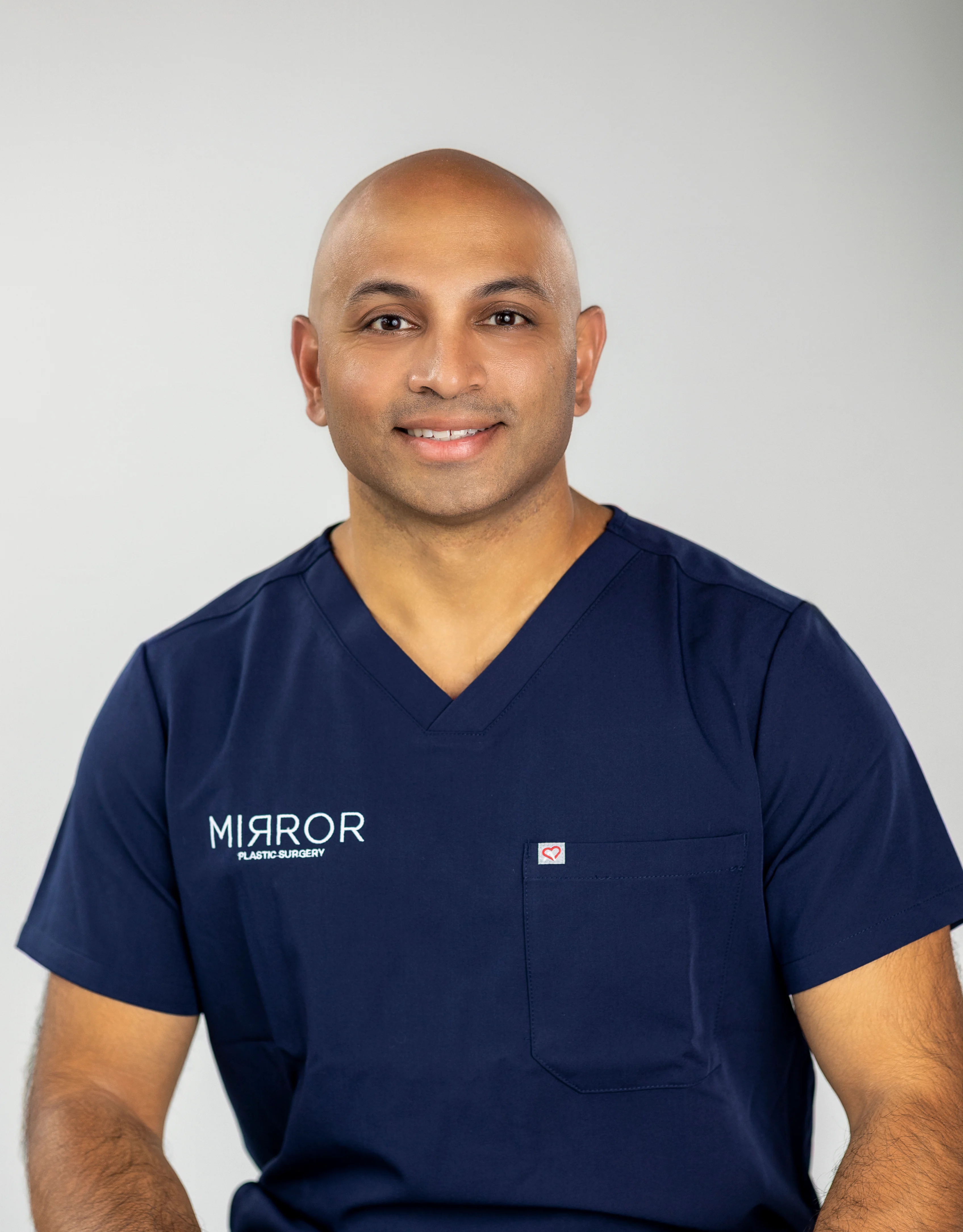
At Mirror Plastic Surgery, every injectable treatment is performed by Dr. Akash Chandawarkar, a board-certified plastic surgeon with detailed knowledge of facial and subdermal anatomy. Dr. Akash serves on advisory boards for Merz Aesthetics and Tiger Aesthetics, which keeps him current on injectable advances. Mirror Plastic Surgery follows a supplier-neutral philosophy, so product selection reflects your needs rather than quotas or commissions.
What to look for in an injector:
- Board certification in plastic surgery or dermatology
- Deep understanding of facial anatomy across all tissue planes
- Clear communication about risks, benefits, and realistic outcomes
- A consultation process that prioritizes education over upselling
- On-site hyaluronidase and a defined protocol for managing complications
- Reliable availability for follow-up care
Get a surgeon’s expert opinion on your filler plan and see how a careful, anatomy-first approach feels in person.
What to Expect in a Dermal Filler Consultation at Mirror Plastic Surgery
Consultations at Mirror Plastic Surgery follow a concierge-style model with time for detailed discussion. Dr. Akash often spends up to an hour on each initial assessment. He reviews your facial anatomy, emotional drivers, and long-term goals. He is known for transparent guidance and will sometimes recommend delaying or skipping treatment when it does not serve you. That honesty supports long-term relationships instead of one-time procedures.
What sets Mirror Plastic Surgery apart:
- Up-to-hour-long consultations with Dr. Akash himself
- Top-to-bottom facial assessment instead of single-area focus
- Honest recommendations, including advising against treatment when appropriate
- Supplier-neutral product selection based on your anatomy and goals
- A long-term care philosophy that places safety and function before aesthetics
Start your journey with a consultation at Mirror Plastic Surgery and work with a surgeon who tailors care to your face and your story.
Frequently Asked Questions
What Is the Minimum Age for Dermal Fillers?
The FDA approval ages mentioned earlier vary by product, with most cosmetic fillers cleared for adults 21 or 22 and older. There is no federal law in the United States that explicitly prohibits cosmetic fillers at age 18, but most reputable providers follow FDA guidance and professional society recommendations. Facial bones and soft tissues continue developing into the early 20s, which explains why safety data for younger patients remain limited. Most legitimate providers decline cosmetic filler for minors even with parental consent because of incomplete development and lack of clinical data.
Can Fillers Make You Look 10 Years Younger?
Fillers can create meaningful improvement, especially when they address volume loss in the right areas.1 Results depend on your starting point, skin quality, and the extent of aging changes. In your 40s or 50s, well-placed fillers can restore a rested, refreshed appearance.1 Fillers cannot tighten significant skin laxity or match the results of a surgical facelift.1 A board-certified surgeon will set clear expectations about what fillers can and cannot achieve for your features.
Do Fillers Hurt?
Most patients feel mild discomfort during injection. Many modern fillers contain lidocaine for comfort, and your provider can add topical numbing or other measures. The procedure typically takes under an hour with minimal downtime. Swelling and bruising are common but temporary. Lidocaine in fillers can occasionally mask the early pain of a vascular complication, which makes careful monitoring by an experienced injector essential.
How Long Do Fillers Last?
Filler duration varies by product, placement, and your metabolism. Most fillers last 6–18 months depending on the formula and treatment area.1 Biostimulatory fillers such as Radiesse stimulate collagen production with effects that can last 12–18 months or longer.1 Lip fillers usually metabolize faster than cheek or jawline fillers. Imaging research has detected residual filler signal in tissue beyond the expected duration, which supports a conservative, anatomy-guided dosing strategy.
Will I Look “Overdone”?
A skilled, conservative injector aims for natural results. Appropriate dosing and a full-face approach help treat the face as a connected structure instead of isolated spots. As Dr. Akash notes, “The goal is to look like a well-rested version of yourself, not someone who has had obvious work done.”1 Starting with less and adding gradually over multiple sessions usually produces the most natural outcome. Overfilled syndrome is a documented complication of excessive or poorly planned filler use and is preventable with the right provider and philosophy.
The Best Age Is When You Are Ready
The best age for dermal fillers is the moment you have a specific concern, realistic expectations, and a qualified professional guiding your care. Age offers a framework, but your anatomy, goals, and overall health tell the full story. Whether you are in your late 20s exploring subtle enhancement or in your 50s seeking structural restoration, the right approach starts with an honest, thorough consultation.
Mirror Plastic Surgery is located at 780 4th Ave S, St. Petersburg, FL 33701. Call or text 727-361-6515, or email hello@mirrorplasticsurgery.com. Take the first step with a consultation at Mirror Plastic Surgery and move toward a natural, confident you.
Disclaimer: Results may vary from person to person. Editorial content, before and after images, and patient testimonials do not constitute a guarantee of specific results.
1 Results may vary from person to person. Editorial content, before and after images, and patient testimonials do not constitute a guarantee of specific results.