
Written by: Dr. Akash Chandawarkar, Board Certified Plastic Surgeon, Mirror Plastic Surgery
Key Takeaways
- Brachioplasty scar camouflage reduces the visual contrast of arm lift scars but does not remove the scar itself.1
- Scar camouflage becomes appropriate once the scar has fully matured, usually around 12–18 months after surgery.
- The correct camouflage or treatment method depends on the scar’s current characteristics. Flat and pale scars may benefit from paramedical tattooing, while red or raised scars usually need medical management first.
- Paramedical tattooing and cosmetic camouflage makeup are the main camouflage options. Silicone, steroid injections, laser therapy, and surgical revision address structural or inflammatory issues.
- Patients considering brachioplasty scar camouflage can schedule a consultation at Mirror Plastic Surgery for an expert assessment and personalized treatment plan.
What Brachioplasty Scar Camouflage Does And Does Not Do
Brachioplasty scar camouflage is a non-surgical way to reduce the visual contrast of an arm lift scar. It works through two methods: paramedical tattooing, which deposits skin-tone pigment into the scar tissue, and cosmetic camouflage makeup, which provides temporary, transfer-resistant coverage. Neither method removes the scar. The scar tissue remains physically present and palpable, and only its visual prominence against the surrounding skin changes.
Key Concepts And Terminology For Arm Lift Scars
Clear language around scar care helps patients compare options and set realistic expectations.
- Brachioplasty (Arm Lift): A surgical procedure that removes excess skin and fat from the upper arm. The resulting scar typically runs along the inner arm from the axilla (armpit) toward the elbow.
- Scar Maturation: The biological process in which a scar progresses from red, raised, and firm to flat, pale, and soft. This process typically takes 12–18 months.
- Paramedical Tattooing (Scar Camouflage Tattoo / Micropigmentation): A clinical technique that deposits insoluble pigment particles into the dermis to blend a pale scar toward surrounding skin tone. Unlike decorative tattooing, it uses skin-tone pigments and focuses on restoration rather than artistic designs.
- Cosmetic Camouflage Makeup: Highly pigmented, water-resistant formulations designed to cover scars temporarily. When properly set with a mineral finishing powder, these products can last 8–12 hours on the face and up to 3–4 days on body skin.
- Hypertrophic Scar: A raised, red, firm scar that remains within the original wound boundary. Hypertrophic scars typically appear between four weeks and six months post-op and often improve over time.
- Keloid Scar: A scar that grows beyond the original wound margins into surrounding healthy tissue and rarely regresses spontaneously. Keloids can continue growing for months or years.
- Silicone Gel/Sheets: First-line, non-invasive scar management tools. Silicone reduces scar erythema, thickness, and itching and is considered the gold standard adjunct in hypertrophic scar prevention and early treatment.
- Intralesional Steroid Injections: Injections of corticosteroid (typically triamcinolone acetonide) directly into raised scar tissue to reduce inflammation and flatten the scar. Published resolution rates range from 50–100%, with recurrence rates of 9–50% when used alone1.
- Laser Therapy: Devices such as pulsed dye laser (PDL) and fractional CO₂ laser that target redness, texture, and thickness in scars. Vascular lasers can start as early as 2–4 weeks after suture removal to manage redness, while fractional lasers are introduced later to guide remodeling.
- Surgical Scar Revision: Excision and re-closure of a scar, sometimes with techniques such as Z-plasty or W-plasty, to improve orientation, reduce tension, or address structural problems. Surgeons reserve revision for scars in unfavorable orientations or those resistant to non-surgical treatment.
Three distinctions often cause confusion. Camouflage reduces visual contrast, while revision changes the scar’s structure. Paramedical tattooing uses skin-tone pigment for restoration, whereas decorative tattooing uses artistic designs and deeper ink placement. In short, camouflage focuses on color and revision focuses on anatomy.
Get an honest assessment of your scar type from Dr. Akash and learn which options fit your situation.
Timing: Why Scar Maturity Matters More Than A Calendar Date
Most scars are considered mature at 12 to 18 months post-surgery, and reputable paramedical tattoo practitioners generally wait at least 12 months, often 12 to 18 months, and base readiness on tissue state. Many clinicians advise waiting until the scar is fully stable before any camouflage procedure.
Patients can assess their own scar’s maturity by watching for three changes. First, color: a maturing scar fades from red or pink toward the surrounding skin tone, because redness signals active healing and strong blood supply. A scar that is still red or pink is still remodeling. Second, texture: the scar should soften from firm and rope-like to pliable. Third, flatness: a mature scar is no longer raised or hard and has not changed in size or appearance for at least three to six months.
Treating a scar before it is ready wastes money and often produces poor results. Tattooing an immature scar can reactivate inflammation, distort eventual color, and waste pigment in tissue that is still remodeling.
When To Wait Before Camouflage
You should wait until your scar is fully mature, and that readiness comes from its color, texture, and flatness, not just its age. A scar that remains red, raised, or changing has not reached the camouflage stage. A stable appearance does not equal full maturation, because scar tissue continues to remodel internally for up to two years after wound closure. A board-certified plastic surgeon’s assessment offers the most reliable way to determine readiness.
Ask Dr. Akash to evaluate whether your scar is ready or whether medical scar management should come first.
Matching The Method To Your Brachioplasty Scar
No single camouflage or treatment option fits every brachioplasty scar. The scar’s current characteristics, rather than patient preference, guide the correct starting point.
Flat, White, Or Pale (Mature) Scars
Hypopigmented (lighter-than-skin-tone) scars tend to respond best to camouflage tattooing. A flat, pale, fully stable scar is an ideal candidate for paramedical tattooing and also works well with cosmetic camouflage makeup for temporary coverage. These scars have completed their remodeling cycle, and the tissue is stable enough to accept and retain pigment predictably.
Red, Raised, Or Hypertrophic Scars
Active medical treatment usually comes before camouflage for these scars. Clinicians prioritize active scar treatment during the remodeling phase, which can last up to 24 months. Silicone gel or sheets, intralesional steroid injections, and laser therapy are the main tools at this stage. Needling a scar with a hypertrophic or keloid history can provoke the same overgrowth the patient hoped to hide. A physician assessment is essential before any camouflage on a raised or red scar.
Indented Or Widened Scars
Camouflage alone addresses color contrast and does not correct structural problems. Pigment placed in the depression of an indented scar can appear darker than pigment on flat skin even when colors match. For scars that are significantly widened, tethered, or indented, surgical scar revision may need discussion before or instead of camouflage. A board-certified plastic surgeon can determine whether the scar’s structure is the primary issue.
Have your scar type categorized and planned with a tailored approach from Dr. Akash.
Options For Brachioplasty Scar Camouflage And Scar Management
Each option targets a different aspect of scar appearance and fits a specific stage of scar maturation.
Paramedical Tattooing: Paramedical tattooing deposits insoluble pigment particles into the dermis to blend a pale scar toward surrounding skin tone. Most patients need multiple sessions spaced about 6 to 8 weeks apart, with sources citing 2 to 4 or sometimes 2 to 8 sessions depending on the scar. Results are long-lasting but not permanent, often lasting 3–5 years depending on skin type, sun exposure, lifestyle, and aftercare1. Risks include ink migration, color mismatch, and uneven pigment absorption. Tattooed pigment does not tan, so a patch matched to winter skin can appear lighter on tanned summer skin.
Cosmetic Camouflage Makeup: Highly pigmented, water-resistant formulations provide temporary coverage. Recommended application uses stippling with a damp sponge or synthetic brush, and products must never touch open wounds or unhealed incisions. Cosmetic camouflage becomes appropriate once the skin is fully closed and works well during the maturation period when the scar is still changing and paramedical tattooing is not yet appropriate.
Silicone Gel Or Sheets: Silicone is the first-line, noninvasive treatment for hypertrophic scars and keloids and reduces scar erythema, thickness, and itching. Guidelines recommend at least 12 hours of daily use for 3 to 6 months. Silicone works best when started early in the maturation process.
Intralesional Steroid Injections: Intralesional corticosteroid injections treat dense, rigid keloids and established hypertrophic scars that need rapid collagen breakdown and volume reduction, typically every 4 to 6 weeks for 3 to 6 sessions. Adverse reactions occur in up to 63% of treated lesions and include localized dermal atrophy, visible vessels, and permanent hypopigmentation1.
Laser Therapy: Pulsed dye laser targets blood vessels in the scar to reduce redness and itching, while fractional CO₂ laser creates microscopic channels that stimulate new, more organized collagen. Clinicians typically perform 2–5 procedures, spaced 1–3 months apart, to reach a satisfactory outcome.
Surgical Scar Revision: Surgeons reserve scar revision for hypertrophic scars in unfavorable orientations where re-excision with Z-plasty or W-plasty can change geometry, relieve tension, and reduce recurrence. Final appearance can take up to a year after revision surgery.
Comparison Of Brachioplasty Scar Camouflage And Management Options
The table below summarizes what each option does, which scar type it suits, and the main tradeoffs so you can compare them at a glance.
Cost And Choosing A Provider For Scar Camouflage
Brachioplasty scar camouflage pricing varies from patient to patient. Costs depend on the number of sessions, the length and complexity of the scar, the provider’s credentials and setting, and whether other treatments are combined. Each patient at Mirror Plastic Surgery receives a personalized assessment and quote during consultation rather than a flat price.
Provider credentials play a major role in safety and outcomes. Paramedical tattoo artists, dermatologists, and board-certified plastic surgeons bring different scopes of expertise. In most American states, anyone with a body-art license can legally tattoo a scar, and medical boards have little jurisdiction unless the practitioner also holds a medical license. A physician assessment can identify whether the scar needs medical treatment before camouflage, which non-physician providers cannot reliably determine.
When evaluating any provider, watch for these red flags:
- Guarantees of scar removal or promises that the scar will disappear
- Willingness to treat immature scars without a documented maturity assessment
- Booking treatment sessions without an in-person scar evaluation
- Multi-day certification courses that issue certificates with no national accrediting body, no examination standard, and no oversight
- Inability to show healed portfolio work across multiple skin tones and scar types
Risks, Limitations, And Common Misconceptions
Several myths circulate about brachioplasty scar camouflage, and addressing them directly helps patients make informed decisions.
As noted earlier, camouflage does not remove the scar and only reduces its visual prominence. A “scarless arm lift” does not exist, because every surgical incision produces a scar, and the quality of that scar depends on biology, technique, and aftercare rather than marketing language.
Results from paramedical tattooing are semi-permanent and change over time. Pigment ages on its own schedule, drifting warm toward orange-pink or cool toward grey-ash as particle mixes break down over years. Touch-up sessions form a normal part of long-term maintenance.
Camouflage does not suit every scar type or stage. Keloid scars can sometimes worsen with tattooing and require medical advice before treatment. Tattooing over an immature scar can cause several problems: ink blowout, patchy pigmentation, raised texture from stimulated collagen, infection, and keloid triggering in predisposed individuals.
Tummy tuck scar camouflage achieves 70 to 95 percent visual integration for many patients with mature, hypopigmented scars, although evidence does not yet confirm whether this benchmark applies to brachioplasty scars1. Patients should approach camouflage with the goal of meaningful improvement rather than complete invisibility.
That expectation-setting sits at the center of how Dr. Akash and Mirror Plastic Surgery approach scar camouflage.
How Dr. Akash Evaluates Scar Camouflage Candidates
Dr. Akash is a Harvard-educated, Johns Hopkins-trained, board-certified plastic surgeon at Mirror Plastic Surgery in St. Petersburg and Tampa, Florida, where arm lift (brachioplasty) is among the offered procedures. He completed his medical degree at Harvard Medical School with Honors, his seven-year integrated plastic and reconstructive surgery residency at Johns Hopkins University, and a fellowship in aesthetic surgery at the Manhattan Eye, Ear and Throat Hospital (MEETH). He also completed a Biodesign Innovation Fellowship at Stanford University.
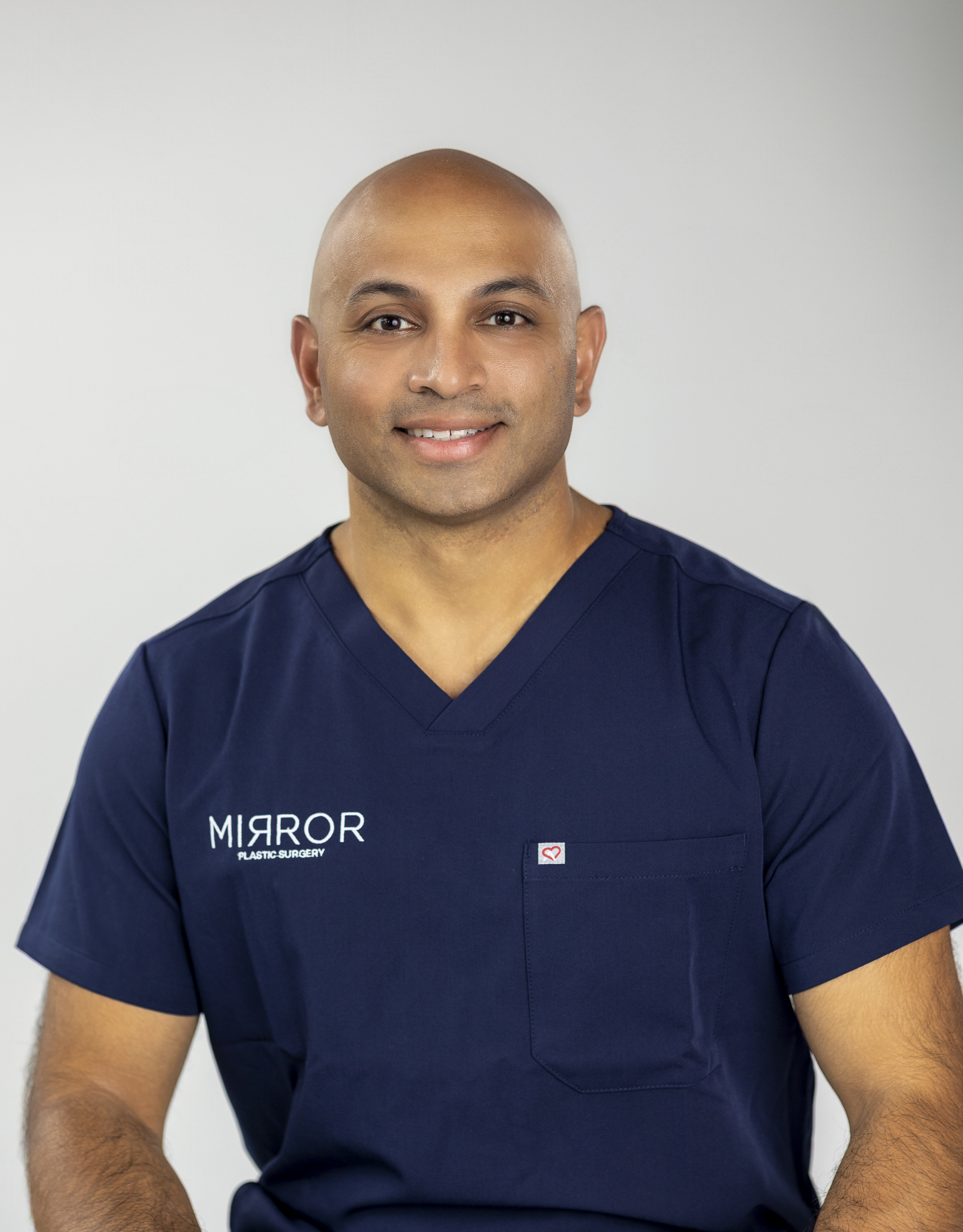
Dr. Akash has been named in America’s Best Plastic Surgeons 2025 by Newsweek for two consecutive years. He serves on the editorial board of the Aesthetic Surgery Journal and has testified before the U.S. Food and Drug Administration on breast implant safety. His approach to scar care follows an evidence-based, anatomy-first philosophy that mirrors his approach to every procedure at Mirror Plastic Surgery.
How Mirror Plastic Surgery Approaches Scar Care
Mirror Plastic Surgery uses a concierge medicine model that addresses the gaps many patients experience at high-volume practices. Consultations can run up to an hour, which allows time for a thorough, top-to-bottom scar assessment instead of a rushed visit. The practice limits itself to one to two surgeries per day so each patient receives focused attention before, during, and after surgery.
Treatment planning at Mirror Plastic Surgery is evidence-based and supplier-neutral. The team recommends the right treatment for the specific scar rather than upselling a service or defaulting to a single modality. The practice’s guiding philosophy, “safety first, function second, aesthetics third,” applies to scar management as directly as it applies to surgery. A scar that needs medical treatment before camouflage receives that care first, rather than a quick cosmetic fix.
Schedule a comprehensive scar evaluation with Dr. Akash and receive a plan tailored to your anatomy and goals.
That individualized approach matters because clinical standards around scar camouflage have shifted in recent years.
How Brachioplasty Scar Camouflage Fits Into Current Standards
Patient interest in paramedical tattooing for surgical scars has grown, and the clinical framework around it has matured as well. Scars can take up to 18 months to 2 years to mature, changing in color and appearance as they heal, and current standards base camouflage decisions on scar maturity rather than a fixed calendar date.
The roles of silicone, steroid injections, and laser therapy in scar management are well-established in the literature. Dermatology scar management protocols follow a stage-based framework: silicone in the early intervention window, corticosteroid injections and laser in the active management window, and surgical revision or combination therapy for refractory scars. Camouflage fits into this framework after the scar stabilizes and functions as a finishing step rather than a first response.
A dermatologist or plastic surgeon evaluation before tattooing over any scar is considered standard of care, and medical clearance remains the gold standard even when visible signs of maturation appear complete. This standard exists because treating the wrong scar at the wrong time can lead to wasted investment, poor pigment retention, or worsened scar biology, all of which are avoidable with proper evaluation.
Have your brachioplasty scar evaluated within current standards before you commit to camouflage or any other treatment.
1 Results may vary from person to person. Editorial content, before and after images, and patient testimonials do not constitute a guarantee of specific results.