Lip fillers typically last 6–12 months, with most patients enjoying strong results for about 9 months before gradual fade begins.1
Longevity varies based on product type, individual metabolism, lip movement, injection technique, and lifestyle factors like sun exposure and smoking.
Touch-ups are usually needed every 6–9 months to maintain consistent volume and definition without starting from scratch.1
Hyaluronic acid fillers are temporary and reversible with hyaluronidase, allowing patients to adjust or dissolve results if desired.
Why Lip Filler Longevity Varies: Five Key Factors
No single answer fits everyone. Two patients treated the same day with the same product can have very different timelines. A 2026 narrative review published in Plastic and Reconstructive Surgery Global Open found that clinical effects generally last 4–18 months depending on product formulation, injection technique, treatment area, and patient factors such as metabolism, diet, and lifestyle.1
Patients with faster metabolisms break down hyaluronic acid filler more quickly, which remains one of the most unpredictable variables. This explains why two people treated the same way on the same day can have very different experiences.
Given these variables, a one-size-fits-all plan rarely works. Each patient benefits from a tailored approach that matches product and technique to their lifestyle and anatomy.
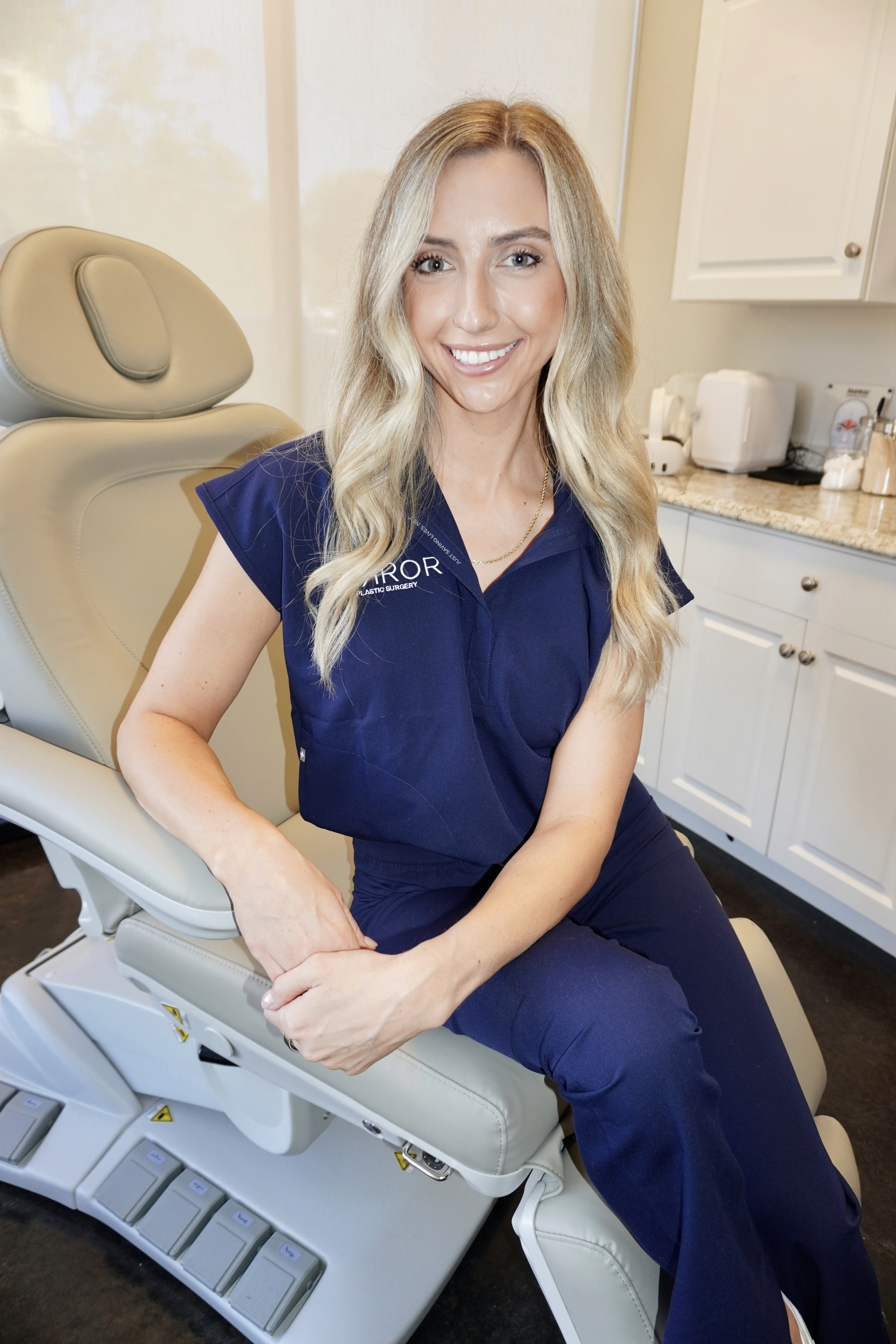
“In my practice, I emphasize that lip filler is a journey, not a one-time fix. We plan for maintenance from the start, choosing the right product and technique for each patient’s unique anatomy and lifestyle.” — Ellie Pranckevicius, FNP-BC
How Long Different Lip Fillers Last: Product-By-Product Overview
The following table compares FDA-approved lip fillers with data drawn from their pivotal clinical trials. All figures reflect averages, and individual results vary.1
“Patients often underestimate how quickly filler metabolizes. We recommend planning for a touch-up at 6–9 months to maintain your look. Waiting until it’s completely gone means starting over.” — Ellie Pranckevicius, FNP-BC
How To Make Lip Filler Last Longer: Practical, Evidence-Based Tips
The most impactful choices happen before and right after your appointment. Choosing a product that matches your lips and goals sets the foundation, and a slightly firmer gel can support longer wear. Careful aftercare then protects that investment by reducing early breakdown.
Follow your provider’s instructions closely. Avoid excessive heat, alcohol, and strenuous exercise for the first 24–48 hours, since these can increase swelling and speed metabolism. Daily SPF lip balm helps shield against UV damage that weakens the surrounding tissue.
Working with an experienced injector ties these pieces together. The right provider selects an appropriate product, uses sound technique, and builds a long-term plan around your anatomy and lifestyle.
“The key to natural-looking results is understanding your unique anatomy. We never use a one-size-fits-all approach, and we are always honest about what to expect as filler fades.” — Dr. Akash Chandawarkar
While the gradual fade reassures many patients, understanding potential downsides before you commit remains just as important.
What Is The Downside To Lip Fillers? Honest Answers About Risks And Maintenance
Beyond the short-term recovery, ongoing maintenance matters. Lip filler is a repeating investment, and most people budget for touch-ups within the same general 6–12 month range mentioned earlier. Choosing an injector who values natural results helps reduce the risk of overfilling or unbalanced shape.
Hyaluronic acid fillers offer a meaningful safety advantage. They can be dissolved with hyaluronidase, which gives your provider a way to correct problems or adjust results when needed.
Some patients feel regret, often because of poor provider choice or unrealistic expectations. Starting conservatively and choosing an experienced injector significantly lowers this risk.
“I often advise patients to start with less than they think they need. You can always add more, but it is harder to dissolve overdone filler.” — Ellie Pranckevicius, FNP-BC
A half-syringe often lasts several months, with the exact duration shaped by the product used, your metabolism, and your lip anatomy. A more subtle enhancement may fade sooner than a full syringe because there is less product to lose before the effect diminishes. For first-time patients, starting with 0.5 mL is often a conservative and sensible approach, and you can always add more at a follow-up visit.
Do Lips Go Back To Normal After Lip Fillers?
Hyaluronic acid fillers are temporary and naturally metabolized by the body. Once the filler dissolves, your lips return gradually to their pre-treatment appearance, rather than deflating suddenly. If you have had multiple rounds of treatment over several years, you may notice mild changes in tissue elasticity, but the overall return to baseline usually looks gradual and natural.
Patients with active infections near the treatment area, a history of severe allergic reactions to filler components, or certain bleeding disorders may not be suitable candidates. Those with a history of cold sores should inform their provider in advance, as prophylactic antiviral medication can be prescribed to help prevent reactivation. Unrealistic expectations also matter clinically, so a thorough consultation with a qualified provider remains the most important step in determining candidacy and setting appropriate goals.
Why Choose Mirror Plastic Surgery For Lip Filler?
Mirror Plastic Surgery’s philosophy prioritizes safety above all, with function and aesthetics following in that order. Non-surgical treatments are led by Ellie Pranckevicius, FNP-BC, an Aesthetic Nurse Practitioner with dual training in esthetics and advanced nursing, four years of ICU clinical experience, and deep expertise in facial anatomy. Her work is supported by Dr. Akash Chandawarkar, a Harvard-educated, Johns Hopkins-trained plastic surgeon with fellowship training at Manhattan Eye Ear And Throat Hospital.
Several features distinguish Mirror from high-volume practices:
Hour-long consultations with a top-to-bottom assessment, so you never feel rushed
Supplier-neutral practice, where product recommendations reflect your anatomy rather than sales quotas
Concierge care with responsive communication before, during, and after treatment
Natural results focus that aims to harmonize features instead of overfilling
Honest guidance on maintenance, realistic timelines, and long-term planning
Conclusion: Plan Your Lip Filler Journey With Confidence
Lip filler longevity exists on a spectrum shaped by product choice, your biology, and your injector’s expertise. Patients who feel happiest with their results treat maintenance as part of the plan from day one, scheduling touch-ups before volume disappears and choosing a provider who explains the fade curve clearly.
At Mirror Plastic Surgery, every lip filler treatment begins with an in-depth consultation that explores your goals, evaluates your anatomy, and recommends a tailored product and technique. This approach replaces one-size-fits-all protocols with thoughtful, individualized care.
Ready to plan your lip filler journey? Book your consultation with Ellie today. Call or text 727-361-6515 or email hello@mirrorplasticsurgery.com. The practice is located at 780 4th Ave S, St. Petersburg, FL 33701.
Disclaimer: Results may vary from person to person. Editorial content, before and after images, and patient testimonials do not constitute a guarantee of specific results.
1 Results may vary from person to person. Editorial content, before and after images, and patient testimonials do not constitute a guarantee of specific results.