
Written by: Dr. Akash Chandawarkar, Board Certified Plastic Surgeon, Mirror Plastic Surgery | Last updated: September 9, 2026
Key Takeaways
Before you dive into the details, keep these core points in mind about filler types, safety, and long-term results.
- The type of dermal filler you choose affects how long results last, whether they can be reversed, and your risk of long-term complications.1
- Biostimulatory fillers like Radiesse and Sculptra stimulate collagen and last longer but cannot be dissolved, while permanent fillers like PMMA carry the highest risk of chronic complications.1
- Recent research from 2024 to 2026 consistently shows that the injector’s expertise is the most critical factor in safety and natural results, more than filler brand alone.
- Common long-term risks across all filler types include migration, overfilled syndrome, and vascular complications, which are largely preventable with proper technique and detailed anatomical knowledge.1
- To review which filler type fits your anatomy and goals, schedule a consultation with Ellie at Mirror Plastic Surgery.
Methodology: How This 2026 Research Summary Was Built
This report synthesizes findings from systematic reviews, meta-analyses, narrative reviews, and regulatory guidance published between 2024 and 2026. Sources include peer-reviewed journals and FDA consumer guidance. Individual results vary, but the patterns described reflect the current consensus in the aesthetic medicine literature.
The Four Main Filler Categories: A Comparative Overview
Four major filler categories are used in aesthetic medicine today: hyaluronic acid (HA), calcium hydroxylapatite (CaHA), poly-L-lactic acid (PLLA), and polymethylmethacrylate (PMMA). Each category has distinct properties that influence duration, reversibility, and risk profile. The table below highlights how long they tend to last and whether they can be reversed.
| Filler Type | Examples | Duration | Reversibility |
|---|---|---|---|
| Calcium Hydroxylapatite (CaHA) | Radiesse | 12–18 months | No enzymatic reversal |
| Poly-L-lactic Acid (PLLA) | Sculptra | Up to 2+ years | No enzymatic reversal |
| PMMA | Bellafill | Permanent | No reversal, surgical removal only |
This table is educational; individual results vary based on product, placement, and patient factors.
Key Finding 1: Biostimulatory Fillers Build Collagen And Require Precise Placement
CaHA (Radiesse) and PLLA (Sculptra) are biostimulatory fillers that trigger the body’s own collagen production rather than simply adding volume. CaHA fillers are considered semipermanent or long-lasting, with effects around 12–18 months, and they act as biostimulators that provide immediate volume while also stimulating collagen production for delayed and longer-lasting effects.1 PLLA provides long-lasting structural improvement, often exceeding 24 months.1
Neither filler can be dissolved with hyaluronidase, so precise placement is critical. PLLA nodule formation occurs in 1.7–3% of patients, typically as small, non-inflammatory papules.1 The risk decreases with adequate product dilution, correct injection depth, and rigorous post-treatment massage. Sculptra-related nodule formation has declined since adoption of a new FDA-approved reconstitution protocol. CaHA complications rely mainly on prevention and, in select cases, surgical removal.
Dr. Akash Chandawarkar serves as an advisory board member for Merz Aesthetics (Radiesse), which gives him manufacturer-level insight into biostimulatory filler science and technique. That depth of knowledge matters when using products that cannot be easily corrected after placement.
Key Finding 2: Permanent Fillers (PMMA) Have The Highest Long-Term Risk
A 2026 systematic review in Aesthetic Plastic Surgery found that granulomas occur in approximately 1–2% of patients, particularly with PMMA dermal fillers, which are permanent or semi-permanent fillers that generate an inflammatory reaction around the filler material itself.1 Permanent fillers such as PMMA are disproportionately associated with chronic inflammatory, vascular, and deforming complications, and the review recommends they be used with extreme caution or avoided altogether.
PMMA cannot be reversed. Complications may require surgical removal, and recurrence remains a documented concern. The Brazilian Federal Council of Medicine banned PMMA for aesthetic use in February 2026 following a patient death, and the Brazilian Society of Plastic Surgery supported this resolution, stating that members should avoid PMMA in any circumstance or quantity. According to the CFM, late complications associated with PMMA include persistent inflammatory reactions, granuloma formation, and migration of the material to other regions of the body, and surgical removal does not always restore the affected area with a satisfactory aesthetic result. Most reputable providers, including Mirror Plastic Surgery, avoid permanent fillers for facial rejuvenation because of these safety concerns.
Key Finding 3: Shared Long-Term Risks Across All Filler Types
Certain risks apply regardless of filler category. Filler migration occurs in up to 1% of cases and can cause uneven contours or a lumpy appearance that may become permanent if untreated.1 Facial overfilled syndrome involves anatomical distortion, loss of natural facial contours, and dynamic impairment, which can create significant physical and psychological challenges.
These risks remain rare when fillers are placed correctly by an experienced injector. Confirmed cases of HA gel migration are uncommon and link to poor injection technique, such as high volumes, rapid injection under excessive pressure, or inappropriate needle or cannula size, as well as external forces like excessive massage, rather than an inherent property of HA gels. Anatomic injection site, incorrect technique, and filler permanence, rather than injected volume alone, are the principal determinants of irreversible injury from dermal fillers.
Key Finding 4: How Fillers Affect Aging Over Time
The viral fear that fillers “ruin your face” has some basis, but research points to planning and technique as the main drivers. HA filler problems are often planning failures rather than material failures. Overfilled syndrome, facial heaviness, and unnatural broadening frequently result from inappropriate indication, excessive medial filling, poor sequencing, and insufficient analysis of the ligament-fat compartment support system. Facial overfilled syndrome has a multifactorial cause, including mismatched rheological properties of fillers, practitioner misjudgment, and patient body dysmorphic tendencies amplified by social media.
Facial overfilled syndrome can also be explained by “perception drift,” where repeated injections shift a patient’s baseline perception of their own appearance and drive further unnecessary treatment. With a skilled provider who prioritizes natural results and honest communication, this pattern is preventable. The prospective, multicenter HARMONY trial (93 patients) showed significant improvements in psychological well-being, social confidence, and aging appearance scores at four months post-treatment.1 When used thoughtfully, fillers can support a refreshed appearance without accelerating aging.
The Overriding Finding: Injector Expertise Drives Safety And Results
Recent research consistently identifies provider experience, injection technique, and anatomic site as the principal determinants of irreversible injury, more than filler type alone. The results of dermal filler treatment depend heavily on the injector’s command of facial anatomy and technique rather than the brand of filler used. A landmark study in JAMA Dermatology, which analyzed over 1.7 million individual syringe injections, found that cannula injections carried 77.1% lower odds of vascular occlusion than sharp needles.
Board-certified plastic surgeons like Dr. Akash Chandawarkar complete extensive training in facial and subdermal anatomy that exceeds the preparation most injectors receive. At Mirror Plastic Surgery, Dr. Akash personally performs all injections, which provides surgeon-level precision for every treatment. This approach contrasts with high-volume practices where injections may be delegated to less experienced staff. Consensus guidelines from the Aesthetic Surgery Journal recommend that all aesthetic clinicians performing tissue filler injections attend a safety course that includes best-practice management for a presumed vascular adverse event. Dr. Akash exceeds this standard through his surgical training and ongoing advisory board involvement.
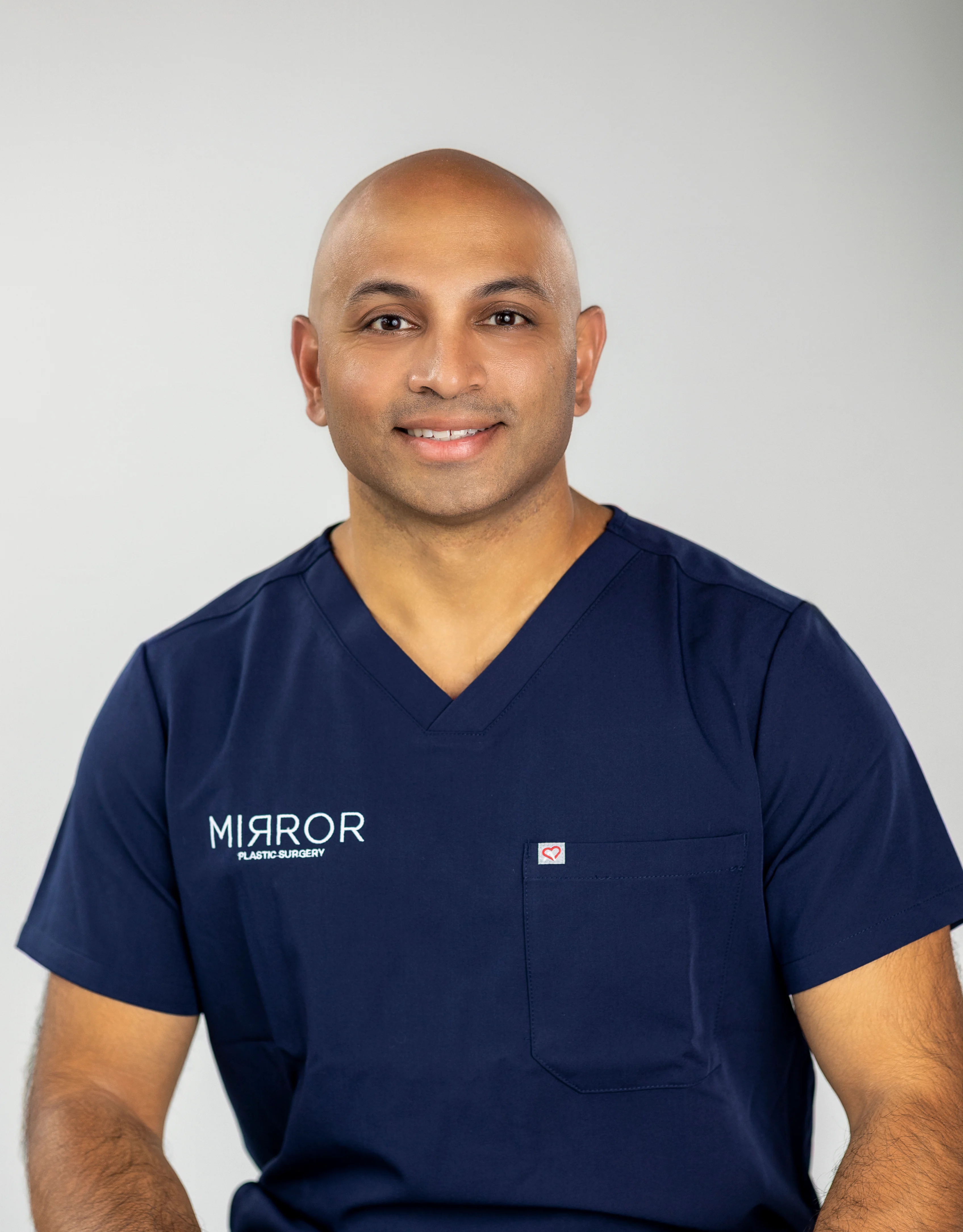
Arrange a consultation with Ellie to speak directly with Dr. Akash about your anatomy, goals, and the safest filler plan for you.
How To Choose A Safe Provider: Essential Questions To Ask
Selecting the right injector is the single most important decision in your filler journey. Before committing to treatment, ask any prospective provider the following questions.
- Are you board-certified, and in what specialty?
- Do you personally perform all injections, or do you delegate to staff?
- How do you handle complications such as vascular occlusion?
- Do you stock hyaluronidase on-site for emergency reversal?
- What filler brands do you use, and how do you select the right product for each patient?
- Can you show me before-and-after photos of patients with similar anatomy and goals?
- How long is the initial consultation, and what does it cover?
Mirror Plastic Surgery offers a comprehensive, hour-long consultation that addresses each of these questions and tailors any treatment plan to your specific anatomy rather than a standard protocol.
Why Mirror Plastic Surgery Is A Trusted Choice For Safe, Natural Results
Dr. Akash Chandawarkar is a Harvard-educated, Johns Hopkins-trained, board-certified plastic surgeon with fellowship training in aesthetic surgery at the Manhattan Eye Ear & Throat Hospital and Lenox Hill Hospital. He also completed medical innovation training at Stanford University. Every neuromodulator and dermal filler at Mirror Plastic Surgery is placed by Dr. Akash himself, a physician with a surgeon’s command of facial and subdermal anatomy.
Dr. Akash serves as an advisory board member for Merz Aesthetics (Radiesse) and Tiger Aesthetics (AlloClae), which keeps him at the forefront of biostimulatory and regenerative filler science. The practice is supplier-neutral, so product selection is based on each patient’s anatomy and goals, without quotas or commissions. Mirror Plastic Surgery follows a clear philosophy: safety first, function second, aesthetics third. This framework guides every treatment plan.
Mirror Plastic Surgery is located at 780 4th Ave S, St. Petersburg, FL 33701. Reach the team by phone at 727-361-6515 or by email at hello@mirrorplasticsurgery.com.
Request a consultation with Ellie and take the first step toward safe, natural-looking results with a provider who prioritizes your long-term well-being.
Frequently Asked Questions
What Is The Safest Dermal Filler For My Face?
Biostimulatory fillers like Radiesse may suit certain patients seeking collagen stimulation, even though they cannot be reversed. The most important safety variable is the expertise of the injector placing the filler. A board-certified plastic surgeon with deep anatomical knowledge will select the right product and place it correctly, which minimizes risk across categories.
Does Filler Ever Fully Leave Your Body?
Filler behavior depends on the material. Biostimulatory fillers like Radiesse (CaHA) and Sculptra (PLLA) are absorbed, but the collagen they stimulate remains in the tissue and continues to provide benefit after the filler itself has been metabolized. PMMA is a permanent, non-biodegradable material, so its microspheres are never absorbed and remain in the body indefinitely. Many reputable providers avoid PMMA for facial rejuvenation because any complication that develops years later often requires surgery.
What Happens When You Stop Getting Fillers?
Your face gradually returns to its natural baseline as fillers metabolize. Current evidence does not show that stopping fillers causes accelerated aging or makes your face look worse than it did before treatment. With biostimulatory fillers, the collagen stimulated during treatment fades more slowly, so the transition back to baseline feels more gradual. Some patients perceive worsening because they compare their natural aging to their previously treated appearance. A skilled provider will set realistic expectations early and design a maintenance plan that supports your long-term goals.
Can Fillers Cause Permanent Damage?
Serious complications are rare but real. Vascular occlusion, where filler inadvertently enters or compresses a blood vessel, can cause tissue necrosis or, in the most severe cases, vision loss.1 These events occur at an incidence below 0.1% of procedures1 and are largely preventable with proper technique, detailed anatomical knowledge, and the use of cannulas in high-risk areas. Permanent fillers like PMMA carry a higher baseline risk of chronic inflammatory complications, granulomas, and migration that may require surgical correction. Choosing a board-certified plastic surgeon who stocks hyaluronidase on-site, uses evidence-based injection protocols, and is trained in complication management is the most effective way to reduce the risk of permanent damage.
How Long Do Different Fillers Last?
Duration varies by filler category and is influenced by the specific product used, the anatomical area treated, injection technique, and individual metabolism. As a general guide, CaHA (Radiesse), PLLA (Sculptra), and PMMA (Bellafill) follow the duration ranges outlined in the comparison table above. These ranges represent averages. Some patients metabolize fillers faster, and areas with greater muscle movement, such as the lips, tend to break down filler more quickly than areas with less movement, such as the temples. Your provider should review realistic duration expectations during your consultation based on your anatomy and the products under consideration.
Conclusion: The Evidence Is Clear, Choose Your Injector First
Filler type influences how long results last, whether they can be reversed, and your baseline risk profile. Biostimulatory fillers like Radiesse and Sculptra deliver longer-lasting collagen stimulation but demand precise placement because they cannot be dissolved. Permanent fillers carry the highest long-term risk and are avoided by most evidence-based providers. As established above, the injector’s anatomical expertise, technique, and readiness to manage complications are the primary drivers of safe, natural outcomes.
If you are considering dermal fillers and want a provider who places your safety and long-term satisfaction at the center of every decision, schedule your consultation with Ellie at Mirror Plastic Surgery today.
Disclaimer: Results may vary from person to person. Editorial content, before and after images, and patient testimonials do not constitute a guarantee of specific results.
1 Results may vary from person to person. Editorial content, before and after images, and patient testimonials do not constitute a guarantee of specific results.