
Written by: Dr. Akash Chandawarkar, Board Certified Plastic Surgeon, Mirror Plastic Surgery | Last updated: September 9, 2026
Why Long-Term Filler Safety Matters Now
According to the International Society of Aesthetic Plastic Surgery’s 2023 survey, 5.56 million hyaluronic acid filler procedures were performed globally, making HA fillers the second most common nonsurgical aesthetic procedure worldwide. As the first generation of filler patients enters their second or third decade of treatment, long-term safety has become a central concern for many people.
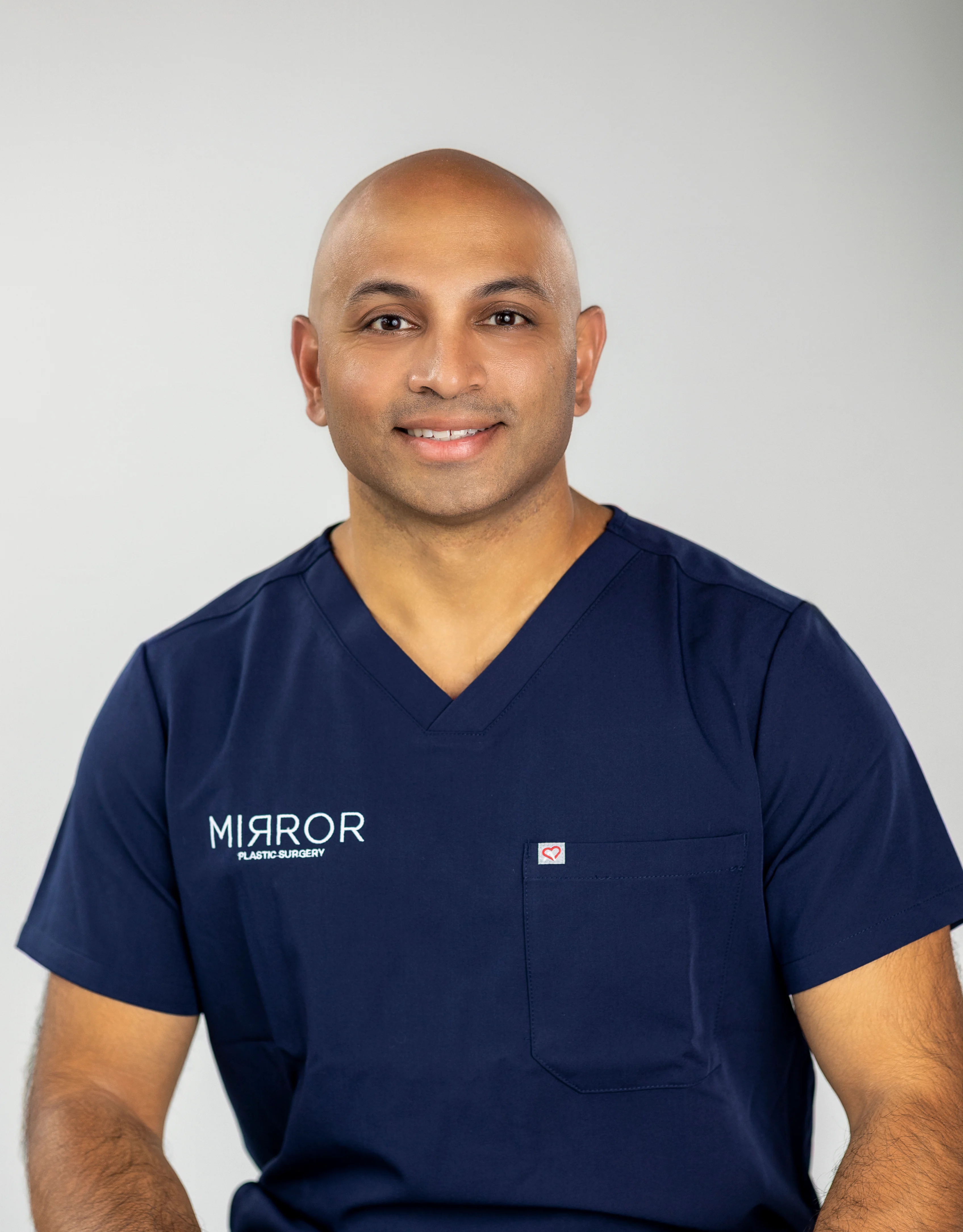
This research report synthesizes peer-reviewed studies, FDA postmarketing data, and advanced imaging research to explain what current evidence shows. Dr. Akash Chandawarkar, a board-certified plastic surgeon who personally performs all injectable treatments at Mirror Plastic Surgery in St. Petersburg, FL, provides the clinical context that turns dense academic data into clear guidance for patients.
Schedule a personalized safety review to discuss your filler history and long-term treatment plan with a surgeon who prioritizes safety.
How This Long-Term Filler Evidence Was Reviewed
This report draws on prospective clinical trials, retrospective analyses, FDA post-approval studies, expert consensus statements, and MRI and ultrasound imaging studies published through 2026. Studies were selected for meaningful sample size, follow-up duration from 2 to 15 years, and direct relevance to real-world patient decisions. The goal is to present what the evidence supports so patients can make informed choices about starting, continuing, or revising facial filler treatment.
Main Dermal Filler Types And Long-Term Safety
Facial dermal fillers fall into three broad categories, and each has a different long-term safety profile.
Hyaluronic acid (HA) fillers (for example, Juvederm, Restylane, RHA, Versa, Evolysse) are the most extensively studied. They are reversible with hyaluronidase and supported by robust safety data from multiple trials. HA fillers offer several advantages over earlier collagen-based fillers: they are less immunogenic, migrate less after injection, last longer, and are easier to use.1
Biostimulatory fillers (for example, Radiesse/calcium hydroxylapatite, Sculptra/poly-L-lactic acid) stimulate collagen production and last longer than most HA fillers. They have different complication patterns and are not enzymatically reversible.
Permanent fillers (for example, Bellafill/PMMA) have the longest track record but also the highest long-term risk. Because they cannot be dissolved, complications that appear years after injection are more difficult to manage.
Among these options, HA fillers currently have the strongest long-term safety evidence. Permanent fillers require the greatest caution because late complications cannot be reversed with an enzyme.
What Long-Term Clinical Studies Reveal About Filler Safety
Several recent studies provide concrete data on long-term safety outcomes for facial fillers.
- A 2026 prospective study of 60 patients receiving a low-modification HA filler (Volonic Light, MoD 2%) reported no granulomas, delayed nodules, or persistent inflammatory reactions over 24 months of follow-up. Early events included transient swelling in 40% of patients and bruising in 15%, which resolved within 7–10 days.1
- A 2026 comprehensive review in the Journal of Cosmetic Dermatology estimated histologically confirmed foreign-body granulomas in approximately 0.02%–0.4% of HA filler cases, with vascular occlusion rates below 0.1%.1
- A systematic review of delayed inflammatory reactions to HA fillers found a pooled incidence of 0.0005 events per patient-year, or about one event per 2,000 patients followed for one year. Onset ranged from 2 weeks to 12 years after injection.1
- For permanent PMMA fillers (Bellafill), a 5-year prospective study of more than 1,000 patients found confirmed granulomas in fewer than 1% of subjects, with most adverse events appearing within the first year.1
What Happens To Fillers Years Later? Evidence On Persistence
Recent imaging research shows that HA fillers can persist for many years and often occupy a larger volume than the amount originally injected.
- A 2026 MRI study by Issa et al. found that HA filler volume on 3D MRI averaged 2.8 times the injected amount, with detectable filler present for up to 15 years. The mean injected volume was 3.32 mL, while the mean MRI-measured volume was 12.26 mL, a statistically significant difference (P = 0.006).1
- A 2021 MRI study by Master showed detectable HA filler in the midface lasting 2 to 15 years in 33 patients.1
- Ultrasound studies have identified HA filler remnants 5 to 10 years after injection, appearing as small residual clusters, scattered fragments, or encapsulated nodules.
The expansion of HA fillers likely reflects the hydrophilic nature of hyaluronic acid, which draws in water and increases final volume. This persistence appears generally safe but challenges the idea that fillers fully dissolve within 6–18 months.1
Delayed Dermal Filler Complications To Watch For
Late-onset adverse events fall into several categories, and each presents differently in the clinic.
- Delayed nodules: Many delayed nodules after HA filler reflect localized filler accumulation, fibrosis, or scar formation related to technique. Histologic evaluation is often required to confirm whether a true granuloma is present.
- Granulomas: Granulomas usually appear months to years after injection. Their development involves individual immune predisposition, product characteristics, and immune activation from events such as dental work or systemic illness.
- Migration: A narrative review identified the nose, lips, nasolabial folds, and forehead as frequent sites of filler migration. Tear trough injections carry a particular risk of migration into the orbit.
- Late-onset swelling: Delayed inflammatory reactions to HA fillers form a spectrum in which filler properties, host immune status, and low-grade bacterial contamination interact. Illness, dental procedures, or other inflammatory events often trigger these flares.
- Persistent malar edema: Persistent malar or periorbital edema after tear trough or upper cheek injections can last for months. Removing the filler with hyaluronidase is usually the most effective treatment.
Risk reduction starts with an experienced injector who understands facial anatomy in depth. Effective prevention also requires thoughtful patient selection, careful product choice, and detailed procedural planning. Get an evidence-based assessment of your filler history with a board-certified plastic surgeon.
Safety Of Repeated Filler Use Over Many Years
The FDA has stated that controlled clinical studies have not evaluated the safety of dermal fillers used repeatedly over very long periods. Patients deserve clear communication about this evidence gap.
Within the available time frames, current data remains reassuring.
- The FDA’s 5-year post-approval study of Sculptra Aesthetic (PAS002), which followed 867 patients, found no trend toward more nodules or papules with additional injection sessions.
- A 2026 expert consensus panel recommended individualized long-term HA filler plans, with closer follow-up and more cautious product selection for patients with heavier cumulative exposure.
The concept of “filler fatigue” suggests that repeated injections and the 2.8× expansion noted earlier could stretch skin and contribute to laxity. This remains biologically plausible but unproven in controlled trials. Conservative dosing and long-range planning remain central to responsible filler care.
FDA Guidance On Long-Term Filler Risks
The FDA tracks adverse events through postmarketing surveillance and has issued several key safety communications.
- Recent FDA updates strengthened warnings about delayed-onset inflammation near HA filler injection sites.
- The agency has identified up to 60 published cases of bone resorption in the chin, jaw, midface, or forehead after supraperiosteal HA injections and now advises against injecting filler into bone, tendon, ligament, or muscle.
- Injectable silicone is not approved for any aesthetic procedure and has been linked to serious injury, permanent disfigurement, blood vessel blockages, stroke, and death.
- FDA safety communications warn that accidental injection of filler into a blood vessel can cause embolization, vessel occlusion, ischemia, vision loss, stroke, and skin necrosis.
Expert Recommendations For Safer Long-Term Filler Use
Current expert consensus and clinical data support several practical steps for patients who plan to use fillers over many years.
- Choose a board-certified provider with surgeon-level anatomical knowledge who performs injections personally.
- Use conservative treatment volumes. The 2.8× expansion documented on MRI supports careful dosing and long-term planning.
- Maintain regular follow-up visits to monitor for delayed complications, especially if you have a history of nodules, autoimmune disease, or higher cumulative filler exposure.
- Keep a complete record of your filler history, including products, volumes, and injection sites, to support individualized management.
- Favor HA fillers when reversibility matters. Hyaluronidase-based reversal underpins treatment algorithms for vascular occlusion, Tyndall effect, chronic edema, and nodules.
The following table summarizes the key studies referenced throughout this report and allows quick comparison of their scope and findings.
Summary Table: Key Long-Term Safety Studies
| Study / Filler | Sample Size | Follow-Up | Key Findings |
|---|---|---|---|
| Volonic Light HA (2026) | 60 patients | 24 months | No granulomas, nodules, or persistent inflammation; transient edema and bruising resolved within 7–10 days |
| HA filler systematic review (2026) | Multiple trials | Variable | Histologically confirmed granulomas in 0.02%–0.4% of cases; vascular occlusion below 0.1% |
| Bellafill PMMA — Cohen et al. | 1,000+ patients | 5 years | Granulomas in fewer than 1%; most adverse events occurred within the first year and were localized and manageable |
| Sculptra FDA post-approval study (PAS002) | 867 patients | 5 years | No increasing nodule trend with repeated sessions; serious complications, including granuloma and necrosis, in 1.0% of subjects |
| Issa MRI study (2026) | 14 patients | Up to 15 years | Filler volume averaged 2.8× injected amount on 3D MRI; detectable filler present up to 180 months after injection |
Frequently Asked Questions About Long-Term Fillers
What Happens To Fillers Years After Injection?
MRI and ultrasound studies show that HA fillers can remain in tissue for 2–15 years, which is far longer than earlier 6–18 month estimates. The Issa MRI study reported an average 2.8× expansion of filler volume on imaging, likely due to water absorption by hyaluronic acid. This persistence appears generally safe but supports conservative treatment plans and ongoing monitoring rather than assuming complete dissolution between visits.
Do Fillers Make You Look Older Over Time?
Controlled clinical evidence does not show that fillers accelerate aging. Imaging data does confirm that HA fillers can expand beyond their injected volume, which may stretch surrounding tissue in some cases. The “filler fatigue” concept remains theoretical but biologically plausible. Working with an experienced injector who uses modest volumes and a full-face, anatomy-based approach helps minimize any cumulative tissue effects.
Are Dermal Fillers Safe For Long-Term, Repeated Use?
The FDA has noted that controlled studies have not yet evaluated filler safety over multiple decades of repeated use. This represents an important unanswered question. Five-year data, including the Sculptra post-approval study of 867 patients, shows no rising complication trend with additional sessions, which is reassuring within that time frame. Patients with higher lifetime filler exposure benefit from individualized monitoring and cautious dosing.
What Is The Most Common Delayed Filler Complication?
Delayed nodules are the most frequently reported late complication, occurring at the same low rate described in the granuloma review mentioned earlier. Many nodules represent filler accumulation, fibrosis, or technique-related changes rather than true foreign-body granulomas. Confirming a granuloma requires histologic evaluation. These reactions often appear months to years after injection and may follow systemic inflammatory events such as illness or dental procedures. HA-related nodules usually respond to hyaluronidase, which offers a key safety advantage over non-reversible fillers.
How Can I Lower My Risk With Dermal Fillers?
Risk reduction starts with choosing a board-certified provider who has advanced anatomical expertise and performs injections personally. Additional steps include using conservative volumes in light of the 2.8× expansion described earlier, documenting your full filler history, and keeping regular follow-up visits for early detection of delayed issues. Prioritizing HA fillers when reversibility is important allows use of hyaluronidase if complications occur. Patients with autoimmune conditions, prior nodules, or higher cumulative exposure should receive closer monitoring and more cautious product selection.
Conclusion: Making Informed Decisions About Long-Term Fillers
Current evidence shows that HA fillers have a strong short-term safety record, with serious complications such as granulomas and vascular occlusion remaining rare. Imaging studies reveal that fillers can persist and expand for many years, which supports conservative dosing and thoughtful long-term planning. Delayed complications remain uncommon but possible, and FDA guidance highlights the importance of technique, anatomy, and product choice.
Outcomes depend heavily on injector expertise, precise placement, and individualized management over time. At Mirror Plastic Surgery in St. Petersburg, FL, Dr. Akash Chandawarkar, a Harvard-educated, Johns Hopkins-trained, board-certified plastic surgeon, personally performs every injectable treatment. His philosophy places safety first, function second, and aesthetics third, aligning with what the evidence supports about long-term filler care.
Patients who want a clear, science-based review of their situation can schedule a comprehensive consultation that may last up to an hour. This visit allows time to review your full filler history, evaluate your anatomy, and design a plan that respects both your goals and the current data. Schedule your consultation at Mirror Plastic Surgery today. Located at 780 4th Ave S, St. Petersburg, FL 33701. Call or text: 727-361-6515. Email: hello@mirrorplasticsurgery.com.
Disclaimer: Results may vary from person to person. Editorial content, before and after images, and patient testimonials do not constitute a guarantee of specific results.
1 Results may vary from person to person. Editorial content, before and after images, and patient testimonials do not constitute a guarantee of specific results.