

Written by: Dr. Akash Chandawarkar, Board Certified Plastic Surgeon, Mirror Plastic Surgery | Last updated: September 9, 2026
Key Takeaways
- Med spa safety credentials such as licenses, medical oversight, and facility standards protect you from serious injectable complications.
- Only licensed physicians (MD/DO), nurse practitioners, or physician assistants under physician protocols may legally perform injections. Aestheticians and unlicensed staff cannot inject.
- Essential safety markers include an actively involved medical director, current BLS/ACLS certification, Laser Safety Officer designation, OSHA bloodborne pathogens training, and facility accreditation.
- Red flags such as absent medical directors, pressure sales tactics, or significantly below-market pricing often signal unsafe practices.
- Verify credentials thoroughly before treatment and schedule your consultation at Mirror Plastic Surgery to experience true physician-led injectable care.
Why Med Spa Safety Credentials Matter: The Risks Of Unqualified Injectors
Neuromodulators such as Botox and Dysport and dermal fillers are prescription-only legend drugs, not medical devices. Safe use requires deep knowledge of facial arteries, nerves, and muscle layers. Incorrect placement can cause nerve damage, vascular occlusion, tissue necrosis, and disfiguring results that demand costly correction.
Medical oversight means a physician is legally responsible for your safety. It does not simply mean a business owner hired someone with a weekend certificate. The American Med Spa Association identifies the absence of a supervising physician as one of the clearest warning signs of an unsafe practice. A U.S. Department of Justice case documented an unlicensed med spa owner who injected clients with unapproved botulinum toxin from illegitimate sources, causing numerous severe botulism cases after falsely claiming to be licensed. That case shows what can happen when no one verifies credentials.
Credentials and genuine medical oversight are your strongest protection. Clear knowledge of what they mean helps you choose safely.
Who Should Perform Your Treatment? Key Staff Roles Explained
The person holding the needle matters more than the décor or branding. Each role at a med spa carries specific training and legal responsibilities.
Medical Director
A medical director is a physician (MD or DO) who oversees medical protocols and holds legal responsibility for patient safety. In Florida, the medical director must be an actively licensed MD or DO in good standing with the Florida Board of Medicine. A nurse practitioner or physician assistant cannot fill this role.
Florida regulators now act aggressively against the “paper director” model. This model involves a physician who signs an agreement, collects a monthly fee, and never appears in the practice. A legitimate medical director writes and signs treatment protocols, performs or delegates good-faith patient exams, reviews charts, and remains genuinely available during operating hours.
Advanced Practice Providers (NP/PA)
Nurse practitioners and physician assistants can perform injections under physician supervision. Their aesthetic training varies widely. Some have extensive experience, while others are new to injectables. In Florida, an ARNP may perform injectables under a physician protocol, and a PA may do so under written physician delegation.
Registered Nurses (RNs)
Registered nurses can administer injections under a physician’s order. Their aesthetic training may be limited or extensive, depending on their background. In Florida, an RN cannot perform the good-faith exam required before treatment or generate the treatment order. Those responsibilities belong to a physician, ARNP, or PA.
Aestheticians
Licensed aestheticians cannot inject. Their work focuses on superficial treatments such as facials and some chemical peels. In Florida, estheticians and unlicensed staff may never inject under any circumstances. State regulators actively cite scope-of-practice violations. The first mention of this rule serves as your “aesthetician red flag” for the rest of the article.
Board-Certified Plastic Surgeon
A board-certified plastic surgeon represents the gold standard for injectable safety. American Board of Plastic Surgery (ABPS) certification requires years of accredited residency training and rigorous written and oral examinations. Ongoing certification maintains that standard. A board-certified plastic surgeon brings a surgeon’s command of facial and subdermal anatomy to every injection. That depth of knowledge makes treatment safer and more precise.
| Role | Required License | Can They Inject? |
|---|---|---|
| Board-Certified Plastic Surgeon | MD or DO + ABPS certification | Yes |
| Medical Director (MD/DO) | Active state MD or DO license | Yes |
| Nurse Practitioner (NP/ARNP) | Advanced nursing license + physician protocol | Yes, under physician protocol |
| Physician Assistant (PA) | PA license + written physician delegation | Yes, under physician supervision |
| Registered Nurse (RN) | Nursing license + physician order | Yes, under physician order and supervision |
| Aesthetician | Cosmetology/esthetics license | No |
Understanding who can legally inject is the first step. The next step is verifying the training and certifications that support those roles.
Essential Certifications And Training: What To Look For
A “Botox certification” from a weekend course does not qualify anyone to inject safely. In Florida, authority to inject flows from the physician relationship and the delegation behind it. It does not come from a course certificate. State licensing and medical delegation determine who can legally perform procedures. Beyond that legal baseline, the following credentials signal a practice that takes safety seriously.
- BLS/ACLS Certification: Basic Life Support should be current for every clinical team member. Advanced Cardiovascular Life Support is expected for anyone administering higher-risk procedures and is essential for managing emergencies such as anaphylaxis or vascular occlusion.
- Laser Safety Officer (LSO): ANSI Z136.3-2024 requires every facility using Class IIIb or Class IV lasers to designate a trained Laser Safety Officer. This person handles hazard evaluation, protective eyewear, controlled-area signage, and staff training.
- OSHA Bloodborne Pathogens Training: OSHA mandates bloodborne pathogens training within 10 days of hire and annually thereafter for any employee with reasonably anticipated blood contact. That group includes anyone performing microneedling, PRP, or injectables.
- Ongoing Injectable Education: Medical spa providers should plan for 20 to 40 hours of continuing education every year. The injectable field changes quickly, and ongoing training keeps techniques current and safe.
Board certification represents a different level of commitment than a short course. The rigorous ABPS board certification described earlier reflects years of supervised surgical training and examination.
Facility Accreditation And HIPAA Compliance: Why The Facility Environment Matters
Accreditation signals a facility’s commitment to structured, verifiable safety standards. QUAD A launched its dedicated Non-Surgical Aesthetic and Wellness (MedSpa) Accreditation Program in March 2026. The program requires full compliance with standards covering medical governance, emergency preparedness, infection control, personnel training, and truthful marketing.
Accredited facilities complete annual self-surveys and triennial third-party on-site surveys. Patients are 79% more likely to describe accredited outpatient facilities as trustworthy and 82% more likely to rate them as high-quality compared to non-accredited centers.
HIPAA compliance also matters. Medical spas handle protected health information such as your medical history, treatment records, and photographs. A Florida med spa that transmits health information electronically in connection with a covered transaction is likely a HIPAA covered entity and owes the full privacy and security program. That program includes a designated privacy officer, secure electronic records, breach-notification procedures, and business associate agreements with any vendor that touches your data. In Florida, all before-and-after photos are considered Protected Health Information and require explicit written patient consent before any use, including marketing.
Red Flags To Watch For: When To Walk Away
A reputable provider welcomes your questions and moves at your pace. AmSpa CEO Alex Thiersch notes that feeling rushed or pressured is a clear red flag. That behavior would feel out of place in a traditional doctor’s office and should feel out of place in a medical spa.
The following warning signs suggest you should leave and keep looking.
- No identifiable medical director or refusal to name one
- Injectors without verifiable medical licenses
- Reluctance to discuss credentials or training
- High-pressure sales tactics or same-day-only offers
- Significantly below-market pricing that may indicate diluted, counterfeit, or non-FDA-approved product
- No consultation before treatment
- No written informed consent
- No emergency plan or supplies, such as hyaluronidase for dissolving filler in the event of vascular occlusion
- Inability to reach anyone after treatment for follow-up
- Any situation that repeats the aesthetician red flag mentioned earlier
How To Verify Med Spa Credentials: A Step-By-Step Checklist
Use this checklist when researching any med spa, including options in the St. Petersburg and Tampa Bay area.
- Ask who will perform your treatment. Get their full name and exact credentials (MD, DO, NP, PA, RN).
- Verify board certification. For physicians, check the American Board of Plastic Surgery website or certificationmatters.org.
- Check your state medical board. Search the Florida Board of Medicine’s license verification portal for any disciplinary actions or license restrictions.
- Ask about the medical director’s involvement. Find out whether the director is on-site and whether they perform or directly oversee good-faith exams. AHCA inspectors document ghost medical directors named on paperwork but absent in practice as a primary compliance failure.
- Confirm the facility’s accreditation status. Ask whether they are accredited by QUAD A, The Joint Commission, or another recognized body.
- Ask about HIPAA compliance. Confirm that they use secure electronic medical records and obtain written consent before using your photos for any purpose.
- Trust your instincts. If something feels off, leave. Your safety carries more value than any discount.
When you are ready to choose a provider who meets every item on this list, book a consultation with Ellie at Mirror Plastic Surgery.
Frequently Asked Questions
What Certifications Should A Med Spa Have?
A safe med spa should have a clearly identified medical director who is an actively licensed MD or DO, with verifiable board certification in a relevant specialty such as plastic surgery or dermatology. Clinical staff should hold current Basic Life Support certification at minimum, with Advanced Cardiovascular Life Support for those performing higher-risk procedures. Any facility operating medical-grade lasers must designate a trained Laser Safety Officer under ANSI Z136.3 standards.
All staff with blood-contact risk must complete OSHA bloodborne pathogens training, documented annually. The facility should maintain written treatment protocols, a HIPAA compliance program, and ideally accreditation from a recognized body such as QUAD A. Beyond these items, the most important credential is the physician’s rigorous ABPS board certification described earlier and their active, on-site involvement in patient care.
What Are Red Flags To Watch For At A Med Spa?
Major red flags include an inability or unwillingness to name the medical director, injectors who cannot produce verifiable medical licenses, and the absence of a consultation before treatment. High-pressure sales tactics such as same-day-only discounts or package pressure during a “free” consultation also raise concern. Pricing far below market rates can indicate diluted, counterfeit, or non-FDA-approved product.
Any facility that repeats the aesthetician red flag mentioned earlier operates outside legal scope-of-practice boundaries. The absence of written informed consent, no emergency supplies on-site such as hyaluronidase for filler complications, and difficulty reaching the provider after treatment are serious concerns. A reputable practice welcomes your questions and gives you time to decide.
Do Med Spas Have To Be HIPAA Compliant?
Most medical spas qualify as HIPAA covered entities because they handle protected health information such as your medical history, treatment records, photographs, and billing data and transmit that information electronically. A compliant med spa must have a designated privacy officer, a written Notice of Privacy Practices, secure electronic medical records, documented staff training on PHI handling, breach-notification procedures, and signed Business Associate Agreements with any vendor that accesses your data.
Before-and-after photographs count as protected health information and require explicit written patient consent before use for any purpose, including social media marketing. If a med spa cannot explain its HIPAA compliance program when asked, treat that as a meaningful warning sign.
What Is A Medical Director, And Why Does It Matter?
A medical director is a licensed physician (MD or DO) who is legally responsible for the medical services delivered at a med spa. Their duties include writing and signing treatment protocols, delegating procedures to qualified staff, overseeing good-faith patient exams before treatment, reviewing charts, and managing the clinical response to complications.
In Florida, the medical director must be an actively licensed MD or DO. A nurse practitioner or physician assistant cannot hold this role. What matters most to patients is whether the medical director is genuinely present and engaged or functions as a distant “paper director.” Florida regulators actively cite ghost medical directors as a primary compliance failure. When evaluating a med spa, ask whether the medical director is on-site, whether they personally see patients, and whether they can be reached during operating hours.
Is A Board-Certified Plastic Surgeon Safer For Injectables Than A Nurse Injector?
Board certification by the American Board of Plastic Surgery requires completing an accredited plastic surgery residency, passing rigorous written and oral examinations, and maintaining ongoing certification. This process takes years and builds a comprehensive command of facial anatomy, including the precise location of facial arteries, veins, nerves, and muscle layers.
This anatomical depth directly supports injectable safety. Knowing where a facial artery runs helps a surgeon avoid it, and knowing how to manage a vascular occlusion shapes the response to a complication. Nurse injectors vary widely in training and experience, and some are highly skilled. The baseline anatomical training of a board-certified plastic surgeon, however, is more extensive. At Mirror Plastic Surgery, Dr. Akash Chandawarkar performs every injection himself and brings a surgeon’s precision to every treatment.
Why Mirror Plastic Surgery Sets The Safety Standard
Mirror Plastic Surgery reflects everything this safety checklist describes. Dr. Akash Chandawarkar is board-certified by the American Board of Plastic Surgery, Harvard-educated, and Johns Hopkins-trained, with additional fellowship training in aesthetic surgery at the Manhattan Eye Ear & Throat Hospital and Lenox Hill Hospital. He personally performs every injectable treatment at the practice, without delegating injections to less-qualified staff.
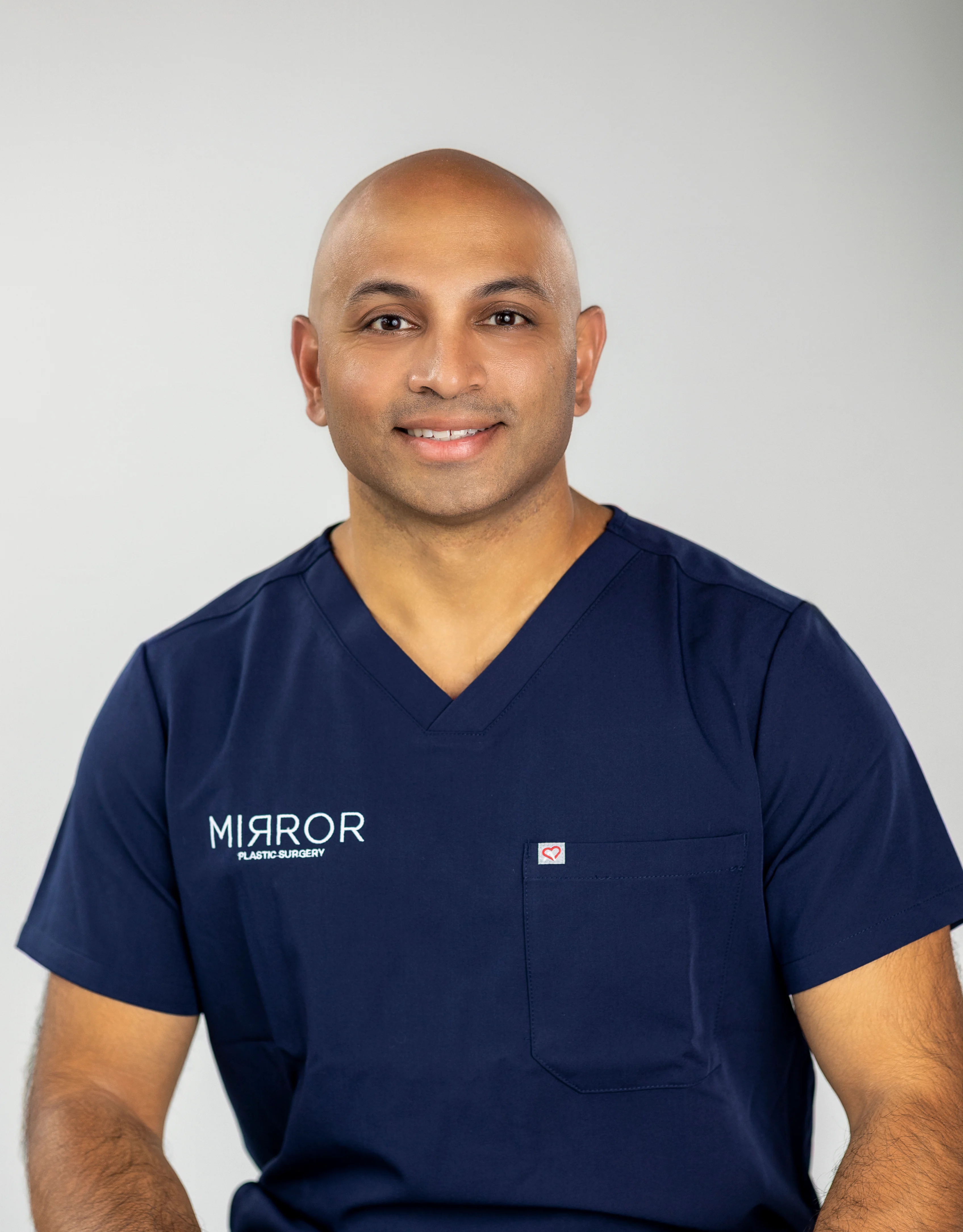
Dr. Akash’s philosophy prioritizes safety first, function second, and aesthetics third. His consultations run up to an hour. They include a top-to-bottom anatomical assessment, an honest discussion of risks and realistic outcomes, and a personalized treatment plan grounded in evidence rather than commission. As an advisory board member for Merz Aesthetics and Tiger Aesthetics, he stays at the forefront of injectable innovation while remaining supplier-neutral. He recommends what fits each patient’s anatomy and goals.
This is what physician-led care looks like in practice: a board-certified plastic surgeon who understands facial anatomy at a surgical level, is present and accountable for every treatment, and will tell you honestly when a procedure is not yet necessary.
Schedule your visit with Ellie to see the difference in person and experience the Mirror Plastic Surgery approach to safety and results.
Conclusion: Your Safety Is Worth The Due Diligence
Med spa safety credentials exist to protect you. The credential landscape of medical directors, board certification, BLS/ACLS training, laser safety officers, OSHA compliance, HIPAA protocols, and facility accreditation forms a safety infrastructure. This structure separates a physician who understands what happens when a filler enters a blood vessel from someone who does not. Verifying those credentials before any treatment is one of the most important steps in your aesthetic journey.
Choosing a board-certified plastic surgeon like Dr. Akash Chandawarkar at Mirror Plastic Surgery means choosing high-level anatomical expertise, genuine medical oversight, and a practice built on transparency and long-term patient trust.
Disclaimer: Results may vary from person to person. Editorial content, before and after images, and patient testimonials do not constitute a guarantee of specific results.


