
Written by: Dr. Akash Chandawarkar, Board Certified Plastic Surgeon, Mirror Plastic Surgery | Last updated: September 9, 2026
Key Takeaways
- Injector credentials and medical training strongly predict safety outcomes for neuromodulators and dermal fillers.
- Board-certified plastic surgeons bring deep anatomical expertise that reduces risks such as vascular occlusion and ptosis.
- Red flags like non-clinical venues, missing hyaluronidase, and suspiciously low prices signal higher complication risk.
- A thorough consultation with medical history review, product transparency, and realistic expectations is essential before any injectable treatment.
- Physician-led injectable care from a board-certified plastic surgeon offers a high standard of safety and personalized treatment.
The Data Linking Injector Credentials To Safety Outcomes
There is no national “Botox license” in the United States. Only licensed medical professionals such as physicians (MD/DO), nurse practitioners, physician assistants, registered nurses under supervision, and in some states dentists, may legally inject. Estheticians cannot inject in any U.S. state.
Board certification in plastic surgery or dermatology remains optional for injectors. A nurse with a weekend training course can legally inject in most states. This credential gap has measurable consequences, as the data below shows.
- Vascular occlusion, the most feared filler complication, occurs in roughly 1 in 6,000 filler syringes, with estimates ranging from 1 in 2,000 to 1 in 10,000.1
- Serious filler-related injuries increased 1,700% between 2005 and 2020, including a 30-fold jump in ischemic skin injuries.1
- Temporary eyelid drooping (ptosis) occurs in approximately 1–5% of forehead and glabellar Botox injections.1
- The 78% rise in nonsurgical cosmetic complications between 2018 and 2023 correlates directly with the expansion of undertrained providers.1
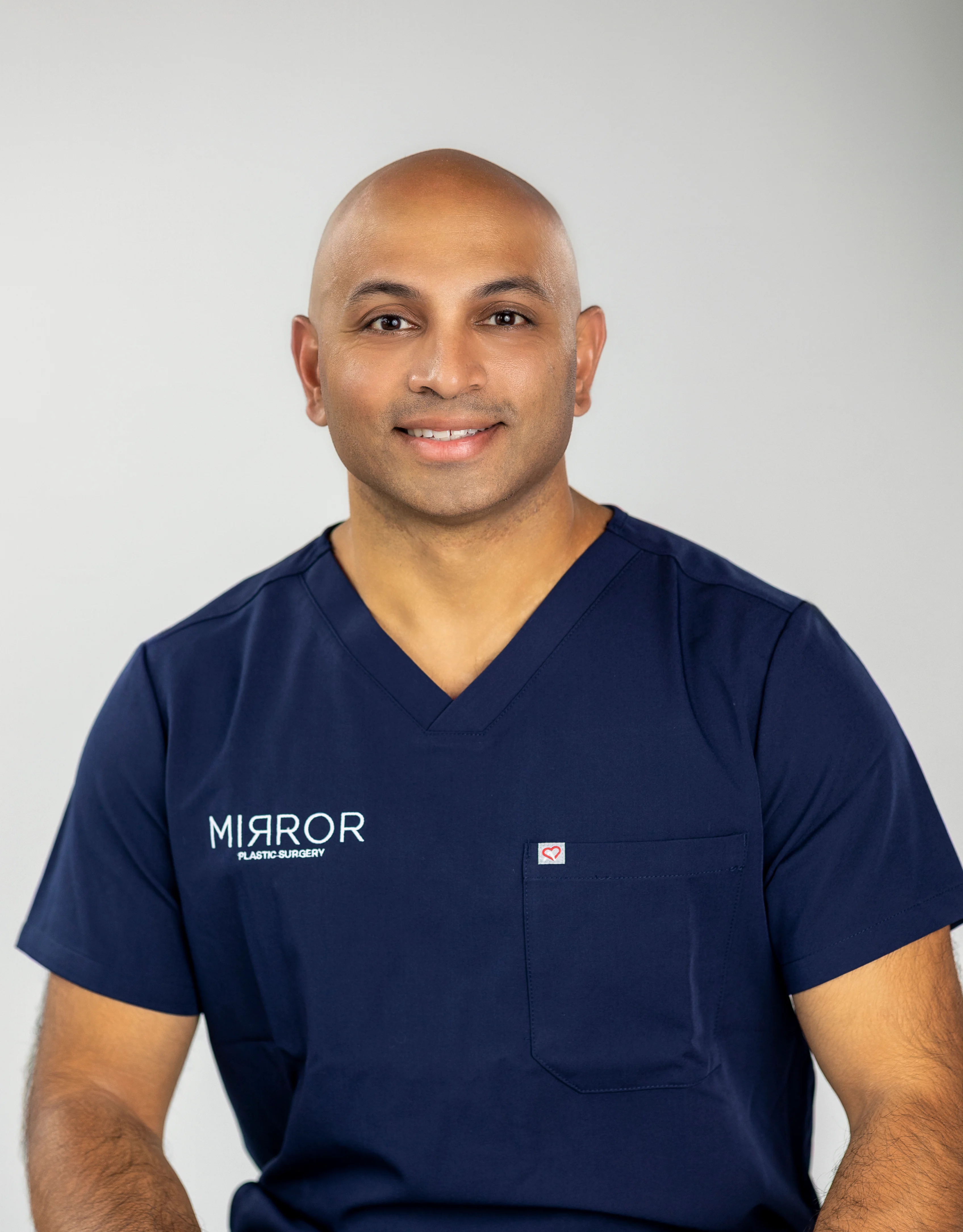
A board-certified plastic surgeon’s training includes years of dedicated study of facial anatomy. Surgeons learn every relevant nerve, vessel, muscle, and fat compartment in detail. Dr. Akash Chandawarkar, founder of Mirror Plastic Surgery in St. Petersburg, is board-certified by the American Board of Plastic Surgery. He is Harvard-educated and Johns Hopkins-trained, with fellowship training in aesthetic surgery at Manhattan Eye Ear & Throat Hospital. He personally performs every injectable treatment at the practice. Every neuromodulator and dermal filler is placed by a physician with a surgeon’s command of facial and subdermal anatomy.
Schedule your physician-led consultation to see this level of training applied to your own treatment plan.
Red Flags Research Identifies In Med Spa Settings
The single biggest risk factor for med spa complications is who performs the treatment. Research from med spa safety organizations and dermatologic surgery societies consistently highlights the same warning signs.
- “Botox parties” or injections in non-clinical venues. Homes, hotel rooms, and salons are unsafe by design because they lack sterile fields, emergency equipment, and medical oversight.
- No medical consultation before treatment. A legitimate provider reviews your medical history, medications, and allergies, and explains what will be injected, how much, and where.
- Inability to identify the medical director. Staff should name the medical director and their specialty without hesitation.
- Prices that seem too good to be true. Botox under $10 per unit or filler syringes under $450 can signal counterfeit, diluted, or illegally imported product.
- No hyaluronidase on-site. For filler treatments, the clinic must stock the dissolving enzyme. Its absence represents a critical safety failure.
- High-pressure sales tactics. “This special expires today” reflects a sales pitch, not medical decision-making.
- Refusal to show product packaging. Patients have a legal right to inspect any pharmaceutical product before injection. The FDA issued multiple warnings in 2024 and 2025 about counterfeit Botox seized across more than a dozen states.
The riskiest place for Botox is any setting without meaningful medical oversight. Safe injectables require both a qualified injector and a proper clinical environment.
Using The Consultation To Evaluate Safety
A consultation functions as a diagnostic tool for the provider and for you. The way a practice handles this visit reveals its priorities and standards. Every patient benefits from asking the following questions before committing to treatment.
- What is your medical training and board certification? Board certification in plastic surgery or dermatology represents a high standard for physician injectors.
- How many injections do you perform monthly? High-volume injectors placing 50 or more syringes per month tend to demonstrate more consistent technique.
- How do you handle complications? A strong answer includes hyaluronidase on-site, a clear escalation path, and recognition of early warning signs such as blanching or severe pain.
- What products do you offer, and why this one for me? A provider should offer multiple brands and explain the choice based on your anatomy and goals.
- Can I see before-and-after photos of your work? Look for healed photos at 2–4 weeks post-treatment, consistent lighting, and natural results that match each patient’s features.
At Mirror Plastic Surgery, Dr. Akash conducts hour-long consultations. He performs a top-to-bottom assessment that explores your emotional drivers, medical history, and facial anatomy before discussing any treatment. He often tells patients when they do not need a treatment yet. This approach contrasts with a 10-minute consult that functions as a sales pitch.
Product Options And Why They Matter
A broad injectable portfolio allows a provider to tailor treatment to each patient’s anatomy and goals. The injectable market has expanded significantly, and a single-brand practice limits outcomes.
Neuromodulators relax muscles to smooth wrinkles. Available options include Botox, Dysport, Xeomin, Jeuveau, and Daxxify. Daxxify, FDA-approved in September 2022, uses a proprietary stabilizing peptide and showed a median duration of approximately 24 weeks for glabellar lines in pivotal clinical trials.1 It currently offers the longest duration among neuromodulators and can help patients who metabolize Botox quickly.
Dermal fillers restore volume and structure. Options include Juvederm, Restylane, RHA, Versa, Radiesse, and Evolysse. These products vary in viscosity, lift capacity, and longevity. They must be matched carefully to the facial region and patient anatomy. Non-HA fillers such as Radiesse cannot be dissolved, which makes provider expertise especially critical when using biostimulatory products.
Dr. Akash serves as an advisory board member for Merz Aesthetics (Radiesse) and Tiger Aesthetics (AlloClae). These roles give him direct insight into product development and evidence-based application across a wide range of options. Mirror Plastic Surgery remains supplier-neutral, so product selection is driven by patient anatomy and clinical evidence.
Choosing Between A Dermatologist, Plastic Surgeon, Or Med Spa
A board-certified plastic surgeon offers a high level of anatomical expertise for injectable treatments. Facial structures including nerves, vessels, fat pads, and muscles vary widely from patient to patient, and missing or misjudging these elements commonly leads to complications. A surgeon’s training includes years of direct surgical engagement with these structures, which a weekend certification course cannot match.
Higher-risk injectable areas include under-eye filler, nasal filler, and any treatment near major blood vessels. Lower prices at a volume med spa may reflect a thinner safety margin in these zones. The facility type matters less than the individual injector’s credentials, training volume, and emergency preparedness. Prioritize the injector over the sign on the building.
Request a physician-led injectable evaluation to have a board-certified plastic surgeon guide your options.
The Natural Results Framework At Mirror Plastic Surgery
A 2026 international consensus paper in the Journal of Cosmetic Dermatology proposed a “Natural Outcomes Framework” defining natural results across four dimensions: see (visual observation), touch (palpation), feel (patient satisfaction), and express (dynamic facial movement). The authors noted that overemphasis on “perfect” symmetry often produces unnatural outcomes, and that personalized treatment plans developed during pre-treatment consultation are essential.
Dr. Akash’s philosophy aligns closely with this evidence. His approach prioritizes safety first, function second, and aesthetics third. By restoring inherent facial characteristics before considering volume augmentation, he creates seamless transitions between the upper, middle, and lower facial regions. This strategy helps prevent the “overdone” appearance or asymmetry that arises from isolated, single-area injections. Expert injectors assess the whole face before discussing specific treatments and think anatomically about how facial structures relate to each other.
Aftercare And Long-Term Injectable Maintenance
Injectables provide temporary results that require maintenance. Neuromodulators typically last three to four months, and fillers last six months to two years depending on product and placement.1 A quality provider explains long-term care and realistic timelines from the first visit.
Dr. Akash likens aesthetics to dentistry. Professional treatments deliver results, and lasting outcomes depend on understanding and consistent maintenance. Rather than simply recommending a procedure, he explains the physiology of the skin in relatable terms. Patients learn why a treatment is being performed and how to support results over time. Mirror Plastic Surgery follows a concierge medicine model that emphasizes ongoing relationships and thoughtful planning.
Schedule your injectable consultation at Mirror Plastic Surgery in St. Petersburg, Florida, to build a long-term plan with a board-certified plastic surgeon.
Frequently Asked Questions
What Is The Riskiest Place For Botox?
The riskiest place for Botox is any setting without medical oversight, such as injection parties, hotel rooms, salons, or unlicensed providers. These environments lack sterile fields, emergency equipment, and physician supervision. The FDA has issued multiple warnings about counterfeit botulinum toxin products sold to such venues. The primary risk comes from the absence of trained, credentialed medical oversight and the infrastructure to manage complications. Choose a medical practice where a licensed physician is present and emergency protocols are established.
How Do I Know If A Med Spa Is Safe?
Verify the medical director’s license through your state medical board’s online lookup tool. Confirm who will perform your injection and review their specific credentials. Manufacturer training certificates function as marketing tools and do not replace a license. Ask whether hyaluronidase is stocked on-site for filler emergencies. Ask how the practice handles complications and whether they have a written escalation protocol. A legitimate, well-run practice answers these questions clearly and without hesitation. If staff cannot name the medical director or explain the complication protocol, choose a different provider.
What Should I Look For In An Injectable Provider?
Prioritize training, experience, and a portfolio of natural, healed results. For physician injectors, board certification in plastic surgery or dermatology represents a strong credential. For nurse injectors, look for documented advanced aesthetic training from a recognized program rather than a single-day workshop. Ask about monthly injection volume, because providers performing 50 or more syringes per month usually develop more consistent technique than occasional injectors. Review before-and-after photos taken at two to four weeks post-treatment under consistent lighting. Avoid providers whose portfolios show only day-of photos or whose results look identical across all patients.
Do You Age Faster After Stopping Botox?
You do not age faster after stopping Botox.1 Botox temporarily relaxes targeted muscles, and when treatments stop, muscle activity gradually returns to its pre-treatment baseline.1 Wrinkles may reappear as muscle movement resumes, but stopping Botox does not accelerate aging beyond where it would have been without treatment. Some long-term users notice that consistent treatment over years softens deep dynamic lines even between sessions, because the muscles have been less active.1 Maintenance treatments every three to four months help sustain results for patients who choose to continue.
How Does Mirror Plastic Surgery Approach Injectables?
Mirror Plastic Surgery is physician-led in the truest sense. Dr. Akash Chandawarkar personally performs every injectable treatment, applying the credentials detailed earlier in this article. This practice model ensures that a surgeon with a surgeon’s command of facial anatomy places every syringe rather than overseeing injectors from a distance. Consultations run up to an hour and cover emotional drivers, medical history, and a full anatomical assessment before any treatment is discussed. The practice remains supplier-neutral, so product selection is based on patient anatomy and evidence. Dr. Akash also frequently advises patients when a treatment is not yet necessary, which supports long-term trust and thoughtful care.
Disclaimer: Results may vary from person to person. Editorial content, before and after images, and patient testimonials do not constitute a guarantee of specific results.
1 Results may vary from person to person. Editorial content, before and after images, and patient testimonials do not constitute a guarantee of specific results.