
Written by: Dr. Akash Chandawarkar, Board Certified Plastic Surgeon, Mirror Plastic Surgery | Last updated: September 9, 2026
Key Takeaways
- Medical spas and plastic surgery practices differ in provider training, safety oversight, and the types of procedures they can perform.
- Board-certified plastic surgeons complete years of accredited surgical training, while many med spa injectors train through short continuing-education courses.
- Approximately 64% of malpractice claims originate in non-medical facilities, with nearly 80% involving medical spas, which highlights the value of accredited surgical settings.
- Only board-certified plastic surgeons can offer both surgical and non-surgical treatments, which supports continuity of care and expert complication management.
- For the highest level of safety and personalized care, schedule a consultation with a board-certified plastic surgeon at Mirror Plastic Surgery.
How Medical Spas And Plastic Surgery Practices Differ
A medical spa bridges cosmetic and medical aesthetics. Services typically include neuromodulators (Botox, Dysport), dermal fillers, laser hair removal, chemical peels, microneedling, and increasingly, weight-loss injections. The physician’s role varies widely. Some med spas have a medical director who is actively involved, while others operate with minimal oversight. Seventy-four percent of med spa medical directors come from outside core aesthetic specialties, and 67% of single-owner med spas are not physician-owned.
A plastic surgery practice is led by a board-certified plastic surgeon. This physician completes four years of medical school, a minimum of six years of surgical training with at least three years dedicated specifically to plastic surgery, and rigorous written and oral examinations administered by the American Board of Plastic Surgery (ABPS). These practices offer the full spectrum of surgical procedures alongside non-surgical treatments.
The difference lies in the depth of medical training behind each injection, laser pulse, or surgical incision.
Provider Qualifications: Who Is Actually Performing Your Treatment?
Board certification by the ABPS is the gold standard for plastic surgeons. Only approximately 7,749 actively practicing ABPS diplomates exist in the United States. This credential requires years of accredited residency training, standardized examinations, and ongoing maintenance of certification.
At a med spa, the person injecting is often a registered nurse (RN), nurse practitioner (NP), or physician assistant (PA). Many are skilled, yet aesthetic injection technique is typically learned through continuing education courses, sometimes a weekend certification, rather than a standardized residency. The American Society of Plastic Surgeons identifies plastic surgery, facial plastic surgery, and dermatology as the only medical specialties requiring comprehensive, standardized training in injectables and laser procedures.
Injecting neurotoxins and fillers is the practice of medicine. Complications, though rare, can be serious. Vascular occlusion is the most feared filler complication. It occurs in approximately 1 per 6,410 syringes, and the window to salvage tissue is roughly four hours.1 A plastic surgeon’s deep anatomical knowledge is critical in both preventing and managing such events.
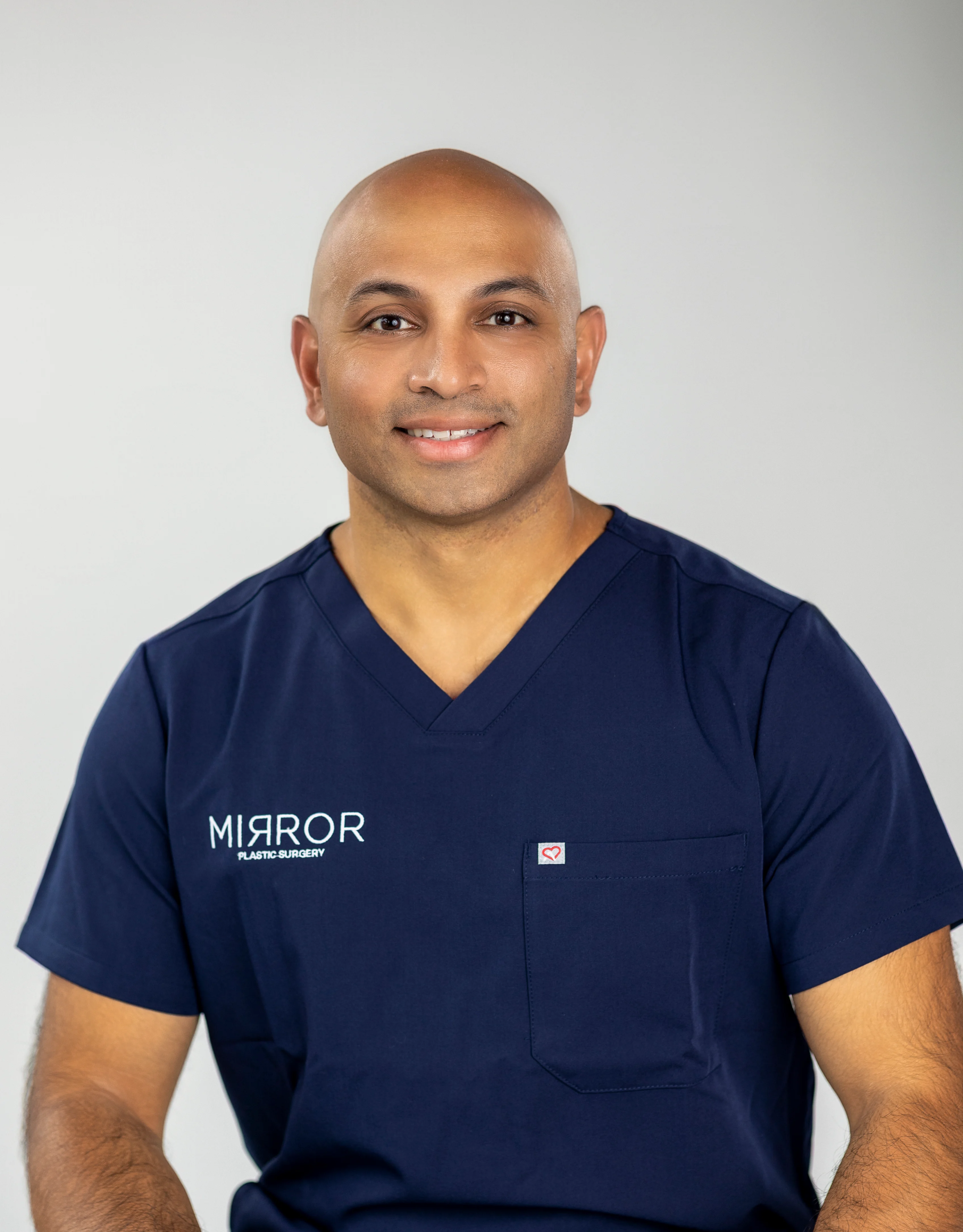
At Mirror Plastic Surgery, Dr. Akash Chandawarkar exemplifies this high standard of qualification. He is Harvard-educated, Johns Hopkins-trained, and fellowship-trained in aesthetic surgery at the Manhattan Eye Ear & Throat Hospital. His practice follows a “safety first, function second, aesthetics third” philosophy.
Safety Oversight And Accreditation For Aesthetic Care
Medical spas operate under state-level regulations that vary dramatically. Some states allow non-physicians to own med spas, with a physician serving as a nominal medical director who rarely visits. The American Society for Dermatologic Surgery Association (ASDSA) created model legislation called the Medical Spa Safety Act to address these gaps, but adoption varies by state.
Approximately 64% of relevant malpractice claims in the USA originated in non-medical facilities, with nearly 80% involving medical spas. This data point is absent from many provider comparisons, yet it directly relates to patient safety.
Plastic surgery practices that perform surgical procedures operate in accredited facilities (AAAASF, AAAHC, TJC, or QUAD A). These facilities mandate rigorous standards for equipment, sterilization, and emergency preparedness. Accredited office-based facilities maintain complication and mortality rates comparable to or lower than traditional hospital settings.1
Mirror Plastic Surgery limits itself to one to two surgeries per day. This schedule supports unwavering focus on each patient and avoids the risks of high-volume surgical days.
Scope Of Services: Surgical And Non-Surgical Options
A board-certified plastic surgeon can perform both surgical procedures such as facelift, liposuction, breast augmentation, and tummy tuck, and non-surgical treatments such as injectables, lasers, chemical peels, and emerging therapies like peptide treatments. This range allows seamless coordination when a patient needs multiple treatments across a long-term plan.
Med spas cannot perform surgery because they are not equipped or licensed for surgical procedures. Patients who eventually need surgical solutions must transition to a different provider, which disrupts continuity of care.
Even for non-surgical treatments like injectables, a plastic surgeon’s anatomical expertise matters. High-risk zones such as the glabella, nose, and periorbital area require precise knowledge of vascular anatomy to avoid complications. The Beleznay series documented over 190 published cases of filler-associated blindness globally, with high-risk zones accounting for the overwhelming majority of events.
Mirror Plastic Surgery offers both surgical and non-surgical options, including advanced peptide therapies for wellness and anti-aging, all under the supervision of a board-certified plastic surgeon.
Recovery And Downtime: What To Expect
Because the scope of services differs so widely, the recovery experience also varies. Surgical procedures involve significant downtime. A traditional facelift typically requires two to three weeks of social downtime, whereas less invasive procedures such as a mini-facelift usually require only five to seven days.1 A tummy tuck may require four to six weeks.1 Pain, swelling, and bruising are expected, and aftercare is critical.
Non-surgical med spa treatments are typically minimally invasive with little to no downtime.1 Botox requires no recovery time, and most filler patients return to normal activities immediately.1 Even non-surgical treatments carry risks, however. Thread lifts, increasingly offered at med spas, show swelling in 34% of cases and visible threads in 10%.1 Having a plastic surgeon oversee your care ensures that any complications are managed effectively.
The table below summarizes the key differences between medical spas and plastic surgery practices across factors that affect safety, recovery, and outcomes.
| Factor | Medical Spa | Plastic Surgery Practice |
|---|---|---|
| Procedure Type | Non-surgical only (injectables, lasers, peels) | Surgical and non-surgical (full spectrum) |
| Provider Training | Often RN, NP, or PA, injection technique typically learned through continuing education courses, sometimes a weekend certification | Board-certified plastic surgeon, minimum six years of surgical training, at least three dedicated to plastic surgery |
| Recovery Time | Minimal to none for non-surgical treatments | Varies, surgical procedures require one to six weeks of downtime |
| Safety Oversight | State-regulated, physician oversight varies widely by state and facility | Accredited surgical facilities, ABPS-certified surgeon on-site |
| Complication Management | Limited, may require referral to an outside physician | In-house expertise, surgeon trained to prevent and manage complications |
Cost Considerations: Understanding The True Value
Med spas typically charge less than plastic surgery practices for comparable non-surgical treatments. Med spas can offer 20–40% savings on standard non-surgical treatments like Botox and filler compared to plastic surgeon offices, and those savings are appropriate only when the facility has real, verifiable physician oversight and properly trained injectors.1
Lower upfront costs can be misleading for two reasons. First, non-surgical treatments are temporary. Botox lasts three to four months, and most fillers last six to eighteen months, so you repeat the expense regularly. Second, the cost of complications adds another dimension. Dissolving hyaluronic acid filler with hyaluronidase costs $100–$400 per session.1 and that applies only to reversible complications. The average cost of a dermal filler reversal is $345 per treatment.1 Irreversible complications, such as vascular occlusion or tissue necrosis, carry costs far beyond the financial.
At Mirror Plastic Surgery, your payment covers the expertise to use each product safely, not just the product itself. Dr. Chandawarkar often tells clients when a service is unnecessary and prioritizes long-term results over short-term revenue.
Decision Framework: Choosing Between A Med Spa And A Plastic Surgeon
Consider a board-certified plastic surgeon if any of the following apply:
- You are considering any surgical procedure.
- You are seeking treatment in high-risk anatomical zones such as the nose, under-eye, or periorbital area.
- You have a history of complications from prior injectable treatments.
- You have underlying medical conditions such as autoimmune disease or anticoagulant use.
- You want a comprehensive, personalized treatment plan addressing multiple concerns.
- You value continuity of care from a single provider.
A med spa may be appropriate if all of the following are true:
- You are seeking a simple, non-invasive treatment with no underlying health concerns.
- You have verified that the injector is properly trained and supervised by a physician with relevant specialty training.
- The facility stocks emergency supplies such as hyaluronidase and epinephrine and has a clear, documented complication protocol.
For those who want the highest level of safety, expertise, and personalized care, whether they need surgical or non-surgical treatments, Mirror Plastic Surgery offers an unmatched standard. Dr. Chandawarkar’s concierge approach includes up to an hour in consultation, an in-depth assessment, and a personalized treatment plan tailored to your unique anatomy and goals.
Red Flags And Smart Questions For Any Aesthetic Provider
Red flags at any facility include:
- The provider cannot name the specific product being injected or its manufacturer.
- No consultation or medical history is taken before treatment.
- The injector cannot explain their emergency protocol for vascular occlusion.
- The facility cannot confirm that hyaluronidase is stocked on-site.
- The medical director’s name and specialty are not disclosed.
- High-pressure sales tactics or pressure to purchase packages immediately.
- Inability to provide before-and-after photos of similar cases.
Ask these questions before any treatment:
- Who will actually perform my treatment, and what are their credentials?
- Are you board-certified by the American Board of Plastic Surgery?
- How do you handle complications, and what emergency supplies do you stock on-site?
- Can I see before-and-after photos of similar cases?
- What is your medical director’s specialty, and how involved are they day-to-day?
- What product brand will you use, and can I see the vial?
Mirror Plastic Surgery encourages these questions and provides transparent, honest answers. Dr. Chandawarkar frequently tells clients when a service is not necessary, which builds lasting trust.
Why Mirror Plastic Surgery Is The Safe Choice
Dr. Akash Chandawarkar is board-certified by the American Board of Plastic Surgery. His education includes MIT (neuroscience and nuclear engineering), Harvard Medical School (graduated with Honors), a seven-year integrated plastic and reconstructive surgery residency at Johns Hopkins, and a fellowship in aesthetic surgery at the Manhattan Eye Ear & Throat Hospital. He also completed the Stanford University Biodesign Innovation Fellowship.
Mirror Plastic Surgery operates on this same safety-first philosophy. The practice limits itself to one to two surgeries per day so each patient receives undivided attention. Consultations typically last up to an hour, which allows for a thorough, top-to-bottom assessment. Dr. Chandawarkar is available via text for ongoing support, and every treatment plan is personalized to your unique anatomy, goals, and physiology.
Mirror Plastic Surgery offers both surgical and non-surgical treatments, including advanced peptide therapies for wellness and anti-aging. Whether you need a surgical procedure, injectables, or a comprehensive wellness plan, a board-certified plastic surgeon provides your care directly.
Frequently Asked Questions
Is A Med Spa Worth It?
For simple, non-invasive treatments performed by qualified providers under appropriate physician supervision, a med spa can be a reasonable choice. The value equation shifts when you consider that med spa injectors may have as little as a weekend of formal aesthetic training and that state-level oversight of physician involvement varies significantly. The cost savings mentioned earlier may not justify the increased risk, particularly for treatments in high-risk anatomical zones such as the nose, glabella, or periorbital area. For patients with underlying health conditions, a history of prior complications, or goals that may eventually require surgical intervention, a board-certified plastic surgeon offers a level of expertise and continuity that a med spa cannot match.
Is It Better To Go To A Dermatologist Or A Med Spa?
For medical skin conditions such as acne, rosacea, or skin cancer screening, a dermatologist is the appropriate choice. For aesthetic treatments, the American Society of Plastic Surgeons recommends verifying that your provider is overseen by a licensed physician with specialized training in the procedures offered, ideally a board-certified plastic surgeon, facial plastic surgeon, or dermatologist. These specialties require comprehensive, standardized training in injectables and laser procedures. A dermatology practice can also identify conditions such as basal cell carcinoma during a cosmetic consultation, a capability a purely cosmetic med spa does not possess.
Do Med Spas Do Surgery?
Medical spas are limited to non-surgical treatments. They are not equipped or licensed for surgical procedures. Any facility offering surgical procedures should be led by a board-certified plastic surgeon operating in an accredited surgical facility that meets the standards of bodies such as AAAASF, AAAHC, TJC, or QUAD A. If a facility is performing surgical procedures outside an accredited setting, that situation represents a significant red flag.
What Is The Hardest Plastic Surgery To Recover From?
Recovery difficulty varies by procedure and individual patient factors. Facelifts and tummy tucks typically require two to six weeks of downtime, while procedures like liposuction or breast augmentation vary based on extent and technique.1 Even non-surgical treatments carry real risks and recovery considerations. Thread lifts, for example, show swelling in approximately one-third of patients and visible threads in one in ten.1 Having a board-certified plastic surgeon oversee your care, whether surgical or non-surgical, helps ensure that any complications are identified and managed effectively rather than referred out to another provider.
How Do I Choose A Medical Spa?
Verify the medical director’s credentials and their actual day-to-day involvement in the practice. Ask specifically who will perform your treatment and what their license type and aesthetic training history are. Confirm that the facility stocks emergency supplies including hyaluronidase and epinephrine, and ask to see their documented protocol for managing vascular occlusion. Check that the injector has specific, structured aesthetic training, not just a weekend certification course. If you have underlying health conditions, are on anticoagulants, or are seeking treatment in a high-risk anatomical zone, a board-certified plastic surgeon is the safer choice regardless of cost considerations.
Results vary and any medical procedure carries risks. This article is for educational purposes and does not constitute medical advice. Consult a qualified professional for personalized guidance on your aesthetic goals.
1 Results may vary from person to person. Editorial content, before and after images, and patient testimonials do not constitute a guarantee of specific results.
Peptide therapy is intended for wellness and optimization purposes and is not prescribed to diagnose, treat, cure, or prevent disease unless specifically stated. Many peptides are not FDA-approved and may be used off-label. Some have limited long-term safety data, with a potential for unknown risks, complications, or desensitization with prolonged use.