

Written by: Ellie Pranckevicius, FNP-BC, Aesthetic Nurse Practitioner & Aesthetic Injector | Facial Restoration & Regenerative Injectable Specialist, Mirror Plastic Surgery
Key Takeaways
- Neuromodulators, dermal fillers, and biostimulatory fillers require precise anatomical knowledge to avoid serious complications such as vascular occlusion.
- Plastic surgery practices provide deeper anatomical training and immediate physician oversight compared to many high-volume medical spas.
- High-risk facial zones like the glabella, nose, and forehead demand experienced injectors and on-site emergency protocols including hyaluronidase.
- Choosing a provider should prioritize board-certified oversight, supplier-neutral product selection, and documented vascular emergency readiness over convenience or price.
- Patients seeking safe, comprehensive injectable care can book a consultation with Mirror Plastic Surgery to receive expert evaluation and treatment planning.
Key Terms and Risk Factors
The central facial anatomy contains a dense network of arteries with anastomoses, or interconnections between vessels, that create pathways for filler to migrate toward critical structures, including the ophthalmic artery. Vascular complications from HA and calcium hydroxylapatite fillers occur infrequently, though risk rises markedly in the glabella, forehead, and nose due to anastomoses with the ophthalmic artery that can lead to skin necrosis or permanent vision loss.
While such events are uncommon, the sheer scale of the injectable market, with 19.1 million nonsurgical aesthetic procedures performed globally in 2023, means that even rare complications occur often enough to demand structured prevention protocols. Limited anatomical awareness is listed among key risk factors for vascular occlusion, alongside greater bolus volumes, high injection pressure, and use of sharp needles in highly vascular facial regions.
Because anatomical knowledge and emergency response capability vary significantly across practice settings, understanding how different provider models address these risk factors is essential to making an informed choice.
Oversight Models Compared for Injectable Safety
The table below compares plastic surgery practices and high-volume medical spas across four dimensions relevant to injectable safety. Each dimension directly influences either complication prevention or emergency response capability: anatomical exposure shapes injection accuracy, immediate infrastructure affects complication outcomes, product-selection freedom supports evidence-based recommendations, and supervision requirements establish legal accountability. Every figure is linked to its source.
| Dimension | Plastic Surgery Practice | High-Volume Medical Spa |
|---|---|---|
| Daily anatomical exposure | Board-certified plastic surgeons complete a 3–6 year surgical residency with ACGME-required aesthetic surgery training, providing continuous hands-on anatomical exposure | Nurse injector education typically consists of specialized instruction and supervised practice rather than a residency-based specialty pathway |
| Immediate complication infrastructure | Plastic surgery practices provide nurse injectors with the highest level of medical oversight through direct collaboration with board-certified plastic surgeons | Supervision ranges from direct on-site to nominal oversight where the physician’s name appears on agreements but provides minimal actual oversight and may supervise dozens of clinics |
| Product-selection freedom | Supplier-neutral practices select products based on individual patient anatomy, age, and skin quality without commission-driven constraints | Medical spas often feature commission-based compensation and higher patient volumes, which can influence product recommendations |
| Florida supervision requirements | Plastic surgery practices feature direct involvement by board-certified plastic surgeons | Proposed 2026 bills HB 1429 and SB 1728 (which died in committee) would have required Florida medical spas to designate a responsible person under the Medical Spa Prescription Drug Oversight Act, but contained no board-certification requirements for medical directors |
Choosing Between a Dermatologist or Plastic Surgeon for Fillers
Both dermatologists and plastic surgeons complete substantially more structured training than non-physician injectors working in high-volume environments. A board-certified dermatologist completes four years of medical school, a one-year internship, and a three-year ACGME-accredited dermatology residency.
A board-certified plastic surgeon completes four years of medical school and a 5- to 6-year surgical residency. The surgical residency provides daily exposure to facial anatomy in three dimensions. That depth of spatial understanding informs injection plane selection and complication management in ways that shorter training pathways rarely match.
The American Society of Plastic Surgeons identifies plastic surgery, facial plastic surgery, and dermatology as the only medical specialties that require comprehensive training in the treatments typically offered at medical spas. For patients whose primary concern is complication management capability and full-face surgical-to-non-surgical continuity of care, a plastic surgery practice offers the broadest scope of intervention if escalation becomes necessary.
With appropriate training, education, and safety algorithms, most filler complications can be treated effectively, but the operative word is appropriate. Patients must consider not only who is holding the syringe, but also who is immediately available if something goes wrong.
Understanding the Riskiest Places for Fillers
Among the high-risk zones identified earlier, the glabella stands out as the single most dangerous injection site. The supratrochlear and supraorbital arteries in that region communicate directly with the ophthalmic artery, creating a pathway to the retinal circulation that can result in permanent vision loss if filler enters the vascular system.
Permanent visual loss from filler injection remains rare but constitutes a structural risk, with the Beleznay et al. (2019) series documenting 146 published cases globally of partial or complete vision loss. High-risk zones include the glabella, nasal dorsum and tip, forehead, nasolabial fold, and periorbital region.
Prevention of vascular complications rests on anatomical knowledge by injection plane, cannula use in high-risk zones including the glabella, nose, nasolabial fold, and infra-orbital region, slow low-pressure delivery, and small aliquots of 0.1 mL or less per bolus, according to the 2021 ASDS Multi-Society guideline. Clinic infrastructure, specifically whether hyaluronidase is on-site and in-date and whether the team is rehearsed in its administration, determines whether a vascular event results in full recovery or permanent injury.
Red Flags in High-Volume Injectable Environments
Certain operational patterns in high-volume settings correlate with elevated risk. Patients evaluating any provider should watch for the following:
- Consultations lasting fewer than 15 minutes with no documented facial assessment
- Recommendations driven by promotional packages or volume discounts rather than individual anatomy
- Commission-based injector compensation, which can influence product and volume recommendations
- No confirmed on-site hyaluronidase or written vascular occlusion protocol
- A medical director whose name appears on agreements but who provides minimal actual oversight and may supervise dozens of clinics
- Treatment of isolated areas without assessment of full-face balance and structural support
- No documented good-faith exam prior to injection, as required under Florida law
- Inability to explain escalation pathways if a complication occurs
Safety Questions to Ask Any Injector
Before booking an injectable appointment, patients can use the following questions to confirm that a provider meets a minimum safety standard:
- What is your professional license, and what level of physician supervision governs your injections?
- Is a board-certified plastic surgeon or dermatologist on-site during treatments?
- Do you have hyaluronidase on-site, in-date, and a written vascular occlusion protocol your team has rehearsed?
- How do you conduct your pre-treatment assessment, and how long does it take?
- Are your product recommendations supplier-neutral, or does your practice have volume agreements with specific brands?
- What is your escalation pathway if I experience a complication after I leave the clinic?
- Can you verify your board certification through the American Board of Plastic Surgery or American Board of Dermatology?
Industry Standards and Evolving Safety Protocols
The 10-point safety model from Heydenrych et al. (2018) remains a core standard for HA dermal filler procedures, encompassing patient assessment, product selection, anatomical knowledge, technique, aspiration, slow injection, depth control, red-flag recognition, immediate rescue capability, and follow-up. Clinics operating at this standard maintain weekly hyaluronidase audits, quarterly team review of complication protocols, and per-zone, per-product consent documentation.
Florida requires a good-faith exam, a medical evaluation in which a physician, nurse practitioner, or physician assistant confirms the patient is an appropriate candidate and authorizes the treatment plan, before any injectable treatment. This requirement converts a cosmetic service into properly supervised medical care, establishing a legal floor for patient safety. However, meeting this minimum does not guarantee the depth of anatomical expertise or emergency preparedness that distinguishes high-quality providers.
The broader industry is also shifting in its treatment philosophy. Patients are increasingly asking about longevity, collagen stimulation, and structural support, making durability and skin quality central to treatment planning rather than short-term aesthetic change. The growth in biostimulators such as poly-L-lactic acid and calcium hydroxylapatite reflects a clinical shift from passive volumizing toward collagen stimulation and long-term tissue quality improvement.1 This trend rewards practices capable of holistic, full-face planning over isolated single-area injection models. The standards outlined above, from the 10-point safety model to full-face treatment philosophy, become clearer when viewed in a real clinical setting.
The Safety-First Approach at Mirror Plastic Surgery
Mirror Plastic Surgery in St. Petersburg, Florida, illustrates what these standards look like in daily practice. Initial consultations with Ellie Pranckevicius, FNP-BC, extend up to an hour and follow a structured top-to-bottom assessment framework that evaluates facial anatomy, volume distribution, skin quality, and the patient’s long-term goals before any treatment is recommended.
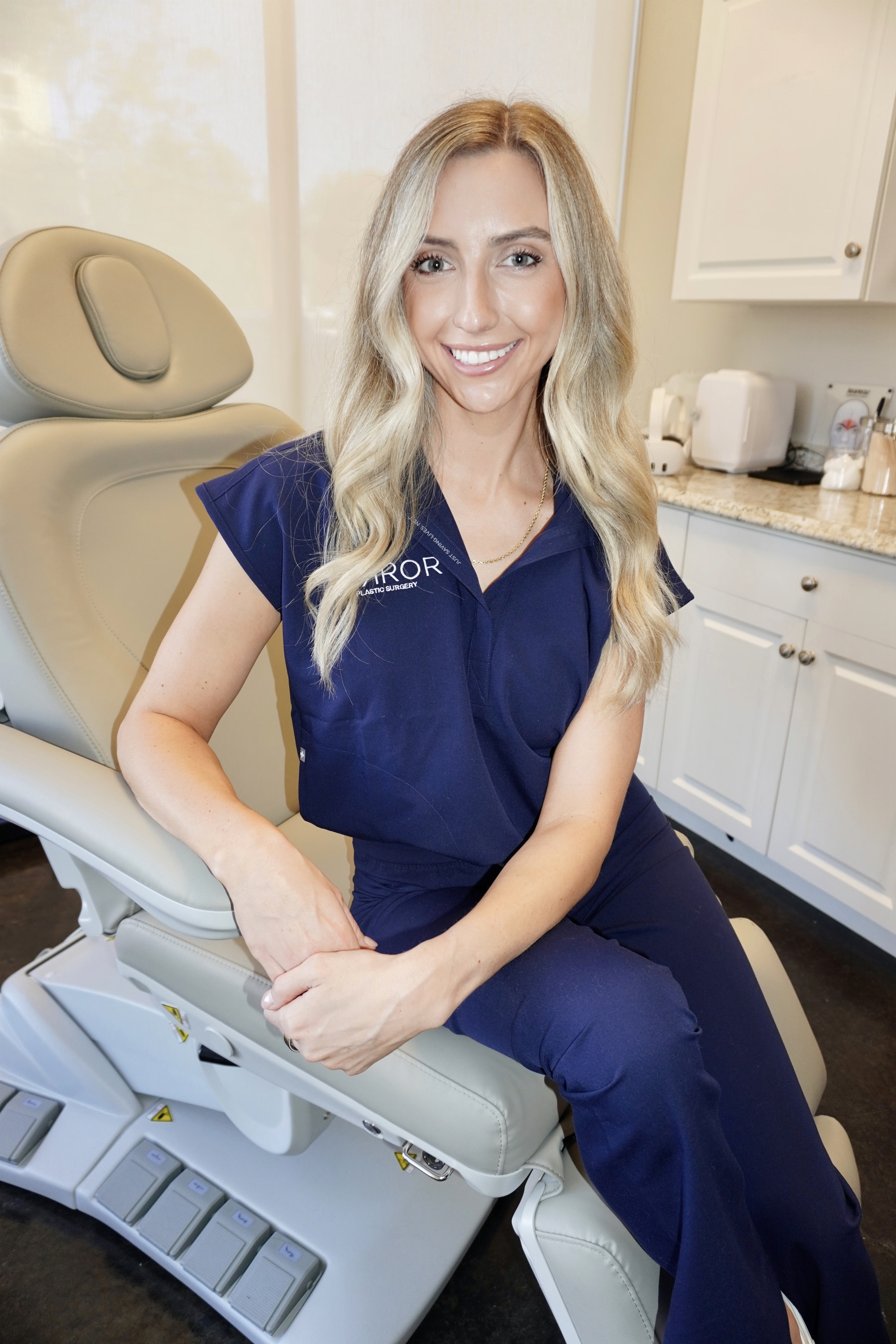
Ellie holds a Bachelor’s in Health Science from Boston University, completed a 600-hour aesthetics licensure program, earned both her Bachelor’s and Master’s in Nursing from the University of South Florida, and spent four years in the Neuroscience ICU at Tampa General Hospital before transitioning to aesthetic medicine. That ICU background directly informs her clinical judgment in time-sensitive situations. The same judgment applies when recognizing and responding to early signs of vascular compromise.
Product selection at Mirror Plastic Surgery is supplier-neutral. Ellie selects from a broad portfolio, including Juvederm, RHA, Versa, Restylane, Radiesse, Evolysse, Botox, Dysport, Xeomin, Daxxify, and Jeuveau, based on individual patient anatomy, skin quality, and treatment objectives, not volume agreements or commission structures. Her treatment philosophy prioritizes foundational restoration before volume augmentation, addressing the upper, middle, and lower facial regions as an integrated system to prevent the asymmetry and overdone appearance that can result from isolated single-area injections. This comprehensive approach occasionally reveals cases where surgical intervention would produce better long-term outcomes than injectables alone.
When the clinical picture warrants it, Ellie’s work is directly supported by Dr. Akash Chandawarkar, MD, a Harvard-educated physician, Johns Hopkins-trained plastic surgeon, and fellowship-trained aesthetic surgeon at Manhattan Eye Ear & Throat Hospital/Lenox Hill Hospital. That surgical infrastructure is immediately accessible, not available only by phone from a remote location.
Making an Informed Choice About Injectables
The choice between a medical spa and a plastic surgery practice for injectables and fillers rests on three variables: the depth of anatomical expertise guiding the injection, the immediacy of physician oversight if a complication occurs, and the structural readiness of the clinic to manage a vascular emergency within the critical first hour. Price and convenience remain legitimate considerations, but they do not replace these factors when treatment involves central facial anatomy.
Patients who prioritize long-term outcomes, natural results, and safety infrastructure often find that the oversight model of a board-certified plastic surgery practice, with direct surgeon involvement, supplier-neutral product selection, and hour-long assessments, aligns most closely with those priorities.1
Frequently Asked Questions
What is the difference between a neuromodulator and a dermal filler?
Neuromodulators such as Botox, Dysport, Xeomin, Daxxify, and Jeuveau work by temporarily blocking nerve signals to specific muscles, reducing the appearance of dynamic wrinkles caused by repetitive facial movement. Common treatment areas include the forehead, between the brows, crow’s feet, massagers, and the trapezius muscle. Dermal fillers, by contrast, physically add volume or structural support beneath the skin. Calcium hydroxylapatite fillers provide immediate volume and structural support. Biostimulatory fillers such as Radiesse and Sculptra stimulate the body’s own collagen production over time, producing gradual improvements in skin firmness and volume that can last two to four or more years.1 The two categories are often used together in a full-face treatment plan, with neuromodulators addressing muscle-driven concerns and fillers restoring structural volume and contour.
How does Florida law regulate who can inject Botox and dermal fillers at a medical spa?
In Florida, only licensed medical professionals may administer injectable treatments such as Botox and dermal fillers. Physicians and osteopathic physicians may inject independently. Advanced Practice Registered Nurses may inject under a collaborative agreement or autonomous registration. Physician assistants require a written supervision agreement with a physician. Registered nurses may administer injectables only under the direct supervision and order of a licensed physician. Estheticians and non-licensed personnel are strictly prohibited from performing these medical acts.
Florida law mandates a documented good-faith exam before any injectable treatment. This exam must be performed by a physician, nurse practitioner, or physician assistant, and serves to confirm that the patient is medically appropriate for the proposed treatment and that a licensed provider has authorized the specific treatment plan. This requirement distinguishes cosmetic injectables from over-the-counter beauty services by establishing them as supervised medical procedures. Proposed 2026 bills HB 1429 and SB 1728 (which died in committee) would have required med spas to obtain a Florida Board of Pharmacy license, designate a responsible person, and report adverse events, but contained no board-certification requirements for medical directors.
What are the warning signs of a vascular occlusion after filler, and what should I do?
Vascular occlusion occurs when filler material compresses or enters a blood vessel, restricting blood flow to surrounding tissue. Early warning signs include immediate blanching or whitening of the skin at or near the injection site, livedo reticularis, which is a mottled, net-like discoloration, pain that is disproportionate to the injection, and delayed capillary refill. These signs can appear within minutes of injection or develop over the following hours.
Vascular occlusion is a time-critical emergency. If you experience any of these symptoms after a filler treatment, contact your provider immediately. Effective management requires high-dose hyaluronidase administered ideally within one to four hours of symptom onset to dissolve hyaluronic acid filler and restore blood flow. Clinics that do not stock in-date hyaluronidase on-site or lack a written vascular occlusion protocol are not equipped to manage this emergency. Before any filler appointment, confirm that your provider has hyaluronidase available and can describe their emergency response protocol in specific terms.
Why does Mirror Plastic Surgery take a full-face approach rather than treating one area at a time?
Facial aging is a three-dimensional process involving simultaneous changes in bone, fat compartments, muscle, and skin across all facial regions. Treating a single area in isolation, such as adding lip volume without assessing midface support, can create disproportionate results or accelerate the appearance of aging in adjacent areas. Ellie Pranckevicius approaches each patient with a holistic assessment that evaluates the upper, middle, and lower face as an integrated system.
This method ensures that volume restoration, muscle relaxation, and structural support work together to produce balanced, natural-looking results.1 It also prevents the common outcome of an overdone appearance that arises when multiple isolated treatments accumulate without a coordinating treatment plan. The initial consultation at Mirror Plastic Surgery is designed specifically to establish this full-face understanding before any product is recommended.
What should I expect during an injectable consultation at Mirror Plastic Surgery?
The initial consultation at Mirror Plastic Surgery typically lasts up to an hour. Ellie begins with an open-ended conversation to understand your aesthetic goals, emotional motivations, and any previous treatment history. She then conducts a structured physical assessment of your facial anatomy, evaluating volume distribution, skin quality, muscle dynamics, and symmetry across all facial regions.
Based on this assessment, she develops a personalized treatment plan that explains which products are recommended, why they are appropriate for your specific anatomy, what results are realistic, and what the long-term maintenance plan looks like. If a recommended treatment is not yet necessary for your anatomy, Ellie will say so directly. The consultation is designed to give you a clear, evidence-based understanding of your options so that any decision you make is fully informed. If your goals eventually extend to surgical options, Dr. Akash Chandawarkar is available within the same practice to provide continuity of care.
Disclaimer
Disclaimer: Results may vary from person to person. Editorial content, before and after images, and patient testimonials do not constitute a guarantee of specific results.
1 Results may vary from person to person. Editorial content, before and after images, and patient testimonials do not constitute a guarantee of specific results.
