Written by: Ellie Pranckevicius, FNP-BC, Aesthetic Nurse Practitioner & Aesthetic Injector | Facial Restoration & Regenerative Injectable Specialist, Mirror Plastic Surgery
Key Takeaways for Safe Peptide Therapy
- Supervised peptide protocols at Mirror Plastic Surgery include baseline labs, clinician review, and lot-specific third-party testing, which unregulated online vendors do not provide.
- Independent audits show 41.6% of grey-market vials fail basic quality checks, while FDA-approved GLP-1 drugs undergo rigorous pre-market review.
- Ellie Pranckevicius, FNP-BC, leads Mirror Plastic Surgery’s peptide program, combining critical-care experience with aesthetics expertise for safe, individualized care.
- Structured workflows with intake, lab review, custom protocol design, batch-tested sourcing, and 24/7 concierge support reduce risks and improve outcomes.1
- Patients seeking a medically supervised peptide protocol can schedule an intake evaluation to begin the process outlined in this article.
What a Safe, Supervised Peptide Protocol Includes
A medically supervised peptide protocol at Mirror Plastic Surgery starts well before the first dose. The process includes a comprehensive intake evaluation, baseline laboratory work, clinician review of contraindications, and sourcing from suppliers who provide lot-specific certificates of analysis documenting identity, purity, and sterility. Missing any one of these elements shifts a protocol from supervised medicine into self-experimentation.
This distinction matters because peptides are biologically active substances that alter physiological function. Health Canada states that unauthorized injectable peptides purchased online have not been assessed for safety, efficacy, or quality and may contain too much, too little, or none of the active ingredient. Medical supervision turns that uncertainty into a documented, monitored process.
Risk Comparison: Online Vendors, GLP-1 Drugs, and Supervised Clinics
The following table compares three sourcing models across four critical safety dimensions and shows why medical supervision and batch testing are essential for peptide therapy.
| Criterion | Online / Grey-Market Vendors | FDA-Approved GLP-1 Drugs | Supervised Compounding Clinics |
|---|---|---|---|
| Purity Testing | ~1 in 3 products fail basic quality checks at independent labs; 41.6% of 6,285 grey-market vials failed a lenient compounding-pharmacy benchmark on dose accuracy, purity, or identity, including documented identity failures for TB-500 and CJC-1295 | Reviewed by FDA for safety, effectiveness, and quality prior to market authorization | Minimum acceptable COA from ISO-accredited lab includes HPLC purity ≥98%, mass spectrometry identity, endotoxin, and sterility results |
| Dosing Accuracy | A substantial portion of grey-market vials fell outside the acceptable dose window, and some vials contained none of the labeled peptide | Standardized manufacturing uses cGMP requirements to support labeled dose accuracy | Lot-specific third-party COAs are required, and the clinician titrates dose based on lab results and patient response |
| Medical Oversight | No clinician review, no contraindication screening, and no follow-up | Prescription required, with the prescribing clinician responsible for monitoring | Comprehensive intake, lab panel review, ongoing clinician access, and a structured follow-up schedule |
| Documented Adverse Events | Bacterial endotoxins have been found in some wellness peptide products; Health Canada documents risks including liver or kidney damage, blood clots, and growth of cancerous tumours | Medication-error reports for GLP-1 drugs have risen substantially in recent years, often linked to dosing confusion rather than the drug itself | Side-effect profile is managed through gradual titration, contraindication screening, and structured monitoring; nausea rates with GLP-1 peptides can be reduced by gradual dose escalation under medical supervision1 |
Practitioner Expertise: Ellie Pranckevicius, FNP-BC
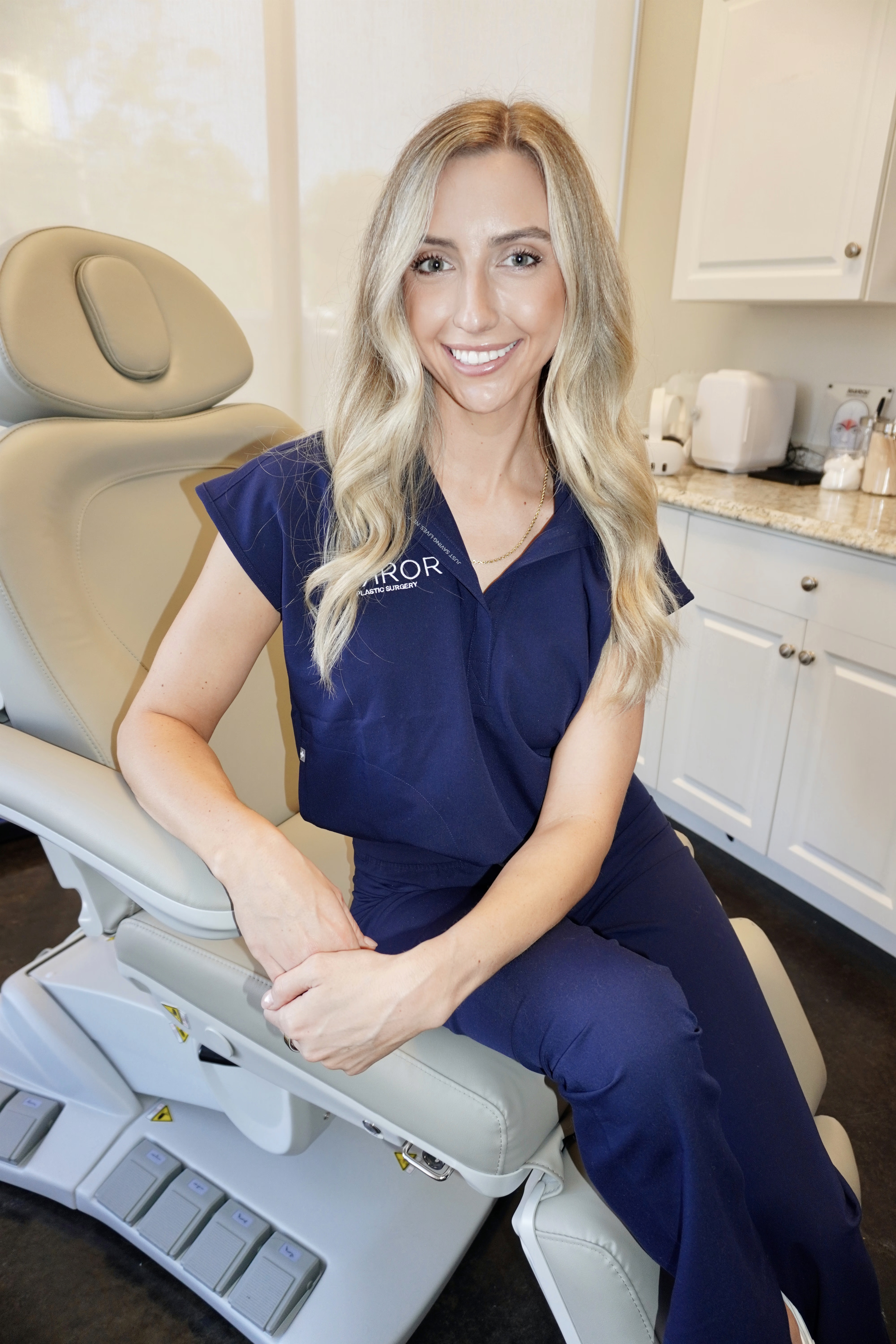
Ellie Pranckevicius, FNP-BC, leads peptide therapies and non-surgical aesthetics at Mirror Plastic Surgery. She holds a Bachelor’s in Health Science from Boston University, completed a rigorous aesthetics licensure program, and earned both her Bachelor’s and Master’s in Nursing from the University of South Florida. Her clinical foundation includes four years in the Neuroscience ICU at Tampa General Hospital, where she managed complex patients and developed a deep understanding of physiology, metabolic health, and recovery capacity. This combination of critical-care experience and esthetician training gives Ellie a dual perspective that is rare in the peptide space. She understands both the aesthetic outcomes patients seek and the clinical science required to reach them safely.
Connect with Ellie to explore whether peptide therapy aligns with your health goals.
Key Peptide and Safety Concepts
GLP-3R Compounding: A next-generation receptor agonist formulation related to GLP-1, the well-established class used for diabetes and weight management. Newer formulations in this category are reported to carry fewer gastrointestinal side effects, reduced risk of lean-mass loss, and broader metabolic indications including insulin resistance and cardiovascular risk factors.1
BPC-157 (Body Protective Compound 157): A 15-amino-acid peptide derived from gastric juice protein with preclinical evidence for accelerating gastric ulcer healing, modulating gut inflammation, and supporting muscle, tendon, ligament, and joint repair.1
GHK-Cu (Copper Peptide): A peptide used primarily to stimulate collagen and elastin production, supporting skin health, hair, and nail rejuvenation, and addressing concerns such as melasma and grey hair.1
Batch Testing: The process by which an independent, accredited laboratory analyzes a specific production lot of a peptide for identity via mass spectrometry, purity via HPLC, endotoxin burden, and sterility. Research-grade peptide suppliers for clinical use must provide lot-specific third-party COAs documenting identity, purity ≥98%, and absence of endotoxin and heavy-metal contamination. A certificate of analysis tied to a specific lot number provides the minimum evidence of batch testing.
Reconstitution: The process of adding bacteriostatic water to a lyophilized peptide powder to prepare it for injection. Incorrect reconstitution volume directly affects the concentration and therefore the dose delivered per injection. Mirror Plastic Surgery provides detailed instructions and video demonstrations for this step.
The Clinical Workflow at Mirror Plastic Surgery
Mirror Plastic Surgery’s peptide program follows a structured sequence that establishes safety first, then focuses on efficacy.
- Comprehensive Intake: A 30–60 minute consultation with Ellie covers full medical history, current medications, health goals, and contraindication screening.
- Lab Panel Review: For weight management and inflammatory conditions, relevant panels, including thyroid, liver, kidney, diabetes markers, and hormone panels, are reviewed or ordered. A universal baseline panel before any peptide protocol includes CBC with differential, CMP, fasting glucose and insulin, HbA1c, lipid panel, and thyroid function drawn after a 12-hour fast.
- Custom Protocol Design: Based on intake and labs, Ellie builds a personalized peptide stack. Combinations such as the Glow Stack, which includes GHK-Cu, BPC-157, and TB-500, or GLP-3R compounding protocols are selected based on individual physiology and goals, not a one-size-fits-all template.
- Sourcing and Dispensing: Peptides are sourced from suppliers with documented batch testing for purity, identity, and sterility. The full process, from consultation to prescription and shipping, is available in person in St. Petersburg, Florida, or remotely across the United States, including Hawaii and Alaska.
- 24/7 Concierge Support: Once peptides are dispensed, patients have direct text access to Ellie for questions, side-effect management, and refill requests throughout the protocol.
- Post-Surgical Recovery Protocols: For patients undergoing procedures with Dr. Akash Chandawarkar, peptides such as BPC-157 and TB-500 can be incorporated into post-operative recovery plans to reduce inflammation and support healing.1
Start your intake evaluation and lab review with Ellie.
The 2026 Regulatory and Clinical Landscape
In early 2026 the FDA sent warning letters to telehealth companies over misleading marketing claims about compounded GLP-1 drugs such as semaglutide and tirzepatide, representing a second wave of enforcement following more than 100 warning letters issued in 2025. Compounded GLP-1 drugs sold by telehealth companies are not reviewed by the FDA for safety, effectiveness, or quality before being marketed to patients.
On the research frontier, newer multi-receptor agonists are being developed to improve efficacy while maintaining acceptable short-term safety profiles, though long-term safety data remain limited, particularly for agents with glucagon receptor activity that may increase heart rate or hepatic aminotransferases. Next-generation formulations such as GLP-3R compounds are reported to produce fewer gastrointestinal side effects than earlier GLP-1 agents, and these claims require evaluation within a supervised clinical context.
Beyond the GLP-1 class, most research peptides, including BPC-157, GHK-Cu, TB-500, and peptide stacks used for anti-aging or inflammation, face even less regulatory oversight. Regulatory agencies including Medsafe have stated that claims such as “for research purposes only,” “clinically proven,” or “safe” on unapproved peptide products have no legal effect and do not permit sale, supply, or use in people. The absence of FDA regulation for most research peptides makes the sourcing and supervision model the primary safety variable.
Decision-Making Considerations for Patients
Peptide therapy does not suit every individual, and clear criteria support an informed evaluation.
Who may benefit from supervised peptide therapy:
- Adults with documented chronic inflammation, autoimmune conditions, or metabolic dysfunction who have not achieved desired outcomes with conventional treatments
- Individuals seeking evidence-based anti-aging or body-composition support with lab-confirmed baseline data
- Post-surgical patients requiring accelerated recovery under clinical supervision
Who should avoid or delay peptide therapy:
- GLP-1 peptides are contraindicated for patients with a history of medullary thyroid carcinoma or MEN2, pregnant or breastfeeding women, individuals under 18, and those with active cancer.
- Individuals with end-stage renal disease considering tirzepatide-class compounds
- Anyone unwilling to complete baseline labs or maintain follow-up monitoring
Beyond safety screening, setting appropriate expectations for results is essential to informed decision-making.
Realistic timelines: Initial changes may be perceptible within the first week for some conditions. Meaningful, measurable outcomes typically require 8–16 weeks of consistent use.1 Every serious peptide weight-loss program includes a 12- and 24-month maintenance and de-escalation plan, based on data showing substantial weight regain after discontinuation.
Common Misconceptions Corrected
“All peptides are the same.” Peptides differ substantially by mechanism, target receptor, half-life, and required administration route. As documented in the comparison table above, grey-market identity failures mean buyers often receive a different compound than ordered. The molecule matters, and so does the source.
“Results are permanent.” Peptide benefits are maintenance-dependent. Benefits from peptide therapy are generally not permanent.1 Discontinuing a protocol typically results in a gradual return toward baseline.1 For weight management, data from the STEP-4 and SURMOUNT-4 trials show substantial weight regain after GLP-1 discontinuation.1 For inflammatory conditions, the immune dysregulation that was being managed will likely reassert itself without ongoing support. Mirror Plastic Surgery builds maintenance and de-escalation planning into every protocol from the outset.
“Online is cheaper and just as safe.” Large profit margins in the peptide supply chain have attracted nefarious actors. Lower upfront cost does not account for the risk of receiving a contaminated, underdosed, or mislabeled product, or the downstream medical costs of an adverse event.
Safety Checklist to Use With Any Provider
Patients can use the following questions to confirm that a provider follows the supervised, lab-informed model described in this article rather than a grey-market approach.
- Do you require baseline laboratory work before initiating any peptide protocol, and which specific panels are included?
- Can you provide lot-specific, third-party certificates of analysis for every peptide you dispense, including HPLC purity, mass spectrometry identity, and endotoxin results?
- What is your monitoring schedule after initiation, and what lab findings would prompt you to pause or discontinue the protocol?
- Are you able to screen for contraindications specific to the peptides being prescribed, including thyroid history for GLP-class compounds?
- What direct clinician access do patients have if they experience side effects between scheduled appointments?
Frequently Asked Questions
-
Are peptides regulated by the FDA?
As noted earlier, most research peptides are not FDA-regulated. The exception is GLP-1 receptor agonists such as semaglutide and tirzepatide, which are FDA-approved only when dispensed as branded pharmaceuticals, and compounded versions lack the FDA review process described in the regulatory landscape section above. This regulatory gap makes the sourcing model and clinical oversight the primary safety variables for patients pursuing peptide therapy.
What happens if I stop taking peptides?
Benefits from peptide therapy are generally not permanent.1 Discontinuing a protocol typically results in a gradual return toward baseline.1 For weight management, data from the STEP-4 and SURMOUNT-4 trials show substantial weight regain after GLP-1 discontinuation.1 For inflammatory conditions, the immune dysregulation that was being managed will likely reassert itself. Mirror Plastic Surgery builds maintenance and de-escalation planning into every protocol from the outset.
Will everyone see the same results?
Outcomes vary significantly based on genetics, baseline lab values, diet, lifestyle, adherence, and the specific peptide stack used.1 This variation explains why Mirror Plastic Surgery conducts a thorough intake evaluation and lab review before designing any protocol. A custom approach based on individual physiology produces more predictable outcomes than a standardized regimen.1
Can I access Mirror Plastic Surgery’s peptide program remotely?
Yes. The full process, including consultation, lab review, protocol design, prescription, and shipping, is available remotely across the United States, including Hawaii and Alaska. Patients also have direct 24/7 text access to Ellie Pranckevicius throughout their protocol for questions, side-effect management, and refill requests.
Are peptides only for weight loss?
No. Mirror Plastic Surgery’s peptide offerings address a broad range of concerns. These include systemic inflammation and autoimmune conditions, post-surgical recovery, collagen and elastin production for skin and hair health, energy and cellular anti-aging via NAD, anxiety and mood support through nootropic peptides such as Selank, sexual wellness, and fertility support. A consultation with Ellie identifies which peptides or stacks are appropriate for each individual’s specific goals and health profile.
Conclusion: Choosing a Supervised Peptide Path
The peptide market in 2026 presents a clear three-way choice. Patients can select unregulated online vendors with documented contamination and dosing failure rates, FDA-approved pharmaceuticals with established safety profiles but limited flexibility, or medically supervised compounding clinics that combine batch-tested sourcing with personalized clinical oversight. For health-conscious adults who have already researched peptides and understand the stakes, the supervised model addresses the core risks of purity, dosing accuracy, contraindication screening, and ongoing monitoring that the grey market cannot.
Mirror Plastic Surgery’s concierge approach, led by Ellie Pranckevicius, FNP-BC, with the clinical foundation of Harvard-educated, Johns Hopkins-trained plastic surgeon Dr. Akash Chandawarkar, applies the same standard of individualized, evidence-based care to peptide protocols that the practice applies to every surgical and non-surgical treatment it offers.
1 Results may vary from person to person. Editorial content, before and after images, and patient testimonials do not constitute a guarantee of specific results.
Peptide therapy is intended for wellness and optimization purposes and is not prescribed to diagnose, treat, cure, or prevent disease unless specifically stated. Many peptides are not FDA-approved and may be used off-label. Some have limited long-term safety data, with a potential for unknown risks, complications, or desensitization with prolonged use.