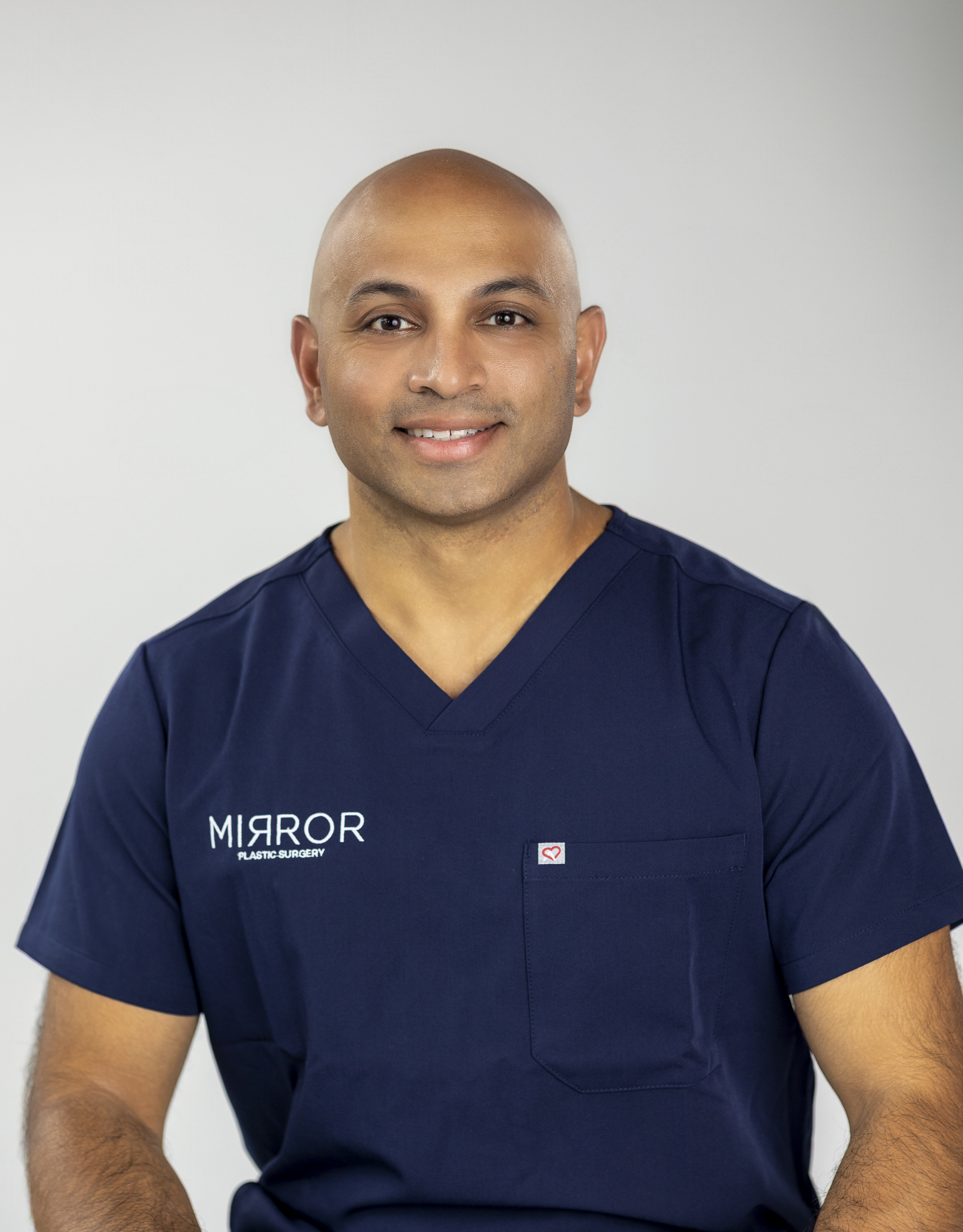
Written by: Dr. Akash Chandawarkar, Board Certified Plastic Surgeon, Mirror Plastic Surgery
Key Takeaways
- Natural BBL results depend on ABPS board certification, ultrasound-guided subcutaneous fat placement, and individualized planning instead of high-volume production.
- Proportion-focused techniques, such as waist-to-hip ratio targeting and micro-injection, create contours that enhance a patient’s natural silhouette.
- Patient safety relies on accredited facilities, board-certified anesthesiologists, and strict subcutaneous-only injection protocols that sharply reduce complication rates.
- High-volume practices increase revision risk. Limiting daily surgeries to one or two supports focused attention and safer, more stable outcomes.
- Patients seeking natural, safe BBL results in Tampa can schedule a personalized consultation at Mirror Plastic Surgery to review anatomy and goals with Dr. Akash.
Natural-Looking BBL Results Through Proportion-Focused Planning
Natural BBL results come from surgeons who prioritize proportion over volume. Liposuction donor-site selection and pattern are planned as part of artistic body contouring to improve waist-to-hip proportions and overall buttock appearance in relation to the patient’s existing anatomy, skin quality, and fat distribution. Fat is injected in small amounts through multiple passes using micro-injection technique. This gradual approach builds contour without large clumps that create an artificial shelf or disproportionate projection.
A significant portion of transferred fat often survives long-term after a natural BBL, and results evolve with weight changes and aging.1 However, not all transferred fat survives the initial healing period, so surgeons plan for this predictable resorption by overfilling modestly.1 They inject a slightly larger volume than the final desired result to account for normal fat cell loss.
Expert BBL surgeons also work toward clear anatomical proportion benchmarks. A waist-to-hip ratio of roughly 0.7 for women often produces harmonious, proportionate, and natural-looking contours that align with the patient’s anatomy.1 At Mirror Plastic Surgery, Dr. Akash uses deep anatomical training to guide donor-site liposuction and fat placement so results enhance, rather than override, a patient’s natural silhouette.
BMI Guidelines for Safe, Proportionate BBL Candidacy
Achieving natural BBL results depends on both surgical technique and having the right fat distribution to work with. Most surgeons prefer patients with a BMI between 18 and 30 for BBL candidacy because this range balances safety with the likelihood of having adequate transferable subcutaneous fat.
Visceral fat, which surrounds internal organs, cannot be harvested for transfer. Candidacy instead depends on having enough subcutaneous fat in donor areas such as the abdomen, flanks, back, and thighs.
Some practices accept patients with BMI up to 32, yet higher BMI often brings increased risks. These risks include poor wound healing, blood clots, and respiratory complications from anesthesia, so careful screening becomes even more important.
BMI serves as a starting point rather than a strict cutoff. Surgeons assess candidacy through physical pinch tests and sometimes imaging of donor sites to confirm adequate subcutaneous fat. During Mirror Plastic Surgery’s hour-long consultation, Dr. Akash performs a comprehensive top-to-bottom anatomical assessment. He evaluates fat distribution, skin quality, and overall health to determine whether a patient can achieve a safe, proportionate outcome through surgery.
Safety Standards for BBL Surgery in Tampa
Safe BBL surgery rests on four structural factors: the surgeon’s board certification, the injection technique, the facility’s accreditation, and the anesthesia provider.
The Multi-Society Gluteal Fat Grafting Task Force, convened by the American Society of Plastic Surgeons, the Aesthetic Society, and the Aesthetic Surgery Education and Research Foundation, established subcutaneous-only fat injection above the fascia covering the gluteal muscle as the core modern safety rule for Brazilian butt lift procedures. Florida became the first state to require real-time ultrasound guidance during gluteal fat grafting procedures, and Mirror Plastic Surgery complies fully with this mandate.
When performed by qualified, board-certified plastic surgeons following modern safety guidelines, the BBL fatality rate due to fat embolism drops from a historical 1 in 3,000 to approximately 1 in 15,000.1 This improvement stems directly from subcutaneous-only technique and ultrasound guidance.
BBL procedures should be performed in accredited surgical facilities with proper emergency equipment and protocols, with anesthesia administered by board-certified anesthesiologists. Mirror Plastic Surgery operates only in accredited facilities and works with board-certified physician anesthesiologists. This standard reflects the practice’s safety-first philosophy and is not negotiable.
Visual Checklist for Natural, Proportionate BBL Results
Use this checklist when reviewing before-and-after portfolios or discussing your goals during a consultation.
- Smooth gluteal shelf transition: The upper buttock blends gradually into the lower back without an abrupt shelf or ledge, which suggests conservative subcutaneous placement instead of excessive volume.
- Waist-to-hip harmony: Enhanced projection matches the waist circumference created by donor-site liposuction, producing an hourglass silhouette rather than isolated volume.
- Lateral hip fill without overhang: Subtle lateral fullness rounds the hip contour without creating an unnatural overhang when viewed from the front.
- Infragluteal fold preservation: The natural crease beneath the buttock remains defined, which indicates that fat was not placed too low or in excessive volume.
- Skin surface uniformity: The skin shows no dimpling, rippling, or contour irregularities that might signal uneven fat distribution or intramuscular placement.
- Proportionate projection relative to height and frame: Projection matches the patient’s overall body frame instead of being maximized for volume alone.
- Donor-site contour improvement: Liposuction areas appear smooth and refined, supporting overall body harmony rather than showing contour irregularities.
Why Some Patients Choose BBL Revision or Removal
BBL revision and removal requests most often trace back to outcomes from high-volume practices. Intramuscular placement, excessive fat volumes, or limited follow-up can produce unnatural or symptomatic results that patients later want corrected. Revision BBL procedures are technically more demanding than primary procedures because of fibrosis, altered tissue planes, and reduced availability of donor fat, which leads to longer surgical times and higher costs than the original procedure.
A surgeon’s pedigree, years of training, and ethical approach are crucial for delivering safer, more stable, and natural BBL results that respect the patient’s individual anatomy rather than pursuing dramatic changes. Yet even a well-trained surgeon cannot fully individualize care when the practice model works against that goal. Practices that perform five to ten surgeries daily are structurally less able to provide the detailed planning and intraoperative attention that help minimize revision risk.
Mirror Plastic Surgery’s one-to-two surgery daily limit directly addresses the conditions that often drive revision requests. Dr. Akash’s ABPS board certification, ultrasound-guided subcutaneous technique, and accredited facility standards target the primary revision risk factors before surgery begins.
Book a consultation with Dr. Akash to review your anatomy and see how a safety-first BBL approach works in practice.
How Long Brazilian Butt Lift Results Typically Last
Most transferred adipocytes die from ischemia within the first 3 months after grafting and are replaced by new cells, rather than surviving permanently once they establish blood supply, which makes the results long-lasting as the new fat integrates.1 Published research shows that transferred fat can survive once neovascularization is complete. After that point, the surviving fat behaves like native body fat and responds to weight changes, aging, and lifestyle for the rest of the patient’s life.
Weight fluctuations beyond a moderate range are a common reason BBL results change after the initial six-month stability point.1 Patients who keep their weight close to their surgical weight usually report more consistent long-term results.
Natural aging is the primary driver of changes in BBL results over a decade when weight remains stable, though weight fluctuations and other factors also contribute.1 Patients who maintain stable weight, follow post-operative protocols, and perform glute-focused exercise tend to preserve their results most effectively over the long term.
Decision Framework: Five Safety Questions to Ask Any Surgeon
Long-term results depend on more than post-operative care. They begin with choosing a surgeon whose technique and practice standards support safe, lasting outcomes from day one. Before committing to a BBL consultation or procedure, ask every prospective surgeon these five questions directly.
- Are you board-certified by the American Board of Plastic Surgery? ABPS certification requires extensive surgical training, passing written and oral exams, and a lifelong commitment to continuing education. ABPS is the only board recognized by the American Board of Medical Specialties to certify doctors in the full scope of plastic surgery for the entire body.
- Do you use real-time ultrasound guidance during fat injection? Real-time intraoperative ultrasound must be used during BBL surgery to confirm cannula placement remains in the subcutaneous plane rather than relying on feel alone. Florida mandates this technology, so any surgeon who does not use it is practicing below the current standard of care.
- How many surgeries do you perform each day? Practices performing five to ten surgeries daily cannot provide the individualized intraoperative attention that minimizes complication risk. One to two surgeries per day reflects the concierge standard that Mirror Plastic Surgery maintains.
- Is your surgical facility accredited? As mentioned earlier, accredited facilities and board-certified anesthesiologists are non-negotiable safety requirements. Verify accreditation through AAAASF, AAAHC, or The Joint Commission.
- Can I review a portfolio of before-and-after results specific to patients with my body type? Prospective patients should ask surgeons what their revision rate is and whether revision is included in the original fee to evaluate procedural volume and experience. A surgeon confident in natural, proportionate outcomes will show a portfolio that demonstrates restraint and anatomical harmony rather than maximum volume.
Conclusion: Setting the Bar for Safe, Natural BBLs in Tampa
Natural Brazilian butt lift results come from anatomical expertise, strict subcutaneous-only technique with ultrasound guidance, accredited facility standards, and individualized planning. Each of these criteria can be verified and each one predicts both safety and aesthetic outcome.
Dr. Akash at Mirror Plastic Surgery meets every criterion on this list. His advanced training and experience allow him to limit his practice to one to two surgeries per day, use real-time ultrasound guidance, operate in accredited facilities with board-certified anesthesiologists, and apply a safety-function-aesthetics hierarchy to every procedure. For Tampa Bay patients who want natural, lasting BBL results from a surgeon whose credentials and philosophy support that outcome, Mirror Plastic Surgery sets a clear standard.
Book a consultation with Dr. Akash and take the first step toward results that are as safe as they are refined.
Frequently Asked Questions
What makes a BBL look natural versus overdone?
A natural BBL result comes from proportion-focused planning rather than volume maximization. Surgeons who prioritize anatomical harmony use donor-site liposuction to refine the waist and flanks while placing fat conservatively in the subcutaneous layer to enhance projection without creating an artificial shelf or disproportionate size. Key markers of a proportionate outcome include a smooth transition from the lower back to the upper buttock and preservation of the infragluteal fold. Overdone results usually stem from excessive fat volumes, intramuscular placement that distorts natural contour, or a failure to account for the patient’s overall frame and existing anatomy. At Mirror Plastic Surgery, Dr. Akash’s hour-long consultation process aligns surgical planning with each patient’s unique anatomy and aesthetic goals instead of a one-size-fits-all volume target.
Is a BBL safe for patients in Tampa, Florida?
BBL safety depends on the surgeon, technique, and facility rather than the city itself. Florida is ahead of many states on BBL safety regulation with its ultrasound guidance mandate, discussed earlier. This technology lets surgeons confirm fat placement in real time instead of relying only on tactile estimation, which directly addresses historical safety concerns. When an ABPS board-certified plastic surgeon uses subcutaneous-only technique, ultrasound guidance, and an accredited surgical facility with a board-certified anesthesiologist, BBL becomes a well-studied procedure with a substantially reduced risk profile compared to earlier techniques. Mirror Plastic Surgery meets all of these standards and limits daily surgical volume to one to two procedures to support focused, meticulous care for every patient.
How do I know if I have enough fat for a BBL?
The key factor is having sufficient subcutaneous fat, the fat layer beneath the skin, in donor areas such as the abdomen, flanks, back, and thighs. Visceral fat, which surrounds internal organs, cannot be harvested. Very lean patients with a BMI below 23 may not have adequate donor fat for meaningful transfer, while patients with a BMI above 30 face increased anesthesia and wound-healing risks. The most accurate assessment comes from a hands-on physical evaluation by a board-certified plastic surgeon, which may include a pinch test of donor areas and a review of overall body composition. During Mirror Plastic Surgery’s comprehensive consultation, Dr. Akash performs a thorough anatomical assessment to determine candidacy and set realistic expectations before any surgical plan is finalized.
What should I do to maintain my BBL results long-term?
Once transferred fat establishes its blood supply, typically within six weeks, it behaves like native body fat for the rest of your life. Weight stability is the most important maintenance factor. Keeping your weight within about 10 pounds of your post-surgical weight helps preserve both the enhanced buttock volume and the liposuction contour improvements. Significant weight gain can expand grafted fat cells, while significant weight loss can shrink them. Following all post-operative protocols, including avoiding direct pressure on the buttocks for the first several weeks, wearing compression garments as directed, and gradually reintroducing exercise, also affects how much transferred fat survives the initial healing period. Glute-focused exercise after full recovery helps maintain muscle tone beneath the grafted fat, which supports long-term shape. Dr. Akash provides detailed, individualized maintenance guidance as part of Mirror Plastic Surgery’s concierge follow-up care.
Why does Mirror Plastic Surgery only perform one to two surgeries per day?
Mirror Plastic Surgery’s one-to-two surgery daily limit reflects a deliberate safety-first philosophy. As noted in the revision discussion, high-volume practices distribute their team’s attention across many patients at once. This model creates specific pressure points, including rushed pre-operative planning that may miss anatomical nuances, intraoperative time constraints that can lead to suboptimal fat placement decisions, and fragmented post-operative monitoring when complications are most likely to appear. By limiting daily surgical volume, Dr. Akash and the Mirror Plastic Surgery team can dedicate full attention to each patient before, during, and after the procedure. This structure also reduces pressure to rush intraoperative decisions about fat placement depth and volume. For patients seeking natural, safe BBL outcomes, this concierge approach functions as a meaningful structural safety advantage.
1 Results may vary from person to person. Editorial content, before and after images, and patient testimonials do not constitute a guarantee of specific results.