

Written by: Dr. Akash Chandawarkar, Board Certified Plastic Surgeon, Mirror Plastic Surgery | Last updated: September 9, 2026
Why Injector Expertise Matters More Than Facility Type
Patients across St. Petersburg and Tampa often compare med spas with plastic surgery practices for injectable treatments. Many focus on convenience, pricing, or branding, yet safety depends on something more specific. The injector’s anatomical training and the availability of an on-site physician determine how safely complications are prevented and managed.
This guide evaluates injectable providers through three lenses: safety science, anatomical knowledge, and emergency preparedness. Mirror Plastic Surgery brings together concierge-level access with the precision of a board-certified plastic surgeon who personally performs every injection.
Schedule a consultation at Mirror Plastic Surgery to experience surgeon-led, personalized injectable care.
The Real Difference: Anatomy Training And Physician Oversight
The most meaningful distinction between med spas and plastic surgery practices lies in the injector’s foundational training. A 2024 investigation in Women’s Health reported that some regions allow nurses and PAs to start injecting after a single weekend course. Board-certified plastic surgeons instead complete years of surgical residency with intensive focus on facial and subdermal anatomy before performing elective injections.
Dr. Akash Chandawarkar, founder of Mirror Plastic Surgery, personally performs every injectable treatment. He is Harvard-educated, Johns Hopkins-trained, and completed an aesthetic surgery fellowship at Manhattan Eye Ear & Throat Hospital, along with medical innovation training at Stanford University. He serves on advisory boards for Merz Aesthetics and Tiger Aesthetics, which keeps his approach aligned with current injectable science. His surgeon-level command of vascular anatomy supports safer, more precise results.1
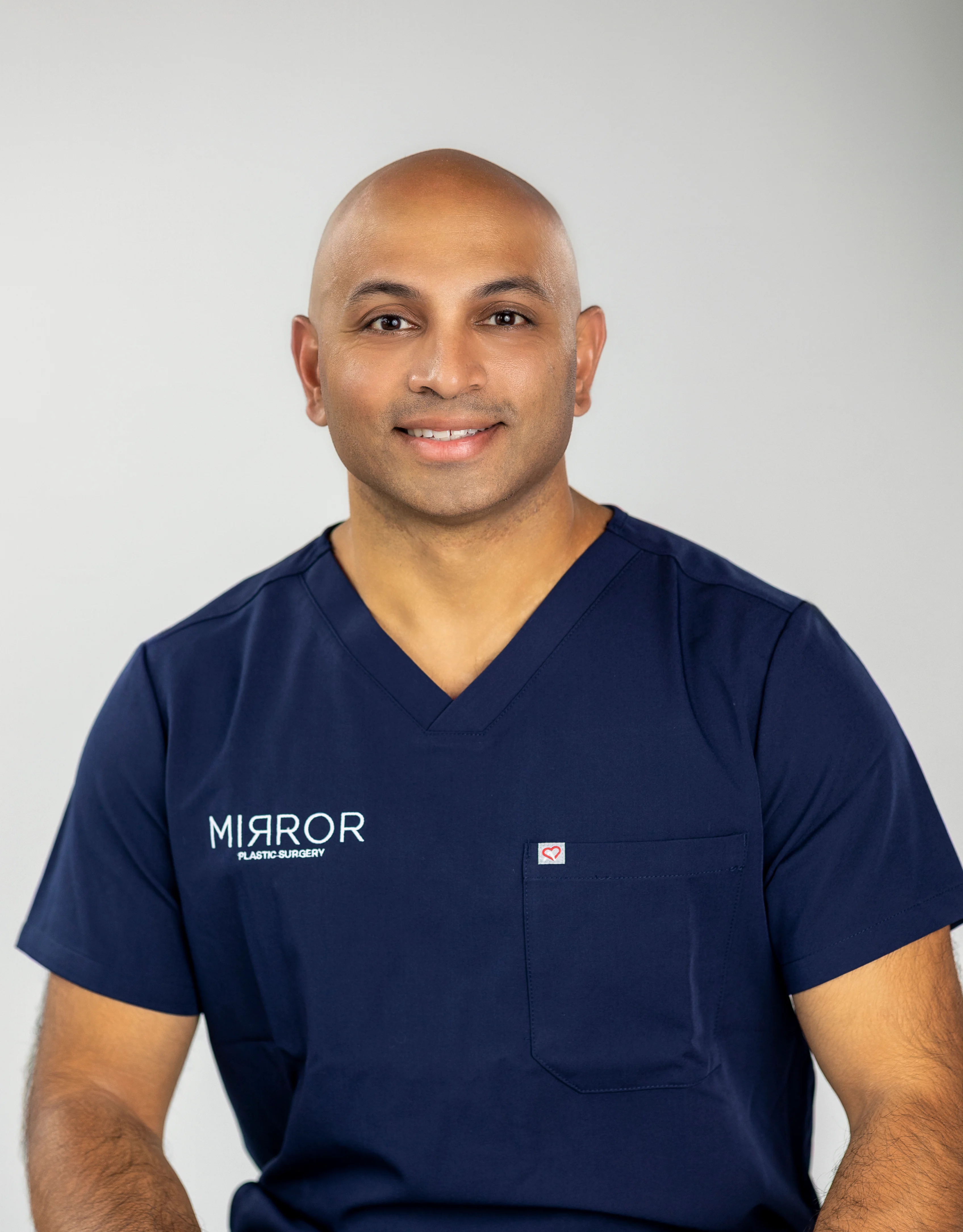
“Every injection is a balance between artistry and anatomy; a surgeon’s understanding of what lies beneath the skin is non-negotiable for safety.” — Dr. Akash Chandawarkar
A 2024 Aesthetic Surgery Journal international survey estimated that practitioners need about 3.85 years and 786 filler injections to reach advanced competency. Many med spa injectors begin far earlier in their learning curve, which creates a significant safety gap between facility types.
High-Risk Filler Zones And Why Surgeon Oversight Matters
Certain facial areas carry substantially higher risk for serious filler complications. The tear trough, nose, and glabella are three zones where limited vascular knowledge can cause tissue necrosis or permanent vision loss. The table below contrasts how med spas and plastic surgery practices typically address these risk factors.
| Risk Factor | Med Spa | Plastic Surgery Practice |
|---|---|---|
| Typical injector training | Weekend courses to RN/PA certification | 5+ years surgical residency plus fellowship |
| Vascular anatomy knowledge | Variable, cosmetic technique focus | Deep understanding of subdermal structures |
| Emergency response | Depends on on-site medical director and state regulations | Immediate physician intervention available |
| Hyaluronidase protocol | Variable by state regulations | Standard protocol with on-site supply |
What Is The Riskiest Place For Fillers?
The nose and glabella carry the highest risk for vascular occlusion leading to blindness, followed closely by the tear trough. The glabella is especially dangerous because the supratrochlear and supraorbital arteries connect directly to the ophthalmic artery, which helps explain the severity of complications in this region. A global review found blindness in approximately 0.94% of reported filler complications involving the nose, supraorbital area, and cheek. The tear trough lies near the angular artery, which connects to the ophthalmic artery behind the eye, so this delicate area becomes particularly hazardous in inexperienced hands.
The ASDS Task Force protocol for vascular occlusion instructs practitioners to stop injecting immediately at any sign of blanching, severe disproportionate pain, or mottled skin. The protocol then calls for activation of the emergency kit, high-dose hyaluronidase into the affected territory, warm compresses to support circulation, and emergent referral if vision changes, ocular pain, or neurological symptoms appear. Correct execution requires both an on-site supply and physician-level training to act quickly, which many med spas do not consistently provide.
This safety gap becomes even more significant when consultations feel rushed, which is why the consultation experience deserves closer attention.
The Consultation Experience: Concierge Care Versus High Volume
A safe injectable journey starts with a thorough consultation. A high-quality assessment focuses on clinical evaluation and informed consent, rather than product sales or same-day pressure. Mirror Plastic Surgery follows this model. Dr. Akash’s initial assessments can extend up to an hour and begin with an open conversation about the emotional reasons for seeking treatment before any product is discussed.
Why A 15-Minute Consult Falls Short
A brief consultation cannot fully assess facial proportions, individual risk factors, and long-term goals. These elements determine whether injectables are appropriate and how they should be sequenced. As noted earlier, reaching advanced competency in fillers takes years of training and extensive hands-on experience, not a quick introductory course. The hour-long consultation at Mirror Plastic Surgery reflects a concierge philosophy that prioritizes understanding before injecting. This approach supports natural, balanced results and helps avoid the “overdone” look that often follows isolated, single-area treatments.1
For Tampa Bay residents who want this level of care, schedule your comprehensive assessment with Dr. Chandawarkar and experience a detailed, unhurried evaluation.
How To Vet Any Injector: Five Key Questions
Every patient can improve safety by asking structured questions before booking. Start with credentials, then move into experience, oversight, and aesthetic judgment.
- “Are you a board-certified plastic surgeon or physician?” Board certification reflects years of supervised surgical training in facial anatomy and overall patient safety.
- “What is your experience with vascular complications?” Ask specifically about their training in recognizing and managing occlusion events, along with how often they review these protocols.
- “Do you have a physician on-site during injections?” Many med spas lack immediate physician access. Plastic surgery practices instead have surgeons available to manage vascular occlusion and other emergencies.
- “How do you handle emergencies?” The practice should keep hyaluronidase on-site and follow a documented vascular occlusion protocol. The ASDS Task Force strongly recommends immediate high-dose hyaluronidase for vascular occlusion from hyaluronic acid fillers, based on moderate certainty evidence.
- “Can you show me before-and-after photos of full-face treatments?” Review results for natural, balanced changes across the entire face. Avoid providers whose galleries show overfilled features or isolated corrections that create visible asymmetry.
When A Med Spa May Be Reasonable
Some scenarios carry relatively low risk. For straightforward treatments such as lip augmentation in healthy individuals, a reputable med spa with a well-trained injector and documented on-site physician oversight may be reasonable. The American Society for Dermatologic Surgery Association has proposed model legislation urging states to require medical directors with procedure-specific training and public notification when no physician is on-site.
Treatments involving high-risk zones such as the tear trough, nose, or glabella, or complex full-face balancing, call for a different level of expertise. In these situations, a board-certified plastic surgeon offers a safer and more precise option.
Why Mirror Plastic Surgery Stands Out In Tampa Bay
For patients in the St. Petersburg and Tampa Bay area, Mirror Plastic Surgery combines concierge-level attention with surgeon-led safety. Dr. Akash Chandawarkar personally performs every neuromodulator and dermal filler treatment, rather than delegating injections to nurses or physician assistants. His background includes Harvard education, Johns Hopkins surgical training, an aesthetic surgery fellowship at Manhattan Eye Ear & Throat Hospital, and advisory roles with Merz Aesthetics and Tiger Aesthetics.
The practice remains supplier-neutral, so product selection follows each patient’s anatomy and goals. The cost of asymmetry, over-treatment, or complication management often exceeds the savings from a lower-priced provider. Choosing surgeon-led care from the beginning reduces the likelihood of costly corrections and supports natural, lasting outcomes.1
Mirror Plastic Surgery also emphasizes ongoing communication, with prompt responses by call, text, or email and a long-term care philosophy. Patients interested in a full-face liquid facelift approach, combining neuromodulators, dermal fillers, and biostimulators like Radiesse, receive a holistic assessment. Dr. Akash sequences volume, contour, and dynamic line treatments thoughtfully to avoid the “pillow face” effect that can occur when every area is filled at once.1
Frequently Asked Questions
Is Botox Cheaper At A Med Spa?
Many med spas price Botox lower than physician-led practices due to higher volume and lower overhead. Correcting a poor outcome or managing a complication often costs more than the initial savings. A more useful question focuses on whether the injector has the anatomical training and emergency protocols to reduce the chance of those problems.
Which Filler Areas Are Most Dangerous For Vision Loss?
The nose, glabella, and tear trough present the greatest risk because of their vascular connections to the ophthalmic artery. Filler entering arteries in these regions can cause tissue necrosis or blindness. The glabella is particularly concerning due to the direct pathway from the supratrochlear and supraorbital arteries to the ophthalmic artery. These areas call for deep surgical anatomy knowledge and an on-site emergency protocol. For detailed discussion, see the High-Risk Filler Zones section above.
Can A Med Spa Injector Handle Complications?
Capability varies by state regulations and practice structure. In Florida, aesthetic medicine counts as the practice of medicine, which requires physician delegation and a good faith examination before aesthetic procedures. Plastic surgery practices provide immediate surgeon access for vascular occlusion and other emergencies, which creates a meaningful safety advantage for higher-risk treatments.
How Long Do Fillers Last?
Most fillers last 6–18 months, depending on the product, treatment area, and individual metabolism.1 Biostimulatory fillers like Radiesse can last 2–3 years by stimulating collagen production.1 Dr. Akash offers a full range of options, including Juvederm, RHA, Restylane, Versa, Radiesse, and Evolysse, and selects products based on anatomy rather than supplier preference.
What Is A Concierge Med Spa?
A concierge med spa centers care around personalized attention, extended consultation time, and consistent communication instead of high-volume turnover. Mirror Plastic Surgery follows this model with hour-long consultations, direct access to Dr. Akash, and a philosophy that places safety and function before aesthetics. This structure contrasts with high-volume “mill” practices that move quickly through multiple patients per hour with limited individualized assessment.
Choose Expertise Over Convenience
The decision between a med spa and a plastic surgery practice for injectables should focus on anatomical expertise and safety protocols. Facility type matters less than the person holding the syringe, the training behind each decision, and the plan for managing complications. Mirror Plastic Surgery addresses all three with a board-certified plastic surgeon who performs every treatment, maintains on-site emergency protocols, and dedicates up to an hour to understanding each patient before treatment begins.
Secure An Appointment
Mirror Plastic Surgery welcomes new patients seeking safe, natural-looking injectable results in the St. Petersburg and Tampa Bay area. Dr. Akash Chandawarkar personally performs all treatments so that every injection reflects years of surgical anatomy training and a concierge commitment to long-term well-being.
Start your journey toward balanced, harmonious facial rejuvenation today. Call 727-361-6515 to schedule your comprehensive assessment.
Disclaimer: Results may vary from person to person. Editorial content, before and after images, and patient testimonials do not constitute a guarantee of specific results.
1 Results may vary from person to person. Editorial content, before and after images, and patient testimonials do not constitute a guarantee of specific results.


