
Written by: Ellie Pranckevicius, FNP-BC, Aesthetic Nurse Practitioner & Aesthetic Injector | Facial Restoration & Regenerative Injectable Specialist, Mirror Plastic Surgery
Key Takeaways
- Injector training and on-site physician access, not the setting label, drive injectable safety.
- High-risk facial zones such as the nose, glabella, and tear trough demand deep anatomical knowledge and rapid complication management.
- Florida law requires direct physician presence for RN-administered injections, yet many med spas rely on remote or absentee oversight.
- Ellie Pranckevicius combines esthetics licensure, ICU nursing experience, and FNP-BC certification under board-certified plastic surgeon Dr. Akash Chandawarkar.
- Book a consultation with Ellie at Mirror Plastic Surgery to receive a comprehensive, hour-long assessment with board-certified oversight built into every appointment.
Why the Nose, Tear Trough, and Glabella Carry Higher Filler Risk
Not all facial zones carry equal risk. A 2026 systematic review identified the nose and glabella as the highest-risk sites for vascular occlusion and blindness after dermal filler injection, due to retrograde flow into the ophthalmic artery via the supratrochlear, supraorbital, or angular arteries. In a large observational study of 41,775 hyaluronic acid filler cases, the forehead had an early complication rate of 0.29%.
The tear trough presents a separate anatomical challenge. The medial tear trough sits directly over the infraorbital foramen, where the infraorbital, angular, and dorsal nasal arteries converge, so depth control and periocular anatomy knowledge are non-negotiable. Superficial plane injections in this zone carry high risk of Tyndall effect, persistent edema, and vascular compromise.
The table below connects each high-risk zone with its key vessels, main complications, and technique adjustments, showing why a single generic injection method cannot safely cover the entire face.
| High-Risk Zone | Primary Vascular Structures at Risk | Potential Complication | Recommended Technique |
|---|---|---|---|
| Glabella | Supratrochlear vessels | Blindness, necrosis | Cannula, low-pressure injection |
| Nasal dorsum/tip | Angular artery | Blindness, skin necrosis | Cannula, deep plane placement |
| Tear trough | Infraorbital, angular, dorsal nasal arteries | Vascular compromise, edema | Deep supraperiosteal bolus, high-cohesivity filler |
| Forehead | Supraorbital neurovascular bundle | Cerebral embolic events | Deep plane, Doppler mapping |
Dr. Akash Chandawarkar is a Johns Hopkins-trained plastic surgeon who completed fellowship training in aesthetic surgery at MEETH/Lenox Hill Hospital. Vascular anatomy forms the core of his surgical education rather than a brief add-on module. Ellie Pranckevicius works within that framework, with Dr. Akash available on-site for immediate escalation.
Emergency Response for Fillers: Why Minutes Matter
When vascular occlusion occurs, the treatment window is narrow. A prepared practice following the DeLorenzi protocol can deliver reversal agent within minutes of recognition, with the optimal window being the first hour for near-100% tissue salvage rates.1 For ophthalmic artery occlusion, reversing the occlusion within 90 minutes is critical to preventing permanent blindness.
Florida law creates a meaningful structural difference in how quickly that response can occur. Florida Board of Nursing guidance requires a supervising physician to be physically present with direct visual observation for RN-administered aesthetic injections. Remote or standby availability does not satisfy the requirement. In practice, many med spas operate with an absentee medical director, a physician who lends a name and signature but never meaningfully participates in approving procedures or reviewing adverse events.
| Factor | High-Volume Med Spa (Typical) | Mirror Plastic Surgery |
|---|---|---|
| Physician presence during injection | Often absentee medical director, remote oversight | Board-certified plastic surgeon on-site |
| Reversal agent on-site | Required but compliance variable | On-site, in-date, with written dosing protocol |
| Emergency escalation path | Contact medical director, potential delay | Immediate in-room physician escalation |
| Injector anatomy credential | Varies, RN or NP with variable training | FNP-BC with ICU background plus plastic surgeon oversight |
Every practice injecting dermal filler must keep an in-date reversal agent emergency kit on-site with a rehearsed high-dose pulsed protocol. An expired or missing kit is indefensible after an occlusion event.
Ellie’s Training Path: From Esthetics to ICU to Nurse Practitioner
Ellie Pranckevicius, FNP-BC, holds a Bachelor’s in Health Science from Boston University, completed a 600-hour hands-on aesthetics licensure program, and earned both her Bachelor’s and Master’s in Nursing from the University of South Florida, creating a foundation that blends surface-level skin physiology with systemic vascular knowledge. That academic training was then tested in a high-acuity clinical environment, as she spent four years in the Neuroscience ICU at Tampa General Hospital, where clinical judgment under pressure, physiological pattern recognition, and decisive action become reflexive. Her career began in 2019 at a high-end medical spa on Newberry Street in Boston, advancing from esthetician to medical esthetician and giving her direct experience with the aesthetic outcomes patients seek before she gained the clinical depth to deliver them safely.
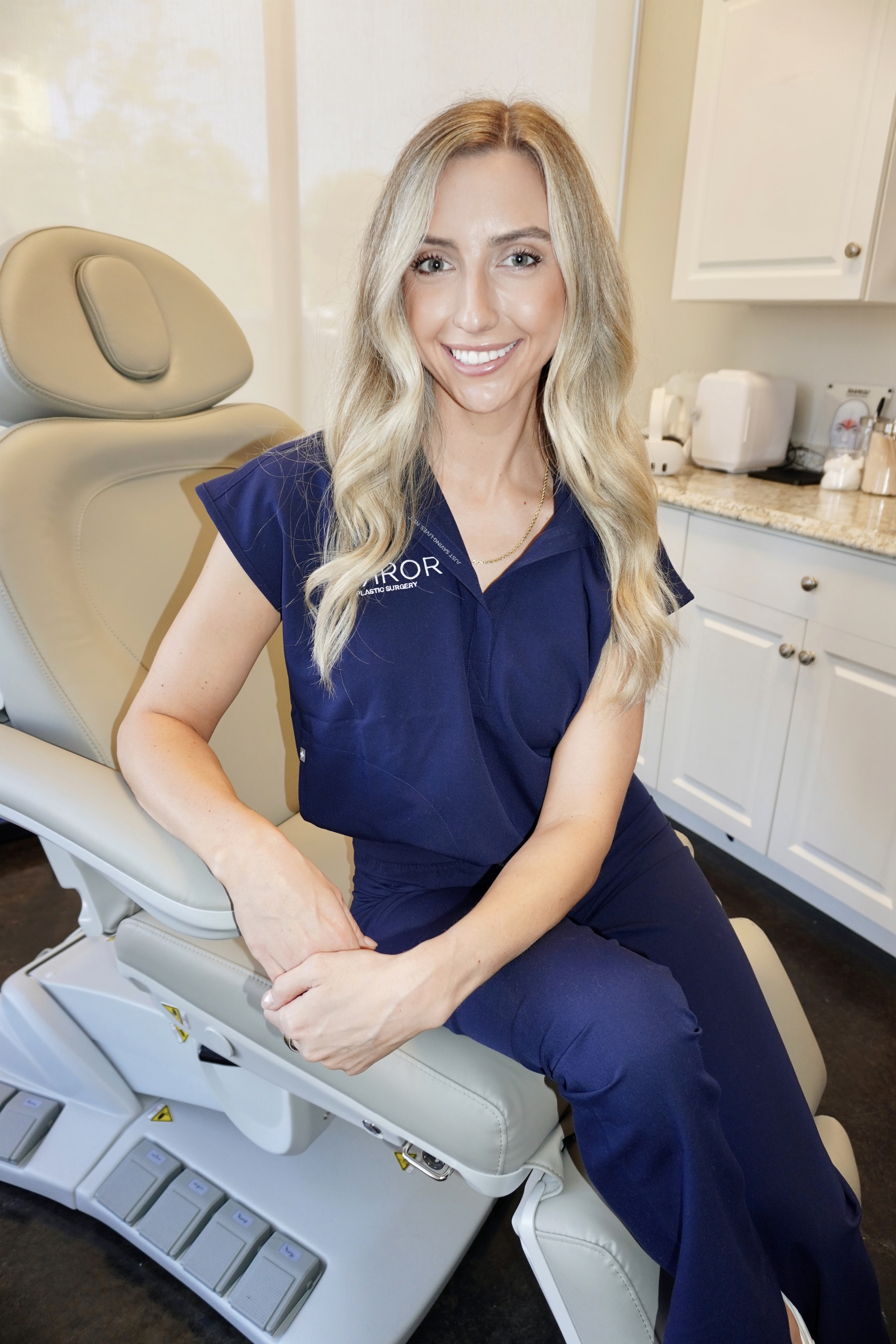
That trajectory, combining esthetics licensure, ICU nursing, and advanced practice certification, produces a practitioner who understands skin physiology at the surface level and vascular physiology at the systemic level. Most med-spa injectors hold one of those credentials, not all three. Ellie’s approach to full-face mapping treats the face as an integrated structure. She restores foundational volume before considering augmentation and focuses on seamless transitions between the upper, middle, and lower facial thirds to avoid the asymmetry that isolated single-area injections often create.
Board-certified plastic surgeons and the nurse practitioners working directly under their supervision possess the deepest training in facial vascular anatomy and complication management, a standard that Ellie’s credential path and Dr. Akash’s on-site presence together meet.
Concierge Assessment at Mirror vs a 15-Minute Consult
High-volume injectable practices frequently schedule consultations in 10–15 minutes, a window too short for mapping facial anatomy, understanding emotional drivers, or screening contraindications thoroughly. Many Tampa and St. Pete professionals describe a consistent pattern of upselling pressure, generic treatment plans, and uncertainty about what was actually injected and why.
Mirror Plastic Surgery’s initial assessment runs up to an hour. That time supports a structured top-to-bottom diagnostic evaluation, exploration of the patient’s long-term goals, and development of an evidence-based treatment plan that prioritizes safety first, function second, and aesthetics third. Ellie often advises patients that an expensive service is not yet necessary for them, which builds trust rather than short-term revenue. The practice is supplier-neutral, so product recommendations follow individual anatomy and outcome data instead of manufacturer quotas.
Anatomically guided filler placement in structurally important facial zones can produce predominantly mild and transient adverse events with no clinically significant functional repercussions.1 This pattern highlights the value of careful regional anatomical planning over volume-driven approaches.
Cost, Revisions, and the Real Price of Filler
The upfront cost gap between a high-volume med spa and a concierge plastic surgery practice narrows once revision risk enters the equation. A 2026 systematic review identified facial overfilled syndrome (FOS), which produces deformities such as “chipmunk” cheeks and “pillow” faces, as a direct consequence of excessive high-volume filler practices. Correcting FOS requires reversal agent dissolution sessions, extended downtime, and often multiple appointments, each with its own cost and risk.
The same review confirmed that anatomic injection site, injection technique, and filler permanence are the principal determinants of irreversible injury, and that hyaluronic acid fillers remain preferable in high-risk zones because reversal agent can dissolve them. A single well-planned treatment from a credentialed injector with on-site physician oversight is structurally less likely to require costly correction than a series of high-volume, rushed sessions.
Five Questions to Vet Any Injector
Patients in Florida can quickly screen any injector by asking five focused questions.
- What is your license type, and are you board-certified? Florida permits MDs, DOs, NPs (ARNPs), PAs, and supervised RNs to inject. ARNPs may operate under a written collaborative agreement, and RNs require a physician order and direct on-site supervision per Florida Board of Nursing guidance.
- Who is the medical director, and are they physically present during my treatment? Florida does not require med-spa medical directors to be board-certified or board-eligible in dermatology or plastic surgery, so any MD or DO with an active, unencumbered Florida license may serve, subject to fact-specific supervision standards under §458.348. Remote oversight does not satisfy the direct supervision requirement for RN injectors.
- Do you have reversal agent on-site, in-date, and a written vascular occlusion protocol? Confirm the practice maintains the reversal agent standard described earlier: in-date kit, written protocol, and rehearsed dosing.
- Can you describe your emergency escalation path if I develop blanching or vision changes during treatment? A prepared injector should describe this protocol without hesitation, including immediate access to reversal agent on-site rather than storage off-site.
- What specific training do you have in the zone you are treating? High-risk zones such as the glabella, nose, tear trough, and forehead require demonstrable anatomical training. Board-certified plastic surgeons complete 5–6 years of training focused on facial anatomy, so your injector’s credential path should show comparable depth for the zone being treated.
When a Med Spa Can Be a Reasonable Choice
Not every injectable treatment carries equivalent risk. A med spa with a credentialed NP or PA injector, a genuinely active medical director, documented hyaluronidase on-site, and a written occlusion protocol may be a reasonable choice for lower-risk scenarios, including:
- Neuromodulator treatments in low-risk zones such as the frontalis, crow’s feet, or masseter, where vascular anatomy is more forgiving
- Lip augmentation with hyaluronic acid filler performed by an experienced NP or PA under documented physician oversight
- Maintenance appointments for established patients with a stable, well-mapped treatment history and no prior complications
The calculus shifts toward plastic-surgery-level oversight when the treatment plan involves high-risk zones such as the glabella, nose, tear trough, or forehead, biostimulatory fillers, combination full-face treatments, or any patient with prior facial surgery that may have altered vascular anatomy. Prior filler or surgery can shift blood vessel positions, increasing complexity and risk during subsequent injections in high-risk zones.
Frequently Asked Questions
What is vascular occlusion, and how quickly does it need to be treated?
Vascular occlusion occurs when dermal filler enters or compresses a blood vessel, cutting off circulation to the tissue it supplies. It is recognized by sudden or disproportionate pain, immediate blanching, and dusky or mottled discoloration following a vessel path. The treatment window is extremely narrow, and the optimal window for reversal agent administration is within the first hour for near-complete tissue salvage.1 For ophthalmic artery involvement, the 90-minute window mentioned earlier becomes the difference between vision preservation and permanent loss. On-site physician access and immediately available reversal agent therefore separate a managed complication from a permanent injury. At Mirror Plastic Surgery, Dr. Akash is on-site and reversal agent is maintained in-date with a written dosing protocol.
What does Florida law actually require from a med-spa medical director?
Florida does not require med-spa medical directors to be board-certified or board-eligible in dermatology or plastic surgery, so any MD or DO with an active, unencumbered Florida license may serve, subject to fact-specific supervision standards under §458.348. For practices employing RN injectors, the supervising physician must be physically present in the room with direct visual observation during the injection, and remote or standby availability does not satisfy the legal standard. NPs (ARNPs) and PAs may inject under written collaborative agreements without the physician physically present, but those agreements must document the manner and frequency of supervision. A good-faith examination by a physician, NP, or PA must occur before any injectable treatment, and a self-reported intake form does not qualify. Florida’s enforcement is complaint-driven, so non-compliant practices may operate until a patient complaint triggers a review.
Which facial zones are highest risk for filler complications, and why?
The glabella, nasal dorsum and tip, tear trough, and forehead are the highest-risk zones for serious filler complications including blindness, stroke, and tissue necrosis. These zones carry elevated risk because of the retrograde arterial pathways described earlier, where any filler that enters the supratrochlear, supraorbital, or angular arteries can travel backward into the ophthalmic circulation and cut off blood supply to the retina. Injecting in these zones requires deep anatomical knowledge, appropriate technique such as cannula use, deep plane placement, and low-pressure injection, and the immediate ability to administer hyaluronidase if occlusion occurs.
How is Ellie’s approach at Mirror Plastic Surgery different from a typical med-spa injector?
Ellie Pranckevicius, FNP-BC, brings a credential combination that is uncommon in the injectable space, including a 600-hour esthetics licensure program, four years in the Neuroscience ICU at Tampa General Hospital, and a Master’s in Nursing from the University of South Florida. Her ICU training, detailed in the credentials section, translates directly to injectable safety, since the same pattern recognition that identifies a deteriorating neuro patient also identifies early vascular occlusion signs before they become irreversible. She works within a concierge model that allocates up to an hour for initial assessment, uses a full-face mapping approach rather than isolated single-area injections, and operates with Dr. Akash Chandawarkar, a Harvard-educated, Johns Hopkins-trained plastic surgeon, on-site for immediate escalation. The practice is supplier-neutral, so product recommendations follow individual anatomy and evidence instead of manufacturer incentives.
Is a non-surgical BBL with injectables safe, and what products does Mirror use?
Non-surgical BBL with injectables can be a legitimate aesthetic option when a credentialed injector uses appropriate biostimulatory products. Mirror Plastic Surgery uses Radiesse and AlloClae for gluteal contouring and non-surgical BBL treatments. These biostimulatory fillers stimulate the body’s own collagen production, providing structural support and gradual volume enhancement.1 Ellie tailors each treatment to individual goals, whether significant volume, subtle enhancement, correction of hip dips, or cellulite reduction, and she integrates regenerative medicine principles. As with all injectable treatments at Mirror, the approach prioritizes safety and anatomical precision over volume-driven outcomes.
Conclusion and Next Step
The med spa versus plastic surgery decision centers on whether your injector’s anatomical training matches the complexity of your treatment plan and whether a board-certified physician is immediately available if something goes wrong. Florida law sets a minimum floor for supervision, yet compliance with that floor varies widely across the state’s dense concentration of med spas. The framework in this guide, including risk-zone awareness, credential verification, emergency protocol confirmation, and the five vetting questions, gives you tools to evaluate any provider objectively.
Mirror Plastic Surgery’s concierge model serves patients who have moved past the 15-minute consultation and want a provider relationship grounded in anatomical depth, honest communication, and long-term outcomes. Ellie’s esthetician-to-ICU-to-NP credential path, combined with Dr. Akash’s on-site plastic surgery expertise, delivers the hybrid that many Tampa and St. Pete patients seek: med-spa accessibility with plastic-surgery-level safety infrastructure.
Disclaimer: Results may vary from person to person. Editorial content, before and after images, and patient testimonials do not constitute a guarantee of specific results.
1 Results may vary from person to person. Editorial content, before and after images, and patient testimonials do not constitute a guarantee of specific results.