
Written by: Ellie Pranckevicius, FNP-BC, Aesthetic Nurse Practitioner & Aesthetic Injector | Facial Restoration & Regenerative Injectable Specialist, Mirror Plastic Surgery
Key Takeaways
- Dynamic wrinkles, static lines, and volume loss come from different aging mechanisms and respond to different treatments.
- Matching the right tool to the right issue, such as neuromodulators for muscle movement and fillers for volume, improves safety and longevity.
- A slow, detailed whole-face evaluation at rest and in motion helps avoid mismatched treatments and an overfilled look.
- Thoughtful combinations of injectables and energy devices often work better than any single treatment for complex facial aging.
- Schedule your personalized assessment at Mirror Plastic Surgery to compare wrinkle and volume options tailored to your anatomy.
How Dynamic Wrinkles, Static Lines, and Volume Loss Develop
Dynamic wrinkles form when facial muscles that attach directly to the skin contract and repeatedly fold the overlying skin along predictable paths. Forehead lines, crow’s feet, and glabellar “11s” are classic examples. The mechanism is neuromuscular. A nerve releases acetylcholine at the neuromuscular junction, the muscle fiber shortens, and the skin above it creases.
Static lines behave differently. They remain visible at rest and reflect cumulative collagen and elastin loss, chronic skin folding, and gradual deflation of underlying tissue. Bone and facial fat compartments change over time, altering how the skin is supported, and these changes make repeated movement more likely to leave a line behind.
Volume loss arises from deflation and descent of facial fat compartments plus skeletal resorption at key sites including the orbital rim, midface, and jaw. Deep fat pads compressed against bone tend to selectively atrophy over time, while superficial fat pads near the dynamic muscles of facial expression behave differently, producing a face that looks hollow in the midface and heavy along the jaw due to fat migration rather than uniform loss. Volume loss often contributes more to an aged appearance than surface wrinkles alone.
Ellie’s Whole-Face Approach to Treatment Planning
A physician-led whole-face evaluation at rest and during expression can distinguish muscle-related dynamic wrinkles from volume loss, skin damage, and laxity, which prevents inappropriate treatment selection. At Mirror Plastic Surgery, Aesthetic Nurse Practitioner Ellie Pranckevicius, FNP-BC, performs this evaluation. Her dual background in esthetics and advanced nursing, including four years in the Neuroscience ICU at Tampa General Hospital, supports a precise understanding of both surface and subdermal anatomy.
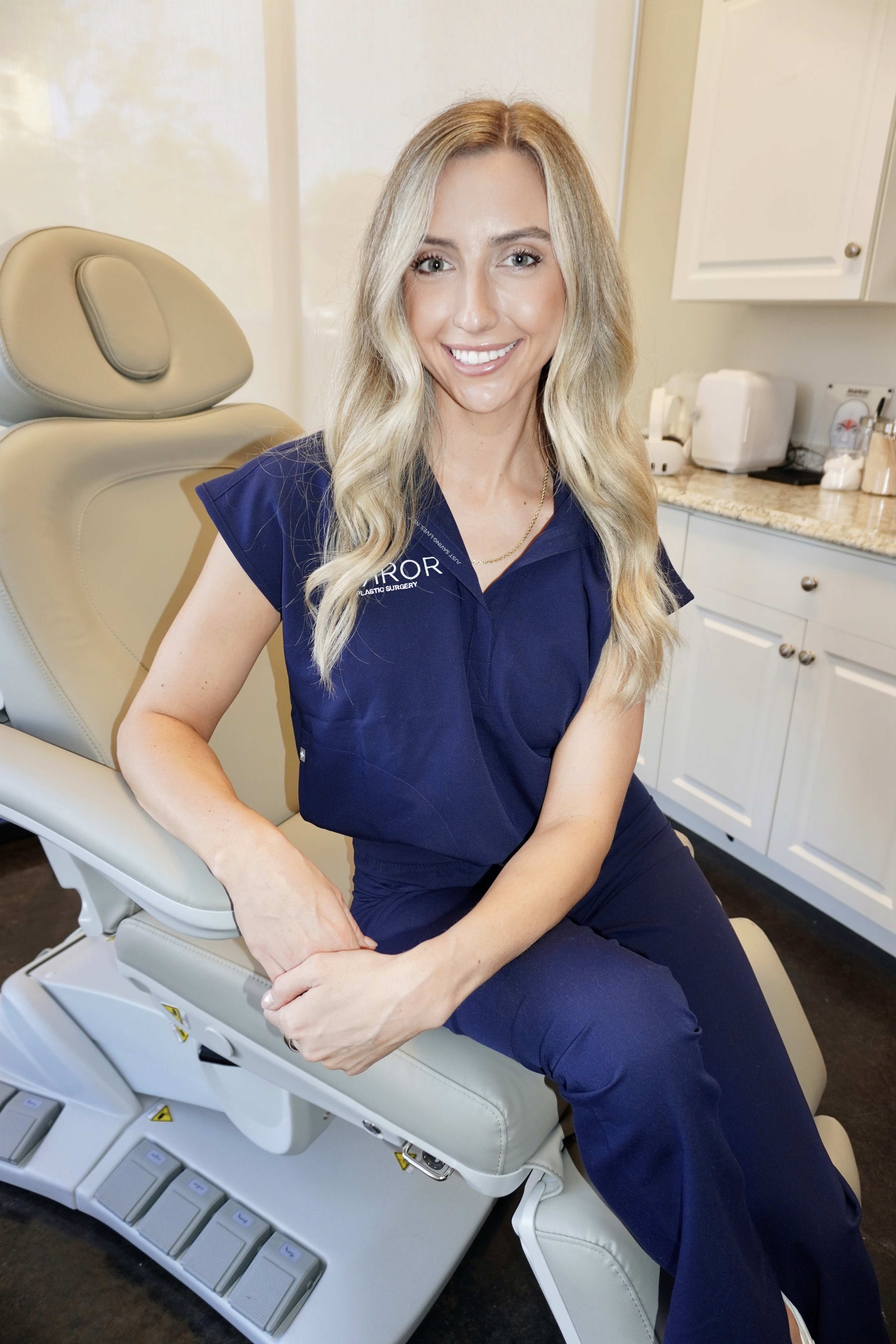
Ellie focuses on foundational restoration before adding volume. She evaluates the upper, middle, and lower face as one connected system rather than isolated zones. This approach reduces the risk of asymmetry and the “overdone” look that can follow single-area injections. Her initial consultation at Mirror Plastic Surgery can last up to an hour, which contrasts with rushed assessments that leave patients unsure about recommendations.
Current Trends in Wrinkle and Volume Treatment
Narrative reviews show that multimodal protocols that integrate energy-based devices with dermal fillers can address volume deficits and surface texture at the same time. These approaches often outperform single-modality plans for complex facial aging.1
For patients with pronounced hollowness and significant volume loss in the temples and midface, optimal outcomes come from combining deep supraperiosteal placement of large-particle fillers for structural reinforcement with superficial high-cohesive gel-type injections to restore soft-tissue fullness1. Related research proposes a priority sequence that starts with lifting, then moves to contouring, volumization, smoothening, and revitalization to match facial biomechanics.
Diluted calcium hydroxylapatite (CaHA) acts as a collagen-stimulating agent for skin-tightening procedures and improves dermal elasticity and surface texture without requiring large-volume volumization. These refinements highlight a shift toward mechanism-specific protocols rather than product-focused decisions.
Patient Factors That Shape Your Treatment Plan
Patient-specific factors guide every treatment choice, and a careful review must consider both systemic and local issues that affect safety and results.
Systemic factors include medical history and current medications. Botulinum toxin type A is contraindicated in pregnant or breastfeeding women, individuals with neuromuscular disorders such as myasthenia gravis or Lambert-Eaton syndrome, and patients with a known allergy to any component of the neurotoxin formulation. Aminoglycoside antibiotics, anticoagulants, and muscle relaxants require careful consideration before botulinum toxin treatment because they may increase bruising risk or alter treatment response.
Local factors focus on the treatment area itself. Treatment should be delayed when there is local infection, dermatitis, skin irritation, or active acne in the treatment area because injecting through compromised skin increases infection risk. Fitzpatrick skin type influences the risk of post-procedural edema and hyperpigmentation when combining energy-based devices with fractional resurfacing, especially in higher skin types. Pre-existing eyelid or brow ptosis and compensatory muscle activity must be evaluated before botulinum toxin treatment, because reducing forehead movement without addressing underlying balance can worsen brow position or eyelid droop.
Risks, Limitations, and Treatment Timing
Rare complications of dermal fillers include infection and vascular occlusion, and these risks decrease with careful anatomical assessment, appropriate product and depth selection, and established emergency protocols. On-site access to hyaluronidase is a key safety feature for reversing hyaluronic acid fillers when needed.
Staged treatment versus same-day treatment depends on clinical judgment. When combining neurotoxin injections with microneedle fractional radiofrequency, treatments should be spaced at least 3 days apart. This spacing allows healing and reduces the risk of product migration or complications.
Misconceptions That Lead to Mismatched Treatments
Several common beliefs push patients toward treatments that do not match their actual aging pattern.
- Neuromodulators erase static lines. When a line is already visible at rest, muscle relaxation alone may not erase an established static crease caused by volume loss or collagen change. Neuromodulators address muscle activity but do not rebuild lost tissue.
- All fillers work the same way. Large-particle granular fillers suit deep structural support in contouring indications because they distribute vertically in tissue and provide high elastic modulus, while highly cohesive gel-type fillers are preferred for localized volumization due to their horizontal distribution. Product selection must match the anatomy and goal.
- Botox treats nasolabial folds directly. Botox is not recommended as a primary treatment for nasolabial folds because they are not primarily caused by a single muscle group, and injecting near the fold to relax the levator labii superioris can impair smile dynamics and create unnatural results.
- Faster results always mean better outcomes. Biostimulatory fillers build collagen gradually over months and can last longer than immediate-volume products. Chasing instant change can lead to choosing a tool that does not match the underlying mechanism.
Comparing Treatment Options by Mechanism
The table below compares four primary modalities with the three core aging mechanisms and includes longevity, downtime, and reversibility. All longevity figures represent typical clinical ranges, and individual results vary based on anatomy, metabolism, and treatment area.1
| Modality | Best Matched Aging Mechanism | Typical Longevity | Downtime | Reversible? |
|---|---|---|---|---|
| Neuromodulators (Botox, Dysport, Daxxify, Xeomin, Jeuveau) | Dynamic wrinkles (muscle-driven) | Botox/Dysport: 3–4 months, Daxxify: up to 6 months | Minimal, onset 48–72 hours, full effect 10–14 days | No (effect dissipates naturally) |
| Dermal Fillers (Radiesse, Sculptra, Juvederm, RHA, Restylane, Versa) | Static lines, soft-tissue volume loss | 6–24+ months depending on product and area | 24–48 hours social downtime, swelling or bruising up to 1 week | HA fillers: Yes, with hyaluronidase. Biostimulatory fillers: No (collagen stimulation is not reversible) |
| Radiofrequency Microneedling | Skin texture, crepey surface, mild laxity | 1–2 years with maintenance, onset 4–6 weeks | 2–3 days | Not applicable (device-based remodeling) |
For patients with multiple concerns, coordinated combination treatment using neuromodulators, fillers, and energy-based devices in a planned sequence produces more complete results than any single modality1. Most adults over 35 show a mix of aging mechanisms and benefit from multimodal planning rather than a single-product strategy.
FAQ
What distinguishes dynamic wrinkles from volume loss?
Dynamic wrinkles come from repeated muscle contractions that fold the overlying skin along predictable paths. Forehead lines, crow’s feet, and glabellar lines are the most common examples. They appear most strongly during expression and may soften or disappear at rest in earlier stages. Volume loss results from gradual atrophy of facial fat compartments and resorption of the underlying facial skeleton. It creates hollowing under the eyes, cheek flattening, and deepened folds that remain visible at rest regardless of muscle activity. The two mechanisms often coexist, so a whole-face evaluation at rest and during expression is necessary before choosing any treatment.
How long do results typically last for each modality?
Neuromodulators such as Botox and Dysport usually last three to four months, and Daxxify can extend results to about six months. Dermal fillers last six to twenty-four months or longer depending on the product formulation and treatment area, and higher-movement areas like the lips metabolize filler faster than the cheeks or jawline. Biostimulatory fillers such as Radiesse and Sculptra stimulate collagen production gradually over two to four months and can deliver results that last eighteen to twenty-four months or longer. Radiofrequency microneedling produces collagen remodeling that becomes visible over four to six weeks and can last one to two years with maintenance sessions. Individual metabolism, anatomy, and lifestyle influence all of these ranges.1
When should treatments be staged rather than combined?
Neuromodulators and hyaluronic acid fillers can often be combined safely in a single appointment after a thorough health history review. Many providers inject the neuromodulator first, then place filler after reassessing the injection sites, because reduced muscle activity can decrease mechanical shear forces that speed filler breakdown. Energy-based resurfacing procedures such as radiofrequency microneedling should be spaced at least two weeks from any injectable treatment to allow healing and reduce the risk of product migration. Patients with active skin infections, certain medications, or complex functional anatomy, including pre-existing ptosis or perioral functional concerns, may need staged planning across multiple appointments. Ellie reviews each of these factors during the initial hour-long assessment before scheduling treatment.
What safety steps reduce complication risk?
Injector expertise and anatomical knowledge provide the strongest safety foundation. A thorough pre-treatment review of medical history, current medications, neuromuscular conditions, and skin integrity is essential before any injectable or energy-based treatment. Hyaluronidase should be available on-site whenever hyaluronic acid fillers are used so that the team can respond quickly in the rare event of vascular occlusion. Conservative neuromodulator dosing preserves natural expression and lowers the risk of ptosis or asymmetry. Combination treatments that include both injectables and energy devices require careful sequencing. At Mirror Plastic Surgery, Ellie’s Neuroscience ICU background and deep understanding of facial anatomy inform every safety decision, and the practice’s supplier-neutral model keeps product selection focused on patient anatomy rather than inventory quotas.
Conclusion
The most effective med spa treatments for wrinkles and volume match the specific aging mechanism rather than current trends. Dynamic wrinkles respond to neuromodulators. Static lines and volume deficits respond to structural restoration with fillers or biostimulators. Surface texture and laxity respond to energy-based devices. When several mechanisms appear together, sequenced multimodal protocols can deliver results that a single modality cannot match.
This level of precision depends on an unhurried, anatomy-focused evaluation instead of a rushed consultation driven by quotas. Mirror Plastic Surgery’s concierge model, led by Ellie Pranckevicius and supported by Harvard-educated, Johns Hopkins-trained plastic surgeon Dr. Akash Chandawarkar, serves patients who want to understand the science behind their plan before they commit.
Start With a Comprehensive Assessment
Mirror Plastic Surgery’s hour-long top-to-bottom assessment maps your specific aging mechanisms, including dynamic wrinkles, static lines, and volume loss, to the modalities most likely to deliver safe, lasting results. Ellie reviews your full medical history, evaluates your face at rest and during expression, and presents a supplier-neutral treatment plan grounded in evidence rather than upselling.
Mirror Plastic Surgery is located at 780 4th Ave S, St. Petersburg, FL 33701. Reach the practice by phone or text at 727-361-6515, or by email at hello@mirrorplasticsurgery.com.
Disclaimer
Disclaimer: Results may vary from person to person. Editorial content, before and after images, and patient testimonials do not constitute a guarantee of specific results.
1 Results may vary from person to person. Editorial content, before and after images, and patient testimonials do not constitute a guarantee of specific results.