

Written by: Dr. Akash Chandawarkar, Board Certified Plastic Surgeon, Mirror Plastic Surgery | Last updated: September 9, 2026
Key Takeaways
Before you book injectable treatment in Florida, keep these core safety and legal points in mind:
- Florida law treats injectables as medical procedures that require licensed professionals working under defined supervision standards.
- Physicians (MD/DO) hold full authority to inject. RNs must follow the direct supervision requirement for RNs described earlier, and PAs/APRNs need written delegation protocols.
- Every medical spa must have a qualified physician medical director who documents protocols, verifies training, and prepares for emergencies.
- Patients should confirm injector credentials, supervision structure, AHCA registration, and emergency protocols before any injectable treatment.
- Choose physician-performed injectables at Mirror Plastic Surgery to align with the highest safety standards and surgical-level expertise.
Why Injectable Safety Standards Matter In Florida Med Spas
Injectables count as medical procedures, not spa add-ons. Florida’s regulatory framework reflects this reality, and violations can have life-changing consequences. In June 2026, Rosa Mena was sentenced to three years in prison in Port St. Lucie after a client developed partial facial paralysis from Botox injections given in a backyard shed. Mena used an altered, expired phlebotomy certificate and falsely claimed to be a physician.
In September 2026, Latonya Shanice Starks was arrested in Miami-Dade County after three clients were hospitalized following injections with an FDA-unauthorized product at her unlicensed spa. One client required surgery after MRI imaging revealed abscesses too deep to drain.
These cases highlight two major dangers: unqualified injectors and unregulated products. Florida law responds with clear rules about who may inject, what supervision they need, and what training they must complete. This guide explains those standards and offers a practical verification checklist so patients and operators can confirm compliance.
Who Can Legally Inject In Florida: The Scope-Of-Practice Matrix
Florida classifies injectables as the practice of medicine, so only specific licensed professionals may perform them within defined scopes. The table below summarizes who may inject and under what conditions, based on Florida Chapters 458, 459, and 464. The key takeaway: physicians (MD/DO) have full authority, while every other injector must work under physician supervision or delegation.
| Licensed Professional | Legal Authority to Inject | Supervision Required | Key Restrictions |
|---|---|---|---|
| Physician (MD/DO) | Full authority under Chapters 458/459 | None required | Must hold active, unencumbered Florida license |
| Physician Assistant (PA) | Yes, under physician delegation | Written protocol, physician genuinely available | Cannot act as supervising physician for RN injectors |
| Advanced Practice Registered Nurse (APRN/NP) | Yes, under physician protocol | Written protocol, physician genuinely available | Cannot substitute for physician in supervising RN injectors |
| Registered Nurse (RN) | Yes, under physician order | Direct supervision, physician physically present and visually observing | RN participation must be disclosed in informed consent |
| Licensed Practical Nurse (LPN) | Generally restricted from injectables | Only under strict, specific authorization | Narrow scope, not a standard injectable provider |
| Esthetician / Unlicensed Staff | Never permitted to inject | Prohibited under all circumstances | Manufacturer training certificates do not confer authority |
Key 2026 Update on RN Delegation: Florida Board of Nursing Final Order No. DOH-24-0637 (issued May 2024) confirmed that RNs may administer Botox only under direct physician supervision. The physician must be physically present and watching the injection. Remote or standby availability does not satisfy this standard. An APRN cannot substitute for the physician in this supervisory role, and the RN’s participation must be disclosed in the patient’s informed consent.
Estheticians, medical assistants, and unlicensed staff are strictly prohibited from performing injections or any procedure that penetrates living tissue, regardless of manufacturer training or certificates. Florida treats unlicensed practice of medicine as a felony under Florida Statute 458.327.
Med Spa Medical Director Requirements Florida: Supervision Standards And The “Ghost Director” Risk
Every medical spa offering injectables in Florida must operate under the oversight of a Florida-licensed physician (MD or DO) serving as medical director. The medical director’s responsibilities include:
- Creating and signing treatment protocols and standing orders
- Verifying the training and competency of all injectors
- Performing or authorizing good-faith examinations before treatment
- Reviewing patient charts on a documented schedule
- Being genuinely available for consultation and emergencies
These responsibilities translate into different supervision levels depending on the injector’s license. Direct vs. Indirect Supervision: for RNs, the Florida Board of Nursing requires direct supervision, meaning the physician must be physically present and visually observing the injection. For PAs and APRNs, the supervising physician may work off site but must be genuinely available for consultation and must maintain documented delegation protocols.
The “Ghost Medical Director” Problem: AHCA in 2026 is actively targeting nominal medical director arrangements where a physician signs an agreement, collects a small monthly fee, and never participates in care. Fines for these arrangements commonly run $5,000–$10,000 per violation. A compliant medical director relationship includes documented chart reviews, protocol approvals, and proof that the physician remains genuinely available.
Florida Botox Certification Requirements And Injectable Training Standards
Florida does not issue a standalone “med spa injector certificate.” Compliance depends on the injector’s professional license, documented delegation, and demonstrated competency. Best-practice training standards include:
- Hands-on anatomical training: detailed understanding of facial and subdermal anatomy, including vascular structures and danger zones
- Complication management: specific training in recognizing and managing vascular occlusion, including reversal agent administration protocols
- Emergency preparedness: documented protocols for anaphylaxis, vascular compromise, and ocular emergencies, with emergency kits physically on site
- Ongoing competency assessment: regular skills verification and continuing education
Vascular occlusion protocols should detail immediate cessation of treatment, rapid reversal agent reconstitution and administration, warm compress application, aspirin administration, and urgent ophthalmology consultation if periorbital involvement is suspected. A written protocol that has never been rehearsed functions as a document, not a defense.
A weekend certification course cannot grant legal authority to inject, and it cannot replace the anatomical expertise of a physician. Manufacturer training alone does not satisfy Florida’s delegation and supervision requirements. Board-certified plastic surgeons like Dr. Akash Chandawarkar bring advanced anatomical expertise from residency and fellowship training, which far exceeds what a short course can provide.
Florida Health Care Clinic Act: Registration Requirements For Med Spas
Beyond individual injector qualifications, the facility itself must meet state registration rules. Under the Florida Health Care Clinic Act (Chapter 400, Part X, Florida Statutes), a med spa that provides health care services for compensation and bills third-party payors generally must hold a Health Care Clinic license from the Agency for Health Care Administration (AHCA). Key points include:
- Exemption criteria: clinics wholly owned by Florida-licensed physicians (MD, DO, and certain other practitioners) may qualify for an exemption. The exemption tracks entity ownership, not the supervising physician arrangement.
- Non-physician ownership: Florida does not enforce a strict corporate practice of medicine doctrine, so non-physicians can own med spas. However, non-physician-owned entities generally require AHCA licensure, and even 1% non-clinician ownership can disqualify a practice from the practitioner-owned exemption.
- Penalties: operating an unlicensed health care clinic when one is required is a third-degree felony under Florida Statute 400.9935.
- Medical director duties under the Act: for licensed clinics, the medical director must review billing and coding practices, supervise clinical operations, and ensure all practitioners are appropriately licensed.
2026 Legislative Update: The proposed Medical Spa Prescription Drug Oversight Act (SB 1728/HB 1429) died in committee on March 13, 2026. AHCA continues active enforcement under the existing Health Care Clinic Act framework, and industry stakeholders anticipate reintroduction in 2027.
How To Verify Med Spa Injector Qualifications Florida: An 8-Step Checklist
Before booking any injectable treatment in Florida, work through this eight-step checklist to confirm the practice meets every legal and safety standard:
- Check the medical director’s license: use the Florida Department of Health’s license verification portal to confirm the medical director holds an active, unencumbered MD or DO license.
- Confirm the injector’s credentials: verify that the person performing your injection holds an active Florida license appropriate for injectables (MD, DO, PA, APRN, or RN).
- Ask about supervision structure: for RN injectors, confirm the supervising physician is physically present during injections, consistent with the direct supervision requirement for RNs described earlier. For PAs and APRNs, confirm written delegation protocols exist.
- Request the good-faith exam policy: Florida law requires a documented good-faith examination by a physician, PA, or APRN before any injectable treatment. Confirm who performs this exam.
- Ask about emergency protocols: confirm the practice has written vascular occlusion and anaphylaxis protocols, and that emergency supplies are on site.
- Review before-and-after photos: ask to see representative results from the specific injector who will treat you.
- Verify AHCA registration or exemption: ask whether the practice holds an AHCA Health Care Clinic license or a written exemption determination.
- Check for informed consent transparency: confirm the consent form clearly states who will perform the injection and, for RN injectors, that their participation appears as required by the Board of Nursing.
Red Flags: Warning Signs Of Unsafe Med Spa Practices
Patterns that trigger investigations in Florida med spas include the following warning signs. If you encounter any of these, treat them as strong signals that the practice may fall outside Florida’s legal framework:
- No identifiable medical director or reluctance to name the supervising physician
- Injectors whose licenses are not verifiable on the Florida Department of Health website
- Rushed consultations without a documented good-faith examination
- Inability to answer questions about complication management or emergency protocols
- Estheticians or unlicensed staff performing injections or recommending prescription treatments
- Reluctance to show before-and-after photos or provide product information
- Products sourced from unauthorized distributors or foreign suppliers
- Pressure to book immediately or discounts that seem unusually steep
Mirror Plastic Surgery: Where Safety-First Meets Surgical Expertise
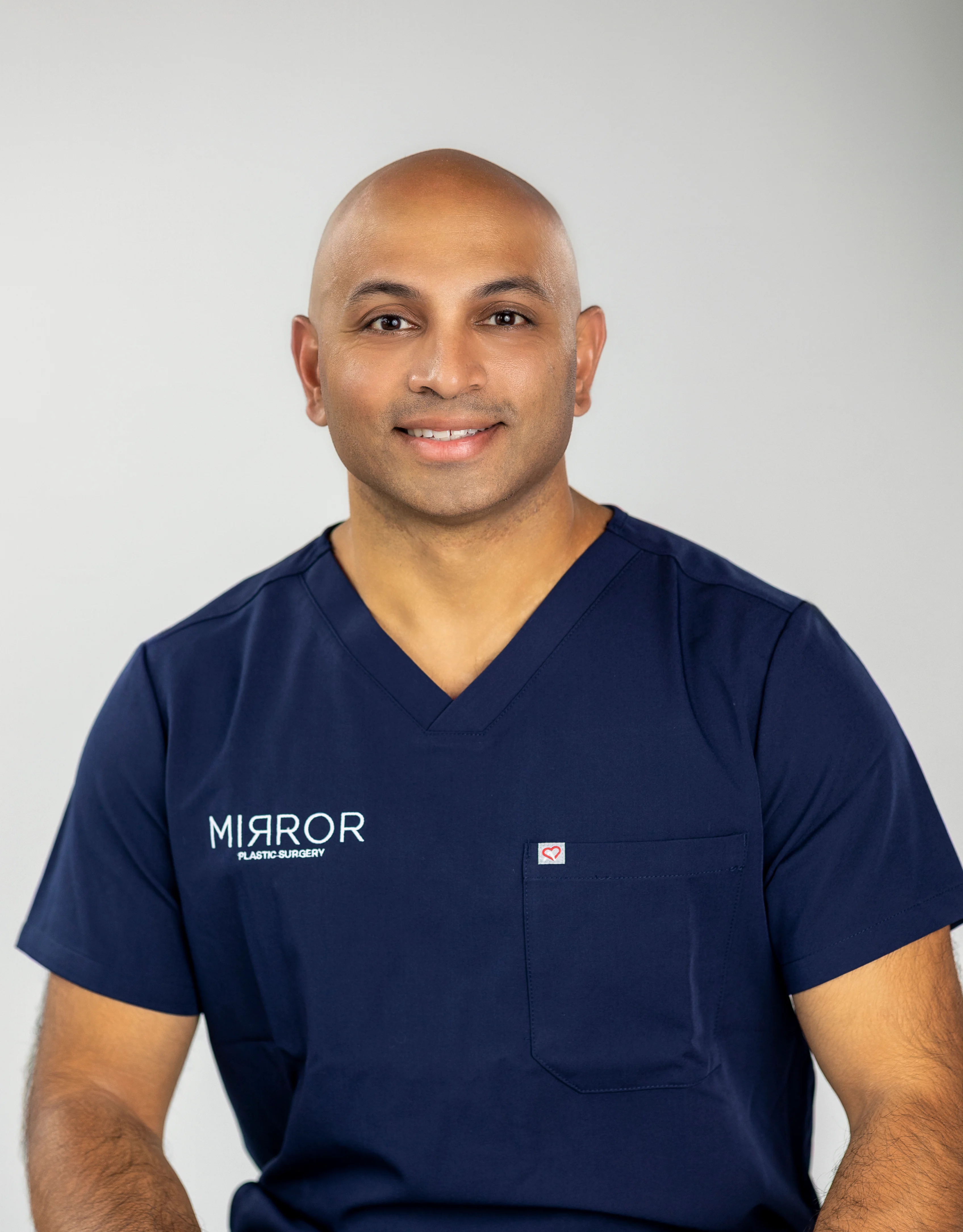
Mirror Plastic Surgery in St. Petersburg, Florida, puts these safety standards into daily practice. Every injectable treatment is personally performed by Dr. Akash Chandawarkar, a board-certified plastic surgeon whose training and experience exceed Florida’s minimum requirements.
Dr. Akash’s credentials reflect a commitment to surgical excellence. He completed his plastic surgery residency at Johns Hopkins, followed by specialized fellowship training in aesthetic surgery at the Manhattan Eye Ear & Throat Hospital (MEETH)/Lenox Hill Hospital. He holds certification from the American Board of Plastic Surgery and serves on advisory boards for Merz Aesthetics and Tiger Aesthetics, which keeps him at the forefront of injectable innovation. Because he is a board-certified plastic surgeon, every neuromodulator and dermal filler is placed by a physician with a surgeon’s command of facial and subdermal anatomy. This expertise makes injectable treatment both safer and more precise.
Mirror Plastic Surgery operates on the principle of safety first, function second, aesthetics third. Consultations extend up to an hour, allowing for a comprehensive top-to-bottom assessment. This approach ensures your goals and anatomy are fully understood before any treatment is recommended.
This safety-first approach is best illustrated by a patient who came to Mirror after a negative experience at a high-volume clinic, where she felt rushed and uncertain about the injector’s qualifications. At Mirror, she received a thorough consultation, a treatment plan tailored to her facial anatomy, and the assurance that a board-certified plastic surgeon would perform her injections. The result was natural-looking, harmonious, and most importantly, safe.1
Frequently Asked Questions
What Certifications Should A Med Spa Have In Florida?
Florida does not issue a single “med spa certification.” Compliance instead relies on several pieces working together. These include licensed medical professionals performing injections within their legal scope of practice, a qualified physician medical director with documented involvement, and written delegation protocols for any non-physician injectors. Practices also need AHCA Health Care Clinic registration or a written exemption determination when applicable, plus compliance with OSHA bloodborne pathogen standards, HIPAA privacy requirements, and infection control protocols. A med spa that cannot produce these documents on request is operating below the legal standard.
Can An RN Own A Med Spa In Florida?
Yes. Florida does not enforce a strict corporate practice of medicine doctrine, so a registered nurse can own the business entity. Ownership does not create clinical authority, however. The med spa must operate under a physician medical director who oversees all medical services, and RN injectors must work under direct physician supervision, meaning the physician must be physically present and visually observing the injection. An RN-owned practice that uses an APRN as the supervising clinician for RN injectors does not meet Florida’s legal standard under Board of Nursing Final Order DOH-24-0637.
Who Can Inject Botox In Florida?
Physicians (MD/DO), physician assistants, advanced practice registered nurses, and registered nurses can inject Botox in Florida, each under specific conditions. Physicians operate with full authority under Chapters 458 and 459. PAs and APRNs work under written physician delegation protocols, and the supervising physician may remain off site but must be genuinely available. RNs must follow the direct supervision requirement for RNs described earlier, which requires the physician to be physically present and visually observing the injection. Estheticians, medical assistants, and unlicensed staff can never inject under any circumstances, regardless of any manufacturer training or certificate they may hold.
How Do I Verify A Med Spa Injector’s Qualifications?
Use the Florida Department of Health’s online license verification portal to confirm the injector holds an active, unencumbered Florida license appropriate for injectables. Ask the practice to identify its medical director and confirm that person’s license is also active and in good standing. Ask about the supervision structure for your specific injector, the good-faith exam process, and the practice’s emergency protocols. Request confirmation of AHCA registration or exemption status. If any of these questions receive evasive or vague answers, treat that response as a warning sign.
What Should I Do If I Experience A Complication From Injectables?
Seek immediate medical attention. For signs of vascular occlusion, such as skin blanching, severe pain, or discoloration at or near the injection site, go to the nearest emergency department without delay, as vision loss from filler reaching the retinal circulation has an ischemic tolerance measured in minutes. Report the incident to the Florida Department of Health’s Division of Medical Quality Assurance for concerns about a licensed professional, and to the FDA’s MedWatch program for product-related concerns such as suspected counterfeit or unapproved products. Document everything, including product names, lot numbers, the date of treatment, and the name and credentials of the person who performed the injection.
Schedule Your Consultation At Mirror Plastic Surgery
Florida’s medical spa regulations exist to protect patients from the serious risks of unqualified injectors and inadequate supervision. By understanding who can legally inject, which supervision standards apply, and how to verify a provider’s credentials, you can choose care that keeps your safety at the center.
Mirror Plastic Surgery exceeds every standard described in this guide. When you choose Mirror, your injectable is always in the hands of a board-certified plastic surgeon who personally performs every treatment, bringing surgical precision, deep anatomical knowledge, and a safety-first philosophy to your care.
Mirror Plastic Surgery is located at 780 4th Ave S, St. Petersburg, FL 33701, serving the Tampa Bay area. Reach the practice by phone at 727-361-6515 or by email at hello@mirrorplasticsurgery.com.
Disclaimer: Results may vary from person to person. Editorial content, before and after images, and patient testimonials do not constitute a guarantee of specific results.
1 Results may vary from person to person. Editorial content, before and after images, and patient testimonials do not constitute a guarantee of specific results.


