

Written by: Dr. Akash Chandawarkar, Board Certified Plastic Surgeon, Mirror Plastic Surgery | Last updated: September 9, 2026
Key Takeaways For Florida Med Spa Patients
Florida’s med spa market does not use a single dedicated license, so physician involvement and board certification become the main safety anchors. Neuromodulators and dermal fillers have the strongest clinical evidence, while many “regenerative” treatments still lack solid peer-reviewed support. Serious complications such as vascular occlusion require rapid physician-level recognition, so a physician should personally perform injectable treatments. Patients protect themselves by confirming the medical director’s active Florida license, board certification in plastic surgery or dermatology, and who will actually perform each procedure. In the St. Petersburg and Tampa area, you can schedule a consultation at Mirror Plastic Surgery, where board-certified plastic surgeon Dr. Akash Chandawarkar personally performs all injectable treatments.
What Evidence-Based Aesthetic Medicine Really Means
Evidence-based aesthetic medicine relies on peer-reviewed clinical studies, FDA clearance or approval, and reproducible clinical experience, rather than marketing claims or social media trends. A June 2026 analysis of 2,506 aesthetic clinical trials on ClinicalTrials.gov found that facial aesthetics and wrinkle treatments account for 43% of active pipeline trials, which reflects the commercial weight of injectables. The same analysis showed that most aesthetic trials enroll a median of about 40 participants, which is too few to detect rare adverse events. Post-market surveillance and physician experience therefore carry major weight alongside trial data.
The evidence hierarchy also differs by treatment category. A 2025 guideline in Periodontology 2000 identified the strongest evidence for dermal fillers, botulinum toxin, and autologous platelet concentrates, and highlighted major evidence gaps for other modalities. Combination therapies consistently outperform single treatments. The Global Aesthetics Consensus Group recommends an etiology-driven approach, which means selecting treatments based on the underlying cause of facial disharmony instead of using a one-size-fits-all protocol.
Provider expertise ties all of this together. A physician with deep anatomical knowledge can interpret the evidence and tailor it to a patient’s unique facial structure. You can discuss your anatomy and goals with Dr. Chandawarkar, a board-certified plastic surgeon who performs these treatments every day.
How Florida Regulates Med Spas
Florida does not issue a distinct “med spa license.” Instead, medical spas operate under overlapping regulations that include the Health Care Clinic Act (Chapter 400, Part X), the Florida Board of Medicine, and the Agency for Health Care Administration (AHCA). A med spa that is not wholly owned by Florida-licensed physicians usually needs an AHCA Health Care Clinic license. A medical-director arrangement does not remove that licensure requirement when ownership includes non-clinicians or mixed ownership.
Physician involvement becomes the key variable. Under Florida Statute § 458.348, physicians supervising mid-level practitioners must maintain a primary practice location within 25 miles or the same or a contiguous county, document supervision through chart reviews and site visits, and follow a cap of four ARNPs or PAs per physician across all clinics. Enforcement relies heavily on complaints. A 2022 survey in the Journal of the American Academy of Dermatology reported that nearly 25% of med spas had no board-certified physician overseeing clinical procedures.
The “ghost medical director” model, where a physician signs agreements but rarely appears, has become a primary enforcement target for state boards, with cases in Iowa and Texas leading to fines and license suspensions. In Florida, the proposed Medical Spa Prescription Drug Oversight Act (SB 1728/HB 1429) died in subcommittee in March 2026. The existing framework remains in place, and patients must verify real physician involvement themselves.
Use this quick verification checklist before you book:
- Confirm the medical director holds an active Florida MD or DO license through the Florida Department of Health license search.
- Check board certification in a relevant specialty, with plastic surgery or dermatology preferred.
- Ask who personally performs injections, the physician or delegated staff.
- Confirm the physician is available for consultations and emergencies and not only listed on paperwork.
Evidence-Based Treatments With Strong Support
Neuromodulators: The Most Studied Aesthetic Treatment
Botulinum toxin type A products such as Botox, Dysport, Xeomin, Daxxify, and Jeuveau have the strongest evidence base in aesthetic medicine. They are FDA-approved for temporary improvement of moderate-to-severe frown lines, crow’s feet, and forehead lines. These treatments remain the highest-volume procedure category in the United States, with more than 9.4 million procedures performed in 2024. The Global Aesthetics Consensus Group recommends neuromodulation rather than complete paralysis, using lower dosing and etiology-driven plans. Off-label uses such as masseter reduction, TMJ relief, and trapezius relaxation are common and require expert anatomical knowledge for safe results.
Dermal Fillers: Strong Evidence With Higher Risk
Hyaluronic acid dermal fillers rank among the most commonly used fillers worldwide, with documented safety profiles and reversible outcomes that last 6 to 18 months.1 Biostimulatory fillers such as Radiesse (calcium hydroxylapatite) provide deeper contouring and collagen stimulation. Consensus guidelines from 2025 position CaHA-CMC in layered whole-face rejuvenation protocols. The most serious complication, vascular occlusion, demands immediate recognition and treatment. Physician-level anatomical expertise is therefore essential for safe filler placement.
Laser And Energy-Based Devices: Technique Drives Results
Fractional CO2 lasers, erbium lasers, and broadband light (BBL) therapy are FDA-cleared for laser resurfacing. Evidence supports their use for photoaging, scars, and skin laxity, although protocol variability remains a challenge. A 2026 safety guide advises that when combining energy-based treatments with injectables, the energy-based treatment should come first. Injectables should follow after tissue recovery, and microneedling after filler usually needs a delay of 2 to 4 weeks.
Microneedling: Collagen Stimulation With Expanding Data
Microneedling triggers collagen production and holds FDA clearance for skin rejuvenation. A 2026 analysis identified 39 active pipeline trials involving microneedling, although relatively few branded devices have FDA clearance for specific claims. PRP augmentation shows promise. For example, PRP combined with fractional CO2 laser achieved 56.2% patient satisfaction versus 43.8% with saline control.1 Evidence quality still varies, and protocols remain non-standardized.
Body Contouring: Non-Surgical Options With Limits
CoolSculpting (cryolipolysis) and Kybella are FDA-cleared or approved for fat reduction, and radiofrequency devices such as Thermage are FDA-cleared for skin tightening. Results vary and do not replace surgery for more advanced concerns.1 For gluteal enhancement, biostimulatory fillers like Radiesse and AlloClae provide non-surgical options that demand advanced skill and detailed anatomical knowledge. Hyaluronic acid fillers do not represent a safe or appropriate choice for gluteal augmentation, while Radiesse and AlloClae align with the evidence-supported approach for non-surgical BBL.
Hair Restoration: PRF And Secretome-Based Therapies
PRP and newer secretome-based treatments represent emerging options with promising but evolving evidence. PRF often outperforms PRP, with more than a twofold improvement in collagen synthesis in vitro compared to PRP.1 Many hair restoration protocols now favor PRF as an adjunctive treatment.
If you are considering any of these treatments, you can book a consultation to explore your options at Mirror Plastic Surgery and review a plan with a physician who performs these procedures daily.
Red Flags And Hype Treatments To Question
AmSpa CEO Alex Thiersch highlights deals that seem too good to be true, reluctance to discuss credentials, and pressure to sign up as primary red flags. A 2026 preprint review of 136 publications found that 76.5% of primary studies scored in the “inadequate evidence” range for demonstrating biological rejuvenation. That finding supports a cautious approach to marketing language such as “regeneration” or “rejuvenation.” Additional warning signs include:
- No named medical director or a physician who is rarely on-site.
- Deep discounts on injectables or frequent “specials” on medical procedures.
- Practitioners without verifiable medical licenses.
- Promises of dramatic results with no downtime.
- Treatments with little evidence, such as “detox” or “oxygen” facials.
- No before-and-after photos of their own patients.
- Skipping intake forms or rushing patients into treatment without a thorough assessment.
How To Choose A Safe, Evidence-Based Med Spa In Florida
Once you understand the regulatory gaps and common red flags, you can follow a clear sequence to evaluate specific practices. The steps below draw on regulatory analysis, clinical evidence, and patient safety research to create a practical framework.
- Verify that the medical director is a licensed Florida physician (MD or DO) and ideally board-certified in plastic surgery or dermatology. The American Med Spa Association identifies physician oversight as the core safety criterion.
- Confirm who performs the treatment, with a preference for the physician rather than delegated staff. A 2023 study in Dermatologic Surgery found that clinics with structured protocols had 40% fewer adverse outcomes.1
- Expect a thorough consultation that includes full medical intake and detailed anatomical assessment.
- Confirm that the practice uses FDA-approved products and devices sourced from legitimate U.S. distributors.
- Look for clear, pressure-free discussions of risks, benefits, and alternatives.
- Review before-and-after photos of patients with similar concerns, and avoid practices that rely on stock images.
Key Questions To Ask Before Any Treatment
Use these questions during your consultation to confirm that a provider meets your safety and quality standards:
- Who will perform my treatment, and what are their credentials?
- Is the physician board-certified in plastic surgery or dermatology?
- Which FDA-approved products or devices will you use for my treatment?
- What risks and potential side effects should I understand before proceeding?
- How many treatments will I likely need, and how long do typical results last?
- Can I see before-and-after photos of similar cases from your own patients?
Why Physician-Led Care Matters: The Mirror Plastic Surgery Difference
Treatments supported by clinical research and FDA clearance deliver their best results when providers pair them with deep anatomical expertise.1 Mirror Plastic Surgery builds its entire model around that standard.
Dr. Akash Chandawarkar is a Harvard-educated, Johns Hopkins-trained plastic surgeon with fellowship training in aesthetic surgery at the Manhattan Eye Ear & Throat Hospital (MEETH)/Lenox Hill Hospital. He is board-certified by the American Board of Plastic Surgery and serves on advisory boards for Merz Aesthetics and Tiger Aesthetics, which keeps him closely involved with injectable innovation. His philosophy of safety first, function second, and aesthetics third guides every treatment decision.
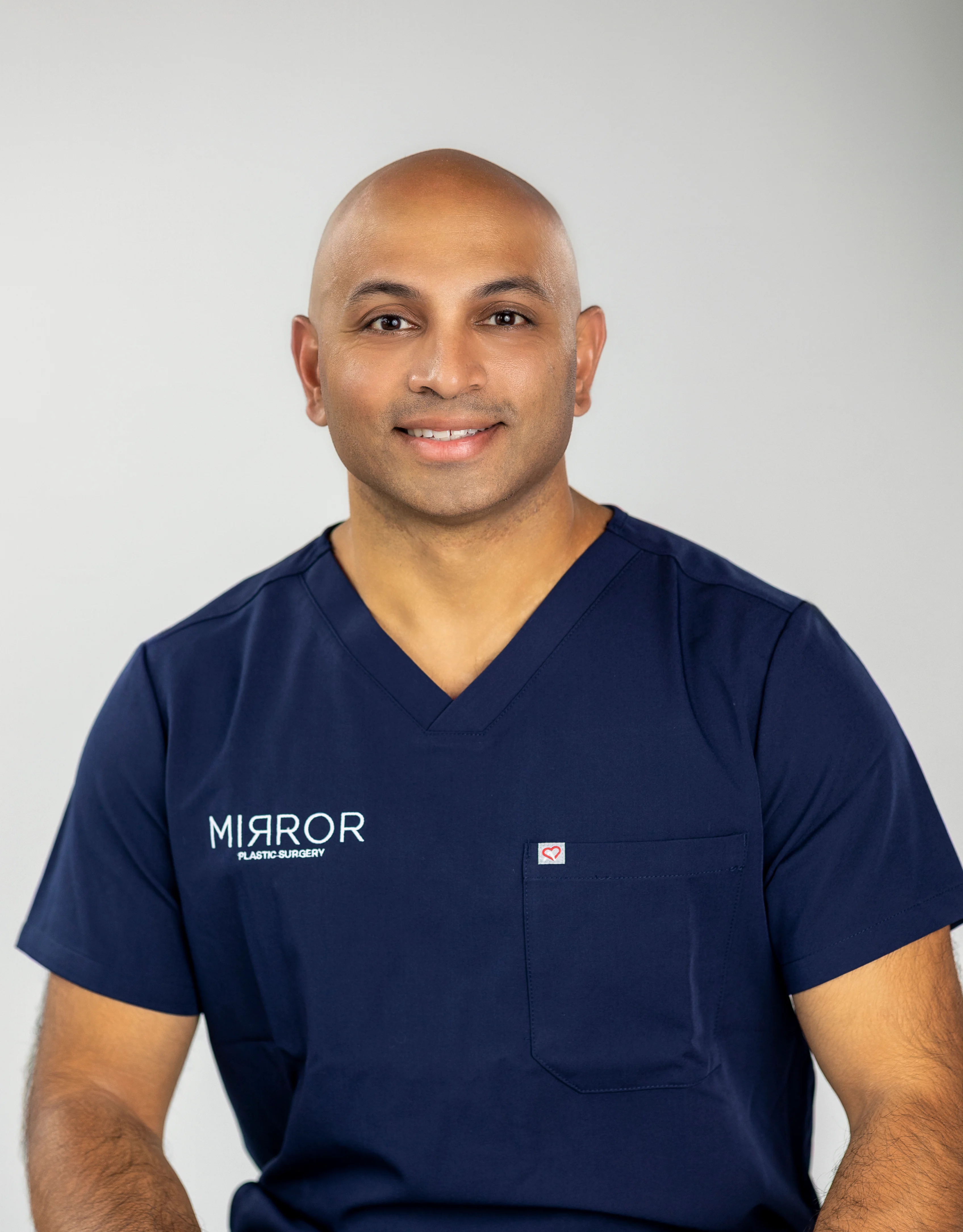
Dr. Akash personally performs all injectable treatments instead of delegating them to staff with limited training. His concierge approach includes consultations that can last up to an hour, which allows a comprehensive top-to-bottom assessment and a focus on long-term well-being rather than quick procedures. The practice limits itself to one to two surgeries per day so that every patient receives focused, individualized attention that aligns with evidence-based care.
To experience this level of physician-led care, you can schedule a consultation at Mirror Plastic Surgery in St. Petersburg. Call or text 727-361-6515 or email hello@mirrorplasticsurgery.com.
Frequently Asked Questions
Are Med Spas Regulated In Florida?
Florida regulates med spas through overlapping frameworks rather than a single dedicated license. The Health Care Clinic Act requires AHCA licensure for non-physician-owned practices, and the Florida Board of Medicine governs physician supervision under § 458.348. Levels of physician involvement vary widely across the state, and Florida relies on a largely complaint-driven enforcement model. Many borderline practices continue operating until a patient complaint appears. Patients should confirm that a board-certified physician actively oversees and personally performs treatments instead of remaining mostly absent.
How Do I Choose A Reputable Med Spa In Florida?
Start by verifying the medical director’s Florida license and board certification in plastic surgery or dermatology. Ask clearly who performs each treatment, whether the physician or a delegated staff member. Confirm that the practice uses FDA-approved products from licensed U.S. distributors. Make sure the team completes a full medical intake and thorough consultation before treatment. The American Med Spa Association recommends confirming that the practitioner is legally permitted to treat you and checking license status directly on state board websites. A practice that skips intake forms, rushes consultations, or pressures you to book same-day raises a serious concern regardless of its marketing.
What Med Spa Treatments Have The Strongest Evidence?
Neuromodulators such as Botox, Dysport, Xeomin, Daxxify, and Jeuveau, along with dermal fillers, hold the most robust evidence bases in aesthetic medicine. The 2025 guideline mentioned earlier highlighted botulinum toxin, dermal fillers, and autologous platelet concentrates as best supported and noted that combination therapies often outperform single treatments. Biostimulatory fillers like Radiesse show strong evidence for layered whole-face rejuvenation and selected body contouring uses. Energy-based devices such as fractional CO2, radiofrequency microneedling, and ultrasound carry FDA clearance and solid clinical support when providers follow appropriate protocols. Treatments marketed with vague terms like “detox,” “oxygen therapy,” or undefined “regeneration” claims usually lack strong peer-reviewed support and deserve careful scrutiny.
What Is The Difference Between A Med Spa And A Day Spa?
A medical spa operates under physician supervision and performs medical procedures that require oversight, including injectables, clinical-grade lasers, and prescription treatments. A day spa focuses on cosmetology services such as facials and massage. Botox is a prescription drug, and fractional CO2 lasers are FDA Class II medical devices, so neither belongs in non-medical settings. In Florida, injectables and device treatments count as medical acts that licensed practitioners must perform within their scope, under the supervision of a qualified medical director with an active Florida license.
Why Does It Matter Whether The Physician Personally Performs Injections?
Injectable treatments, especially dermal fillers, carry risks that require rapid physician-level recognition and management. Vascular occlusion, the most serious filler complication, can cause tissue necrosis or vision loss if providers do not identify and treat it within minutes. A board-certified plastic surgeon performing the injection brings a surgeon’s command of facial and subdermal anatomy to every placement decision, which reduces the risk of misplacement and supports an immediate response if a complication occurs. Delegating injections to staff with limited anatomical training, even under nominal supervision, introduces a meaningful safety gap.
Conclusion: Choose Evidence And Physician Expertise
Florida’s med spa market offers broad access to aesthetic treatments, and the evidence shows that outcomes depend on both the treatment’s research base and the provider’s expertise. The regulatory framework allows wide variation in physician involvement, so patients must verify credentials, protocols, and real physician presence before booking any treatment.
For patients in the St. Petersburg and Tampa area, Mirror Plastic Surgery reflects the principles outlined in this report. The practice emphasizes physician-led care, evidence-based treatment planning, FDA-approved products, and a concierge model that prioritizes safety and function before aesthetics. Dr. Akash Chandawarkar’s board certification, fellowship training, and personal performance of all injectable treatments ensure that care exceeds Florida’s minimum requirements and aligns with the highest clinical standards.
Book a consultation to experience physician-led, evidence-based aesthetic care at Mirror Plastic Surgery in St. Petersburg, FL.
Disclaimer: Results may vary from person to person. Editorial content, before and after images, and patient testimonials do not constitute a guarantee of specific results.
1 Results may vary from person to person. Editorial content, before and after images, and patient testimonials do not constitute a guarantee of specific results.


