

Written by: Dr. Akash Chandawarkar, Board Certified Plastic Surgeon, Mirror Plastic Surgery | Last updated: September 9, 2026
Key Takeaways
Overfilled results usually come from technique and planning, not from the filler material. Excessive volume, poor placement, and neglecting facial harmony create the “pillow face” look. Natural outcomes rely on anatomical expertise, with filler placed in deep support zones and ligament attachment points to lift and contour with less visible product.1 Careful product selection and conservative dosing support balanced, adjustable results over time.1 Choosing a board-certified plastic surgeon who performs injections personally and evaluates the entire face helps ensure proportional, harmonious outcomes.1
Why Some Faces Look Overfilled: Root Causes
The overfilled or “pillow face” appearance results from how dermal fillers are used. Pillow face often follows inappropriate treatment planning, excessive product use, or repeated procedures that ignore natural facial contours. Several common patterns drive this outcome.
- Overcorrection in a single session: Placing too much volume at once, before seeing how the face responds, quickly creates an overfilled look.
- Improper placement: Overdone or distorted results almost always reflect how the filler was placed, the volume delivered, or the lack of a thoughtful, customized plan.
- Product mismatch: Using a firm, high-resistance filler in a delicate, mobile area, such as putting a structural cheek filler in the lips, leads to rigidity and unnatural movement.
- Cumulative buildup: Many patients start with one syringe, return every few months, and slowly accumulate filler over two years until the face looks fuller than it ever did naturally.
- Ignoring facial harmony: Treating one feature in isolation without balancing the whole face disrupts proportions and accelerates the overfilled appearance.
A 2026 review in the Journal of Cosmetic Dermatology notes that overfilled syndrome, facial heaviness, and unnatural broadening often follow inappropriate indication, excessive medial filling, poor sequencing, and weak analysis of the ligament–fat support system. These issues reflect technique and planning rather than an unavoidable effect of filler itself.
The Anatomy Of Natural Results: Why Placement Matters More Than Volume
Surgeon-level expertise strongly influences how natural filler looks. The face contains distinct fat compartments separated by retaining ligaments. Strategic placement in deep support zones can lift and restore contour without adding obvious surface volume. Many non-surgeon injectors do not train extensively in this three-dimensional anatomy.
Three key anatomical principles guide natural outcomes.
- Fat compartments: The midface includes medial, middle, and lateral cheek compartments. Injecting into deep cheek compartments provides structural lift.1 This reduces the need for volume elsewhere and produces a refreshed appearance without surface fullness.1
- Ligament support zones: Placing small amounts of filler near ligament attachment points, such as the zygomatic ligament for midface support, improves contour with less total product.1 This support-first strategy forms the basis of anatomy-guided treatment.
- Risks of medial filling: Heavy filling in the central cheeks or nasolabial folds can worsen facial heaviness and increase facial width. Selected lateral or deep support often achieves better results with less volume.1
Dr. Akash Chandawarkar’s surgical training at Johns Hopkins and fellowship at the Manhattan Eye Ear & Throat Hospital give him a three-dimensional view of subdermal anatomy. He operates on the face as well as injecting it. At Mirror Plastic Surgery, every injectable treatment begins with a comprehensive facial assessment instead of immediate injection.
Choosing The Right Filler And Amount: A Science, Not A Guess
Product selection plays a central role in natural-looking dermal filler results. The best choice depends on the area, tissue characteristics, and desired outcome, rather than brand familiarity or availability.
The two primary categories of dermal fillers serve different purposes.
- Biostimulatory fillers (Radiesse): These stimulate collagen production for gradual, structural improvement that develops over two to three months. Biostimulators work well for broad, diffuse volume loss in areas such as the temples, lateral cheeks, mid-face panels, and décolletage, where the goal is regional tissue quality and support rather than a sharply defined shape.1 They do not reverse once collagen forms.
- Hyaluronic acid (HA) fillers: These provide immediate, moldable volume and can be dissolved with hyaluronidase if needed. HA fillers suit areas that require precise contouring, such as lips, tear troughs, and fine perioral lines, and they allow more flexibility for adjustment over time.1
Dr. Akash serves on the advisory board for Merz Aesthetics, the maker of Radiesse, which gives him direct insight into the science behind biostimulatory fillers. Mirror Plastic Surgery remains supplier-neutral and recommends products based on each patient’s anatomy rather than commission or inventory pressure.
Many expert injectors start with one syringe distributed across several areas instead of concentrating volume in a single spot. This approach maintains balanced proportions and avoids excessive fullness.1 Adding more at a follow-up visit remains far easier than correcting an overfilled result.
How To Avoid Overfilled Fillers: 7 Steps For Subtle, Natural Results
Preventing an overfilled look starts with the provider you choose and continues through every decision in your treatment plan. These seven steps work together as a simple roadmap for subtle, natural results.
- Choose a board-certified plastic surgeon with deep anatomical knowledge who personally performs all injections. A surgeon’s training in facial architecture strongly influences how natural your results appear.
- Work with a provider who performs a comprehensive facial assessment. Your surgeon should evaluate your entire face, not just the area you want treated, to support proportional, harmonious outcomes.
- Request a conservative treatment plan that starts with less product than you expect. Conservative per-area volumes and staged treatment let the injector evaluate your facial response and lower the risk of an overfilled appearance.1
- Ask your provider to explain the “why” behind each injection site. They should describe what they plan to do, which anatomical layer they will target, and how that placement supports a natural result.
- Avoid providers who push extra filler or bundle discounts. Pressure selling, including expiring discounts or package prices that require immediate commitment, signals a sales focus rather than patient-centered care.
- Recognize that swelling can hide your true result. HA fillers retain approximately 90% of volume at two weeks post-treatment.1 Wait the full two to four weeks for settling before judging the outcome or requesting changes.
- Keep facial harmony as the main goal. Aim to look like yourself, only refreshed, with proportions that still feel like your face.
Questions To Ask Your Injector: A Consultation Checklist
The consultation shapes your plan and helps prevent an overfilled result. These questions show whether a provider thinks anatomically and favors conservative dosing.
- “What is your approach to facial harmony and whole-face balance?”
- “How do you decide where to place filler to avoid an overfilled look?”
- “What is your philosophy on conservative dosing?”
- “Can you show me before-and-after photos of patients with similar concerns at two to four weeks, not just immediately after treatment?”
- “What product will you use, and why is it right for my anatomy?”
- “What would make you recommend against treating this area today?”
- “What happens if something goes wrong, and do you have hyaluronidase on site and a defined emergency protocol?”
At Mirror Plastic Surgery, Dr. Akash dedicates up to an hour to each initial consultation. He communicates transparently and sometimes advises that a treatment is not yet necessary, which builds long-term trust that high-volume clinics rarely match. Experience a genuinely anatomy-first assessment by booking a consultation with Dr. Akash Chandawarkar.
What To Expect After Injections: Swelling, Settling, And Realistic Timelines
Most patients notice early swelling after filler treatment, which can make results look more pronounced for several days. This early fullness reflects normal healing rather than excessive product. Keep these general timelines in mind.
- Most swelling improves within one to two weeks.
- Full settling can take up to four weeks for some fillers and areas.
- As noted earlier, HA fillers retain most of their volume at two weeks, so wait for full settling before judging the results.
- In a 24-month prospective cohort study, early post-injection events such as transient swelling and mild bruising resolved on their own within seven to ten days in all patients.1
Living with conservative results for four to six weeks before adding more filler supports safer, more natural outcomes. Touch-ups in the first week often create overcorrection.
Can Too Much Filler Make You Look Older?
Yes. Simply adding volume to an aging face can create a heavier, rounder, and more artificial appearance instead of restoring youthful structure, because facial aging involves structural and positional changes across multiple layers.1 Excessive volume in the cheeks or lips disrupts proportions, widens the face, and can stretch the skin in ways that add years. Facial overfilled syndrome includes anatomical distortion, loss of natural contours, and impaired movement, all of which read as age rather than youth.
How To Fix Overfilled Fillers: Dissolving And Patience
Correction for an overfilled result depends on the filler type.
- HA fillers can be dissolved with hyaluronidase by an experienced provider. Current management of facial overfilled syndrome favors precision, ultrasound-guided dissolution and a staged, diagnosis-driven strategy instead of blind, one-size-fits-all dissolving. Reassessment between sessions supports safety.
- Biostimulatory fillers (Radiesse) do not reverse. The body must metabolize the product, although intralesional corticosteroid may help in selected cases.
Effective correction focuses on restoring proportion, redefining structure, and respecting anatomy. A consultation with a qualified, board-certified provider forms the essential first step.
Red Flags To Avoid: When To Walk Away From A Provider
Some injectors prioritize volume or sales over natural results. Warning signs often cluster around overselling, poor assessment, and weak safety planning.
- They recommend more filler than feels appropriate and cannot give a clear anatomical reason.
- They skip questions about your goals, medical history, or previous treatments.
- They rush consultations, quote package prices before assessment, or upsell multiple treatments at the first visit without a phased plan.
- They lack before-and-after photos of their own patients at two to four weeks post-treatment.
- They cannot explain which product they plan to use or why it suits your anatomy.
- They have no credible complication plan, including on-site hyaluronidase and a named emergency contact.
- They pressure you to book immediately or rely on “today-only” discounts.
Why Choose A Board-Certified Plastic Surgeon For Injectables?
Board-certified plastic surgeons bring advanced anatomical training to injectable treatments. The manifesto notes that injections performed by a board-certified plastic surgeon such as Dr. Akash support safer, more precise treatment.
At Mirror Plastic Surgery in St. Petersburg, FL, Dr. Akash Chandawarkar, a Harvard-educated, Johns Hopkins-trained, fellowship-trained surgeon, personally performs every injectable treatment. The practice offers several clear advantages.
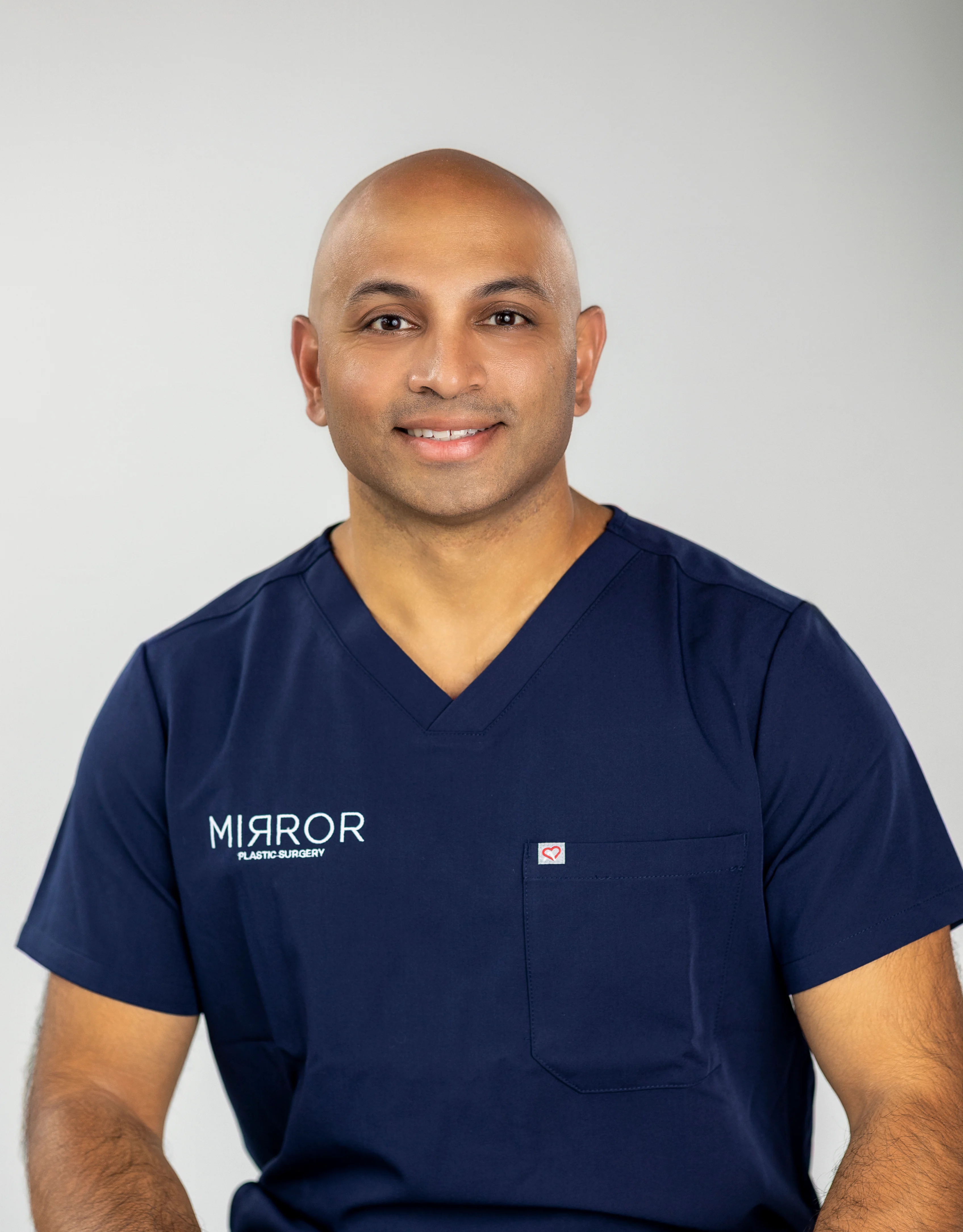
- Dr. Akash performs all injections himself, without delegating to staff.
- Consultations can last up to an hour and include a full top-to-bottom facial assessment.
- Safety comes first, function second, and aesthetics third, guiding every decision.
- The practice remains supplier-neutral and selects products based on your anatomy rather than commissions.
- A concierge medicine model replaces rushed, high-volume clinic experiences with attentive, unhurried care.
This approach builds trust, supports anatomical precision, and encourages honest communication. These elements work together to create subtle, natural-looking filler results that age gracefully.
Frequently Asked Questions
Can Too Much Filler Make You Look Older?
Yes. As described above, overfilling can stretch the skin, disrupt facial proportions, and create a heavy, distorted appearance that adds years. Facial aging involves changes in structure and position across multiple layers, so adding volume without addressing these shifts can worsen heaviness and width. For a deeper explanation, see the earlier section on this topic.
Which Filler Looks Most Natural?
No single filler looks most natural for every situation. The most natural result comes from matching the product to the area and to your anatomy. Biostimulatory fillers such as Radiesse work well for broad, diffuse volume loss in the cheeks, temples, and jawline, where gradual collagen-based restoration develops over months. An anatomy-focused provider selects products based on the specific concern rather than brand preference or stock.
How Long Does It Take For Fillers To Settle?
Most swelling improves within one to two weeks. Full settling, including integration of the product into surrounding tissue, can take up to four weeks depending on filler type and treatment area. Early fullness in the first few days reflects normal healing rather than excess product. Waiting through the full settling period before judging results or requesting changes helps avoid overcorrection.
How Do I Fix Overfilled Fillers?
The correction plan depends on the filler type. Hyaluronic acid fillers can be dissolved with hyaluronidase by an experienced provider, often with visible improvement within a few days. A staged approach with reassessment between sessions offers the safest path and helps prevent over-dissolving. Biostimulatory fillers do not reverse, so the body must metabolize the product over time, sometimes over a year or longer, although intralesional corticosteroid may help in select cases. The most important step is meeting with a qualified, board-certified provider who can assess your situation, set expectations, and design a structured correction plan.
What Is The Best Way To Avoid Looking Overfilled?
The most reliable protection against an overfilled appearance is choosing a provider with strong anatomical expertise, ideally a board-certified plastic surgeon who performs all injections personally. Beyond that, start conservatively and add more at a follow-up if needed, insist on a whole-face assessment rather than isolated treatment, confirm that product selection reflects your anatomy and goals, and allow the full settling period before judging results. A provider who feels comfortable saying “you do not need more treatment yet” usually has your long-term outcome in mind.
Disclaimer: Results may vary from person to person. Editorial content, before and after images, and patient testimonials do not constitute a guarantee of specific results.
1 Results may vary from person to person. Editorial content, before and after images, and patient testimonials do not constitute a guarantee of specific results.


