

Written by: Dr. Akash Chandawarkar, Board Certified Plastic Surgeon, Mirror Plastic Surgery | Last updated: September 9, 2026
Key Takeaways
- Overfilled results usually come from poor planning or injector technique, not the filler itself, and an anatomy-first approach prevents this.
- Board-certified plastic surgeons have the deepest understanding of facial anatomy, which supports safer, more natural-looking filler outcomes.1
- Use a conservative, staged treatment plan. Start low, go slow, and wait at least two weeks before judging results or planning touch-ups.
- Focus on restoring lost volume in deep fat compartments and balancing the full face to keep natural proportions and expressions.1
What Overfilled Results Look Like On The Face
An overfilled look, often called “pillow face,” is a puffy, swollen, or distorted appearance caused by excessive or poorly placed dermal filler. It shows up as a loss of natural contours, overly round cheeks, and a “done” look that hides your natural features and expressions.
Beyond this general picture, specific clinical signs help distinguish an overfilled face from normal post-treatment swelling. Cheeks may look fuller in photographs even when you are not smiling, and your smile can feel slightly stiff, with natural shadows under the cheekbones fading. Cheeks may stay firm or rounded even when the face is relaxed, and photos may show a smoother, flatter look where natural shadow and contour used to exist.
Step 1: Understand The Anatomy And Why Overfilling Happens
Overfilling usually reflects planning and technique rather than a problem with the filler itself. Expert injectors prevent this by performing detailed facial analysis, using conservative dosing, and respecting facial anatomy and proportions.
The face is organized into distinct fat compartments at different tissue depths. The deep fat pads of the midface, especially the sub-orbicularis oculi fat (SOOF) and the deep medial cheek fat pad, provide primary support for overlying tissues. With age, these deep fat pads gradually thin, and the superficial fat pads descend, which hollows the infraorbital area and deepens the nasolabial fold. Restoring volume to the correct deep compartments supports the face in a way that looks natural.1 Injecting into the wrong layer, or ignoring the balance between the midface, temples, and lower face, creates distortion instead of restoration.
Fillers can compound this risk because they are hydrophilic, meaning they attract and bind water. This can make filler appear more pronounced months after injection, a clinical point many articles skip. Imaging studies show that some fillers persist in the injected area for a long time, so fresh injections can layer on top of residual product and gradually build excess volume.
A board-certified plastic surgeon’s deep, operative understanding of these tissue planes forms the first line of defense against overfilling.1 This knowledge comes from years of surgical training in three-dimensional facial anatomy at every depth, not from a short certification course.
Step 2: Vet Your Injector And Protect Your Safety
The injector’s expertise matters more than the brand of filler. The American Society of Plastic Surgeons recorded a 38% year-over-year increase in filler complications from non-physician injectors in 2025, driven mostly by vascular occlusion. Choosing the right provider is a safety decision.
When evaluating an injector, focus on these criteria:
- Board Certification: Board certification in plastic surgery, verified via certificationmatters.org, signals advanced medical training that supports safe, anatomically precise injection. The American Board of Plastic Surgery (ABPS) is the key certifying body for plastic surgeons.
- Surgical Training: A plastic surgeon gains unmatched command of subdermal anatomy through years of operating on the face. This differs from procedure-specific aesthetic certificates, which demonstrate competency but do not create the same depth of anatomical knowledge.
- Conservative Philosophy: A physician injector who is willing to recommend less filler, or none at all, offers a stronger safety signal than one who simply fulfills requested volume. Look for a provider who talks about restoration and harmony and explains how each area affects the whole face.
- Reversal Agent On-Site: A reversal agent must be available on-site for emergency treatment of vascular occlusion, which is a non-negotiable safety requirement.
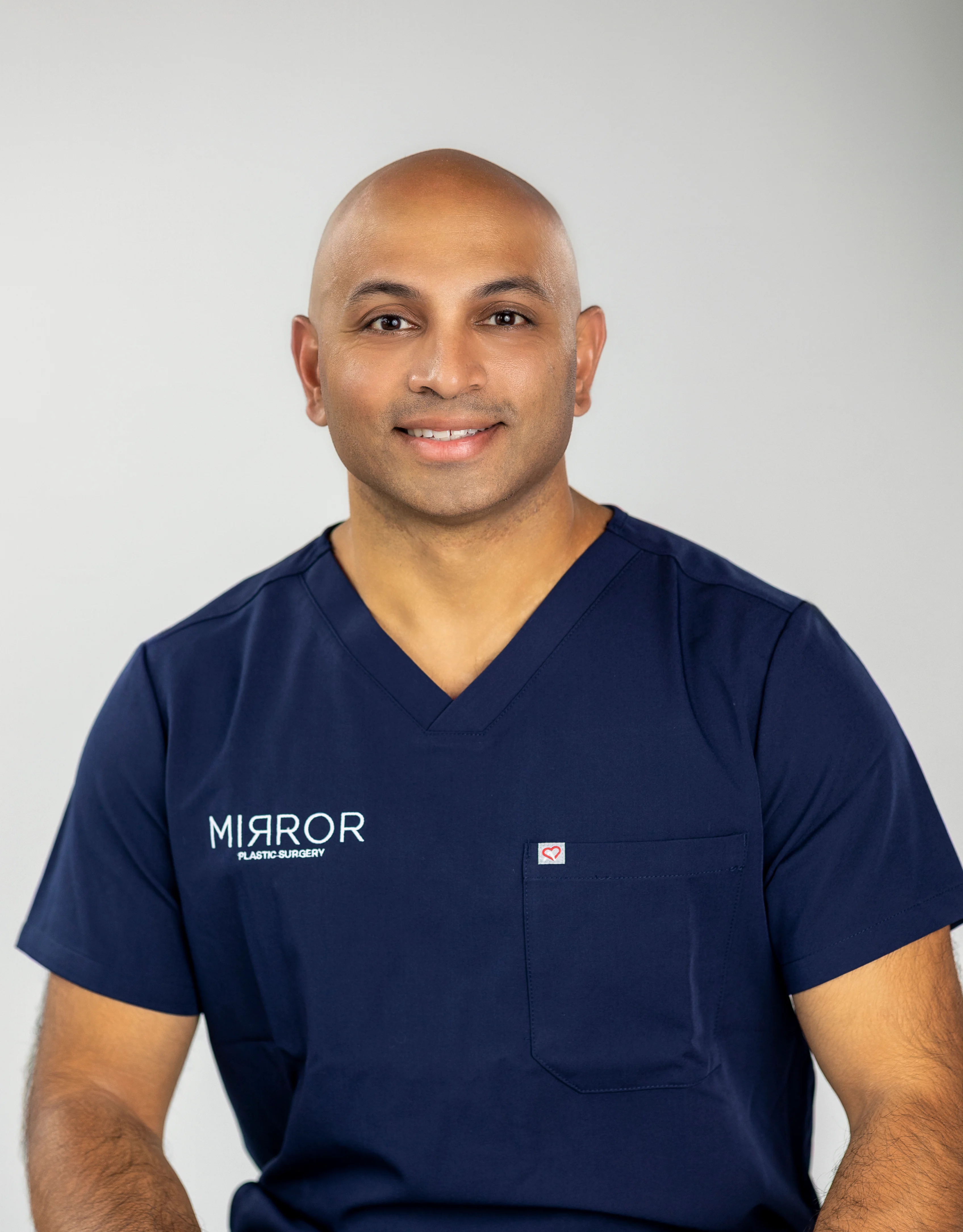
Dr. Akash Chandawarkar is a Harvard-educated, Johns Hopkins-trained plastic surgeon with fellowship training in aesthetic surgery at the Manhattan Eye Ear & Throat Hospital (MEETH)/Lenox Hill Hospital. He serves on advisory boards for Merz Aesthetics and Tiger Aesthetics and personally performs every injectable treatment at Mirror Plastic Surgery. This level of anatomical expertise defines a surgeon-led practice and sets it apart from a high-volume injection clinic.
Step 3: Adopt The “Start Low, Go Slow” Strategy
Conservative, staged treatment is the clinical standard for safe, natural results.1 A 2026 systematic review in Aesthetic Plastic Surgery found that safe dermal filler practice relies on anatomic precision, meticulous technique, informed product selection, and readiness to manage complications, rather than large initial volumes.
Because it is far easier to add a small amount of filler later than to dissolve an overfilled area, you need to understand the swelling timeline to avoid premature decisions:
- Days 1–3: This is the peak swelling period. Visible volume reflects both the injected gel and acute edema from tissue trauma, which look the same in the first 24–48 hours.
- Days 3–7: Swelling starts to resolve and the result often looks subtler than it did initially. The product is still present; the swelling is simply fading.
- Weeks 1–2: The product absorbs tissue water, softens, and integrates. The true result appears at about 2 weeks and is fully expressed by 4 weeks.
The clinical rule is clear. Do not judge a filler result before 2 weeks, and do not book a touch-up before 4 weeks, because decisions made earlier rely on a moving target. Booking a touch-up too early is one of the most common structural causes of cumulative overfilling.
Step 4: Prioritize Structure Over Lines With A Restoration Mindset
A surgeon-led injectable plan starts by identifying what has been lost and the minimum intervention needed to restore it. Natural results come from supporting deep fat compartments to replace lost volume, rather than superficially filling wrinkles or chasing trend-driven aesthetics.1
When sagging cheeks come mainly from skin laxity instead of volume loss, trying to “lift” the face with large filler volumes is an anatomical error that creates the overfilled, syndromic look, where the midface appears unnaturally projected, especially during expression. Adding volume to a face where laxity is the main issue adds weight to tissues already affected by gravity. This extra weight speeds tissue descent instead of correcting it.
At Mirror Plastic Surgery, Dr. Chandawarkar performs a top-to-bottom facial assessment before recommending any treatment. This approach ensures that the temples, midface, lower face, and jawline are evaluated in relation to one another. Adding volume only to the cheeks, without balancing the temples, jaw, and lower face, disrupts overall facial proportion and contributes to a pillow face appearance. The goal is restoration that respects your natural anatomy and keeps you recognizable to yourself.
Step 5: Use This Script During Your Consultation
The consultation is the most important appointment in the filler process. The questions you ask, and the answers you receive, reveal the injector’s philosophy more clearly than any website bio. Use these questions to see whether a provider’s approach supports natural, anatomy-first results:
- The “Family Member” Question: “If I were your family member, where would you place the smallest amount of filler to make the biggest difference?”
- The “Restoration” Request: “My goal is restoration. I want to look like myself, just more rested. Can you create a plan that reflects that?”
- The “Less Is More” Check: “I am very afraid of looking overfilled. Can we start with a conservative amount and plan a follow-up in a few weeks to reassess?”
A provider who answers with confidence, specificity, and no pressure is showing the mindset that produces natural results. A provider who pivots to volume targets or dismisses your concern signals a poor fit.
Step 6: Recognize The Red Flags
Certain behaviors during a consultation or treatment suggest an injector whose approach may produce overfilled outcomes. Leave any appointment where you notice the following:
- Pushing multiple syringes during the first visit without a documented full-face assessment.
- Promising a “liquid facelift” to fix severe sagging or jowls with filler alone.
- Rushing the consultation or failing to ask about your filler history at other clinics.
- Lacking a portfolio of natural-looking, settled before-and-after results.
- Being unwilling to discuss the possibility of dissolving filler later if needed.
- Offering prices more than 35% below market rate, which may indicate non-authorized or counterfeit product. Source
Clinic-hopping without sharing filler history is a systemic cause of overfilling. Each new provider may assess the face as if starting from zero, and the cumulative total from several clinics can exceed what the face can carry, even when no single appointment looks excessive. Always disclose your complete filler history at every consultation.
Step 7: Plan For The Long Term And Prevent Build-Up
High-resolution MRI and facial ultrasound show that fillers can persist for over a decade, despite traditional marketing claims that they degrade within 6 to 18 months. Repeated top-ups every 6–12 months can therefore accumulate far more product in the face than most patients expect.
A filler treatment can look natural for six months and then start to appear puffier due to cyclical water absorption by the product, slightly disrupted lymphatic drainage, or gradual tissue changes from repeated treatments in the same area. A provider who plans for the long term builds a maintenance schedule that respects your anatomy. They reassess the face at each visit instead of automatically adding more product, and they will recommend against treatment when it is not the right solution.
Dr. Chandawarkar often tells patients when an expensive service is not yet necessary for them. This transparency supports a long-term patient relationship built on trust. A provider who can say “not yet” gives more weight to every “yes.”
Your Pre-Treatment Checklist
Bring this checklist to every filler consultation:
- Verify Credentials: Confirm the injector is a board-certified plastic surgeon or dermatologist, verified through certificationmatters.org.
- Ask About Philosophy: Ask whether the provider prioritizes restoration over aggressive augmentation and whether they assess the full face before treating any single area.
- Request A Conservative Plan: Ask for the minimum amount of product needed to reach your goal, with a planned reassessment at 4 weeks.
- Understand The Timeline: Ask about the specific swelling timeline for the area being treated, and confirm you will not judge results before 2 weeks.
- Discuss Product Choice: Ask why a specific filler type is being recommended for your anatomy and treatment area.
- Inquire About Reversibility: Confirm whether the filler can be dissolved with a reversal agent if needed, following FDA guidance on dermal filler safety.
- Disclose Your Full Filler History: Share every treatment you have had, at every clinic, including approximate dates and areas treated.
Frequently Asked Questions
How Long Will I Look Different After Fillers?
Swelling peaks within the first 24–72 hours after treatment, and the treated area may look fuller or more dramatic than the final result. Most visible swelling subsides by 1–2 weeks, and the filler continues to soften and integrate through the 4-week mark. Wait for this full settling period before judging your outcome. If swelling worsens after 72 hours, or you notice pain, skin color changes, or persistent asymmetry, contact your provider promptly.
Can Too Much Filler Make Me Look Older?
Yes. Overfilling can stretch the skin, distort natural features, and create a heavy, disproportionate appearance that reads as older and more fatigued. The natural light and shadow that define a youthful face, such as gentle hollows beneath the cheekbones and a defined jawline, depend on contour and dimension. Excessive volume flattens these contours and erases the three-dimensionality that makes a face look vital and healthy. An overfilled face can also appear to sag more over time because extra filler weight pulls on tissues already affected by gravity.
Is Four Syringes Of Filler A Lot?
The answer depends on your anatomy, the areas being treated, and how much residual product remains from prior treatments. There is no universal threshold. A conservative, anatomy-first approach rarely uses that much volume in a single session for most patients. A provider focused on natural results usually starts with less and reassesses at 4 weeks before considering more product. The appropriate volume always reflects your specific anatomy and goals, not a standard protocol or syringe target.
What Is The Best Filler For Older Skin?
There is no single “best” filler. The right product depends on the area treated, the depth of volume loss, the tissue plane, and your skin quality. Thicker, higher-viscosity fillers work well for deep structural support in areas like the midface, while softer, more flexible formulations suit delicate areas like the lips or tear troughs. Biostimulatory fillers, which stimulate your own collagen production, may be a better long-term option when skin quality and diffuse volume loss are the main concerns. A skilled provider selects from a range of products based on your anatomy and goals, not brand preference or inventory.
Your Choice For Natural, Rested Results
Avoiding an overfilled look is a step-by-step process that starts with education and continues with the right provider. The anatomical causes of pillow face are well described, and the red flags of a high-volume, non-anatomical injector are clear. You now have a consultation script and a pre-treatment checklist to guide your decisions. The remaining step is choosing who performs your treatment.
Dr. Akash Chandawarkar’s surgical training, conservative philosophy, and focus on safety, function, and aesthetics make Mirror Plastic Surgery a strong choice for patients in the St. Petersburg and Tampa Bay area who want results that enhance their natural features without overdoing it. Every injectable treatment at Mirror is performed by Dr. Chandawarkar himself, with a surgeon’s understanding of every tissue plane involved.
To explore a personalized, anatomy-first plan for your face, book a consultation with Ellie at Mirror Plastic Surgery today.
Disclaimer: Results may vary from person to person. Editorial content, before and after images, and patient testimonials do not constitute a guarantee of specific results.
1 Results may vary from person to person. Editorial content, before and after images, and patient testimonials do not constitute a guarantee of specific results.


