
Written by: Dr. Akash Chandawarkar, Board Certified Plastic Surgeon, Mirror Plastic Surgery | Last updated: September 9, 2026
Key Takeaways
Before diving into the details, keep these core points in mind as you compare filler options.
- PMMA fillers like Bellafill last the longest at 5 years or more, followed by PLLA (up to 2 years), CaHA (12–18 months), and HA fillers (6–18 months).1
- A longer duration does not automatically mean a better choice, because permanence increases the stakes if something goes wrong.
- HA fillers are the only category that can be reliably dissolved with hyaluronidase, which makes them the safest option for most patients.
- Board-certified plastic surgeon expertise and a conservative, anatomy-guided approach help prevent complications and filler fatigue.
What Are Dermal Fillers?
Dermal fillers are injectable gels or substances that restore volume, smooth lines, and enhance facial contours. They differ from neuromodulators like Botox, which relax the muscles responsible for dynamic wrinkles. Fillers physically occupy space beneath the skin.
The FDA classifies dermal fillers as Class III medical devices, requiring Premarket Approval (PMA). They remain in the body and can cause complications such as vascular occlusion, tissue necrosis, late-onset granulomas, and chronic inflammatory responses.
At the broadest level, fillers fall into two groups.
- Hyaluronic Acid (HA) Fillers, which are reversible with an enzyme called hyaluronidase
- Biostimulatory Fillers (CaHA, PLLA, PMMA), which stimulate collagen production and are not easily or reliably reversible
This distinction between reversible and nonreversible fillers is the most clinically important factor in choosing a product. Every recommendation below uses that lens.
The Main Types Of Dermal Fillers
Hyaluronic Acid (HA) Fillers
Hyaluronic acid is a naturally occurring sugar molecule found throughout the body. In filler form, it attracts water and provides immediate volume and hydration. Hyaluronic acid fillers typically last between 6 and 18 months, though some products like VOLUMA may last longer depending on the product and treatment area. Lips metabolize filler faster because of constant movement, so lip fillers usually break down more quickly than cheek fillers.
Common brands include Juvederm, Restylane, RHA, and Versa. Each product within these families is engineered for a specific depth and tissue type. For example, Juvederm Voluma XC is FDA-approved for the cheeks, chin, and temple region, while Juvederm Volbella XC is approved for the lips and for improving infraorbital hollowing (the tear trough).
Beyond product selection, the defining safety advantage of HA fillers is reversibility. Hyaluronidase dissolves HA gel and allows the body to absorb it, with its enzymatic action lasting 24–48 hours; however, visible improvement typically occurs much sooner, with the most significant volume reduction within the first hour and up to 81.7% reduction by 24 hours. This makes HA the only filler category with a reliable antidote for complications, including the rare but serious vascular occlusion.
Calcium Hydroxylapatite (CaHA) Fillers
CaHA fillers are composed of calcium microspheres suspended in a gel carrier. They work via a two-phase mechanism. The gel carrier provides immediate physical volume, followed by neocollagenesis over a period of months (commonly 2–3 months, with effects continuing beyond that) as the CaHA microspheres stimulate fibroblasts to produce new collagen. The primary brand is Radiesse, manufactured by Merz Aesthetics.
CaHA fillers are considered semipermanent, with effects lasting around 12–18 months. They are biodegradable but cannot be dissolved with hyaluronidase. If a complication arises, options include supportive care, waiting for natural biodegradation, or in select cases surgical removal.
CaHA works well for deeper lines, cheek volume, and jawline contouring. Dr. Akash Chandawarkar serves as an advisory board member for Merz Aesthetics, the maker of Radiesse, which reflects his depth of experience with this category of biostimulatory filler.
Poly-L-Lactic Acid (PLLA) Fillers
PLLA is a biostimulatory filler that triggers the body’s own collagen production over time. Results appear gradually over several months and usually require multiple treatment sessions. The primary brand is Sculptra, which holds FDA approval for facial indications including nasolabial folds and cheek wrinkles.
Sculptra results can last up to 2 years or more, built over a series of treatments. PLLA is not reversible. If placement is incorrect or volume is excessive, the realistic options are waiting, which can take a year or longer, or surgical revision. This reality makes precise injection technique and thorough anatomical knowledge essential with this product.
PLLA is commonly used for full-face volume restoration, cheek hollows, and jawline definition.
Polymethylmethacrylate (PMMA) Fillers
PMMA fillers contain synthetic microspheres that do not biodegrade. The body encapsulates them in collagen, which provides structural support that is effectively permanent. The only FDA-approved PMMA filler in the United States is Bellafill, approved for correction of nasolabial folds and acne scars, with results lasting 5 years or more.
PMMA carries a distinct risk profile. Foreign body granulomas can develop from as early as 1 week to as late as 15 years after PMMA filler injection, with a median onset of about 35 months. There is no enzymatic antidote. When complications occur, the most common treatments are steroid injections, antibiotics for suspected biofilm, and surgical excision, though surgical excision is often reserved as a last resort due to scarring risk, and other options such as intralesional 5-fluorouracil or hyaluronidase may also be used. Bellafill also requires a pre-treatment allergy skin test because of its bovine collagen carrier.
PMMA suits only carefully selected patients and demands the highest level of injector skill and judgment.
Which Dermal Filler Lasts The Longest?
Ranked by duration, PMMA (Bellafill) lasts the longest at 5 years or more, followed by PLLA (Sculptra) at up to 2 years, CaHA (Radiesse) at 12–18 months, and HA fillers at 6–18 months depending on the product and area treated.
But this ranking can mislead: a longer duration does not automatically mean a better choice. Permanent fillers freeze a decision made about a face that changes over time. As fat pads deflate, bone remodels, and skin descends, filler placed to look correct in a full midface can look wrong a decade later. For most patients, HA fillers offer the most practical balance of longevity and safety, because they can be dissolved if needed and adjusted as the face ages.
Dermal Filler Comparison Table
| Filler Type | Brand Examples | Typical Duration | Reversible? |
|---|---|---|---|
| Hyaluronic Acid (HA) | Juvederm, Restylane, RHA, Versa | 6–18 months (lips 6–12 months; cheeks up to 24 months) | Yes, with hyaluronidase |
| Calcium Hydroxylapatite (CaHA) | Radiesse | 12–18 months | No, biodegradable but not dissolvable |
| Poly-L-Lactic Acid (PLLA) | Sculptra | Up to 2 years or more | No |
| Polymethylmethacrylate (PMMA) | Bellafill | 5 years or more (considered permanent) | No, surgical excision only |
Safety And Reversibility: Why It Matters More Than Longevity
Reversibility functions as a core safety mechanism, not a minor convenience. Vascular occlusion from dermal fillers is rare, with reported incidences of vascular adverse events typically below 0.1% (e.g., 0.015% in a Dutch study), though these figures may be underestimated. The risk is markedly higher in the glabella, forehead, and nose due to anastomoses between branches of the internal and external carotid arteries and the ophthalmic artery. Occlusion in these areas can lead to skin necrosis or permanent vision loss.
For HA fillers, the treatment is immediate high-dose hyaluronidase. CaHA, PLLA, and PMMA do not have an equivalent antidote, so management relies on supportive care, time, and sometimes surgery.
The concept of filler fatigue, the unnatural overfilled appearance that can result from repeated, excessive filler use, is increasingly recognized. A 2026 MRI study found detectable HA filler up to 15 years after injection, with the MRI-measured volume averaging 2.8 times greater than the injected volume. The authors recommended conservative dosing and long-term treatment planning. A 2026 critical review describes facial overfilled syndrome as a complex iatrogenic condition marked by anatomical distortion, loss of natural contours, and impaired facial movement. Each additional treatment cycle increases this risk when volume is not carefully managed.
Permanent fillers add another layer of concern. Stacking of permanent fillers, where every prior injection remains in the face, contributes to the overfilled look often associated with these products, since each new treatment is planned on top of material that cannot be removed.
At Mirror Plastic Surgery, the approach is intentionally conservative. Dr. Akash’s philosophy of safety first, function second, and aesthetics third means volume augmentation comes only after foundational restoration, and treatment plans account for how the face will continue to change over time.
Choosing The Right Filler For Your Face
The most appropriate filler for you depends on the treatment area’s anatomy, tissue depth, degree of movement, and your goals. The following guidance highlights how those factors play out by area.
Lip Filler Choices
HA fillers such as Juvederm Ultra XC or Restylane suit lip augmentation best. Hyaluronic acid-based lip fillers typically last 6 to 18 months, with the exact duration depending on factors such as product type, injection technique, metabolism, and lip movement; constant lip motion can cause fillers to break down faster than in less mobile areas. Reversibility matters especially here, because the lips are a high-visibility, high-movement area where precise adjustment is crucial.
Cheek Filler Options
Both HA fillers and biostimulatory fillers can restore cheek volume. Juvederm Voluma XC is FDA-approved for cheek volume restoration with results lasting up to 24 months. Sculptra builds collagen gradually over several months and can last 2 years or more, which suits patients who prefer a progressive, natural-looking result. The choice between immediate lift and gradual collagen stimulation depends on your anatomy and priorities.
Under-Eye Filler Considerations
The under-eye area requires particular care. The skin is thin, the vasculature is complex, and the proximity to the eye makes precision essential. Restylane-L is not indicated for the under-eye area; it is approved only for nasolabial folds and lip augmentation. The HA filler specifically FDA-approved for the under-eye area (infraorbital hollowing) is Restylane Eyelight, and the FDA approved RHA Redensity Eye in May 2026 specifically for infraorbital hollows. Reversibility is essential in this zone.
CaHA is not contraindicated in the infraorbital region; it has been used off-label to correct infraorbital volume loss and tear trough deformities, though the periorbital area carries higher risk and requires caution. Hyaluronic acid under-eye fillers typically last between 6 and 12 months, though many products and patients experience results lasting 9 to 18 months or longer depending on the specific filler and individual factors.
Jawline Filler For Definition
Jawline contouring benefits from fillers with higher structural support. Juvederm Volux XC is FDA-approved specifically for jawline definition, and Radiesse is also used for this indication. Cheek and jawline fillers can last 12–24 months. A skilled injector with deep anatomical knowledge is essential in this area to avoid complications involving the facial artery and its branches.
For a personalized recommendation for your jawline or any other area, schedule a tailored filler consultation with Ellie.
Addressing Common Fears
What Is The Most Natural-Looking Filler?
HA fillers, when injected conservatively by a skilled provider, usually create the most natural results. Expert consensus holds that technique and anatomical planning matter more than simply increasing volume over time, repositioning HA fillers from default volume replacement toward selective, anatomy-guided structural support. The reversibility of HA also allows prompt correction of any overfilling.
What Is The Downside Of Dermal Fillers?
All fillers carry risks. Common side effects include bruising, swelling, and redness at the injection site. More serious risks include vascular occlusion, infection, and nodule formation. PMMA fillers carry notable risks, including pruritus (16% of immediate complications), allergic reactions, and granuloma formation (21% of delayed complications). Granuloma incidence is higher for nondegradable fillers like PMMA compared to resorbable fillers, though direct comparative data across all filler types is limited. Late-onset granulomas around PMMA fillers can appear years after an apparently uneventful treatment, often triggered by unrelated immune events such as infections (e.g., COVID-19) or vaccinations, though dental procedures are not specifically documented as triggers. Choosing an experienced, board-certified injector and an FDA-approved product reduces these risks substantially.
Does Filler Ruin Your Face Over Time?
Filler does not damage the face when used correctly and conservatively. Long-term use of HA fillers, when guided by best-practice principles, can produce excellent, natural outcomes over many years. The risk of an unnatural look, sometimes called “pillow face,” comes from overfilling and poor technique. Careful planning with an experienced injector who thinks long term helps you avoid that outcome.
Why Choose A Board-Certified Plastic Surgeon For Injectables?
Injectables demand deep anatomical knowledge. The face contains a dense network of arteries, veins, and nerves, and the margin for error in high-risk zones is narrow. The FDA advises working with a licensed healthcare provider who is experienced in injecting dermal fillers and knowledgeable about fillers, anatomy, and managing complications.
Dr. Akash Chandawarkar is a board-certified plastic surgeon with fellowship training in aesthetic surgery at the Manhattan Eye Ear & Throat Hospital/Lenox Hill Hospital. He personally performs all injectable treatments at Mirror Plastic Surgery, so every neuromodulator and dermal filler is placed by a physician with a surgeon’s command of facial and subdermal anatomy. He serves as an advisory board member for Merz Aesthetics (maker of Radiesse) and Tiger Aesthetics, reflecting his engagement with the leading edge of injectable innovation.
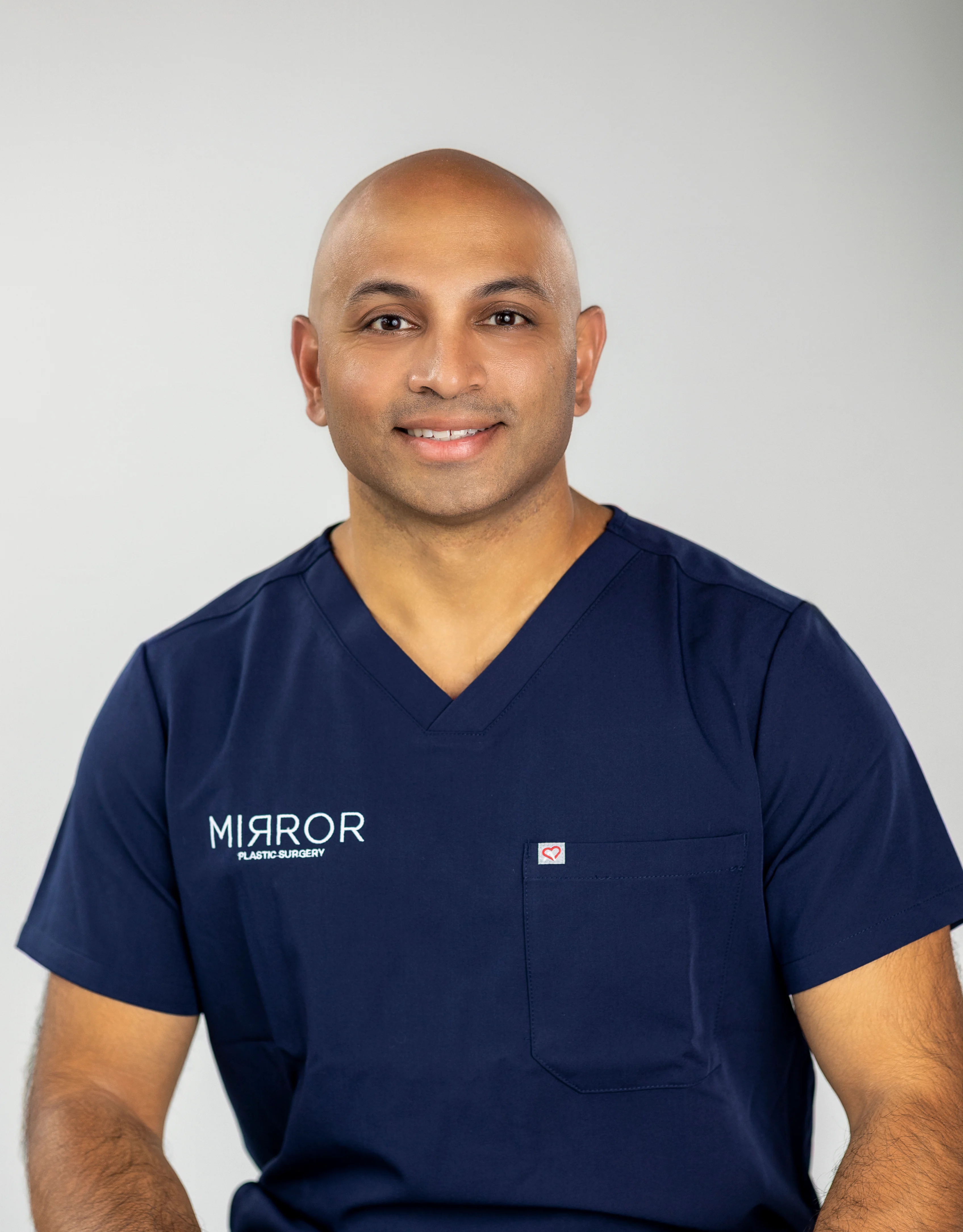
Mirror Plastic Surgery operates on a concierge medicine model. Consultations run up to an hour. The practice limits itself to performing one to two surgeries per day, which ensures that every patient receives the full attention of the entire clinical team before, during, and after treatment.
Ready to explore your options? Schedule a consultation with Ellie at Mirror Plastic Surgery in St. Petersburg, FL, or reach the team directly by calling or texting 727-361-6515, or by emailing hello@mirrorplasticsurgery.com.
Frequently Asked Questions
How Long Do Dermal Fillers Last?
Duration varies by filler type and treatment area. For example, HA fillers in the lips typically last 6–12 months, while in the cheeks they can last up to 24 months. CaHA fillers like Radiesse last approximately 12–18 months. PLLA fillers like Sculptra can last 2 years or more, but they require a series of sessions. At the extreme, PMMA fillers like Bellafill are considered permanent, with results lasting 5 years or more. Individual metabolism, the area treated, and the volume injected all influence how long any given result lasts.
Which Filler Is Best For Lips?
HA fillers such as Juvederm Ultra XC or Restylane are the recommended choice for lip augmentation. The lips are a high-movement area that metabolizes filler quickly, and reversibility is essential here. Biostimulatory and permanent fillers do not suit the lips. HA fillers allow precise volume control and can be dissolved if the result needs adjustment, which makes them the safest and most versatile option for this area.
Which Filler Is Best For Cheeks?
Both HA fillers and biostimulatory fillers can work well for cheek volume restoration. Juvederm Voluma XC provides immediate, reversible lift lasting up to 24 months. Sculptra (PLLA) builds results progressively over several months and can last 2 years or more, which suits patients seeking a natural, gradual improvement. The right choice depends on your anatomy, the degree of volume loss, and your timeline and preferences, all of which are assessed during a thorough consultation.
Are Dermal Fillers Safe?
Dermal fillers have a strong safety record when a qualified, experienced injector uses FDA-approved products. All fillers carry some degree of risk, including bruising, swelling, infection, and the rare but serious risk of vascular occlusion. Safety profiles differ by filler type. HA fillers offer the most favorable profile because complications can be reversed with hyaluronidase. Biostimulatory and permanent fillers carry higher risk profiles because complications cannot be enzymatically reversed. Choosing a board-certified plastic surgeon with deep anatomical expertise is the single most important factor in minimizing risk.
Can Dermal Fillers Be Reversed?
Only hyaluronic acid (HA) fillers can be reliably reversed. Hyaluronidase, an enzyme injected into the treated area, dissolves the HA gel and allows the body to absorb it, typically within 24–48 hours. CaHA (Radiesse), PLLA (Sculptra), and PMMA (Bellafill) cannot be dissolved with hyaluronidase. CaHA and PLLA biodegrade over time, but this process takes months to more than a year. PMMA is permanent and can only be removed surgically, which is often only partially successful. This reversibility difference is the most important factor to understand before choosing any filler.
What Is Filler Fatigue?
Filler fatigue refers to the unnatural, overfilled appearance that can develop from repeated, excessive filler use. Clinical research shows that HA filler can persist in tissue far longer than its marketed duration and can expand in volume beyond what was originally injected, so cumulative effects build with each treatment cycle. For permanent fillers, the risk increases further because material from every prior session remains in the face indefinitely. A conservative, anatomy-guided approach that uses the right amount of the right product in the right location protects natural facial harmony over the long term.
How Do I Choose The Right Filler For Me?
The right filler depends on your anatomy, the area being treated, your aesthetic goals, and how you feel about reversibility trade-offs. There is no universal answer. A thorough consultation with a board-certified plastic surgeon who performs a top-to-bottom facial assessment, evaluating volume loss, tissue quality, skin laxity, and facial proportions, offers the most reliable way to select the best product and approach for your situation.
The Expert, Safety-First Approach To Fillers
The main dermal filler categories each carry distinct longevity and safety profiles. As the comparison table shows, HA fillers provide a reversible option with moderate duration, while CaHA and PLLA last longer without an antidote, and PMMA offers permanence with the highest risk profile. For most patients, the safest plan prioritizes reversibility and long-term facial harmony over maximum duration.
A personalized consultation with a qualified provider forms the foundation of a safe, effective plan. At Mirror Plastic Surgery, every treatment begins with a comprehensive assessment of your anatomy, your goals, and the long-term trajectory of your facial aging, rather than a quick menu of products.
At Mirror Plastic Surgery, safety comes first, function second, and aesthetics third. Talk with Ellie about your filler options to begin your path toward natural, confident results.
Schedule Your Consultation
Ready to explore your options with a board-certified plastic surgeon who prioritizes your long-term well-being? Contact Mirror Plastic Surgery in St. Petersburg, FL, to schedule a personalized assessment with Dr. Akash Chandawarkar.
- Address: 780 4th Ave S, St. Petersburg, FL 33701
- Phone/Text: 727-361-6515
- Email: hello@mirrorplasticsurgery.com
Disclaimer: Results may vary from person to person. Editorial content, before and after images, and patient testimonials do not constitute a guarantee of specific results.
1 Results may vary from person to person. Editorial content, before and after images, and patient testimonials do not constitute a guarantee of specific results.