
Written by: Dr. Akash Chandawarkar, Board Certified Plastic Surgeon, Mirror Plastic Surgery | Last updated: September 9, 2026
What Are Dermal Fillers?
Dermal fillers are injectable treatments that restore volume, smooth wrinkles, and enhance facial contours. They fall into four main categories: hyaluronic acid (HA), calcium hydroxylapatite (CaHA), poly-L-lactic acid (PLLA), and polymethylmethacrylate (PMMA). Some fillers add immediate physical volume. Others stimulate your own collagen over time. A few do both.
The FDA regulates dermal fillers as Class III medical devices, which require Premarket Approval (PMA). This is a rigorous safety and effectiveness review, although any medical procedure still carries some risk. Americans had 5.3 million dermal filler procedures in 2024, making injectables the most common non-surgical cosmetic treatment in the country. Filler choice still needs to be individualized for each face.
Key Takeaways
- Dermal fillers fall into four main categories: HA, CaHA, PLLA, and PMMA. Each has distinct mechanisms, longevity, and reversibility that guide where and how it is used.
- HA fillers are the only reversible option and remain the safest starting point for higher-risk areas such as lips and under-eyes.
- Longer-lasting fillers like PMMA, which can last up to five years, carry higher risk and suit only carefully selected patients after thorough evaluation.
- Natural-looking results depend far more on the injector’s anatomical expertise and conservative technique than on any specific filler brand or type.1
- At Mirror Plastic Surgery, every injectable is performed by Dr. Akash Chandawarkar. Get a personalized filler plan based on an anatomy-first assessment.
The Four Main Types Of Dermal Fillers
These four categories differ in active ingredient, mechanism of action, longevity, and reversibility. Each category fits specific goals and facial zones.
Hyaluronic Acid (HA) Fillers
Hyaluronic acid is a naturally occurring sugar that attracts and retains water, so it provides immediate volume and hydration when injected. HA fillers were the most used injectable aesthetic products in 2023, with more than 5.5 million procedures globally. Common brands include Juvéderm, Restylane, RHA, Versa, and Evolysse, all available at Mirror Plastic Surgery.
HA fillers typically last 6 to 18 months, depending on the product and treatment area.1 Their key safety advantage is reversibility. HA is the only major filler category that can be reversed on demand with the enzyme hyaluronidase, which works within 24 to 48 hours. This makes HA fillers the preferred starting point for most patients and the standard of care for higher-risk areas such as the lips and under-eyes.
Different HA formulations are chosen based on how they behave in tissue. Soft, low-viscosity HA fillers suit lips and tear troughs because they move naturally and help minimize risk. High-viscosity or high-density HA fillers work better for cheeks and jawline, where structural support and lift are needed.
Calcium Hydroxylapatite (CaHA) Fillers
Calcium hydroxylapatite is a mineral compound found in bone. As a filler, it gives immediate structural volume and also stimulates collagen production over time. This dual effect makes it useful for areas that need lift and definition. The primary brand is Radiesse, and Dr. Akash Chandawarkar serves on the advisory board for Merz Aesthetics, the maker of Radiesse.
CaHA fillers are semipermanent, with effects lasting around 12 to 18 months.1 CaHA does not dissolve with an enzyme. Radiesse cannot be dissolved with hyaluronidase, so careful patient selection and injector expertise are crucial. CaHA works well for cheek augmentation, jawline contouring, nasolabial folds, and some non-surgical body contouring.
Poly-L-Lactic Acid (PLLA) Fillers
Poly-L-lactic acid is a biodegradable synthetic polymer that acts as a biostimulatory filler. It does not add much immediate volume. Instead, PLLA microparticles trigger a mild inflammatory response that attracts fibroblasts, which lay down new collagen over weeks and months, so results build gradually. The primary brand is Sculptra.
Sculptra (PLLA) typically lasts 18 to 24 months, and some patients report benefits beyond that window.1 A full treatment plan usually involves several sessions spaced 4 to 6 weeks apart. PLLA is not reversible. It suits diffuse facial volume loss, temples, cheeks, and jawline, where gradual, natural-looking restoration is the goal.
Polymethylmethacrylate (PMMA) Fillers
Polymethylmethacrylate is a synthetic, non-resorbable material. Bellafill is the only FDA-approved permanent dermal filler sold in the US and contains PMMA microspheres that remain in tissue indefinitely as a scaffold for collagen. It has two FDA-approved uses: correction of nasolabial folds and correction of moderate-to-severe atrophic acne scars on the cheek in adults over 21.
Bellafill can last up to five years and cannot be dissolved.1 Because PMMA is permanent and carries a higher risk profile, including granulomas and limited options for correcting mistakes without surgery, it fills a narrow clinical niche and requires an experienced, board-certified injector. It is unsuitable for lips, under-eyes, or patients with bovine collagen allergies, and a skin test is required before treatment.
Dermal Filler Comparison At A Glance
The table below summarizes the main differences between filler categories so you can compare duration and reversibility quickly.
| Type | Examples | Duration | Reversible |
|---|---|---|---|
| Hyaluronic Acid (HA) | Juvéderm, Restylane, RHA, Versa, Evolysse | 6–18 months | Yes, with hyaluronidase |
| Calcium Hydroxylapatite (CaHA) | Radiesse | 12–18 months | No |
| Poly-L-Lactic Acid (PLLA) | Sculptra | 18–24 months | No |
| Polymethylmethacrylate (PMMA) | Bellafill | 5+ years | No |
Best Dermal Filler Choices By Facial Area
Area-specific filler selection depends on tissue characteristics, how much the area moves, and the depth of correction needed. The options below reflect standard clinical practice.
- Lips: Soft, low-viscosity HA fillers such as Juvéderm Volbella and Restylane Kysse are the standard because they move naturally with the lips. Overfilling is the most common cause of the “duck lip” appearance, so most patients achieve natural-looking results with a conservative 0.5–1 mL per session.
- Cheeks: High-viscosity HA fillers such as Juvéderm Voluma or Restylane Lyft, or CaHA (Radiesse), provide lift and structural contour. Cheek and midface enhancement often requires 2–4 syringes total, injected deep along the periosteum to create a scaffold that lifts overlying tissue.
- Under-Eyes: Soft, low-viscosity HA fillers such as Restylane or RHA are placed carefully beneath the orbicularis oculi muscle. Under-eye filler carries the highest technical risk of any facial filler zone, and overfilling can cause a bluish tint called the Tyndall effect.
- Jawline: CaHA (Radiesse) or high-density HA fillers such as Juvéderm Volux are placed along the mandibular border. Results tend to be crisp and long-lasting because the tissue here moves less than the lips or cheeks.
- Nasolabial Folds: HA fillers or, in select patients, PMMA (Bellafill) provide long-lasting correction. Treating nasolabial folds alone often gives a less satisfying result than treating the midface first, because restoring cheek volume softens the folds naturally.
- Temples: PLLA (Sculptra) works especially well in this area. Restoring temple volume can also lift the lateral brow and upper face.
- Non-Surgical BBL: CaHA (Radiesse) and biostimulatory fillers such as AlloClae are preferred for gluteal contouring.
Dr. Akash serves on the advisory boards for both Merz Aesthetics (Radiesse) and Tiger Aesthetics (AlloClae) and is currently welcoming new clients seeking non-surgical BBL services.
How Natural-Looking Filler Results Are Achieved
Natural results come from the injector’s skill, anatomical knowledge, and conservative dosing more than from any single filler brand. A highly trained provider using Restylane will reliably outperform an undertrained provider using Juvéderm Voluma. HA fillers are often chosen for lips and under-eyes because their softness and reversibility support subtle, adjustable results. Across all areas, the most natural look comes from appropriate product selection and a physician who treats the face as a whole rather than chasing isolated spots.
Facial overfilled syndrome, commonly called “pillow face,” results from inadequate anatomical knowledge, poor injection technique, overfilling, and cumulative effects of prior treatments. It does not stem from the inherent properties of a specific filler. A physician-led, anatomy-first assessment before any product is chosen helps prevent this outcome.
Which Dermal Filler Lasts The Longest?
Beyond naturalness, longevity also matters. PMMA fillers such as Bellafill last the longest at 5+ years. PLLA (Sculptra) follows at 18–24 months. CaHA (Radiesse) lasts about 12–18 months. HA fillers generally last 6–18 months, depending on the product and area.
Longevity varies with individual metabolism, the specific area treated, and the volume injected.1 High-movement areas like the lips break down filler faster than structural zones like the cheeks or temples. Longer duration also means a longer-lasting mistake if the result is unsatisfactory, so this trade-off deserves clear discussion during consultation.
Are Permanent Fillers Safe?
Permanent fillers such as PMMA carry a higher risk profile than temporary options. If nodules, granulomas, or misplaced injections appear months or years later, management may involve intralesional steroids, antibiotics when infection is suspected, and, in unresolved cases, surgical removal. A 2025 systematic review reported that PMMA accounted for 35% of foreign-body granuloma cases among collagen-stimulatory fillers, with a median onset of 35 months and cases reported up to 15 years after injection.
FDA approval confirms a favorable risk–benefit profile but does not remove all risk. Many physicians favor temporary or semi-permanent fillers, especially for first-time patients or sensitive facial areas, because the ability to reverse or adjust a result is a major safety advantage.
How A Physician Chooses The Right Dermal Filler
Filler selection is a clinical decision that follows a thorough anatomical assessment. At Mirror Plastic Surgery, Dr. Akash Chandawarkar’s initial consultations can last up to an hour and include a full-face evaluation before any product is discussed. His framework prioritizes safety first, function second, and aesthetics third.
The ideal filler for a patient depends on skin quality, the depth and location of volume loss, how much the target area moves, tolerance for downtime, and long-term goals. A patient with diffuse volume loss across the midface and temples may benefit most from a PLLA protocol. Someone seeking immediate lip definition with the option to adjust results is usually best served by a soft HA filler. A patient with deep nasolabial folds who already has midface support may be a candidate for CaHA or, in select cases, PMMA.
Dr. Akash remains supplier-neutral, and Mirror Plastic Surgery does not work under brand quotas or commission structures. Recommendations focus on what is clinically appropriate for each person. This approach directly addresses frustrations that many patients feel after experiences in high-volume injection practices.
Request your anatomy-first assessment to receive a personalized filler plan from Dr. Akash Chandawarkar.
Safety And Possible Side Effects
Common side effects across all filler types include swelling, bruising, redness, tenderness, and temporary firmness at the injection site. A systematic review of hyaluronic acid filler adverse events found that these effects were usually temporary and resolved within about two weeks.
Rare but serious complications include vascular occlusion, which is accidental injection into a blood vessel. This can cause skin necrosis or, in the periocular region, permanent vision loss. The highest-risk zones for filler-related blindness and necrosis are the glabella, nose, nasolabial fold, and forehead, which are supplied by branches of the ophthalmic artery.
Vascular occlusion from HA fillers has a specific antidote. High-dose pulsed hyaluronidase can be infiltrated along the affected artery and across the ischemic area, a protocol that does not exist for non-HA fillers. Reversibility therefore functions as a safety feature, not just a convenience.
Even HA fillers can rarely cause delayed inflammatory nodules, as documented in FDA MAUDE adverse event reports. No filler category is completely risk-free, and complication management is far more straightforward when the injector has deep anatomical knowledge and immediate access to hyaluronidase.
How To Choose An Injector
The injector’s qualifications influence your outcome more than the product itself. When you evaluate a provider, start by confirming board certification in plastic surgery, dermatology, or a related specialty with documented injectable training. Next, confirm that the physician personally performs the injections rather than delegating to unlicensed staff. Finally, ask about their reversal protocol and ensure that hyaluronidase is available at every session, since this is critical for managing HA-related complications.
A thoughtful injector also favors conservative, whole-face treatment instead of chasing isolated areas and explains product choices in clear, realistic terms. Red flags include recommending maximum syringe counts before examination and lacking a documented reversal protocol. High-volume “injection mill” practices that prioritize speed over individualized assessment often produce the overcorrected results that send patients seeking corrective care.
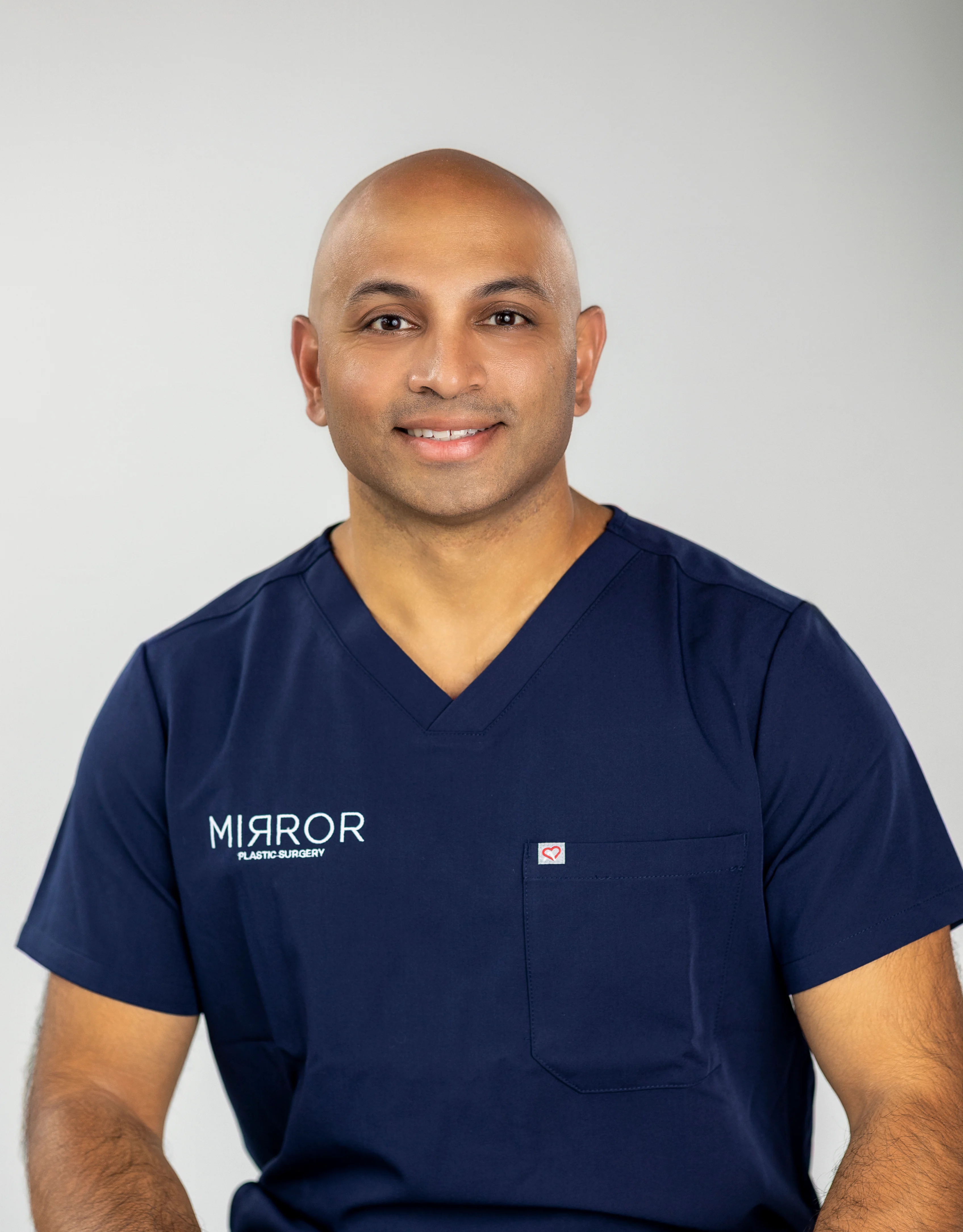
At Mirror Plastic Surgery, every neuromodulator and dermal filler is placed by Dr. Akash Chandawarkar, a board-certified plastic surgeon with a surgeon’s command of facial and subdermal anatomy. The practice limits itself to one to two procedures per day so each patient receives focused attention before, during, and after treatment.
Cost And Maintenance Planning
Filler costs vary based on product type, volume required, and the number of sessions needed to reach your goals. Some fillers, particularly PLLA, require a series of sessions before results become visible, which affects total investment. Others, such as HA fillers, provide immediate results but need maintenance every 6 to 18 months to sustain them.
Longer-lasting fillers can reduce the frequency of touch-ups but carry a higher risk profile that must be weighed against any cost benefit. Every patient at Mirror Plastic Surgery receives a personalized treatment plan and quote during consultation, based on individual anatomy and goals rather than a fixed menu price.
FAQ
What Is The Most Natural-Looking Filler?
No single filler type produces the most natural results for every patient and area. Natural outcomes depend mainly on the injector’s anatomical knowledge, the volume used, and whether the face is treated as a connected system instead of isolated zones. HA fillers are frequently preferred for lips and under-eyes because their softness and reversibility allow precise, adjustable results. In structural areas such as the cheeks and jawline, CaHA or high-viscosity HA fillers can look equally natural when placed correctly. The most natural result comes from a conservative approach guided by a physician with a surgical-level understanding of facial anatomy.
How Long Do Dermal Fillers Last?
Duration varies by filler type and treatment area. HA fillers generally last 6 to 18 months, with lips metabolizing product faster than cheeks or temples. CaHA (Radiesse) lasts about 12 to 18 months. PLLA (Sculptra) lasts 18 to 24 months, and some patients report benefits beyond that. PMMA (Bellafill) is considered permanent, with results documented at five years and longer. Individual metabolism, lifestyle, and specific product formulation all influence how long results persist.
Are Dermal Fillers Safe?
FDA-approved dermal fillers have well-established safety profiles when a qualified, experienced injector administers them. Common side effects such as swelling, bruising, and redness are temporary and usually resolve within days to two weeks. Rare but serious complications include vascular occlusion, which can cause skin necrosis or vision loss if not treated immediately. The risk of serious complications decreases significantly when the injector has deep anatomical knowledge, uses conservative technique, and keeps hyaluronidase available at every session for HA-related emergencies. Non-HA fillers carry a higher complication burden in adverse events because no enzymatic reversal agent exists for them.
Can Dermal Fillers Be Reversed?
Only hyaluronic acid fillers are reversible. Hyaluronidase dissolves HA gel within 24 to 48 hours and is used both to correct aesthetic dissatisfaction and to manage vascular complications. CaHA, PLLA, and PMMA fillers do not dissolve enzymatically. CaHA nodules may respond partially to sodium thiosulfate, although this is neither rapid nor fully reliable. PMMA complications may ultimately require surgical excision. The distinction between reversible and non-reversible fillers is one of the most important factors in product selection, especially for first-time patients or those treated in higher-risk anatomical zones.
What Is The Best Filler For Cheeks?
Cheek augmentation works well with several filler types, depending on the degree of volume loss and the patient’s goals. High-viscosity HA fillers such as Juvéderm Voluma or Restylane Lyft provide immediate lift and structural support with the added safety of reversibility. CaHA (Radiesse) offers immediate volume plus long-term collagen stimulation and suits patients seeking more durable structural correction. PLLA (Sculptra) is ideal for diffuse, gradual volume loss when a natural, progressive result over multiple sessions is preferred. The best choice follows a full facial assessment rather than a product-first decision.
What Is The Best Filler For Lips?
Soft, low-viscosity HA fillers are the clinical standard for lip augmentation. Products such as Juvéderm Volbella and Restylane Kysse are FDA-cleared for lips and fine perioral lines, and their softness allows them to move naturally with facial expression. Most patients achieve natural-looking results with 0.5 to 1 mL per session. Overfilling is the primary cause of unnatural lip results, so conservative volume and an experienced injector matter most. CaHA and PMMA are not appropriate for lip augmentation.
How Do I Choose A Dermal Filler?
The most effective way to choose a filler is to meet with a board-certified physician who performs a comprehensive facial assessment before recommending any product. The right filler depends on your anatomy, the area being treated, your skin quality, your tolerance for downtime, and your long-term aesthetic goals. A qualified injector explains why a specific product fits your face, not just what it is. If a consultation feels rushed or generic, or if a provider recommends a high syringe count before examining you, consider that a meaningful warning sign.
Conclusion
Knowing the four main categories of dermal fillers, HA, CaHA, PLLA, and PMMA, gives you the language to have a productive conversation with a qualified physician. Each category has its own mechanism, longevity profile, reversibility status, and set of appropriate uses. None is universally “best.” The best filler is the one an experienced, anatomy-first injector selects after a thorough review of your face, goals, and medical history.
The injector’s expertise remains the most important factor in any filler outcome. A physician with a surgeon’s understanding of facial anatomy, a conservative treatment philosophy, and a commitment to honest communication will consistently deliver safer, more natural results than a high-volume practice working from a product menu.
Ready To Explore Your Options?
Dr. Akash Chandawarkar at Mirror Plastic Surgery in St. Petersburg, Florida, is currently welcoming new patients for full-face restorative treatments and non-surgical BBL consultations. Every injectable treatment is performed by Dr. Akash personally after a comprehensive, up-to-an-hour assessment that centers your anatomy, safety, and long-term goals.
To schedule your personalized consultation, contact Mirror Plastic Surgery by phone or text at 727-361-6515, by email at hello@mirrorplasticsurgery.com, or online below.
Book your consultation with Ellie
Disclaimer: Results may vary from person to person. Editorial content, before and after images, and patient testimonials do not constitute a guarantee of specific results.
1 Results may vary from person to person. Editorial content, before and after images, and patient testimonials do not constitute a guarantee of specific results.