

Written by: Dr. Akash Chandawarkar, Board Certified Plastic Surgeon, Mirror Plastic Surgery | Last updated: September 9, 2026
Key Takeaways
- Temple filler carries a 3–8% complication rate because of critical blood vessels, so injector selection matters more than product choice.
- Board certification by the American Board of Plastic Surgery, fellowship training, and documented temple-specific experience are essential for safer treatment.
- Key safety protocols include on-site hyaluronidase, ultrasound or Doppler imaging, slow low-pressure injections, and a written vascular emergency plan.
- Patients should ask focused questions about credentials, complication management, injection planes, and whether the physician personally performs every treatment.
When you feel ready to move forward with temple filler, you can schedule a consultation with Ellie at Mirror Plastic Surgery to meet with Dr. Akash.
Credentials That Matter For Safe Temple Filler
Temple filler belongs in the hands of a specialist with advanced training. The checklist below outlines what to confirm before you book with any provider.
- Board certification by the American Board of Plastic Surgery, verified through official registries such as certificationmatters.org, rather than relying on marketing language.
- Fellowship training in aesthetic surgery, which signals subspecialty training beyond residency and a deeper focus on cosmetic procedures.
- Documented temple-specific experience, including photos and case volume in this area, since the temple is a high-risk zone that requires repeated practice.
- Complication management training, including vascular occlusion recognition and clear emergency response protocols.
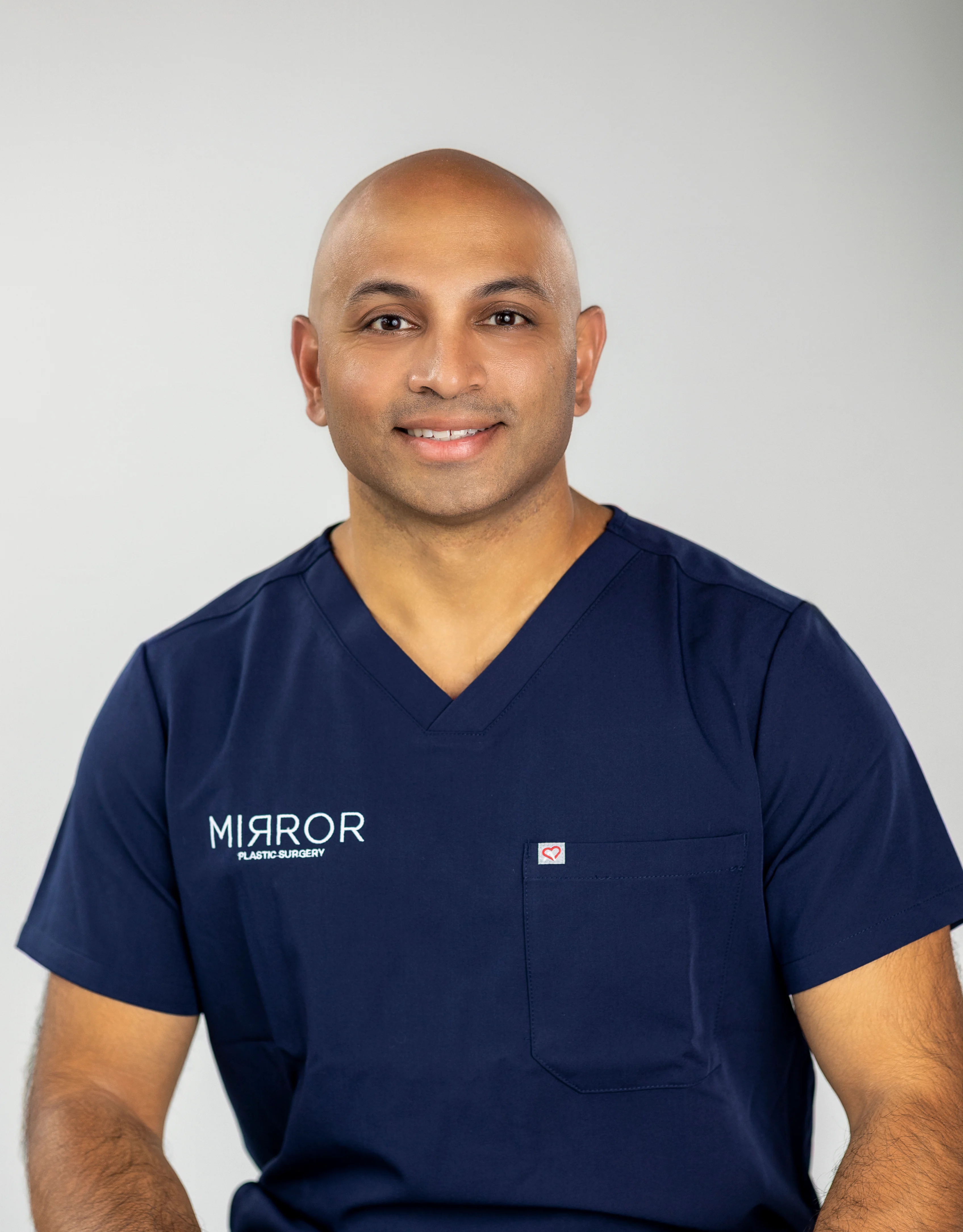
Dr. Akash Chandawarkar holds every credential on this list. He is Harvard-educated and Johns Hopkins-trained, completed a specialized fellowship in aesthetic surgery at the Manhattan Eye Ear & Throat Hospital (MEETH)/Lenox Hill Hospital, and serves on advisory boards for Merz Aesthetics and Tiger Aesthetics. These credentials matter because they reflect years of mastering the layered anatomy of the face, including the superficial temporal fascia, deep temporal fat compartments, and the variable course of the superficial temporal artery. That depth of training directly supports safer injections.
The regulatory landscape further highlights why this level of training is so important. The American Society of Plastic Surgeons recorded a 38% year-over-year increase in filler complications attributed to non-physician injectors in 2025, driven primarily by vascular occlusion. Board certification and surgical training form a critical safety baseline for a procedure with this degree of anatomical complexity.
Safety Protocols Every Temple Filler Expert Should Use
Strong credentials set the stage, and robust safety protocols protect you once treatment begins. Any expert temple filler injector should have the following safeguards in place.
- Emergency reversal agent on-site, with hyaluronidase stocked and staff trained to administer it immediately if needed.
- Ultrasound or Doppler imaging, since Doppler ultrasound before injection helps map the variable course of the superficial temporal artery, which differs from patient to patient.
- Slow, low-pressure injection technique, using small boluses of 0.1–0.2 mL injected slowly to reduce the risk of intravascular placement.
- A written emergency protocol for vascular occlusion, including early recognition of skin blanching, severe pain, or vision changes, plus a defined escalation route.
- Conservative dosing philosophy, supported by a 2026 systematic review and meta-analysis that found a statistically significant association between higher injection volumes and lower treatment effectiveness.
Dr. Akash follows evidence-based, supplier-neutral practices and selects products based on each patient’s anatomy rather than brand loyalty. Mirror Plastic Surgery’s concierge model reserves up to an hour for each consultation, which contrasts with the brief 15-minute assessments common at high-volume clinics.
Once you confirm that a provider has the right credentials and safety systems, the next step is to use your consultation to assess how they think and communicate.
Ten Essential Questions For Your Temple Filler Consultation
The questions below help you evaluate any injector in a structured, practical way. Detailed, confident answers signal genuine preparation for your safety.
- “Are you board-certified by the American Board of Plastic Surgery?” Verify this through official registries, since a surgeon’s command of facial anatomy supports safer temple filler.
- “How many temple filler procedures have you personally performed?” Look for clear numbers and examples that show repeated experience in the temple area.
- “What is your approach to avoiding blood vessels in the temple?” A credible answer will reference the superficial temporal artery, injection planes, and possibly ultrasound guidance.
- “Do you have an emergency reversal agent on-site, and what is your vascular emergency protocol?” Vague answers or visible unfamiliarity with the emergency reversal agent are disqualizing.
- “Can I see before-and-after photos of your temple filler patients specifically?” Look for natural, consistent results across at least 10–20 patients, focused on the temple region.
- “Which injection plane will you use, and why?” Expert consensus from 2025 emphasizes tailoring the injection plane to each patient’s anatomy, so an expert should explain the rationale behind interfascial, supraperiosteal, or deep temporal fat techniques.
- “What are the risks, and how do you manage complications if they occur?” An honest answer acknowledges risk and outlines a clear management plan.
- “How do you ensure natural results rather than overfilling?” Gradual volumization over two sessions produces a more natural result than a single large-volume injection, so look for a staged, conservative approach.
- “Will you personally perform the injection, or will it be delegated?” At Mirror Plastic Surgery, Dr. Akash personally performs all injectable treatments.
- “What is your philosophy on full-face assessment?” Temple hollowing usually affects overall balance, so an expert evaluates how the temple relates to the brow, cheek, and midface.
You can schedule time with Ellie to bring these questions directly to Dr. Akash and experience a consultation built around clear, unhurried answers.
Red Flags When Choosing A Temple Filler Provider
Certain warning signs suggest that a provider may lack the training, safety systems, or ethics required for safe temple filler.
- Same-day consult-and-inject appointments, since a same-day appointment often skips thorough anatomy, medical history, and suitability assessment.
- Heavy discounting or “50% off” offers, because deep discounts often signal cost-cutting on product quality, training, or safety infrastructure.
- Pressure to commit immediately, where “today only” pricing turns a medical decision into a retail sale instead of allowing time to reflect.
- Inability to answer anatomical questions, such as naming the superficial temporal artery or explaining injection planes.
- No emergency reversal agent on-site, since a practitioner who cannot reverse a complication should not be creating one.
- Vague or unverifiable credentials, because titles like “medical aesthetician” can be misleading, so you should verify licenses through state board websites.
Mirror Plastic Surgery structures care in the opposite direction of these red flags. Consultations are hour-long and separate from treatment, which removes same-day pressure. Dr. Akash frequently advises patients when treatment is not yet necessary, and the practice limits itself to one or two procedures per day so each patient receives undivided attention.
After you know what to avoid, it helps to compare qualified providers side by side using consistent criteria.
How To Compare Temple Filler Providers In St. Petersburg
The table below offers a simple framework for evaluating any local provider against the factors that matter most for safer temple filler.
| Criterion | What To Look For | Why It Matters |
|---|---|---|
| Board Certification | American Board of Plastic Surgery, verified via official registry | Surgical command of layered facial anatomy |
| Temple-Specific Experience | Documented case volume in temples, with photos and outcomes | Experience in this exact anatomical area supports safer technique |
| Safety Infrastructure | Hyaluronidase on-site, written vascular emergency protocol | Vascular complications are time-critical and require immediate reversal capability |
| Consultation Length | 30–60 minutes minimum, on a separate day from treatment | Rushed assessments miss key anatomy, history, and suitability details |
| Product Selection | Supplier-neutral, evidence-based selection | Product choice reflects the patient’s anatomy and goals rather than brand incentives |
Mirror Plastic Surgery meets every benchmark in this framework. Dr. Akash’s surgical expertise, concierge consultation model, direct communication, and evidence-based planning keep temple filler within the context of full-face harmony instead of treating it as a quick, isolated fix.
What To Expect During Your Temple Filler Journey At Mirror Plastic Surgery
Once you choose a provider who meets these standards, it helps to know what the actual treatment journey looks like at Mirror Plastic Surgery.
- The consultation: Up to one hour with Dr. Akash, including a full facial assessment, discussion of your aesthetic goals, and an honest recommendation, even when that means advising against treatment for now.
- The treatment: Performed personally by Dr. Akash using conservative, staged dosing. Recent meta-analysis supports gradual volumization over single-session full correction for the most natural and effective results.
- The results: Immediate volume restoration with natural-looking outcomes.1 Common side effects such as swelling, tenderness, and bruising typically resolve within 1–7 days.1 Results with fillers typically last 12–18 months.1
- The philosophy: Foundational restoration first. Dr. Akash focuses on revitalizing your inherent facial characteristics before adding volume, which supports balance across the upper, middle, and lower face.
Conclusion: Move Forward With A Confident Temple Filler Choice
Temple filler ranks among the highest-risk facial injection procedures and calls for an injector with deep anatomical knowledge, strong safety systems, and a conservative aesthetic approach. Your consultation becomes the key checkpoint, and the questions, red flags, and comparison framework in this guide help you evaluate any provider before you commit.
Mirror Plastic Surgery aligns with every standard outlined here. Dr. Akash Chandawarkar is a board-certified plastic surgeon with Harvard education and Johns Hopkins training, and he personally performs all injectable treatments with a safety-first philosophy. The practice’s concierge model ensures you receive time, attention, and honest communication instead of a rushed visit.
If you feel ready to explore temple filler with a board-certified plastic surgeon, you can request a consultation with Ellie at Mirror Plastic Surgery.
- Phone: 727-361-6515
- Email: hello@mirrorplasticsurgery.com
- Address: 780 4th Ave S, St. Petersburg, FL 33701
- Instagram: @mirrorplasticsurgery
Frequently Asked Questions
What Makes Temple Filler Riskier Than Other Facial Filler Treatments?
The temple is classified as a high-risk injection zone because of its dense, variable vascular network and proximity to critical neurovascular structures. The region contains the superficial temporal artery, the sentinel vein, and branches of the facial nerve. These vessels sit within the superficial layers of an anatomically complex, eight-layer structure. The temple’s vascular connections can communicate with the ophthalmic circulation, so a serious complication can threaten vision. Aspiration, which involves pulling back on the syringe to check for blood, is unreliable in the temple because vessels can collapse under negative pressure. As a result, anatomical knowledge, careful plane selection, and slow injection technique act as the primary safeguards instead of procedural shortcuts. This area also has a higher complication rate than low-risk zones, which makes choosing a board-certified plastic surgeon with surgical command of facial anatomy essential.
How Do I Verify That A Temple Filler Injector Is Genuinely Qualified?
Begin with board certification. For physicians, the American Board of Plastic Surgery is the relevant certifying body, and you can confirm certification through registries such as certificationmatters.org rather than relying on website claims. Beyond board certification, look for fellowship training in aesthetic surgery, documented experience specifically with temple filler, and evidence of complication management training that includes vascular occlusion response. In Florida, registered nurses who perform filler injections must work under appropriate physician supervision, so confirm who the medical director is and how they oversee care. Titles like “medical aesthetician” or “certified injector” are not regulated credentials, so always ask for the practitioner’s actual license type and verify it through the Florida Department of Health’s public license lookup. A practitioner who cannot answer anatomical questions about the superficial temporal artery or injection planes does not have the depth of knowledge needed for this area.
What Should I Expect During A Temple Filler Consultation At Mirror Plastic Surgery?
At Mirror Plastic Surgery, every consultation takes place with Dr. Akash Chandawarkar and can last up to one hour. The visit begins with a full facial assessment that evaluates how temporal volume loss interacts with the brow, cheek, midface, and overall facial harmony. Dr. Akash takes time to understand your aesthetic goals, medical history, and the emotional reasons behind your interest in treatment. He explains the physiology of temporal hollowing in clear language, outlines the reasoning behind any recommended treatment, and offers an honest assessment, including advising against treatment when it is not yet appropriate. This approach differs from high-volume practices that may conduct brief assessments and proceed to same-day injections. At Mirror Plastic Surgery, the consultation occurs on a separate day from any treatment, giving you space to reflect, ask follow-up questions, and decide without pressure.
What Are The Latest Advances In Temple Filler Products And Techniques?
In March 2026, Galderma’s Restylane Contour received FDA approval specifically for the correction of temple hollowing in adults over 21, making it one of the few fillers with a regulatory indication for this area. Clinical trial data showed that 91% of patients were considered responders at three months, with more than 85% maintaining improvement at 18 months and over 84% reporting satisfaction throughout that period.1 Technique recommendations have also evolved. Expert consensus in 2025 and 2026 favors tailoring the injection plane to each patient’s anatomy instead of using a single approach. Accepted planes include interfascial, subfascial, fat pad, and supraperiosteal techniques, with ultrasound guidance increasingly recommended to visualize vessels before injection. The meta-analysis mentioned earlier also supports conservative dosing, since higher injection volumes correlated with lower treatment effectiveness.
How Long Do Temple Filler Results Last, And When Should I Consider A Follow-Up?
Fillers in the temple typically last 12–18 months, with longevity influenced by filler type, injected volume, metabolism, and how the tissue integrates the material.1 Biostimulatory options such as poly-L-lactic acid can last up to two years by stimulating collagen production over time, although results develop gradually over 4–12 weeks instead of appearing immediately.1 Most patients notice continued improvement as swelling settles over 1–7 days, so final results are best assessed after that period.1 Rather than scheduling repeat treatments on a fixed calendar, Dr. Akash evaluates each patient’s outcome at follow-up and recommends additional treatment only when it makes clinical sense, consistent with the practice’s staged, anatomy-driven philosophy. Repeat temple filler sessions are generally spaced at least 6–12 months apart to allow full tissue integration and accurate assessment of the previous result.
Disclaimer: Results may vary from person to person. Editorial content, before and after images, and patient testimonials do not constitute a guarantee of specific results.
1 Results may vary from person to person. Editorial content, before and after images, and patient testimonials do not constitute a guarantee of specific results.


