
Written by: Dr. Akash Chandawarkar, Board Certified Plastic Surgeon, Mirror Plastic Surgery | Last updated: September 9, 2026
Key Takeaways
- Temple hollowing treatment carries real vascular risks, so choosing your injector is a medical decision, not a convenience choice.
- Board certification by the American Board of Plastic Surgery and advanced anatomical training are essential for safe temple injections.
- Blunt-tip cannulas, slow low-pressure injection technique, and FDA-approved fillers significantly reduce complication rates.
- Every qualified injector must maintain an emergency protocol with hyaluronidase on-site and a clear ophthalmology pathway for rare vascular events.
- Experience safe, personalized temple hollowing treatment with Dr. Akash Chandawarkar at Mirror Plastic Surgery by scheduling a tailored consultation.
#10: The Anatomy of Risk in Temple Injections
The temple is a high-stakes injection site with little margin for error. Professional dermal filler training identifies the temple as one of the highest-risk areas because arterial anatomy there can permit retrograde flow toward the ophthalmic circulation, which can potentially cause vision loss. The superficial temporal artery and vein run through this region. Any injector who lacks a deep, subdermal understanding of this anatomy should not treat it.
The temporal region harbors the superficial temporal artery, making it a high-risk zone for vascular complications during filler injections. When injection pressure exceeds arterial pressure, filler can travel backward along the artery toward the ophthalmic circulation. This is a real, anatomical risk, which makes provider selection a medical decision rather than a convenience. That decision begins with credentials.
#9: Board Certification and Advanced Training
Board certification by the American Board of Plastic Surgery represents the highest standard of training and oversight. It requires years of surgical residency, mastery of human anatomy, and rigorous written and oral examinations. This background differs significantly from the training of non-physician injectors or providers without a surgical foundation.
Only advanced medical professionals with specific temple injection training and continuous professional development in facial anatomy and complication management should perform temple filler injections. Dr. Akash Chandawarkar completed surgical residency at Johns Hopkins and a fellowship in aesthetic surgery at the Manhattan Eye Ear & Throat Hospital. This training gives him precise command of the facial anatomy that keeps temple injections both safe and accurate.
Connect With Ellie to Arrange a Consultation and meet Dr. Akash to discuss whether temple hollowing treatment fits your goals.
#8: Cannula Technique and Slow Injection for Safety
The tools and technique an injector uses directly affect your risk profile. Blunt-tip cannulas are strongly preferred over sharp needles in high-risk zones like the temple. Cannula use in temple augmentation decreases bruising incidence from 34% to 8% compared to needles, and a landmark study found that cannulas demonstrate a 77% reduction in vascular events compared to needles.
Technique matters equally. Slow, low-pressure injection at typically ≤0.1 ml/min allows vessel collapse and elastic recoil to divert the needle tip away from vascular structures, reducing vascular complication rates to <0.002% compared to 0.01% for high-pressure rapid injections. Because rushing this step can negate the safety benefits of a cannula, any injector who rushes is cutting corners on your safety.
#7: Matching Filler Type to the Correct Tissue Plane
Safe temple treatment depends on pairing the right filler with the right depth and technique. Not every filler suits every patient, and not every injector understands these distinctions. The primary options for temple hollowing include biostimulatory fillers, and each product has a distinct clinical profile.
Juvederm Voluma XC received FDA approval in March 2024 as the first hyaluronic acid filler specifically indicated for correction of temple hollowing in adults. Biostimulatory options like Sculptra and Radiesse work differently by stimulating the body’s own collagen production over time. The table below summarizes how these fillers compare on key factors such as mechanism, timing, and longevity. The right choice depends on individual anatomy, goals, and medical history, so a personalized consultation remains essential.
| Feature | Biostimulatory Fillers (e.g., Sculptra, Radiesse) |
|---|---|
| Mechanism | Stimulates the body’s own collagen production over time. |
| Results Timeline | Gradual results appearing over 4–12 weeks.1 |
| Longevity | Results can last up to 2 years or more.1 |
| Reversibility | Not directly reversible with hyaluronidase. |
#6: Why FDA Approval Matters for Temple Hollowing
Using an FDA-approved product for its specific indication adds a proven layer of safety and efficacy. Restylane Contour received U.S. FDA approval in March 2026 for the correction of temple hollowing in patients older than 21, with clinical data showing 91% of patients were considered responders at 3 months and more than 85% remained treatment responders up to 18 months after the start of treatment.1
More than 70% of patients treated with Restylane Contour for temple hollowing felt they looked younger, less tired, and more refreshed 18 months after treatment. Additionally, 85% felt their temples looked natural at month 18.1 These findings come from prospective, multicenter clinical trials, not marketing copy. An injector who uses FDA-approved products for their approved indications follows the evidence and respects your safety.
#5: Emergency Preparedness for Rare Complications
Serious vascular complications from temple filler are rare, yet their potential consequences are severe. Skin necrosis, vision loss, or in extreme cases pulmonary embolism can occur. Vascular occlusion risk is estimated at under 0.01% in absolute terms, but potential consequences include permanent blindness and tissue necrosis, which makes prevention and preparation critical.
Every aesthetic clinic should hold a written, rehearsed, in-date vascular emergency protocol, stock at least 3,000 units of hyaluronidase on-site, and maintain a named ophthalmology pathway, treating the first hour as the operative window, as outcome correlates with preparedness, not seniority. Before booking any temple filler treatment, confirm that your provider meets this standard and can explain the plan clearly.
#4: Five Essential Questions to Vet Your Injector
Five direct questions can quickly reveal whether an injector meets a safe standard of care:
- Are you a board-certified plastic surgeon or a physician with advanced, anatomy-focused training in facial injections?
- What specific safety protocols do you follow to prevent vascular complications, and do you have hyaluronidase on-site?
- How many temple injections have you performed, and can you show me before-and-after photos of this specific treatment?
- What product do you recommend for my anatomy and why? Are you using an FDA-approved filler for this indication?
- What is your emergency plan if a complication occurs, and how quickly can you act?
Temple filler should only be performed by a board-certified plastic surgeon, dermatologist, or oculoplastic surgeon with documented experience injecting the temporal fossa. Treatment at a general med spa or with an injector whose primary experience is lips and nasolabial folds does not meet this bar. If a provider struggles to answer these questions clearly and confidently, choose a different injector.
Schedule a Safety-Focused Consultation With Ellie and bring these questions. Dr. Akash will address each one in detail.
#3: The Expert Behind Your Treatment: Dr. Akash Chandawarkar
Dr. Akash Chandawarkar, MD, is a Harvard-educated, Johns Hopkins-trained, board-certified plastic surgeon and the founder of Mirror Plastic Surgery. He completed specialized fellowship training in aesthetic surgery at the Manhattan Eye Ear & Throat Hospital (MEETH)/Lenox Hill Hospital and received medical innovation training at Stanford University.
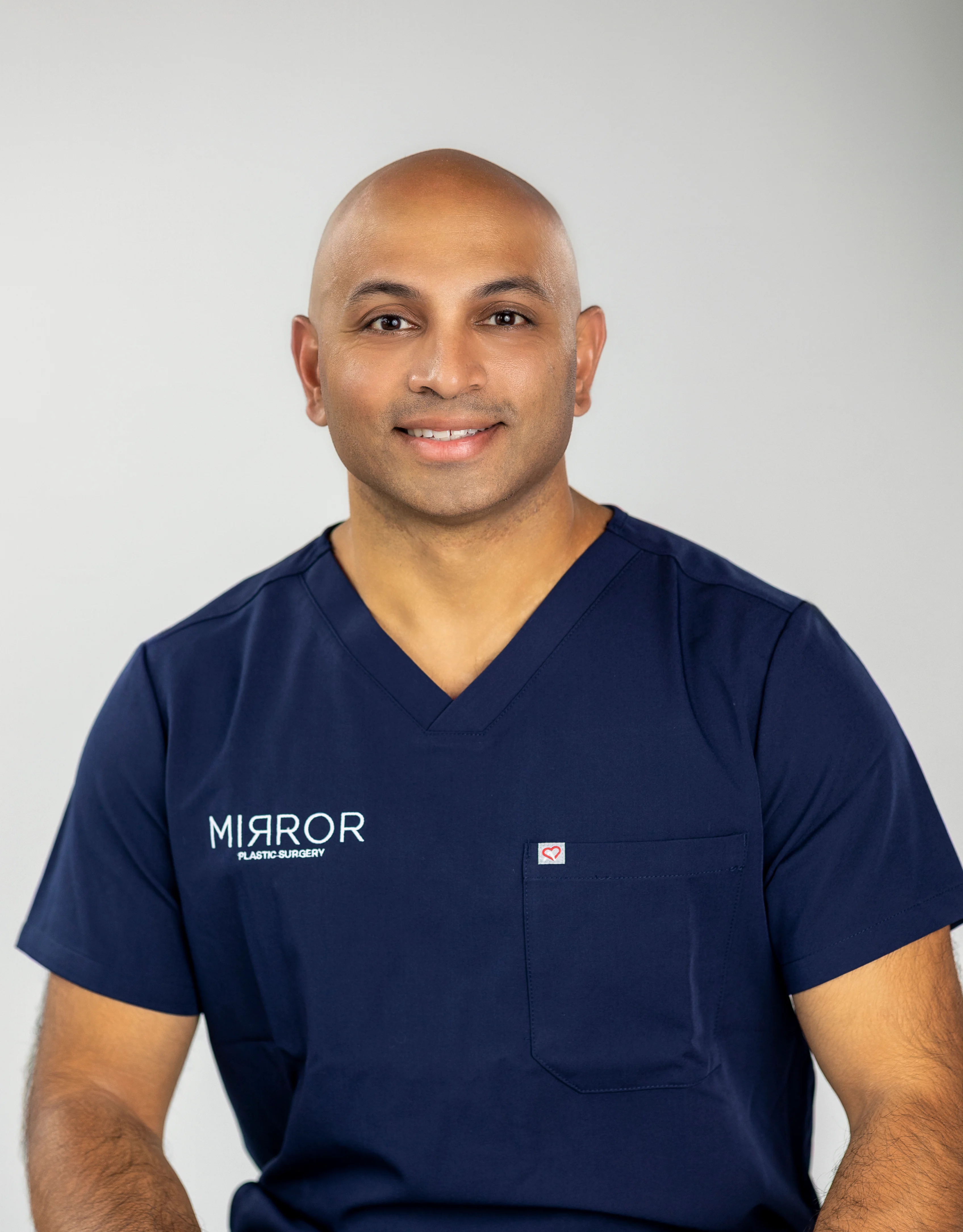
Dr. Akash personally performs injectable treatments at Mirror Plastic Surgery, so every patient benefits from a physician’s command of facial and subdermal anatomy. He has also been recognized for his contributions to the field, including receiving payments from Merz North America and hosting a Tiger Aesthetics webinar, which reflects his engagement with leading aesthetics companies.
#2: The Mirror Plastic Surgery Concierge Experience
Mirror Plastic Surgery follows a philosophy that places safety, function, and aesthetics in that order. This hierarchy guides every consultation, product choice, and injection decision.
Initial consultations at Mirror Plastic Surgery are intentionally thorough. Dr. Akash takes time to understand what a patient wants to change, why they want that change, and what their anatomy actually requires. This approach contrasts with high-volume med-spa models that rely on rushed appointments and quota-driven product recommendations. Mirror Plastic Surgery bases recommendations on the patient’s anatomy and goals, not on commission or inventory pressure.
#1: Personalized Treatment Planning as the Ultimate Safety Feature
The most powerful safety feature in temple hollowing treatment is a plan tailored to you. The most effective risk-reduction strategy for dermal filler vascular occlusion is choosing an experienced, appropriately credentialed injector who understands facial vascular anatomy, uses careful technique, keeps hyaluronidase on hand, and educates patients about warning signs.
At Mirror Plastic Surgery, a consultation begins with a structured, top-to-bottom facial assessment. Dr. Akash evaluates the degree of temporal hollowing, the condition of surrounding facial structures, and overall volume distribution before recommending any product or technique. This approach creates a treatment plan that addresses the whole face, not just the temples in isolation, which helps prevent asymmetry and an overdone appearance.
Patients receive clear guidance about what to expect during and after treatment. Common side effects include mild swelling, redness, and bruising that typically resolve within a few days to a week.1 You will also learn the rare warning signs that require immediate attention and how to contact the practice quickly.
Patients who feel ready to move forward can take the next step with a tailored visit. Request Your Personalized Temple Filler Consultation With Ellie and start your treatment journey with a safety-first team.
Frequently Asked Questions
Is Temple Filler Safe?
Temple filler is safe when performed by a highly qualified injector such as a board-certified plastic surgeon. The temple carries inherent vascular risks because of the superficial temporal artery and its potential connections to the ophthalmic circulation. These risks decrease significantly with advanced surgical training, correct technique using blunt-tip cannulas and slow low-pressure injection, deep placement in the appropriate anatomical plane, and full preparedness for rare complications with on-site hyaluronidase and a written emergency protocol. The FDA approval of products specifically for temple hollowing further supports the safety and efficacy of this procedure when performed correctly.
How Long Do Temple Fillers Last?
Longevity depends on the product used and individual factors such as metabolism and the degree of volume loss. Biostimulatory fillers such as Sculptra, which work by stimulating the body’s own collagen production, can produce results lasting up to two years or more after a full treatment course.1 During your consultation, Dr. Akash will recommend the most appropriate product based on your anatomy, goals, and medical history.
How Much Does Temple Filler Cost in St. Petersburg?
The cost of temple hollowing treatment varies based on the amount of product required, the type of filler selected, and the provider’s level of expertise. At Mirror Plastic Surgery, you receive a personalized quote during your consultation after a thorough, top-to-bottom assessment of your facial anatomy and treatment goals. Mirror Plastic Surgery does not upsell or recommend more product than is clinically appropriate. The recommendation always reflects what your anatomy requires.
What Is the Recovery Time After Temple Filler?
Most patients resume normal daily activities immediately after treatment. Common side effects include mild swelling, redness, tenderness, and bruising at the injection site, which typically resolve within a few days to a week. Given the vascularity of the temporal region, some bruising is not uncommon and may be visible for up to 7–10 days.1 Dr. Akash provides specific post-treatment guidance tailored to your situation, including warning signs that warrant immediate follow-up contact with the practice.
What Is Better for Temples: Sculptra or a Biostimulatory Filler?
No single filler works best for every patient. Biostimulatory fillers like Sculptra provide gradual volume restoration and longer-lasting results for patients who prefer a progressive approach. Patients who are new to temple treatment, or who prioritize reversibility as a safety feature, are often started with an HA filler. A thorough consultation with Dr. Akash is the most reliable way to determine which option fits your specific anatomy and goals.
Conclusion: Safety as the Core Result
Temple hollowing treatment is a high-precision medical procedure that demands expertise and planning. The safest injector in St. Petersburg is the one who prioritizes your safety, holds surgical-grade anatomical knowledge, and builds a treatment plan around your unique anatomy and goals.
Dr. Akash Chandawarkar and the team at Mirror Plastic Surgery uphold this standard at every step, from the hour-long initial consultation to the physician-performed injection and attentive follow-up. Contact Ellie to Schedule Your Temple Filler Consultation at Mirror Plastic Surgery and experience the difference that true expertise provides.
Book a Consultation
Mirror Plastic Surgery is located in St. Petersburg, Florida. Reach out by phone, text, or email to schedule your personalized consultation with Dr. Akash Chandawarkar.
- Phone: 727-361-6515
- Email: drakash@mirrorplasticsurgery.com
- Address: 780 4th Ave S, St. Petersburg, FL 33701
- Instagram: @mirrorplasticsurgery
Disclaimer
Disclaimer: Results may vary from person to person. Editorial content, before and after images, and patient testimonials do not constitute a guarantee of specific results.
1 Results may vary from person to person. Editorial content, before and after images, and patient testimonials do not constitute a guarantee of specific results.