
Written by: Dr. Akash Chandawarkar, Board Certified Plastic Surgeon, Mirror Plastic Surgery | Last updated: September 9, 2026
Key Takeaways
- BBL mortality has dropped from approximately 1 in 3,000 in 2017 to about 1 in 15,000 when surgeons use subcutaneous-only injection with real-time ultrasound guidance.
- The most dangerous risk, pulmonary fat embolism, occurs when fat is injected into or beneath the gluteal muscle. Every confirmed fatality involved intramuscular placement.
- Modern safety protocols, including subcutaneous-only injection, ultrasound guidance, and procedure caps, have reduced mortality by roughly 80 percent and produced zero deaths in a 12,800-case 2024 study.
- Board certification alone does not guarantee safety. Patients also need to confirm that their surgeon uses blunt cannulas at least 4 mm wide, performs real-time ultrasound, and limits BBL cases to three per day.
- Patients who want a safety-focused consultation can schedule a safety-first BBL consultation at Mirror Plastic Surgery to review evidence-based options with a board-certified plastic surgeon.
What Are the Risks of a Brazilian Butt Lift?
BBL surgery carries risks from both liposuction and fat reinjection. Data from a 7,000-patient series using strict subcutaneous-only injection (PubMed ID 42192008) helps clarify how often these complications occur.
The most serious risk is pulmonary fat embolism. Less common but still significant risks include infection and anesthesia complications. More frequent, lower-risk issues include seroma and anemia. The list below groups these risks by severity and mechanism so you can see how they fit together.
- Fat embolism (pulmonary fat embolism): This is the leading cause of BBL-related death. It occurs when injected fat enters the gluteal veins and travels to the lungs, blocking blood flow. In every confirmed BBL fatality investigated by the ASPS, autopsy revealed fat within the gluteal muscle. No confirmed death showed fat confined to the subcutaneous plane.
- Seroma: This fluid buildup beneath the skin is the most common non-fatal complication, occurring in approximately 23% of cases in the 7,000-patient series.
- Anemia: Blood loss from fat harvesting and tissue trauma can cause anemia, reported in about 6.6% of cases in the same series.
- Fat necrosis: Some transferred fat cells die and form firm lumps or oil cysts, reported in approximately 1.9% of cases.
- Infection: Reported in about 0.43% of cases in the 7,000-patient series.
- Asymmetry and contour irregularities: Uneven fat retention or reabsorption can create visible irregularities. These issues may require revision surgery, with a revision rate of approximately 0.21% in the cited series.
- Anesthesia risks: These include adverse reactions and deep vein thrombosis, similar to other procedures that use general anesthesia.
The overall risk profile changes dramatically when surgeons follow the 2022 multi-society safety protocol, which specifies subcutaneous-only injection with ultrasound guidance. The ASPS Gluteal Fat Grafting Safety Advisory identifies gluteal vein injury followed by fat embolism as the central lethal mechanism and states that intramuscular and submuscular injection is contraindicated. The Cleveland Clinic’s BBL overview confirms that subcutaneous-only placement above the muscle fascia is the current standard for risk reduction.
Discuss your personal BBL risk profile with a board-certified surgeon at Mirror Plastic Surgery to understand how these statistics apply to your health and anatomy.
Why BBL Carries Unique Risks: The Anatomy of Fat Embolism
BBL involves three steps: liposuction from donor areas, fat processing, and reinjection into the buttocks. The gluteal region’s anatomy makes this procedure historically riskier than other fat grafting procedures. The gluteus maximus muscle contains the superior and inferior gluteal veins, which sit roughly 4.5 to 5 cm from the sacral midline and 6 cm deep from the skin surface, and are 7 to 13 times larger in diameter than subcutaneous venules.
If a cannula penetrates into or beneath the gluteus maximus muscle, fat can enter these large veins and travel to the lungs, causing a pulmonary fat embolism. Autopsies of women who died after BBL consistently showed fat inside the gluteal muscles, fat beneath the muscles, damage to the large gluteal veins, and massive fat emboli in the heart and lungs. This pattern led the 2018 multi-society task force, representing ASPS, ASAPS, ISAPS, and others, to issue an urgent advisory. ASPS President Dr. Alan Matarasso noted: “BBL is the only aesthetic procedure that has its own autopsy technique.”
How BBL Safety Has Evolved: From 1 in 3,000 to a Dramatic Reduction
BBL safety has improved sharply over the past decade, driven by better technique and clearer guidelines. The timeline below summarizes key milestones from peer-reviewed surveys and multi-society advisories.
- 2017: An ASERF Task Force survey (Mofid et al., Aesthetic Surgery Journal) analyzing data from 4,843 plastic surgeons performing over 198,000 BBLs identified 32 confirmed deaths and 103 non-fatal pulmonary fat embolisms, estimating BBL mortality at approximately 1 in 3,000, the highest of any cosmetic surgery at the time.
- 2018: The ASPS issued a formal Mortality Advisory on August 6, 2018, after forming the Task Force for Safety in Gluteal Fat Grafting across five organizations: ASPS, ASAPS, ISAPS, the International Society of Plastic Regenerative Surgeons, and the International Federation for Adipose Therapeutics and Science.
- 2019: A follow-up survey of Aesthetic Society and ISAPS members found that after the 2017 guidance, the reported BBL mortality rate fell from 1 in 3,448 to 1 in 14,952, an 80% reduction. The incidence of pulmonary fat embolism fell from 1 in 1,030 to 1 in 2,492.
- 2022: A joint ASPS/ASAPS/ISAPS Practice Advisory mandated subcutaneous-only fat injection, required intraoperative ultrasound guidance, and capped procedures at no more than three BBL cases per surgeon per day. BAAPS reported mortality of approximately 1 in 15,000 with these protocols, similar to the mortality risk in abdominoplasty.
- 2024: A study of 12,800 BBL procedures where 96% of surgeons injected exclusively above the muscle reported zero deaths.
Florida has codified these requirements into law through HB 1471 (effective July 1, 2023), while most other states still rely on voluntary compliance. This gap makes surgeon-specific verification essential, even in regions with many board-certified surgeons.
How to Choose a Safe BBL Surgeon: A Verification Checklist
Choosing a safe BBL surgeon means confirming both credentials and technique. In South Florida, 68% of BBL deaths involved ABPS-certified surgeons (PMC9896146), so patients need to ask targeted questions. The checklist below groups key questions and explains why each one matters.
- Are you board-certified by the American Board of Plastic Surgery (ABPS)? Verify directly with the ABPS, and look for a named certifying board rather than a vague “board-certified” claim. This confirms formal training in plastic surgery.
- Do you inject exclusively into the subcutaneous plane, above the muscle fascia? This is the single most important safety question. Every documented BBL fatality involved intramuscular or submuscular injection, so a clear commitment to subcutaneous-only placement is critical.
- Do you use real-time ultrasound guidance during injection, and is the imaging saved to the medical record? The 2022 Practice Advisory in the Aesthetic Surgery Journal recommended ultrasound documentation of cannula position before and during injection. Saved images create accountability and help confirm safe technique.
- What cannula size and type do you use? Guidelines call for blunt-tipped cannulas of at least 4 mm diameter. Larger, blunt cannulas are less likely to pierce a vein wall than small, sharp instruments.
- How many BBL procedures do you perform annually, and what is your personal complication rate? A surgeon who tracks and shares these numbers treats safety data as part of everyday practice. This transparency helps you compare your risk with published series.
- Is the facility accredited, and what is your emergency protocol? Look for accreditation by AAAASF, AAAHC, or the Joint Commission, and ask about hospital-transfer plans. Accredited facilities must meet standards for equipment, staffing, and emergency readiness.
- What is your approach to patient selection? A safety-first surgeon screens out candidates with risk factors such as active smoking, uncontrolled diabetes, or significant cardiovascular disease, even when those patients are eager to proceed.
In Florida, HB 1471 requires the operating surgeon to personally perform both fat extraction and injection, mandates an in-person examination no later than one day before surgery, and requires real-time ultrasound. These rules make Florida one of the most regulated BBL markets in the country. Mirror Plastic Surgery in St. Petersburg follows these standards as a starting point and layers additional safety practices on top.
Use this safety checklist in a consultation with Dr. Akash at Mirror Plastic Surgery to get clear, evidence-based answers before you commit.
Long-Term BBL Outcomes as Part of Your Risk–Benefit Decision
Long-term results after BBL affect both satisfaction and future risk, so they belong in your overall risk–benefit calculation. Research and large clinical series outline how fat survival, weight changes, and body remodeling shape outcomes over time.
- Fat reabsorption and volume change: Long-term fat retention typically ranges from 50% to 70% of injected volume, with wide variation between individuals.1 Volume can change with weight gain or loss, and uneven reabsorption may create asymmetry years later.
- Fat necrosis and oil cysts: Fat necrosis occurs when transferred fat outgrows its blood supply, causing central fat cells to die and liquefy into oily cysts or harden into firm, sometimes painful lumps. These areas can mimic tumors on imaging and may need needle aspiration or surgical removal. The 7,000-patient series reported fat necrosis in 1.9% of cases.
- Need for revision surgery: Revision surgery was required in 0.21% of cases in the 7,000-patient series, usually for secondary contour correction rather than major complications.
- Psychological impact: Complications, asymmetry, or results that do not match expectations can carry a real emotional burden. A safety-first surgeon sets realistic expectations and discusses the possibility of touch-ups or revisions before you decide.
Non-Surgical Alternatives: Reducing Risk While Enhancing Shape
Some patients decide that even a reduced surgical risk feels too high. For these patients, non-surgical BBL options remove the risks of fat embolism, general anesthesia, and surgical recovery while still offering visible enhancement.
At Mirror Plastic Surgery, Dr. Akash Chandawarkar, a board-certified plastic surgeon and advisory board member for Merz Aesthetics and Tiger Aesthetics, performs non-surgical BBL using biostimulatory fillers such as Radiesse (calcium hydroxyapatite) and AlloClae adipose fillers, along with Avéli for cellulite treatment.
A 498-subject safety study found that bruising was the most common side effect of non-surgical buttock treatments at approximately 5%, and nodule incidence was just 0.2%. Clinical trials report 96% patient satisfaction and 84% physician-rated improvement after treatment with biostimulatory fillers.1
Results from non-surgical BBL are more modest than surgical BBL and require maintenance sessions, usually every 12 to 24 months.1 For patients who prefer to avoid surgery or who lack enough donor fat, these injectable options provide a clinically validated path to enhancement. A board-certified plastic surgeon brings surgical-grade anatomical knowledge to every injection. This expertise creates a meaningful safety advantage over non-physician injectors.
Explore non-surgical BBL options with Dr. Akash at Mirror Plastic Surgery to see whether this approach fits your anatomy, lifestyle, and goals.
Frequently Asked Questions
What Is the BBL Death Rate in 2026?
Among surgeons who follow subcutaneous-only injection protocols with real-time ultrasound guidance, current mortality estimates sit at approximately 1 in 15,000. Earlier surveys placed mortality near 1 in 3,000 before these changes. A 2024 study of 12,800 procedures using modern protocols reported zero deaths. Deaths in 2026 cluster mainly at high-volume budget clinics and medical tourism destinations that ignore the 2022 multi-society safety standards. The mortality rate depends directly on the surgeon’s technique and adherence to safety protocols.
How Long After a BBL Are You at Risk for Fat Embolism?
Fat embolism symptoms usually appear within 48 hours of surgery, although they can begin during or immediately after the procedure. Warning signs include sudden shortness of breath, chest pain, rapid heartbeat, confusion, dizziness, and bluish discoloration of the lips or fingertips. Any of these symptoms after BBL surgery require emergency medical attention right away. The highest-risk window is the first 48 hours, but patients should stay alert and maintain close contact with their surgical team throughout early recovery.
Has BBL Gotten Safer?
BBL has become substantially safer among surgeons who follow modern protocols. The mortality rate has fallen by about 80% since 2017, driven by subcutaneous-only fat injection and routine use of real-time intraoperative ultrasound. A 2024 study of 12,800 procedures using these methods reported zero deaths. This improvement applies to surgeons who follow the 2022 multi-society protocols. In markets without enforcement, or at high-volume budget clinics that focus on speed, the older, higher risk profile still appears. The safety of any individual BBL depends on the specific surgeon’s technique and practice environment.
Are Non-Surgical BBL Options Safe?
Non-surgical BBL with biostimulatory fillers such as Radiesse and AlloClae avoids the risks of fat embolism, general anesthesia, and surgical recovery. Common side effects include temporary swelling, bruising, and tenderness at injection sites. Less common risks include nodule formation and, rarely, vascular complications. These risks depend heavily on the injector’s anatomical knowledge and the quality of the clinical setting. A board-certified plastic surgeon performing these treatments applies a surgeon’s understanding of subdermal anatomy to each injection, which reduces the chance of complications compared with less-trained injectors. Results are temporary and more subtle than surgical BBL, so maintenance sessions are needed to sustain the effect.
Conclusion: Choosing a Safety-First Path for BBL
BBL earned its reputation as the most dangerous cosmetic procedure through well-documented data. The same body of evidence now shows that most of this risk is preventable when surgeons follow modern safety protocols and limit case volume. The 12,800-case 2024 study using subcutaneous-only technique with ultrasound guidance and reporting zero deaths illustrates what is possible when safety standards guide every step.
For patients considering surgical BBL, the surgeon’s technique and safety culture matter more than credentials alone. For patients who prefer to avoid surgery, non-surgical options using biostimulatory fillers offer a lower-risk, clinically supported alternative. In both scenarios, you deserve an unhurried consultation with a board-certified plastic surgeon who places safety and function ahead of aesthetics.
At Mirror Plastic Surgery in St. Petersburg, Florida, Dr. Akash Chandawarkar, a Harvard-educated, Johns Hopkins-trained plastic surgeon, spends up to an hour on each consultation. He performs a top-to-bottom assessment and provides direct, evidence-based guidance on which options fit your anatomy, health, and goals. The practice limits itself to one to two procedures per day so that each patient receives focused, safety-centered care.
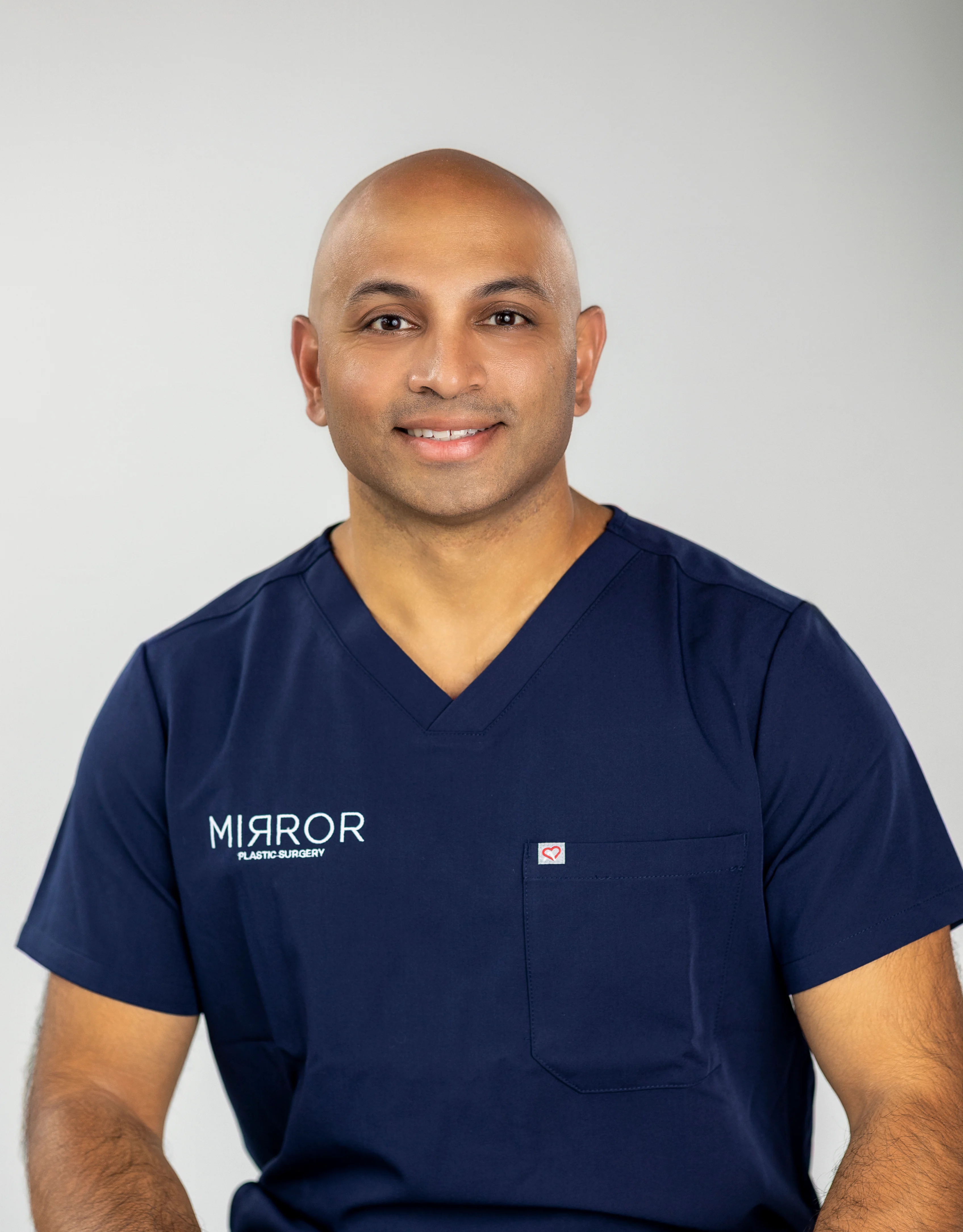
Schedule a safety-first consultation at Mirror Plastic Surgery to review your BBL options with a board-certified plastic surgeon who prioritizes your long-term health and results.
Disclaimer: Results may vary from person to person. Editorial content, before and after images, and patient testimonials do not constitute a guarantee of specific results.
1 Results may vary from person to person. Editorial content, before and after images, and patient testimonials do not constitute a guarantee of specific results.