Written by: Dr. Akash Chandawarkar, Board Certified Plastic Surgeon, Mirror Plastic Surgery | Last updated: September 9, 2026
Key Takeaways
- BBL mortality has fallen sharply since 2017 and is now far lower among surgeons who follow current safety protocols.1
- Most historical deaths came from pulmonary fat embolism after intramuscular injection. Subcutaneous-only placement with ultrasound has nearly eliminated this risk.1
- High-volume budget clinics remain the main source of current BBL deaths. Accredited facilities with protocol-compliant surgeons show near-zero mortality.
- Choosing a board-certified plastic surgeon who limits daily BBL volume, uses real-time ultrasound, and operates in an accredited facility minimizes risk.
The 2017 Crisis: Why BBL Was the Deadliest Cosmetic Procedure
The 2017 ASERF Task Force study, led by Dr. Peter Rubin and published in the Aesthetic Surgery Journal, surveyed 692 surgeons and analyzed 198,857 BBL cases, identifying 32 confirmed deaths and 103 non-fatal pulmonary fat embolisms. The resulting mortality estimate of 1 in 3,448 dwarfed every other cosmetic procedure: abdominoplasty carried a rate of approximately 1 in 13,147, and the overall rate for aesthetic surgery in accredited facilities was roughly 1 in 55,000.
The cause of death in virtually every confirmed case was pulmonary fat embolism (PFE). The mechanism was specific and anatomically predictable: surgeons injected fat into or through the gluteal muscle, where large gluteal veins run through the muscle belly. When a cannula lacerated those vessels and fat was injected under pressure, it entered the venous system. From there it traveled to the heart and lungs, causing cardiovascular collapse, often within minutes of injection. In 100% of autopsy-confirmed BBL deaths, fat was found within or beneath the muscle. In no confirmed death did fat remain exclusively in the subcutaneous plane.
The same task force found that deep muscle injection carried a 403% increased risk of pooled fatal and nonfatal pulmonary fat embolism on multivariate analysis. The danger came from the location of the fat placement, not from the concept of fat transfer itself.
The 2018–2022 Safety Revolution: How The Mortality Rate Was Dramatically Reduced
In August 2018, the American Society of Plastic Surgeons (ASPS) issued a formal Mortality Advisory after forming a multi-society Task Force for Safety in Gluteal Fat Grafting. The task force represented ASPS, ASAPS, ISAPS, the International Society of Plastic Regenerative Surgeons, and the International Federation for Adipose Therapeutics and Science. It published 10 safety guidelines centered on two non-negotiable technical changes:
- Subcutaneous-Only Injection: Fat must be placed strictly above the gluteal fascia, never into or below the muscle.
- Larger, Blunt-Tipped Cannulas: Cannulas of 4 mm diameter or larger require significantly more force to puncture a vein wall, and the larger surface area tends to push elastic blood vessels aside instead of cutting them.
Adoption moved quickly. By 2019, 94% of ASERF survey respondents were aware of the new recommendations, and 86% had transitioned to subcutaneous-only injection, compared to only 39.8% in 2017. Only 0.8% of surveyed surgeons still injected into deep muscle, down from 13.1% two years earlier.
The mortality data shifted in parallel. The 2019 ASERF follow-up survey documented that annual BBL mortality dropped from 1 in 3,448 to 1 in 14,921, and nonfatal PFE rates fell from 1 in 1,030 to 1 in 2,492 (p=0.02).
In April 2022, ASPS, ASAPS, and ISAPS jointly published a comprehensive Practice Advisory on Gluteal Fat Grafting that formalized these protocols as the standard of care. The advisory codified 10 key principles, including mandatory real-time intraoperative ultrasound guidance to confirm cannula placement, a cap of no more than three BBL procedures per surgeon per day, roller pump technique for volumes exceeding 200 mL per buttock, and an accredited surgical facility requirement. Florida later became the first U.S. state to legally mandate these techniques under HB 1471, effective July 1, 2023.
If you want to explore BBL with a surgeon who follows these protocols, you can schedule a safety-focused consultation with Ellie at Mirror Plastic Surgery.
The 2026 Mortality Rate: What The Latest Data Shows
The table below summarizes how BBL mortality has changed from the 2017 crisis to the current standard of care.
| Time Period | Mortality Rate Estimate | Key Protocol | Source |
|---|---|---|---|
| 2017 (baseline) | 1 in 3,448 | Intramuscular injection common, no ultrasound standard | ASERF Task Force (Mofid et al.), Aesthetic Surgery Journal |
| 2019 (post-reform) | 1 in 14,921 | Most surgeons using subcutaneous-only injection | ASERF Follow-Up Survey, Aesthetic Surgery Journal |
| 2020–2022 (Brazilian cohort) | ~1 in 20,000 | Subcutaneous-only technique among Brazilian SBCP surgeons | Cansancao et al., Brazilian Society of Plastic Surgery |
| 2022 (compliant surgeons) | 1 in 23,818 | Full Practice Advisory compliance, including ultrasound | World Association of Gluteal Surgeons Survey |
The table above shows a clear downward trend, and follow-up surveys provide even stronger reassurance. Subcutaneous-only injection with proper technique produced zero documented fatal PFE cases across more than 12,000 cases from 2019 to 2021. A 2024 study reported zero deaths among 12,800 BBL procedures where 96% of surgeons injected exclusively above the muscle. Projections in the Aesthetic Surgery Journal modeled that with continued technique compliance, BBL mortality could fall to between 1 in 25,000 and 1 in 35,000, a range similar to many other elective surgeries.
Why Deaths Still Occur: The 2023 South Florida Analysis
The mortality reduction is real, yet it does not apply to every practice setting. A 2023 study by Pazmiño and Garcia in the Aesthetic Surgery Journal, reviewing South Florida medical examiner records from 2010 to 2022, identified 25 fatal cases of pulmonary fat embolism. Over 90% occurred at high-volume, corporate-owned budget clinics, not in properly accredited facilities. Contributing factors included financial pressure to perform many surgeries daily, surgeon fatigue, limited time for ultrasound documentation, and in some cases providers who lacked board certification in plastic surgery.
One finding from this analysis demands particular attention: 68% of documented South Florida BBL deaths involved ABPS-certified surgeons. Board certification alone does not guarantee safety; it must be paired with protocol adherence. The critical variable is whether the surgeon follows the 2022 subcutaneous-only ultrasound protocol and whether their practice model allows them to apply it safely. A surgeon performing 10 to 12 BBLs in a single day cannot maintain the focus, documentation, and technique discipline that the 2022 advisory requires. This reality explains why deaths have continued even after guidelines were issued.
Fourteen of the 25 South Florida deaths occurred after the 2018 ASERF guidelines were published, and 12 occurred after the Florida Board of Medicine’s 2019 subcutaneous-only rule. These numbers show that guidelines without enforcement and practice-model accountability fail to prevent deaths. The risk in 2026 is not evenly distributed across all BBL providers. It is concentrated almost entirely in a specific, identifiable, and avoidable practice model.
BBL Vs. Butt Implants: Comparing The Risk Profiles
Some patients cannot undergo BBL because they lack sufficient donor fat, so they consider buttock implants instead. Buttock implants carry zero risk of pulmonary fat embolism, because that mechanism does not apply to solid silicone devices. For patients who cannot have BBL, implants remain an option, yet their long-term complication profile is substantially higher than that of fat grafting performed with modern technique. The comparison involves a trade-off between acute surgical risk and chronic device-related problems.
A meta-analysis of 46 articles involving 4,362 patients found an overall complication rate of 6.8% for autologous fat grafting versus 31.4% for buttock implants (p < 0.001). Implant-specific risks include wound dehiscence, seroma, capsular contracture, displacement, and deep infection, complications that often require implant removal and delayed reconstruction. A previous systematic review reported a complication rate of 9.9% with autologous fat versus 21.6% with silicone implants.
The risk profiles differ in character. BBL’s primary risk is acute and perioperative, while implant risks are predominantly chronic and device-related. The appropriate choice depends on patient anatomy, available donor fat, and individual goals, a determination best made through a detailed consultation with a board-certified plastic surgeon.
Does BBL Affect Life Expectancy?
For patients who undergo BBL without perioperative complication, current evidence does not show a reduction in long-term life expectancy.1 The procedure’s risks are acute, occurring during or immediately after surgery, rather than chronic. Long-term health outcomes after a successful BBL depend on lifestyle, weight stability, and overall health. The subcutaneous fat that survives grafting integrates into normal tissue and does not create ongoing systemic risk.1
How To Choose A Safe Surgeon: A Verification Checklist
The research shows that the BBL mortality rate in 2026 reflects surgeon technique and practice model more than the procedure itself. The checklist below turns that data into clear steps you can verify.
- Verify Board Certification: Confirm certification by the American Board of Plastic Surgery (ABPS), the only ABMS-recognized board for this specialty. This serves as a first filter, yet safety still depends on the additional technique and practice-model checks below. Physicians from non-surgical specialties have performed BBLs with devastating outcomes.
- Confirm The Technique: Ask directly: “Do you inject fat exclusively in the subcutaneous plane, above the muscle fascia?” and “Do you use real-time intraoperative ultrasound for every BBL case?” A clear, unequivocal “yes” to both is essential. A surgeon who hesitates or cannot answer without qualification should be avoided.
- Check The Facility: Make sure the procedure takes place in an accredited surgical facility. AAAASF, AAAHC, or Joint Commission accreditation are the recognized standards. Accreditation functions as a structural safety check, not a formality.
- Assess The Practice Model: Ask how many BBLs the surgeon performs per day. The 2022 Practice Advisory caps this at three per surgeon per day. High-volume practices that perform significantly more represent a documented risk factor.
- Evaluate The Consultation: A thorough consultation should cover risks, your anatomy and donor fat availability, and realistic expectations about volume and results. Pressure to book quickly or pricing that seems too good to be true are red flags that match the high-volume budget clinic model seen in the South Florida mortality analysis.
Expert Insight: Dr. Akash Chandawarkar On Safety-First BBL
Dr. Akash Chandawarkar, MD, is the founder of Mirror Plastic Surgery in St. Petersburg, Florida. He is a Harvard-educated physician and Johns Hopkins-trained plastic surgeon, with fellowship training in aesthetic surgery at MEETH/Lenox Hill Hospital and medical innovation training at Stanford University. He is board-certified by the American Board of Plastic Surgery.
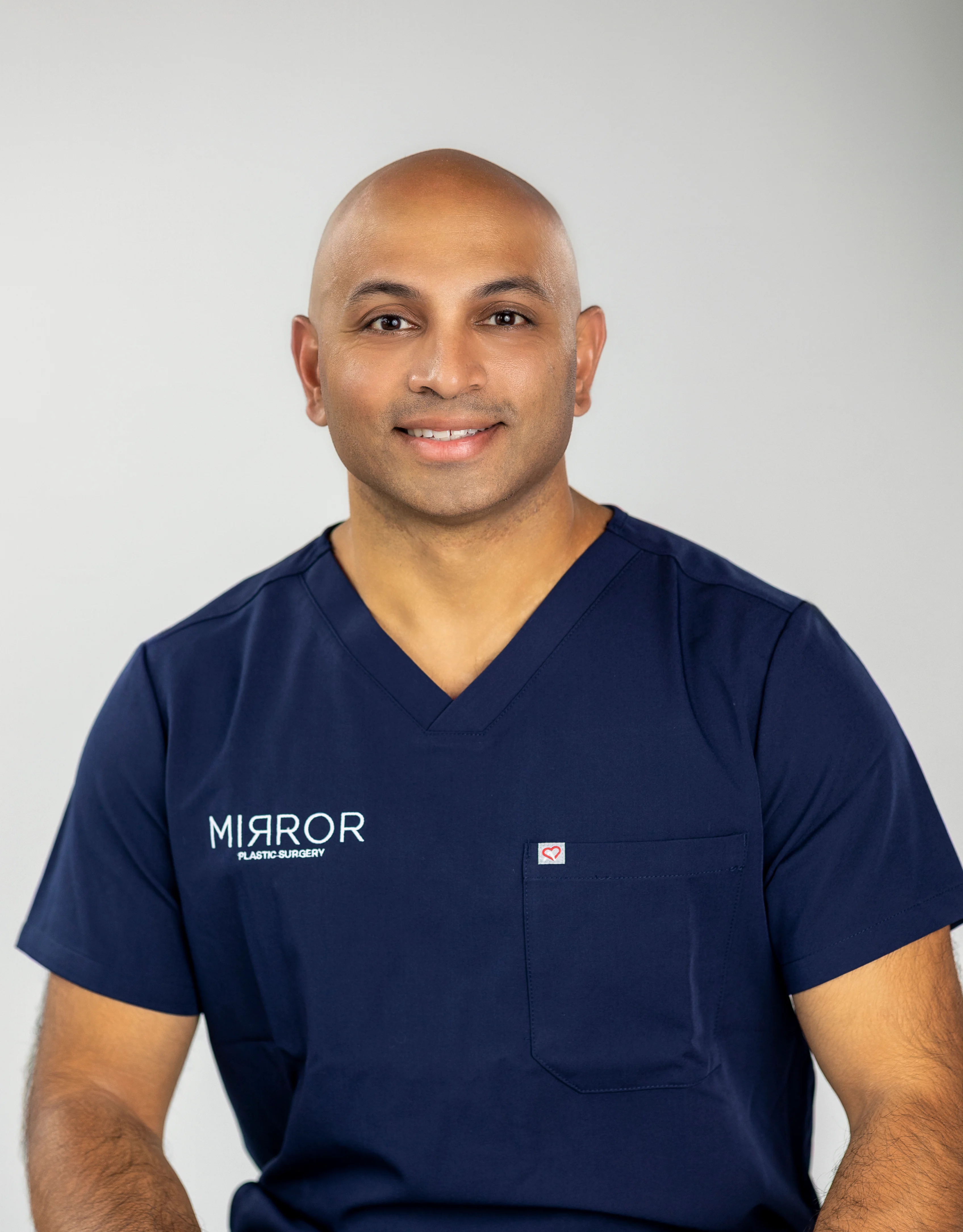
His practice follows a clear principle: safety first, function second, aesthetics third. Mirror Plastic Surgery limits itself to one to two surgeries per day so the entire clinical team can focus on a single patient before, during, and after the procedure. This structure contrasts directly with the high-volume model that the 2023 South Florida analysis identified as the primary remaining risk factor for BBL mortality.
Dr. Akash’s approach to BBL aligns with the 2022 Multi-Society Practice Advisory. He uses subcutaneous-only fat injection, ultrasound guidance, and accredited facility standards. His concierge medicine philosophy allows consultations of up to an hour, enough time to assess anatomy, review risk factors, and explain both the procedure and the safety protocols. For patients who are not surgical candidates or prefer a non-invasive option, he also offers non-surgical BBL using biostimulatory fillers including Radiesse and AlloClae, which carry no risk of fat embolism and are performed in-office.
Arrange a personalized consultation with Ellie to review your anatomy, goals, and the specific safety protocols Dr. Akash follows for every BBL procedure.
Frequently Asked Questions
What Is The Exact Mortality Rate For BBL In 2026?
For surgeons who follow the 2022 ASPS/ASAPS/ISAPS Practice Advisory, the current mortality estimate falls in the low tens of thousands per case. This range comes from the 2019 ASERF follow-up survey, the Cansancao et al. Brazilian cohort study, and the World Association of Gluteal Surgeons survey, and it represents a major improvement over the 2017 baseline. Among fully compliant surgical cohorts, follow-up surveys from 2019 to 2021 documented zero fatal pulmonary fat embolism cases across more than 12,000 procedures using subcutaneous-only technique. The remaining mortality risk in 2026 is concentrated almost entirely in high-volume budget clinics that do not follow these protocols.
Is BBL Worth The Risk?
Every surgery carries risk, and that reality should guide each informed decision. When a board-certified plastic surgeon performs BBL in an accredited facility while following the 2022 guidelines, the mortality rate is now comparable to, and in some analyses lower than, abdominoplasty, which carries an estimated mortality of approximately 1 in 13,000.1 The BAAPS 2023 safety review reached a similar conclusion, stating that modern BBL mortality is “similar to the mortality risk in abdominoplasty.” Whether BBL makes sense for you depends on anatomy, available donor fat, overall health, and personal goals. That judgment requires a thorough, honest consultation with a surgeon who evaluates your individual risk profile.
How Do I Know If My Surgeon Is Following The Safest BBL Technique?
The two most critical questions to ask any prospective BBL surgeon are: “Do you inject fat only in the subcutaneous plane, above the muscle fascia?” and “Do you use real-time intraoperative ultrasound guidance for every BBL case?” Both questions have one acceptable answer, an unequivocal yes. Beyond technique, confirm that the surgeon is board-certified by the American Board of Plastic Surgery, that the procedure will occur in an accredited facility, and that the practice performs no more than three BBLs per day. A surgeon who cannot clearly answer the technique questions, who operates in an unaccredited setting, or who runs a high-volume daily schedule is working outside the parameters set by the 2022 multi-society advisory.
Can I Get A BBL Without Surgery?
Non-surgical options exist for patients seeking gluteal enhancement without surgical risk. Dr. Akash Chandawarkar offers non-surgical BBL using biostimulatory fillers, specifically Radiesse and AlloClae, which stimulate the body’s own collagen and tissue response to improve contour, volume, and symmetry in the gluteal region. These treatments carry no risk of pulmonary fat embolism and are performed in-office. They do not match a surgical BBL in achievable volume, yet they offer a meaningful option for subtle enhancement, hip dip correction, or cellulite reduction without surgery. Dr. Akash serves on the advisory boards of Merz Aesthetics (Radiesse) and Tiger Aesthetics (AlloClae), giving him direct insight into current non-surgical gluteal enhancement protocols.
Conclusion: Empowering Your Decision With Data
The Brazilian Butt Lift mortality rate has undergone a documented, evidence-driven transformation. From a historic high in 2017 to current estimates among protocol-compliant surgeons, the reduction stems from mandatory technique changes and stricter standards. Researchers identified the mechanism of death, prohibited the causative technique, and confirmed the improvement within two years.
The remaining risk in 2026 clusters in high-volume budget clinics that prioritize throughput over protocol adherence. For a patient who selects a board-certified plastic surgeon who performs subcutaneous-only fat injection with ultrasound guidance, operates in an accredited facility, and limits daily case volume, the risk profile of a BBL now resembles that of other major elective surgeries.
Patients can meaningfully reduce risk by choosing the right surgeon and practice model. That process starts with an open conversation about your anatomy, your goals, and the exact protocols your surgeon follows. Request a data-driven BBL consultation with Ellie at Mirror Plastic Surgery and take the first step toward a decision grounded in evidence rather than fear.
Disclaimer: Results may vary from person to person. Editorial content, before and after images, and patient testimonials do not constitute a guarantee of specific results.
1 Results may vary from person to person. Editorial content, before and after images, and patient testimonials do not constitute a guarantee of specific results.