
Written by: Dr. Akash Chandawarkar, Board Certified Plastic Surgeon, Mirror Plastic Surgery | Last updated: September 9, 2026
Key Takeaways
- A fat embolism happens when fat enters the bloodstream during a BBL and blocks vessels in the lungs or brain, so prevention is critical.
- Modern safety protocols, including subcutaneous-only injection, real-time ultrasound guidance, and blunt cannulas, have reduced BBL mortality by up to 80% since 2017.1
- Warning signs such as sudden shortness of breath, chest pain, confusion, or bluish lips usually appear within 24–48 hours and require an immediate 911 call.
- Choosing a board-certified plastic surgeon who follows all safety protocols, limits case volume, and operates in an accredited facility strongly improves patient safety.
- Discuss your BBL safety plan with Ellie at Mirror Plastic Surgery and review your goals with a surgeon who follows every modern safety protocol.
The Real Statistics: How Risky Is A BBL In 2026?
The widely shared 1-in-3,000 mortality figure comes from a specific period in BBL history. The 2017 ASERF Task Force survey analyzed data from 4,843 plastic surgeons performing over 198,000 BBLs, identified 32 confirmed deaths and 103 non-fatal pulmonary fat embolisms, and estimated BBL mortality at approximately 1 in 3,000. At that time, BBL carried the highest mortality of any cosmetic procedure and triggered a major safety overhaul.
In 2018, a multi-society task force representing the American Society of Plastic Surgeons, the American Society for Aesthetic Plastic Surgery, and the International Society of Aesthetic Plastic Surgery issued urgent safety guidelines mandating subcutaneous-only fat injection. The impact was clear. A 2019 follow-up survey found that among surgeons who transitioned to subcutaneous-only injection, BBL mortality fell to approximately 1 in 14,921, an 80% reduction from the 2017 baseline.1
The trend toward safer outcomes has continued. A 2024 review published in the Aesthetic Surgery Journal showed mortality rates approaching zero in U.S. board-certified surgeon cohorts using subcutaneous-only injection and ultrasound guidance.1 A consecutive series of 7,000 procedures performed under a strict subcutaneous protocol reported no cases of pulmonary fat embolism or thromboembolic events.1
The 1-in-3,000 statistic reflects an earlier era. Modern safety protocols have reshaped the risk profile when surgeons follow them consistently. Your choice of surgeon remains the most important safety decision.
Signs Of Fat Embolism After BBL: Know The Warning Signs
Even with strong safety protocols, you still need to recognize emergency symptoms after surgery. A review of 38 patients with pulmonary fat embolism from 20 countries found that in 76% of cases, symptoms began within the first 24 hours after surgery, and all deaths occurred within the following five days. Fat embolism symptoms after a BBL typically appear within 48 hours of surgery, though they can develop immediately.
Emergency warning signs that require calling 911 immediately include:
- Sudden shortness of breath or difficulty breathing
- Chest pain or pressure
- Rapid or irregular heartbeat
- Sudden dizziness or fainting
- Confusion, agitation, or seizure
- Bluish lips or fingertips
- A rash on the chest or neck
Any combination of breathing difficulty and confusion after a BBL is a medical emergency because fat embolism can progress rapidly to organ failure, and response speed matters enormously. Do not wait for a follow-up appointment. Call 911 immediately. Early recognition and rapid emergency care strongly improve the chance of survival.
You should learn these warning signs before surgery. A reputable surgeon will give you clear written instructions that explain which symptoms require emergency care and which can wait for a follow-up call.
How Surgeons Prevent Fat Embolism: Modern BBL Safety Protocols
Most BBL safety protocols focus on one goal: keeping fat out of the gluteal muscle and large veins. Board-certified surgeons in 2026 use several specific techniques to achieve this.
Subcutaneous-Only Fat Placement. Anatomical dissection studies of patients who died from BBL complications found that in 100% of fatal cases, the injected fat was located deep within the gluteus maximus muscle or submuscular space; in no confirmed death did grafted fat remain exclusively in the subcutaneous plane. Surgeons must inject fat only into the subcutaneous layer above the muscle fascia and avoid the gluteal muscle entirely.
Real-Time Ultrasound Guidance. In jurisdictions like Florida, the Board of Medicine passed emergency rules mandating that all surgeons performing gluteal fat grafting use real-time ultrasound guidance to verify cannula position. The surgeon watches the cannula tip on a screen during injection and confirms it stays above the muscle fascia. Not all states require ultrasound, so you should ask your surgeon directly whether they use it.
Blunt Cannulas Of 4mm Or Larger. Research demonstrates that a cannula with a diameter of 4.0 mm or larger and a blunt, rounded tip requires significantly more force to puncture a vein wall compared to a 3.0 mm or smaller cannula. The larger blunt tip tends to push elastic blood vessels aside instead of cutting them, which reduces the chance of fat entering a vein.
Conservative Case Volume. The 2022 multi-society Practice Advisory on Gluteal Fat Grafting codified a cap of three BBL cases per surgeon per day. This cap exists because high-volume practices are riskier. A study reviewing medical examiner records of BBL deaths in South Florida identified that over 90% occurred at high-volume, corporate-owned budget clinics.
Accredited Surgical Facilities. BBL should occur only in an accredited facility with a certified anesthesiologist and appropriate emergency equipment. BBL mortality data clusters around unaccredited centers. Surgery should take place in an AAAASF, AAAHC, or Joint Commission-accredited facility.
Questions To Ask Your Surgeon Before A BBL: Your Safety Checklist
These protocols protect you only when your surgeon follows them every time. To confirm that, you need clear answers during your consultation. A safe surgeon will welcome detailed questions and provide specific, verifiable information.
- Are you board-certified by the American Board of Plastic Surgery? (Verify this on the ABPS website rather than relying on the phrase “board-certified” alone.)
- Do you inject fat only into the subcutaneous layer and avoid the muscle completely?
- Do you use real-time ultrasound guidance during fat injection?
- What size and type of cannulas do you use for BBL?
- How many BBLs do you perform per day?
- What is your complication rate, specifically for fat embolism?
- Is your facility accredited by AAAASF, AAAHC, or the Joint Commission?
- What is your protocol for monitoring patients after surgery and handling emergencies?
Red flags that should end the consultation include unusually low pricing far below the national average, vague or unverifiable credentials, unaccredited facilities, refusal to discuss complications, pressure to book immediately, or any mention of injecting “deep into the muscle for more projection.”
Recovery And Monitoring: Timing, Symptoms, And Standard Healing
Most fat embolisms begin within the first 24 hours after surgery, and all deaths in a reviewed cohort of 38 patients occurred within five days of symptom onset. You should stay alert and review the emergency warning signs throughout the entire first week of recovery.
Beyond monitoring for complications, you also need to plan for a standard recovery. BBL recovery typically requires 2 to 3 weeks off work.1 Patients cannot sit or lie directly on their buttocks for a minimum of 2 to 4 weeks post-surgery and usually use specialized BBL pillows and wear compression garments for 6 to 8 weeks.1 Attending every scheduled follow-up appointment remains essential.
A reputable surgeon will stay reachable during your recovery and will follow a clear, documented protocol for handling emergencies. If a surgeon seems difficult to reach before surgery, that pattern often continues afterward.
Why Choosing The Right Surgeon Matters: The Mirror Plastic Surgery Difference
Board certification by the American Board of Plastic Surgery is the gold standard. It requires completing an accredited residency, passing rigorous written and oral exams, and meeting ongoing education requirements. This credential establishes a minimum safety baseline.
At Mirror Plastic Surgery in St. Petersburg, Dr. Akash Chandawarkar is a Harvard-educated, Johns Hopkins-trained, board-certified plastic surgeon with fellowship training in aesthetic surgery at Manhattan Eye, Ear & Throat Hospital (MEETH)/Lenox Hill Hospital. His guiding philosophy of safety first, function second, and aesthetics third directly shapes every procedure performed at the practice.
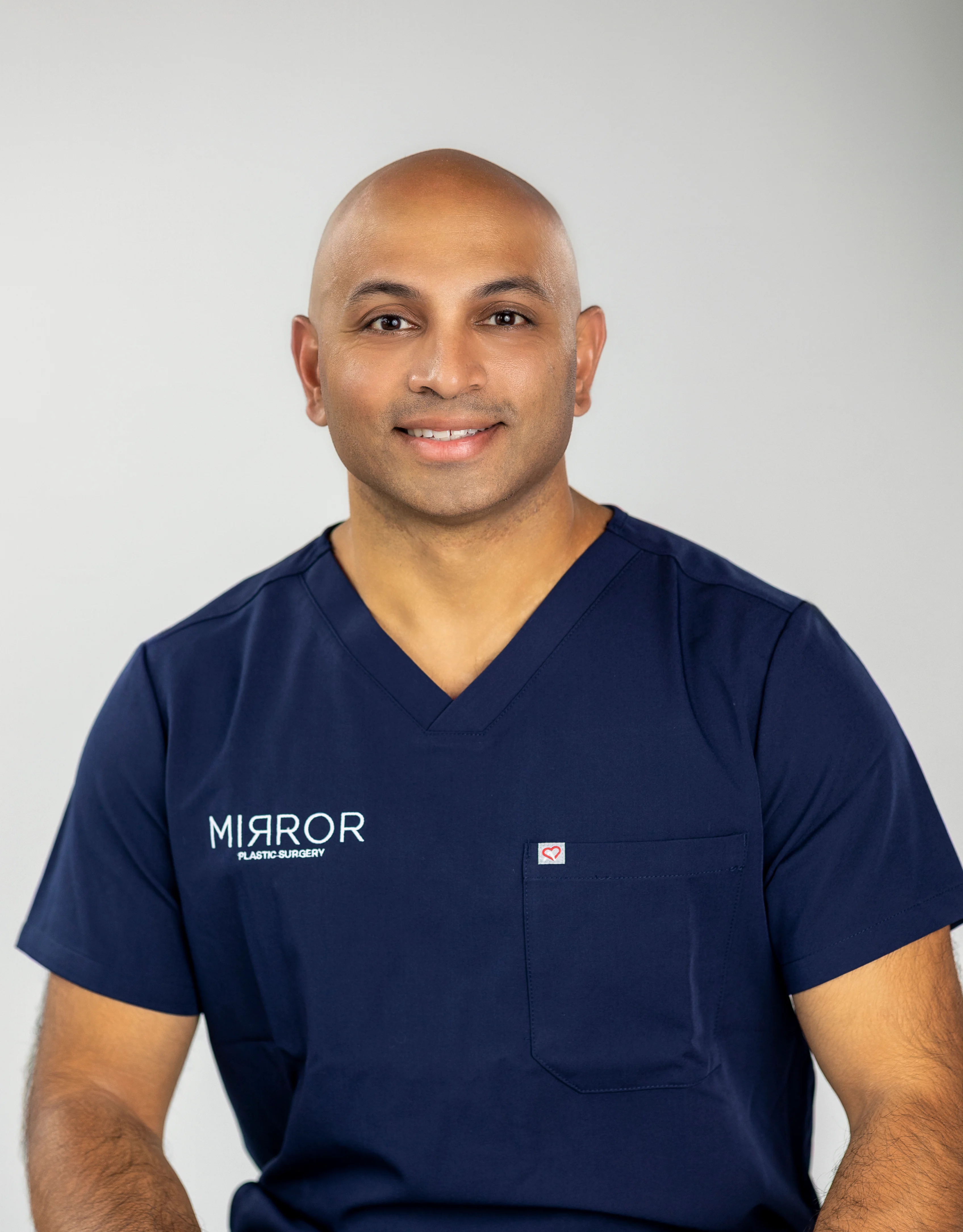
Mirror Plastic Surgery limits the schedule to one to two surgeries per day. This approach contrasts with high-volume practices that may perform five to ten surgeries daily. Dr. Chandawarkar follows the full modern safety protocol, including subcutaneous-only fat injection, real-time ultrasound guidance, blunt cannulas, conservative volumes, and accredited surgical facilities. Every patient receives his full attention before, during, and after surgery.
For patients who want alternatives to surgical BBL, Mirror Plastic Surgery offers non-surgical BBL options using biostimulatory fillers such as Radiesse and AlloClae. These treatments do not involve fat harvesting or fat injection. You can explore whether surgical or non-surgical enhancement better matches your anatomy and goals during your consultation.
Your safety deserves a thoughtful plan. Schedule your consultation with Ellie at Mirror Plastic Surgery and talk through your BBL options with a surgeon who prioritizes your well-being.
Frequently Asked Questions
What Is The Survival Rate For Fat Embolism After BBL?
Many patients survive a fat embolism after BBL when they receive prompt medical treatment.1 Early recognition of warning signs and immediate emergency care, including calling 911 at the first sign of breathing difficulty or confusion, strongly improves outcomes. Patients who survive the initial episode without permanent organ damage usually achieve a full recovery.1 Modern prevention techniques, especially subcutaneous-only injection with ultrasound guidance, have made fat embolism extremely rare among patients who choose board-certified surgeons who follow established safety protocols.1
How Safe Is A Brazilian Butt Lift In 2026?
BBL is significantly safer in 2026 than in 2017, when mortality was estimated at approximately 1 in 3,000 to 1 in 3,448 procedures and represented the highest risk among cosmetic surgeries. Following the 2018 multi-society safety guidelines mandating subcutaneous-only fat injection, mortality dropped by about 80% by 2019.1 A 2024 review in the Aesthetic Surgery Journal showed mortality rates approaching zero in U.S. board-certified surgeon cohorts using subcutaneous-only injection and ultrasound guidance, and a consecutive series of 7,000 procedures under strict subcutaneous protocol reported zero fat embolisms.1 These outcomes apply to board-certified surgeons who follow modern protocols.1
What Are The Signs Of Fat Embolism After BBL?
The main warning signs include sudden shortness of breath, chest pain or pressure, rapid or irregular heartbeat, sudden dizziness or fainting, confusion or agitation, bluish lips or fingertips, and a rash on the chest or neck. Symptoms typically appear within 48 hours of surgery, though they can develop immediately. Any combination of breathing difficulty and confusion requires an immediate 911 call. Fast emergency response is the most important factor in survival.
How Long After BBL Can You Get A Fat Embolism?
Most fat embolism cases begin within the first 24 hours after surgery. A review of 38 patients with pulmonary fat embolism found that 76% experienced symptom onset within the first 24 hours and all deaths occurred within five days of symptom onset. Symptoms can appear up to a week after the procedure. You should stay vigilant throughout the first week, know the emergency warning signs before leaving the surgical facility, and have a clear plan for where to go and who to call if symptoms develop.
How Can I Reduce My Risk Of Fat Embolism After BBL?
You reduce risk most effectively by choosing the right surgeon and facility. Select a surgeon board-certified by the American Board of Plastic Surgery and verify this on the ABPS website. Confirm that fat is injected only into the subcutaneous layer above the muscle fascia and never into the muscle. Ask whether the surgeon uses real-time ultrasound guidance during fat injection. Verify that blunt cannulas of 4mm or larger are used. Confirm the surgeon performs no more than two to three BBL cases per day. Ensure the procedure takes place in an AAAASF, AAAHC, or Joint Commission-accredited facility.
Are Non-Surgical BBLs Safer Than Surgical BBLs?
Non-surgical BBLs using biostimulatory fillers such as Radiesse or AlloClae carry zero risk of fat embolism because no fat is harvested or injected.1 From a fat-embolism perspective, they are safer than surgical BBL. The trade-off is that results are more subtle, require maintenance over time, and work best for patients seeking moderate enhancement rather than major volume change. Non-surgical BBL does not fit every patient or every goal. A consultation with a board-certified plastic surgeon helps you decide whether surgical or non-surgical treatment better matches your anatomy, goals, and risk tolerance.
Take The Next Step: Prioritize Your Safety
Brazilian butt lift fat embolism risks remain real, yet they are dramatically lower in 2026 than many online statistics suggest. The 1-in-3,000 mortality figure reflects practice patterns before the surgical community adopted modern safety protocols. Today, with a board-certified plastic surgeon who uses subcutaneous-only injection, real-time ultrasound guidance, blunt cannulas, and conservative case volume, documented series of thousands of patients show risk approaching zero.
You now have the information to ask detailed questions, recognize red flags, and hold any surgeon to current evidence-based standards. Facts and preparation support confident decisions and help you choose the right provider.
To schedule a comprehensive consultation with Dr. Akash Chandawarkar, contact Mirror Plastic Surgery at 727-361-6515 or hello@mirrorplasticsurgery.com. The practice is located at 780 4th Ave S, St. Petersburg, FL 33701.
Disclaimer: Results may vary from person to person. Editorial content, before and after images, and patient testimonials do not constitute a guarantee of specific results.
1 Results may vary from person to person. Editorial content, before and after images, and patient testimonials do not constitute a guarantee of specific results.