
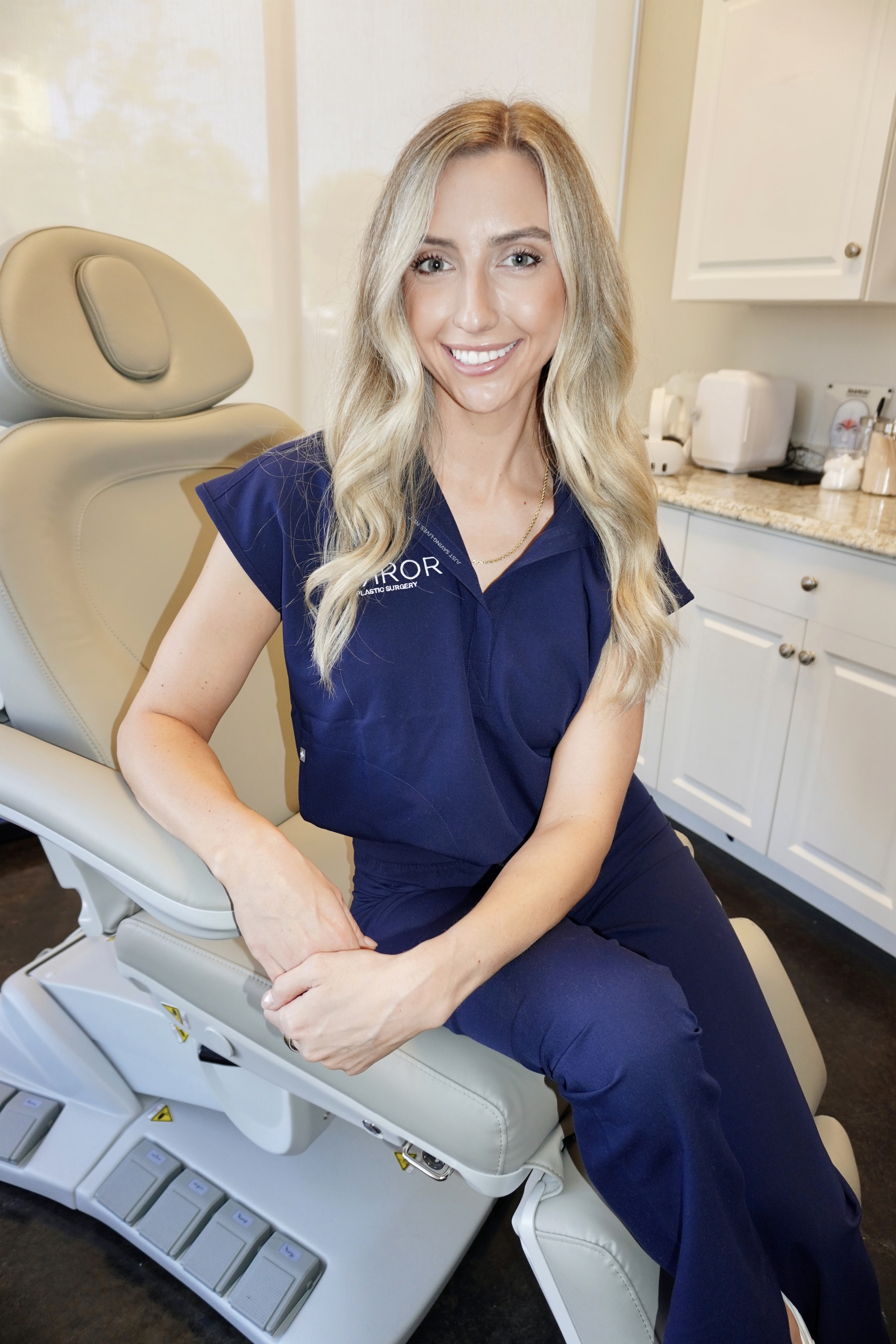
Written by: Ellie Pranckevicius, FNP-BC, Aesthetic Nurse Practitioner & Aesthetic Injector | Facial Restoration & Regenerative Injectable Specialist, Mirror Plastic Surgery | Last updated: July 1, 2026
Key BBL Fat Embolism Facts for 2026
- Fat embolism after BBL occurs when fat enters the gluteal venous system, most often from incorrect injection depth during surgery.
- Modern subcutaneous-only technique and real-time ultrasound guidance have lowered, but not eliminated, BBL mortality risk.1
- Immediate recognition of warning signs such as shortness of breath, chest pain, or confusion is critical for survival.
- Choosing a board-certified plastic surgeon, accredited facility, and limiting daily case volume all reduce BBL complication risk.
- Non-surgical BBL with Radiesse and alloClae at Mirror Plastic Surgery eliminates vascular fat embolism risk entirely, so you can schedule a consultation to explore safer contouring options.1
BBL Fat Embolism Odds in 2026
The surgical BBL has historically carried the highest procedure-specific mortality rate of any elective cosmetic surgery tracked by the American Society of Plastic Surgeons (ASPS). Early estimates placed mortality as high as 1 in 3,000 procedures. That figure came largely from intramuscular and sub-fascial injection techniques that placed fat near the superior and inferior gluteal veins.
The Multi-Society Task Force on Gluteal Fat Grafting later issued updated safety advisories. These advisories mandate subcutaneous-only injection and strongly recommend real-time ultrasound guidance to visualize cannula position throughout the procedure. Under modern subcutaneous-only injection protocols, reported BBL mortality rates have declined substantially, with some data suggesting rates approaching 1 in 15,000 among surgeons who follow this technique.1 However, the procedure still carries meaningful risk, and no surgical BBL can be considered zero-risk.
Beyond technique alone, several practice-level factors determine an individual patient’s actual risk. Surgeon volume, facility accreditation, anesthesia team experience, and patient selection all independently influence individual risk. A patient with a high BMI, hypercoagulable state, or prior venous thromboembolism faces a materially different risk profile than the general population estimate suggests.
Surviving a Fat Embolism After BBL
Survival after fat embolism is possible, and outcomes depend heavily on rapid recognition and high-quality emergency response.1 Fat embolism syndrome (FES) that progresses to massive pulmonary embolism carries a high case-fatality rate when treatment is delayed. Patients who receive immediate supportive care, including supplemental oxygen, hemodynamic stabilization, and intensive monitoring, have significantly better outcomes than patients whose diagnosis is delayed.1
Surgical facilities accredited by the Accreditation Association for Ambulatory Health Care (AAAHC) or the Joint Commission must maintain resuscitation equipment and trained personnel who can manage intraoperative emergencies. Procedures performed in non-accredited or unlicensed settings remove this safety net entirely. In Florida, the Florida Agency for Health Care Administration (AHCA) licenses and inspects ambulatory surgical centers. Verifying a facility’s licensure status before any procedure is a concrete, actionable safety step.
Timing of Fat Embolism Risk After BBL
Timeline of Risk:
- Intraoperative (0–4 hours): This period carries the highest risk. Fat embolism most commonly occurs during active injection when cannula position is incorrect or when intraoperative pressure forces fat into an inadvertently cannulated vein. Ultrasound guidance provides the most direct protective benefit during this phase.
- Immediate postoperative (4–24 hours): Fat embolism syndrome can appear in this window as fat that entered small venous tributaries moves into larger vessels. The classic FES triad of hypoxemia, neurological changes, and petechiae typically appears within 12–72 hours of the inciting event.
- Early postoperative (24–72 hours): Most clinically significant fat embolism events present within this window. Patients discharged to home or a recovery facility without adequate monitoring face a higher risk of delayed recognition.
- Extended window (72 hours–2 weeks): Delayed-onset fat embolism occurs but remains uncommon. Deep vein thrombosis (DVT) that forms in the postoperative period can propagate and cause pulmonary embolism from clot rather than fat. The clinical presentation overlaps, and both situations require emergency evaluation.
Patients should treat respiratory symptoms, chest pain, or neurological changes at any point in the first two weeks after a surgical BBL as urgent. The absence of symptoms in the first 24 hours does not remove risk.
7 Practical Steps to Lower Fat Embolism Risk in BBL
7-step protocol for minimizing fat embolism risk in surgical BBL:
- Confirm subcutaneous-only injection technique. Ask your surgeon directly whether fat is placed exclusively in the subcutaneous layer. Intramuscular injection is the primary mechanism by which fat enters the gluteal venous plexus. Subcutaneous-only technique is the current standard endorsed by the ASPS.
- Require real-time ultrasound guidance. Intraoperative ultrasound allows the surgeon to visualize cannula tip position continuously. This approach provides objective confirmation that fat is not being deposited near or within the gluteal veins.
- Verify board certification in plastic surgery. Only surgeons certified by the American Board of Plastic Surgery (ABPS) have completed a training pathway that includes formal gluteal anatomy education. Certification by other boards does not require the same anatomical training.
- Confirm facility accreditation. Ensure that procedures occur in an AHCA-licensed facility, AAAHC-accredited center, or Joint Commission-accredited hospital. Verify accreditation status independently before scheduling.
- Complete a thorough preoperative medical evaluation. Coagulation disorders, obesity, prior DVT, and hormonal contraceptive use all elevate embolic risk. A detailed preoperative workup helps identify and address modifiable risk factors.
- Limit surgeon case volume on your surgery day. Surgeon fatigue contributes to technical error. Practices that limit daily surgical volume to one or two cases maintain a higher standard of intraoperative attention than high-volume facilities that perform five to ten procedures per day.
- Plan for monitored postoperative recovery. The first 24–72 hours represent the highest-risk window for fat embolism symptoms to appear, so this period should occur in a setting with immediate access to emergency medical care. Because early recognition strongly influences survival, review the warning signs in advance and establish a clear protocol for seeking emergency evaluation before your procedure date.
Florida BBL Safety Checklist for Surgeon Selection
- ABPS board certification: Verify at abplsurg.org and confirm that certification is current and unrestricted.
- Florida medical license in good standing: Search the Florida Department of Health MQA portal for any disciplinary actions or restrictions.
- Facility AHCA licensure: Confirm that the surgical center holds a current Florida AHCA license and has no outstanding deficiencies.
- Ultrasound guidance confirmation: Ask whether the practice owns and routinely uses intraoperative ultrasound for BBL, not just for other procedures.
- Daily case volume limit: Ask how many BBL procedures are scheduled on the day of your surgery. A concierge-model practice that limits itself to one or two surgeries per day offers materially different attentiveness than a high-volume mill.
- Anesthesia provider credentials: Confirm that a board-certified anesthesiologist or certified registered nurse anesthetist (CRNA) will be present throughout the procedure, not only for induction.
- Postoperative monitoring plan: Confirm that the practice has a documented protocol for managing intraoperative and postoperative emergencies, including fat embolism.
Non-Surgical BBL as a Lower-Risk Option
Non-surgical BBL using biostimulatory fillers, specifically Radiesse and alloClae, removes the vascular risk mechanism that makes surgical BBL uniquely dangerous. Because the procedure does not involve fat harvesting or deep gluteal injection, the pathway by which fat enters the venous system is absent. Radiesse, a calcium hydroxylapatite-based biostimulatory filler, is injected into the subcutaneous tissue of the gluteal region to add immediate volume and stimulate the body’s own collagen production over time.1 alloClae is an injectable allograft tissue matrix that supports structural augmentation and tissue regeneration in the buttocks and hip dip areas.
Ellie Pranckevicius, FNP-BC, leads non-surgical BBL services at Mirror Plastic Surgery. Her background includes four years in the Neuroscience ICU at Tampa General Hospital, a dual foundation in esthetics and advanced nursing, and specialized training in subdermal anatomy. This combination directly supports her injection precision and clinical judgment in the gluteal region.
| Risk Factor | Surgical BBL | Non-Surgical BBL (Radiesse / alloClae) | Notes |
|---|---|---|---|
| Embolic event potential | Present; fat can enter gluteal venous plexus if injection depth is incorrect (the mortality mechanism discussed above) | No fat transfer; no vascular fat embolism mechanism; filler embolism risk exists but is distinct and substantially lower in magnitude when injected by a trained provider using correct technique | Vascular occlusion from filler injection is a separate risk category that requires its own informed consent discussion |
| Injection depth | Subcutaneous layer required; intramuscular placement is the primary risk factor per the Multi-Society Task Force | Subcutaneous and intradermal placement; no deep muscular injection required or performed | Depth control remains the central safety variable in both modalities |
| Guidance technology | Real-time intraoperative ultrasound recommended by ASPS task force, but not universally adopted | Surface anatomical landmarks and provider anatomical training guide placement; ultrasound available as an adjunct when indicated | Ultrasound guidance reduces but does not eliminate surgical BBL risk; non-surgical BBL does not require it for the same vascular reason |
| Recovery considerations | General or deep sedation anesthesia; weeks of restricted sitting; compression garments; significant downtime | No general anesthesia; minimal downtime; activity restrictions are limited and short-term | Recovery burden affects patient safety monitoring capacity, and longer recovery increases DVT risk in surgical patients |
Non-surgical BBL does not suit every patient. Individuals seeking dramatic volume increases may find that surgical options remain the only path to their goals. An honest consultation should match the intervention to the anatomy and the goal, rather than defaulting to either modality.
Choosing Between Surgical and Non-Surgical BBL
Fat embolism remains the most serious complication associated with surgical Brazilian butt lift. The mechanism is well-characterized: fat injected into or near the gluteal venous plexus can travel to the lungs and cause fatal pulmonary embolism. Modern subcutaneous-only technique and intraoperative ultrasound guidance have reduced, but not eliminated, this risk. Patients in Florida who are considering any BBL procedure, surgical or non-surgical, benefit from verifying surgeon credentials, facility accreditation, and daily case volume limits before committing to a provider.
Non-surgical BBL with Radiesse and alloClae removes the vascular fat embolism mechanism entirely and offers a clinically legitimate alternative for patients whose anatomy and goals align with what biostimulatory fillers can achieve. The decision between surgical and non-surgical pathways works best when guided by an individualized assessment from a provider with deep anatomical knowledge and a commitment to clear, honest risk communication.
Book a Consultation with Ellie
Mirror Plastic Surgery is a concierge plastic surgery and aesthetic medicine practice located at 780 4th Ave S, St. Petersburg, FL 33701, serving the Tampa Bay area. Ellie Pranckevicius, FNP-BC, is currently welcoming new patients for non-surgical BBL consultations. Initial consultations extend up to an hour and include a top-to-bottom anatomical assessment, clear discussion of surgical versus non-surgical risk profiles, and a personalized treatment plan built around your goals, not a quota.
Frequently Asked Questions
Is fat embolism the only serious risk of a surgical BBL?
Fat embolism is the most widely cited and historically the most lethal complication specific to surgical BBL, but it is not the only serious risk. Deep vein thrombosis, pulmonary embolism from clot, seroma, infection, asymmetry, fat necrosis, and anesthesia-related complications are all documented. The overall complication profile of surgical BBL is broader than fat embolism alone, which is why a thorough preoperative evaluation and an accredited surgical facility both matter. Non-surgical BBL with biostimulatory fillers carries a different and generally lower-severity risk profile, though it still has its own considerations, including vascular occlusion from filler placement, which a trained provider actively works to prevent through correct injection technique and anatomical knowledge.
What makes non-surgical BBL with Radiesse and alloClae different from other filler options?
Radiesse is a calcium hydroxylapatite biostimulatory filler that provides immediate structural volume and stimulates the body’s own collagen production, so results develop and improve over several months.1 alloClae is an injectable allograft tissue matrix that supports tissue regeneration and structural augmentation in the gluteal region and hip dip areas. Together, they address volume, contour, cellulite texture, and symmetry through regenerative mechanisms rather than simple displacement. At Mirror Plastic Surgery, Ellie Pranckevicius selects and combines these modalities based on each patient’s individual anatomy and goals, rather than following a standardized protocol. The absence of fat transfer means the vascular fat embolism risk that defines surgical BBL does not apply to this approach.
How do I know if a Florida surgeon is qualified to perform a surgical BBL safely?
Board certification by the American Board of Plastic Surgery is the baseline credential to verify, and you can confirm current certification status directly at abplsurg.org. Beyond certification, confirm that the surgeon performs subcutaneous-only fat injection and uses real-time intraoperative ultrasound guidance, since both represent current safety standards. Verify that the surgical facility holds a current Florida AHCA license and is accredited by the AAAHC or Joint Commission. Ask directly how many BBL procedures the surgeon performs on the same day as yours, because practices that limit daily surgical volume to one or two cases maintain a higher standard of intraoperative focus. Finally, check the surgeon’s Florida medical license for any disciplinary history through the Florida Department of Health MQA portal.
Can non-surgical BBL results look natural, or will they appear overdone?
Non-surgical BBL results can look natural and proportionate when performed by a provider with strong anatomical training and a conservative, patient-specific approach.1 At Mirror Plastic Surgery, Ellie’s philosophy prioritizes balance and symmetry over maximum volume. She conducts a comprehensive assessment of each patient’s existing gluteal anatomy, hip structure, and overall body proportions before recommending a treatment plan. Patients seeking subtle enhancement, correction of hip dips, or improvement in skin texture and cellulite appearance are often well-suited to this approach. Patients with goals that exceed what biostimulatory fillers can realistically achieve are told so directly during the consultation, because honest communication about realistic outcomes is a core principle of the practice.
What should I expect during a non-surgical BBL consultation at Mirror Plastic Surgery?
Consultations at Mirror Plastic Surgery are structured as comprehensive, up to one-hour assessments. Ellie begins by learning your goals, motivations, and any prior aesthetic treatments. She then conducts a detailed anatomical evaluation of the gluteal region, noting existing volume distribution, skin quality, symmetry, and structural considerations. Based on this assessment, she explains which combination of Radiesse and alloClae suits your anatomy, what results are realistic over time, and what the treatment process involves. If your goals are better served by a surgical consultation, that pathway is discussed openly. No treatment is recommended unless it is genuinely indicated for your specific anatomy and goals.
Disclaimer: Results may vary from person to person. Editorial content, before and after images, and patient testimonials do not constitute a guarantee of specific results.
1 Results may vary from person to person. Editorial content, before and after images, and patient testimonials do not constitute a guarantee of specific results.