
Written by: Ellie Pranckevicius, FNP-BC, Aesthetic Nurse Practitioner & Aesthetic Injector | Facial Restoration & Regenerative Injectable Specialist, Mirror Plastic Surgery
Key Takeaways on Collagen, GHK-Cu, and Skin Elasticity
- Oral collagen peptides at 2.5–10 g daily show modest elasticity gains in industry-funded trials, but these benefits disappear in non-industry-funded and high-quality study subgroups according to the 2025 Myung et al. meta-analysis.1
- GHK-Cu works through a distinct fibroblast-signaling mechanism that directly upregulates collagen and elastin genes, unlike the indirect amino-acid delivery of oral collagen peptides.
- Measurable improvements from collagen peptides require at least 8–12 weeks of consistent daily use, yet long-term persistence of benefits beyond 16 weeks remains unproven.1
- Medical supervision with lab screening, verified sourcing, and ongoing monitoring is essential to minimize risks and ensure safe, personalized peptide protocols.
- Schedule a personalized consultation at Mirror Plastic Surgery to explore whether GHK-Cu or a combined peptide approach best supports your skin elasticity goals.
How Collagen and GHK-Cu Loss Affect Skin Elasticity Over Time
Skin elasticity depends on an intact extracellular matrix composed primarily of type I and type III collagen, elastin fibers, and glycosaminoglycans. After age 20, skin loses approximately 1% of its collagen per year, with type III collagen decreasing faster than type I. Elastin, which provides elastic recoil, has limited regenerative capacity in adult tissue.
At the same time, plasma levels of the endogenous copper-binding tripeptide GHK-Cu decline from approximately 200 ng/mL at age 20 to 80 ng/mL by age 60. This drop reduces a key internal signal for collagen and elastin repair. These converging losses explain why adults aged 35–55 notice progressive changes in skin firmness and start looking for peptide-based options.
How Long Collagen Peptides Take to Affect Skin Elasticity
Industry-funded randomized controlled trials consistently report measurable elasticity improvements after 8–12 weeks of daily supplementation. The table below summarizes key trials, and every data point is cited inline.
| Study | Sample Size & Dose | Duration | Elasticity Outcome |
|---|---|---|---|
| Proksch et al. (2014) | n=69 women aged 35–55, 2.5 g or 5 g/day hydrolyzed collagen | 8 weeks | Statistically significant increases in skin elasticity of up to 30%, effects measurable at 4 weeks and more pronounced at 8 weeks1 |
| Asserin et al. (2015) | women aged 40–65, hydrolyzed Type I collagen | 8 weeks | Statistically significant improvements in skin moisture and dermal collagen network versus placebo |
| Bolke et al. (2019) | n=72 women aged 35+, 2.5 g/day collagen with vitamin C, zinc, biotin | 12 weeks | Significant improvements in skin hydration, elasticity, roughness, and density, with gains substantially retained at 4-week follow-up1 |
| Choi et al. (2019) meta-analysis | meta-analysis of RCTs, 2.5–10 g/day | 8–24 weeks | Positive effect for skin elasticity versus placebo1 |
| 2026 RCT of bioactive collagen peptides | sedentary women aged 35–55, 2.5 g or 10 g/day bioactive collagen | 12 weeks | Both doses improved skin elasticity and hydration versus controls1 |
These trials paint an encouraging picture, but a 2025 meta-analysis reveals a critical limitation that challenges these findings. The 2025 Myung & Park meta-analysis of 23 RCTs (1,474 participants) found the pooled positive effect on skin elasticity was driven exclusively by industry-funded and lower-quality trials. When the analysis was restricted to non-industry-funded and highest-quality studies, no statistically significant effects remained on any skin measure.
Measurement tools such as cutometers and corneometers are also sensitive to operator technique, room humidity, and time of day. These factors create conditions where funding-related expectation bias can inflate effect sizes. The longest trials run only 12–16 weeks, so whether benefits persist with continued use, plateau, or require ongoing supplementation is not established.
How Collagen Peptides Actually Affect Skin Tightness
Hydrolyzed collagen peptides are fragments of collagen protein broken into short chains (di- and tripeptides) through enzymatic or acid hydrolysis. These fragments, notably prolyl-hydroxyproline (Pro-Hyp) and hydroxyprolyl-glycine (Hyp-Gly), survive digestion, reach the bloodstream intact, and act as circulating signaling molecules that fibroblasts detect as a cue to increase collagen production.
Elastin is the protein responsible for elastic recoil in skin. Oral collagen peptides do not directly upregulate elastin gene expression. Their primary documented effect involves collagen synthesis and hyaluronic acid production.
Fibroblast stimulation is the proposed mechanism. Collagen-derived dipeptides signal dermal fibroblasts to synthesize new matrix components. In vitro experiments confirmed that bovine-derived collagen peptides at 0.5 mg/mL significantly increased biosynthesis of type I collagen, elastin, and proteoglycans in primary human dermal fibroblasts.
In practical terms, the effect sizes remain modest. The magnitude of skin elasticity improvement from oral collagen is substantially smaller than the protective effect of daily sunscreen, and the two most recent meta-analyses flag industry-funding bias and short trial durations as key limitations that likely inflate reported effect sizes. Oral collagen peptides do not replace proven interventions such as retinoids, broad-spectrum SPF, and topical vitamin C.
Collagen Peptides vs GHK-Cu: Two Different Paths to Skin Support
Collagen peptides and GHK-Cu support skin through very different biological pathways.
Oral collagen peptides rely on systemic amino-acid and dipeptide delivery. Ingested fragments circulate to the dermis and provide both substrate and signaling cues for fibroblast activity. This effect is indirect and subject to digestive variability, absorption efficiency, and the funding-bias limitations described above.
GHK-Cu (glycyl-L-histidyl-L-lysine complexed with copper II) acts as a direct gene-level signal. GHK-Cu modulates over 4,000 genes, roughly 32% of the human genome, and simultaneously upregulates tissue repair genes including those for collagen types I and III, elastin, decorin, and glycosaminoglycans, while suppressing matrix metalloproteinases that degrade collagen and elastin. Critically, GHK-Cu shifts the TIMP/MMP ratio toward TIMP dominance, creating a microenvironment that favors matrix accumulation over degradation. Unlike dietary collagen peptides, GHK-Cu does not provide amino acid substrate but acts as a potent signal molecule that directly upregulates collagen synthesis genes in fibroblasts.
The copper ion is essential for this effect. GHK-Cu delivers copper(II) ions that act as essential cofactors for lysyl oxidase, the enzyme required for proper cross-linking of newly synthesized collagen and elastin into mature, mechanically functional fibers.
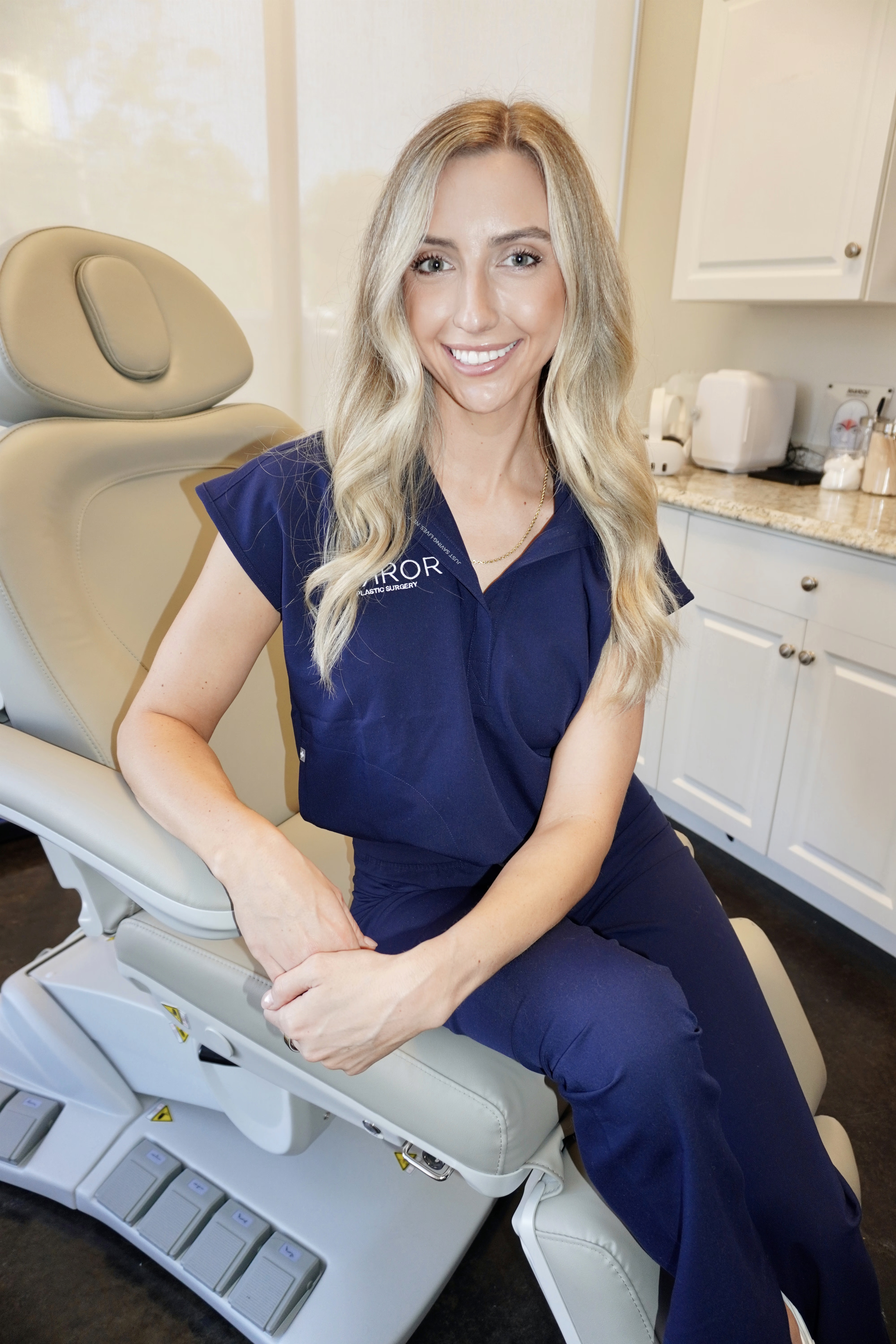
Given GHK-Cu’s complexity and the need for medical oversight of copper-based therapies, proper clinical supervision is essential. At Mirror Plastic Surgery, GHK-Cu protocols are led by Ellie Pranckevicius, FNP-BC, a board-certified Family Nurse Practitioner whose background bridges aesthetic and critical-care medicine. Ellie earned her Bachelor’s in Health Science from Boston University on the premedical track, completed an aesthetics licensure program, and obtained both her Bachelor’s and Master’s in Nursing from the University of South Florida.
Her four years in the Neuroscience ICU at Tampa General Hospital gave her a deep command of physiology and metabolic health that informs her approach to peptide dosing and patient safety. This dual esthetician-and-advanced-nursing perspective means Ellie understands both the aesthetic outcomes patients want and the clinical science required to pursue them safely.
Schedule your personalized GHK-Cu assessment to determine whether GHK-Cu, oral collagen, or a combined protocol aligns with your skin health goals and lab profile.
Daily Use: How Patients Commonly Integrate Collagen Peptides
For adults pursuing oral collagen peptides, current evidence supports the following general framework.
- Hydrolyzed collagen peptides (Types I and III) at 5–10 g/day, paired with 50–100 mg vitamin C, represent the dosing protocol most consistently linked to measurable gains in skin hydration and elasticity in human trials.
- Measurable improvements in skin elasticity require a minimum daily dose of 2.5 g and 8–12 weeks of consistent daily use, and doses below 2.5 g/day show sharply reduced evidence of benefit.
- Daily broad-spectrum SPF 30+ sunscreen remains the single most evidence-supported intervention for preventing further collagen degradation and should accompany any peptide regimen.
- Progress tracking through standardized photography under consistent lighting, or cutometer readings in a clinical setting, provides objective data to evaluate response over time.
- Discontinuation of hydrolyzed collagen peptide supplementation leads to gradual return to baseline skin parameters over 4–8 weeks, which indicates that maintenance dosing is necessary to sustain any gains.
Risks and Considerations Before Starting Peptide Therapy
While the practical framework above outlines how peptides are typically used, several critical risk factors must be understood before beginning any protocol.
Several factors limit the reliability and safety of self-directed peptide use.
- Result variability: Genetics, baseline collagen status, UV history, hormonal status, and supplement quality all influence outcomes. Postmenopausal women represent a key population because female skin can lose up to 30% of its collagen in the first five years after menopause1, which makes individualized assessment essential.
- Unregulated sourcing: Independent third-party testing of GHK-Cu products has reported absent or degraded peptide content, deviations from labelled concentration, contamination, and copper that is not properly chelated to the peptide.
- GHK-Cu contraindications: Wilson disease patients represent a clear contraindication for copper-containing peptides such as GHK-Cu due to impaired copper metabolism. Pregnancy, breastfeeding, active malignancy, and hepatic disease are additional contraindications for injectable formulations.
- Regulatory status: GHK-Cu (except for injectable routes) was removed from FDA Category 1 effective April 22, 2026, with PCAC review of the injectable form scheduled before February 2027. Compounding cannot resume until after final FDA determination, so patients should confirm current dispensing status with their prescriber.
- Lab screening: For injectable GHK-Cu, reasonable baseline monitoring includes serum copper, ceruloplasmin, 24-hour urine copper, liver function panel (AST, ALT, alkaline phosphatase), and complete metabolic panel, with repeat testing every 8–12 weeks.
Medical supervision reduces these risks by ensuring appropriate patient selection, verified peptide sourcing with batch testing, correct dosing calibrated to lab results, and ongoing monitoring throughout the protocol.
Start with a comprehensive lab evaluation before beginning any peptide protocol.
How Mirror Plastic Surgery Uses Peptides in Longevity-Focused Aesthetics
Supervised peptide care sits at the intersection of longevity medicine and aesthetic practice. GHK-Cu is one component of Mirror Plastic Surgery’s Glow Stack, a protocol combining GHK-Cu, BPC-157, and TB500 that is designed to address systemic inflammation alongside collagen and elastin production. This integrated approach reflects a broader shift in aesthetic medicine toward treating skin health as an expression of systemic physiology rather than a surface-level concern.
The distinction between concierge-supervised protocols and unsupervised online purchasing is clinically significant. At Mirror Plastic Surgery, Ellie Pranckevicius conducts 30–60 minute consultations that include review of medical history, relevant lab panels (including serum copper, ceruloplasmin, liver function, and hormone markers where indicated), and construction of a custom peptide stack tailored to each patient’s unique physiology and goals. Peptides are sourced from providers with rigorous batch testing, and patients receive direct 24/7 access to Ellie throughout their protocol.
Explore a custom peptide protocol structured around your specific skin and wellness objectives through lab-guided consultation.
Frequently Asked Questions
What happens if I stop taking collagen peptides or GHK-Cu?
Benefits from both interventions depend on continued use. For oral collagen peptides, skin parameters gradually return to baseline over approximately 4–8 weeks after discontinuation, reverting to the natural age-related decline described earlier.1 For GHK-Cu, the signaling stimulus for fibroblast activity is removed, and the matrix remodeling effects diminish over time.
A maintenance protocol, whether continued supplementation at a lower dose or periodic treatment cycles, is typically necessary to sustain results. Ellie structures protocols with this in mind and builds in reassessment points rather than treating peptide therapy as a one-time course.
Are peptides FDA-approved for skin elasticity?
No peptide therapy discussed here carries FDA approval for skin elasticity or anti-aging indications. Oral hydrolyzed collagen is sold as a dietary supplement and is not subject to FDA drug review. GHK-Cu is classified as a cosmetic ingredient (INCI name: Copper Tripeptide-1) at low concentrations in over-the-counter products, and injectable or compounded formulations are dispensed under Section 503A compounding pharmacy regulations with a patient-specific prescription, not as FDA-approved drugs.
As of April 2026, GHK-Cu is under active FDA review with a target conclusion of February 2027, and compounding availability varies by pharmacy. The absence of FDA approval does not mean these compounds are without evidence. It means the regulatory pathway for approval has not been completed. Medical supervision is essential because the regulatory framework does not provide the same safeguards as approved pharmaceuticals.
Is GHK-Cu safe to use long-term?
Long-term human safety data for sustained systemic GHK-Cu use does not exist at meaningful scale. For topical cosmetic use at concentrations of 0.05–2%, GHK-Cu is generally well tolerated, with reported effects limited to mild transient redness, itching, or stinging.
For injectable formulations, the primary theoretical concern is copper accumulation with chronic high-dose use, which is why baseline and periodic monitoring of serum copper and ceruloplasmin is standard practice. Individuals with Wilson’s disease, copper metabolism disorders, active malignancy, pregnancy, or breastfeeding should not use GHK-Cu. At Mirror Plastic Surgery, Ellie screens for all relevant contraindications before initiating any GHK-Cu protocol and monitors lab values throughout treatment.
How is Mirror Plastic Surgery’s peptide program different from buying collagen online?
The differences are clinical, not cosmetic. Online collagen supplements and research peptides are purchased without a medical history review, lab screening, or dosing guidance. Product quality is unverified, and there is no professional oversight if adverse effects occur.
Mirror Plastic Surgery’s program operationalizes the supervision model described earlier with comprehensive consultations, lab panels to identify contraindications, verified peptide sourcing, and ongoing concierge support, including direct text access to Ellie, throughout the protocol. For patients whose surgical needs extend beyond peptide therapy, Ellie’s work can be complemented by Dr. Akash Chandawarkar, MD, a Harvard-educated, Johns Hopkins-trained plastic surgeon and fellowship-trained aesthetic surgeon.
Can I combine oral collagen peptides with GHK-Cu?
Combining the substrate support of hydrolyzed collagen peptides with the gene-signaling precision of GHK-Cu is a theoretically synergistic approach that is increasingly explored in dermatological and wound healing research. Oral collagen provides amino acid building blocks and fibroblast-stimulating dipeptides, while GHK-Cu directly upregulates the genes governing collagen and elastin synthesis and modulates matrix remodeling enzymes.
Whether this combination produces additive or synergistic clinical outcomes in skin elasticity has not been established in controlled human trials. Ellie evaluates each patient’s goals, lab results, and health history to determine whether a combination protocol is appropriate and, if so, how to structure it safely.
Get your tailored peptide evaluation at Mirror Plastic Surgery with lab-guided protocols designed for your skin health goals. Mirror Plastic Surgery serves patients in St. Petersburg, Tampa Bay, and remotely across the United States.
Disclaimer: The content of this article is for informational purposes only and does not constitute medical advice, diagnosis, or treatment. Individual results vary. Peptide therapies discussed, including GHK-Cu, are not FDA-approved for the prevention or treatment of skin aging or any dermatological indication. Consult a qualified healthcare provider before beginning any peptide protocol.
1 Results may vary from person to person. Editorial content, before and after images, and patient testimonials do not constitute a guarantee of specific results.
Peptide therapy is intended for wellness and optimization purposes and is not prescribed to diagnose, treat, cure, or prevent disease unless specifically stated. Many peptides are not FDA-approved and may be used off-label. Some have limited long-term safety data, with a potential for unknown risks, complications, or desensitization with prolonged use.