Written by: Dr. Akash Chandawarkar, Board Certified Plastic Surgeon, Mirror Plastic Surgery | Last updated: September 9, 2026
Key Takeaways
- BBL mortality dropped from about 1 in 3,000 in 2017 to roughly 1 in 14,921 by 2019 after surgeons adopted subcutaneous-only injection.
- Many forum horror stories describe older intramuscular techniques or procedures done by unqualified providers in high-volume budget clinics.
- Modern safety protocols, including real-time ultrasound guidance, subcutaneous-only injection, and accredited facilities, have eliminated pulmonary fat embolisms in large patient series.
- Patient choices such as avoiding direct sitting for 2–4 weeks and wearing compression garments as directed play a major role in protecting grafted fat.
- Choosing a board-certified surgeon who follows current safety standards in an accredited facility is the single most important factor in BBL safety.
What Forums Say vs. What the Data Shows
Reddit and RealSelf are full of posts about “BBL gone wrong,” fear of dying on the table, and stories of regret. These fears deserve respect. A 2026 RealSelf review describes permanent hypertrophic scarring and skin defects after a BBL, with a major and lasting psychological impact. Complications like this are real, and dismissing them ignores lived experience.
The data tells a more nuanced story. A study of 7,000 BBLs reported zero pulmonary fat embolisms when fat stayed above the fascia. A 2019 ASERF follow-up survey found that after surgeons switched to subcutaneous-only injection, mortality dropped to about 1 in 14,921, an 80% reduction from the 2017 rate of 1 in 3,000. Forum posts often reflect outdated methods or unsafe settings, not what a board-certified surgeon using 2026 protocols typically delivers.
The Evolution of BBL Safety With Subcutaneous-Only Techniques
Early BBLs placed fat directly into the gluteal muscle, where large veins run. When fat entered those veins, it could travel to the lungs and cause a pulmonary fat embolism, which explains nearly every recorded BBL death. The 2017 ASERF Task Force survey, covering more than 198,000 BBLs from 4,843 surgeons, documented 32 deaths and 103 non-fatal pulmonary fat embolisms and estimated mortality at about 1 in 3,000.
Cadaver studies of patients who died from BBL complications found fat deep in the gluteus maximus muscle or submuscular space in every fatal case, and never confined to the subcutaneous layer. These findings drove a complete change in technique.
The April 2022 multi-society Practice Advisory on Gluteal Fat Grafting from ASPS, ASAPS, and ISAPS established subcutaneous-only injection with real-time ultrasound guidance as the standard of care, along with 4 mm or larger cannulas, daily case limits, and accredited facility requirements. In July 2023, Florida’s HB 1471 made ultrasound guidance legally mandatory for all BBLs and required documentation and video recording. These measures turned safer technique into an enforceable standard.
Key Risks and 2026 Complication Statistics
Pulmonary fat embolism remains the most feared BBL complication, yet its rate has fallen sharply with modern protocols. A meta-analysis of more than 6,235 patients reported zero deaths or fat embolisms when surgeons used ultrasound guidance during injection. Other complications still occur and have measurable rates.
The following figures come from a 7,000-patient BBL series using subcutaneous-only injection:
- 2017 BBL mortality rate: about 1 in 3,000 (ASERF Task Force, 198,857+ cases)
- 2019 mortality rate with subcutaneous-only technique: about 1 in 14,921 (ASERF follow-up survey)
- 2026: zero pulmonary fat embolisms in a 7,000-patient subcutaneous-only series (Leva Medical)
- Seroma: ~23%
- Anemia: ~6.6%
- Fat necrosis: ~1.9%
- Infection: ~0.43%
- Hematoma: ~0.14%
- Asymmetry requiring revision: ~0.21%
A 2023 study by Pazmiño and Garcia on BBL deaths in South Florida found that 92% occurred at high-volume budget clinics rather than in accredited facilities. This concentration shows that risk clusters in settings that ignore the protocols described above.
Recovery Realities Patients Often Miss
BBL recovery is strict, and many patients feel surprised by how much it affects daily life. One of the most searched questions, “Can I sit to poop after BBL?” reflects this reality. Patients must avoid sitting or lying directly on their buttocks for at least 2 to 4 weeks, use BBL pillows that shift weight to the thighs, and wear custom compression garments for 6 to 8 weeks. Bathroom positioning follows the same rule, with weight on the thighs instead of the buttocks.
The first 6 weeks are critical for long-term fat survival, and avoiding direct pressure on the buttocks is the most evidence-backed way to protect grafted fat. Swelling peaks around days 3 to 5, bruising usually fades within 2 to 3 weeks, and many patients return to desk work at 2 to 3 weeks.1 The process feels physically demanding and emotionally draining for many people. Following your surgeon’s instructions closely is the most important patient-controlled factor in preventing contour irregularities.
If you are considering a BBL, a consultation can clarify what recovery will truly involve for your lifestyle and job demands. Book a consultation with Ellie to discuss your recovery plan.
Long-Term Results and BBL Outcomes 10 Years Later
Most patients keep 60–80% of transferred fat permanently after the first 3 to 6 months.1 The surviving fat behaves like natural fat and responds to weight changes and aging.1 At 10 years, some projection often decreases by 10–20% because of skin laxity and gravity, yet many patients still look more contoured than before surgery.1
The rise in “BBL removal” deserves context. A 2025 surgeon survey reported that over 70% of BBL reduction consultations cited physical discomfort, such as lower back pain and posture issues, as the main reason rather than aesthetic regret. Many reversals reflect changing lifestyles and preferences, and bodies that no longer match an earlier, more exaggerated look. Choosing a surgeon who favors natural, proportionate curves from the start lowers the chance of wanting a reversal later.
How to Choose a Safe BBL Surgeon
Surgeon selection has the greatest impact on BBL safety. The checklist below draws from the 2022 multi-society Practice Advisory on Gluteal Fat Grafting and 2026 expert consensus on minimum standards:
- Board certification by the American Board of Plastic Surgery (ABPS), verified at abplasticsurgery.org
- Hospital privileges at an accredited facility (AAAASF, AAAHC, or Joint Commission)
- Clear commitment to subcutaneous-only injection, with no fat placed into the muscle
- Use of real-time ultrasound guidance during fat injection
- Blunt cannulas with a diameter of at least 4 mm
- Daily schedule limited to 1–3 BBLs, since lower daily volume correlates with fewer complications
- Transparent complication statistics and a clear revision policy
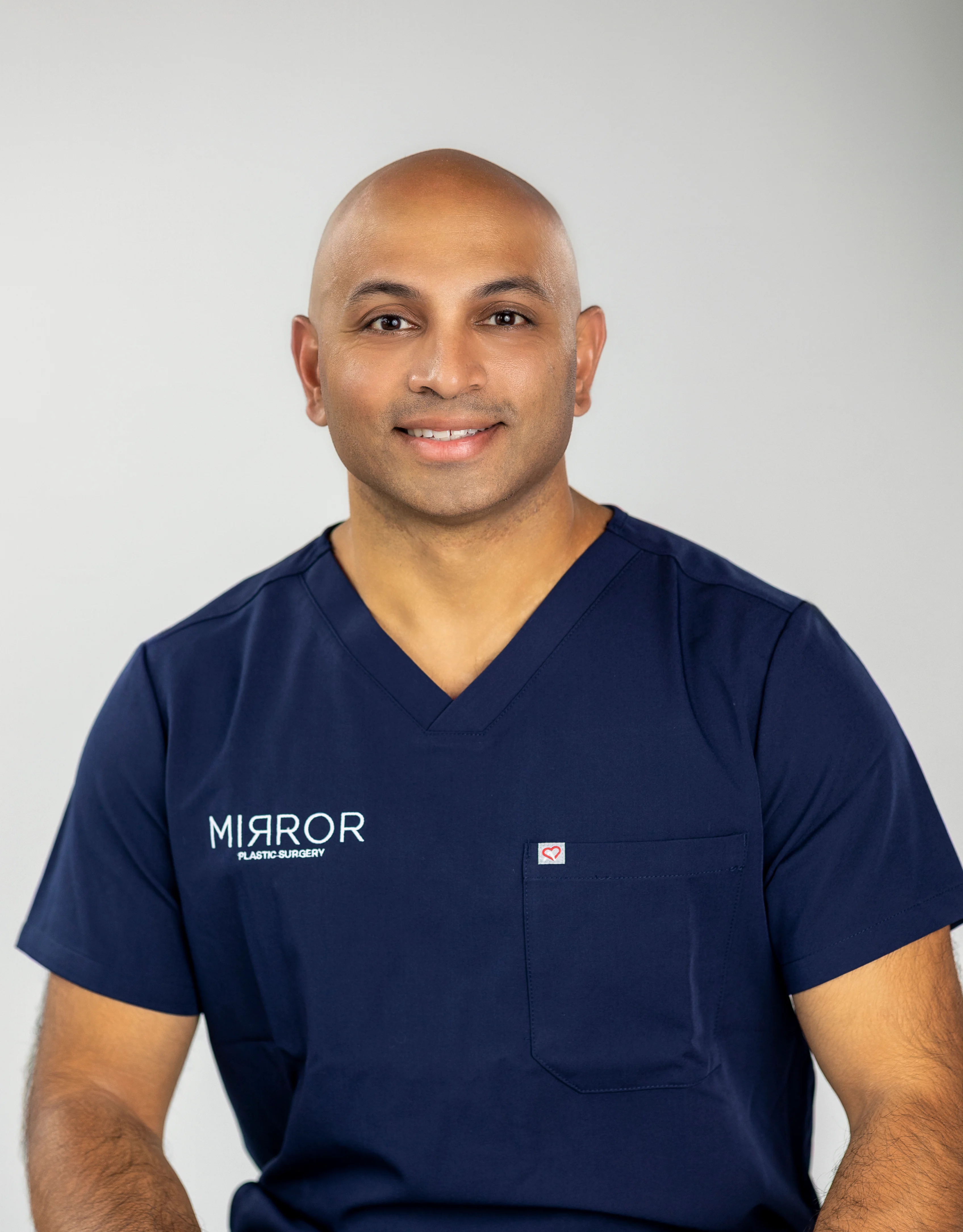
Key questions to ask include: “Do you ever inject into the muscle?”, “Do you use ultrasound guidance for every BBL?”, “What are your complication rates?”, and “How many BBLs do you perform per day?” Mirror Plastic Surgery meets each of these standards. Dr. Akash Chandawarkar is Harvard-educated, Johns Hopkins-trained, and ABPS board-certified. He performs every injection himself and limits the schedule to one or two surgeries per day so the team can focus fully on each patient.
Some patients decide that surgery is not the right fit. For those individuals, or for people who prefer to avoid downtime, non-surgical options offer another path to enhancement.
Alternatives to Surgical BBL With Non-Surgical Options
Non-surgical BBL can suit patients who are not surgical candidates, want minimal downtime, or prefer subtle changes. Mirror Plastic Surgery offers non-surgical BBL with biostimulatory fillers, specifically Radiesse and AlloClae. These treatments can enhance shape, smooth cellulite, soften stretch marks, and correct asymmetry such as hip dips, all without incisions, anesthesia, or fat transfer.
Dr. Akash performs these procedures himself and applies a plastic surgeon’s understanding of subdermal anatomy to every injection. Results appear gradually and look natural, which appeals to patients seeking proportionate enhancement instead of dramatic volume. He also serves on the advisory boards of Merz Aesthetics (Radiesse) and Tiger Aesthetics (AlloClae), giving him early access to new data and technique refinements.
Is BBL Worth the Risk in 2026?
Every surgery carries risk, and BBL once had the highest mortality rate of any cosmetic procedure. That history remains part of the story, yet the risk profile has changed with modern technique. The 2022 BAAPS Gluteal Fat Grafting Safety Review estimated current BBL mortality at about 1 in 15,000 under modern protocols, similar to abdominoplasty.
Recent deaths cluster in medical tourism hubs with weak regulation and among providers without ABPS or ABCS certification who operate outside accredited facilities. In an accredited practice that follows current standards, the risk picture differs greatly from what many 2018 or 2020 forum threads describe. A one-on-one evaluation with a board-certified plastic surgeon remains the only reliable way to judge whether BBL suits your anatomy, health, and goals.
Frequently Asked Questions
Is BBL Safe in 2026?
BBL can be safe in 2026 when a board-certified plastic surgeon performs it in an accredited facility using subcutaneous-only injection and real-time ultrasound guidance. The procedure’s safety depends heavily on the surgeon’s training, technique, and setting rather than the procedure name alone.
What Is the Mortality Rate for BBL?
The 2017 ASERF Task Force reported a mortality rate of about 1 in 3,000 across 198,857 cases. The 2019 ASERF follow-up survey found a rate of about 1 in 14,921 among surgeons who adopted subcutaneous-only injection. A 7,000-patient 2026 series reported zero pulmonary fat embolisms when fat stayed above the fascia. Deaths that still occur tend to happen in high-volume budget clinics and medical tourism settings rather than accredited practices that follow current standards.
Can I Sit After a BBL?
Patients must avoid direct sitting on the buttocks for at least 2 to 4 weeks after surgery. A BBL pillow shifts weight to the thighs, and this rule applies to all seated positions, including bathroom use. Most people return to normal sitting at 6 to 8 weeks once the fat has established a blood supply. Compression garments stay on throughout this period. Careful adherence to the no-sitting protocol gives the grafted fat the best chance to survive and helps prevent contour issues.
How Long Do BBL Results Last?
About 60–80% of transferred fat usually survives permanently once healing finishes around 6 months.1 The remaining fat behaves like natural fat and changes with weight and age.1 Results often last 10 years or more with stable weight, although some projection may soften over time.1 Maintaining a steady weight offers the strongest support for long-term results.
What Is a Non-Surgical BBL?
A non-surgical BBL uses biostimulatory fillers instead of fat transfer to shape the buttocks. At Mirror Plastic Surgery, Dr. Akash uses Radiesse and AlloClae to enhance contour, smooth cellulite, soften stretch marks, and correct asymmetry such as hip dips, all without surgery or anesthesia. Results build gradually, look natural, and involve little to no downtime. This approach can work well for patients who are not surgical candidates or who prefer a subtle, maintenance-friendly enhancement.
The Data Is Clear, So Choose Your Surgeon Carefully
BBL safety has improved dramatically since 2017. The shift from a mortality rate of about 1 in 3,000 to modern series reporting zero embolisms with subcutaneous-only technique represents one of cosmetic surgery’s most significant safety advances. Forum posts add valuable personal context, yet they cannot replace peer-reviewed data or an in-person medical evaluation.
The correct answer to “Is BBL safe?” is that it depends entirely on who performs it and how. Mirror Plastic Surgery offers both surgical and non-surgical BBL, with Dr. Akash Chandawarkar personally performing every procedure using current safety protocols in an accredited facility and limiting daily surgical volume to maintain focused, concierge-level care.
Disclaimer: Results may vary from person to person. Editorial content, before and after images, and patient testimonials do not constitute a guarantee of specific results.
1 Results may vary from person to person. Editorial content, before and after images, and patient testimonials do not constitute a guarantee of specific results.