
Written by: Dr. Akash Chandawarkar, Board Certified Plastic Surgeon, Mirror Plastic Surgery | Last updated: September 9, 2026
The Human Toll: Real Stories Behind the Statistics
Surgical BBL: When Fat Transfer Goes Wrong
Story 1 — A 29-Year-Old Mother of Two: A patient developed severe necrotizing fasciitis, a rapidly spreading deep tissue infection, within days of a surgical BBL at a high-volume clinic. She required multiple emergency surgeries and extensive tissue debridement. Infection after BBL typically presents within the first week, with signs including spreading redness, skin hot to the touch, and fever above 38.5°C. A 2023 study by Pazmiño and Garcia analyzing BBL deaths in South Florida found that 92% occurred at high-volume, budget clinics rather than accredited facilities.
Story 2 — A 34-Year-Old Who Did Not Survive: A patient died from pulmonary fat embolism within hours of surgery. Anatomical dissection studies of patients who died from BBL complications found that in 100% of fatal cases, the injected fat was located deep within the gluteus maximus muscle or within the submuscular space, and in no confirmed death did the grafted fat remain exclusively in the subcutaneous plane. The 2017 ASERF Task Force survey found that deep muscle injection carried a 403% increased risk of pooled fatal and nonfatal pulmonary fat embolism on multivariate analysis.
Non-Surgical BBL: The Hidden Dangers of Liquid Procedures
Story 3 — A Medspa Patient Who Developed Sepsis: A patient received large-volume filler injections at an unregulated medspa and developed sepsis requiring emergency hospitalization. Between 2022 and 2024, Save Face, a UK government-approved practitioner register, received 479 complaints from patients harmed by liquid BBL procedures; 91% required hospital treatment, 77% were hospitalized for more than 48 hours, and 39% required surgical intervention. The buttock region contains dense vascular networks. Blind injection without anatomical expertise can cause vascular occlusion, tissue death, and life-threatening infection.
Methodology: How This Report Was Compiled
This report draws on peer-reviewed studies published in the Aesthetic Surgery Journal and Plastic and Reconstructive Surgery, ASERF (Aesthetic Surgery Education and Research Foundation) task force data, patient safety organization complaint records from Save Face UK, and anonymized patient narratives drawn from public forums, news reports, and published testimonials. All patient stories are anonymized composites representing common themes reported across multiple sources. No invented names or specific identifying details are used. Statistics are cited inline throughout. This report was compiled in September 2026.
Key Statistics: BBL Complications by the Numbers
The table below highlights how BBL safety has changed over time and how complication patterns differ between surgical and liquid procedures.
| Statistic | Value | Source |
|---|---|---|
| BBL mortality rate (2017, pre-safety reforms) | 1 in 3,448 | ASERF Task Force, Aesthetic Surgery Journal |
| BBL mortality rate (2019, post-reforms) | 1 in 14,921 | ASERF follow-up survey, Aesthetic Surgery Journal |
| BBL mortality rate (modern subcutaneous technique) | 1 in 20,000 | Brazilian Society of Plastic Surgery survey |
| Seroma rate (7,000-patient modern series) | 23% | Contemporary evidence review |
| Fat necrosis rate (7,000-patient modern series) | 1.9% | Contemporary evidence review |
| Infection rate (7,000-patient modern series) | 0.43% | Contemporary evidence review |
| Liquid BBL complaints requiring hospital care (2022–2024) | 91% | Save Face UK |
With these numbers in mind, the next sections explain what these complications look like in real life and how they develop.
Understanding the Risks: A Clinical Breakdown
The Top 5 Surgical BBL Complications
- Fat Embolism: Fat enters the bloodstream and blocks vessels in the lungs or brain. This complication can be fatal within hours. The primary cause of BBL death is pulmonary fat embolism, which occurs when grafted fat enters the deep venous circulation and travels to the heart and lungs, causing cardiovascular collapse. Subcutaneous-only injection significantly reduces this risk.
- Fat Necrosis: Transferred fat that does not survive forms hard lumps. Fat necrosis affects approximately 1.9% of patients in modern series. Some cases resolve on their own, while others require treatment.
- Infection and Seroma: Bacterial infection occurs in 0.43% of modern series patients, and seroma, or fluid accumulation, occurs in 23%. Infection typically presents within the first week with redness, heat, and fever.
- Skin Necrosis: Tissue death from compromised blood supply. This problem can occur if fat is injected too superficially or in areas with poor circulation.
- Contour Irregularities: Asymmetry, lumps, or dents from uneven fat reabsorption. Some degree of volume loss, often 30–40%, is expected in the first three months as the body naturally reabsorbs a portion of transferred fat.
The Non-Surgical BBL Risk Profile
Non-surgical BBL using biostimulatory fillers like Radiesse or AlloClae carries a different but significant risk profile that includes vascular occlusion, skin necrosis, infection, migration, and granuloma formation. The term “non-surgical” accurately describes the technique but often implies low risk, even though the procedure can cause sepsis, embolism, and death despite avoiding a scalpel. These risks are frequently underreported because procedures are often performed by non-surgeons in unregulated settings. In a survey of more than 2,000 qualified surgeons, doctors, and nurses conducted by Save Face, 99% said they would not offer liquid BBL, citing the risks involved. Safe non-surgical treatment still requires a board-certified plastic surgeon with deep anatomical knowledge.
Long-Term Outcomes: What Happens 10 Years After a BBL?
Most BBL patients retain 60–80% of transferred fat permanently after the initial 3–6 month healing period, with studies showing mean graft retention of approximately 72% at one year.1 However, these results change over time. Weight fluctuations above 10–15 lb are the single most common reason results change after the initial 6-month stability point.1 Collagen decreases approximately 1% per year after age 40, which contributes to increased skin laxity and potential projection loss over a decade post-BBL.1
One patient, writing in a public forum several years after her procedure, described watching her carefully achieved shape change significantly after a 20-pound weight gain: “I did not realize the fat would grow just like the rest of me. Nobody explained that part.” Weight instability and expectation-outcome mismatch are among the strongest predictors of dissatisfaction with long-term BBL results. Given these long-term realities, patients benefit from a clear framework for weighing risks and benefits.
Is BBL Worth the Risk? A Balanced Assessment
Surgical BBL now carries a lower mortality rate than it did before safety reforms, yet it still involves anesthesia, fat transfer, and recovery. Modern surgical BBL mortality of approximately 1 in 14,921 to 1 in 20,000 is now comparable to abdominoplasty at approximately 1 in 13,000.1 Non-surgical BBL removes anesthesia and fat-embolism risks but introduces filler-related complications that concentrate in unregulated environments. A practical decision framework considers personal health, desired volume change, tolerance for downtime, and willingness to accept rare but severe complications. The guiding principle at Mirror Plastic Surgery, “safety first, function second, aesthetics third,” supports this kind of structured decision-making.
Safety Checklist: How to Vet Your Provider
Patients can reduce risk significantly by following a clear vetting process before choosing any BBL provider, surgical or non-surgical.
- Verify board certification by the American Board of Plastic Surgery, which confirms rigorous training in plastic surgery.
- Ask about the provider’s specific experience with BBLs, including how many they have performed, what technique they use, and their personal complication rate, because experience directly affects safety.
- Ensure the facility is accredited by AAAASF, AAAHC, or the Joint Commission, and confirm that emergency protocols are in place.
- For surgical BBL, confirm the surgeon uses real-time ultrasound guidance and subcutaneous-only injection. For non-surgical treatment, ask what filler is used, why it was chosen, and what anatomical training the injector has.
- Request before-and-after photos of real patients with similar body types to understand realistic outcomes.
- Ask directly about complication rates and how the team manages complications if they occur, including access to hospital care.
- Pay attention to the consultation experience. A rushed visit, pressure to book, or pricing that seems too low often signals unsafe practice patterns.
If you are looking for a provider that meets these safety benchmarks, Mirror Plastic Surgery follows each of these standards.
The Safer Alternative: Non-Surgical BBL At Mirror Plastic Surgery
Non-surgical BBL with biostimulatory fillers such as Radiesse and AlloClae avoids general anesthesia, fat embolism, and surgical recovery.1 Risk still exists, yet treatment by a board-certified plastic surgeon with genuine anatomical expertise creates a substantially lower-risk profile than traditional fat transfer for patients seeking modest enhancement.
At Mirror Plastic Surgery in St. Petersburg, FL, all injectable treatments are performed personally by Dr. Akash Chandawarkar. He is a Harvard-educated, Johns Hopkins-trained, board-certified plastic surgeon, with fellowship training at the Manhattan Eye Ear & Throat Hospital and medical innovation training at Stanford University. Dr. Akash serves as an advisory board member for Merz Aesthetics (Radiesse) and Tiger Aesthetics (AlloClae), which ensures access to high-quality biostimulatory products. His concierge approach dedicates up to an hour of consultation time per patient. His practice philosophy, “safety first, function second, aesthetics third,” keeps every recommendation grounded in your anatomy and long-term well-being.
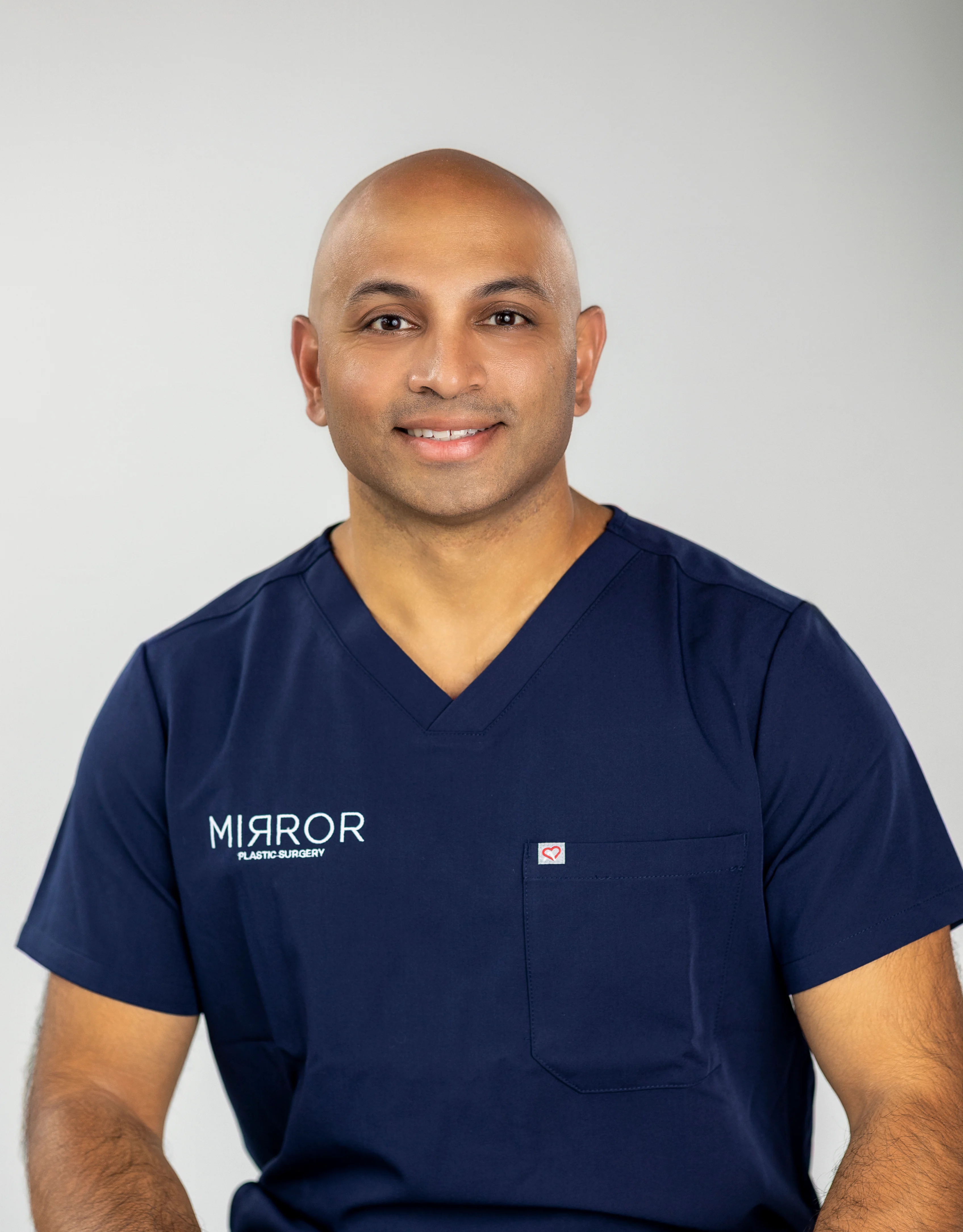
Mirror Plastic Surgery limits itself to one to two procedures per day. This schedule contrasts with high-volume clinics where surgeon fatigue and time pressure have been formally identified as risk factors in BBL complication data.
Schedule your safety consultation for non-surgical BBL options. Call or text 727-361-6515, or email hello@mirrorplasticsurgery.com. Mirror Plastic Surgery is located at 780 4th Ave S, St. Petersburg, FL 33701.
Frequently Asked Questions
How Common Are BBL Complications?
Complication rates vary widely depending on technique, facility, and provider credentials. Modern series using strict subcutaneous-only injection report seroma in approximately 23% of patients, fat necrosis in 1.9%, and infection in 0.43%. The most feared complication, fat embolism, has fallen to the mortality levels shown in the statistics table above after mandatory safety reforms and adoption of ultrasound-guided subcutaneous technique. Non-fatal complications remain possible even with optimal technique, which keeps provider selection and facility accreditation critical for every patient.
What Is the BBL Death Rate?
The BBL mortality rate was approximately 1 in 3,448 in 2017, which made it the highest of any cosmetic procedure at that time and 10 to 20 times more dangerous than the average elective aesthetic surgery. Following the 2018 ASERF safety guidelines requiring subcutaneous-only injection, mortality fell to approximately 1 in 14,921 by 2019, with some modern series reporting rates near 1 in 20,000. As noted earlier, all confirmed fatal cases involved intramuscular or submuscular injection rather than fat confined to the subcutaneous plane.
What Happens 10 Years After a BBL?
Surviving fat from a BBL behaves like normal body fat and expands with weight gain while shrinking with weight loss. Most patients retain 60–80% of transferred fat permanently once the initial reabsorption phase, the first 3–6 months, is complete. At the 5-year mark, many patients retain 70–85% of their enhanced volume with mild softening.1 At 10 years, some projection may decrease 10–20% because of skin laxity and gravity, yet results often remain visible in patients who maintain a stable weight.1 The strongest predictor of long-term satisfaction is weight stability within approximately 10 pounds of surgery weight.1
Can You Get a BBL Without Surgery?
Patients can achieve BBL-style enhancement without surgery through non-surgical BBL using injectable biostimulatory fillers, specifically Radiesse (calcium hydroxylapatite) and AlloClae (adipose filler). These fillers add volume and improve contour without surgery or general anesthesia. Results develop gradually over weeks to months as the fillers stimulate the body’s own collagen production. The buttock region contains dense vascular networks, and blind injection without deep anatomical expertise can cause vascular occlusion, tissue death, and life-threatening infection. A board-certified plastic surgeon should perform this procedure to meaningfully reduce these risks.
How Do I Know If I Am a Good Candidate for a Non-Surgical BBL?
Good candidates are in overall good health, have realistic expectations about the degree of enhancement achievable without surgery, and seek moderate volume improvement, contour refinement, hip dip correction, or skin quality improvement rather than dramatic augmentation. Non-surgical BBL does not suit patients who want the large volume changes achievable only through fat transfer surgery. A thorough consultation with a board-certified plastic surgeon, including a full medical history, physical assessment, and honest discussion of goals, remains the most reliable way to determine candidacy. At Mirror Plastic Surgery, Dr. Akash Chandawarkar’s hour-long consultations give patients a complete picture before any commitment.
Key Takeaways
- BBL mortality has dropped more than fourfold since 2018 as surgeons adopted subcutaneous-only injection techniques and ultrasound guidance.
- Intramuscular or submuscular fat injection appears in every confirmed BBL death, while subcutaneous-only placement has not produced documented fatal pulmonary fat embolism in modern series.
- Non-surgical BBL with biostimulatory fillers removes anesthesia and fat-embolism risks yet still carries serious complications when performed by unqualified providers in unregulated settings.
- Provider credentials and facility accreditation remain the strongest predictors of safety for both surgical and non-surgical BBL.
- Patients in the Tampa Bay area can access non-surgical BBL performed exclusively by board-certified plastic surgeon Dr. Akash Chandawarkar at Mirror Plastic Surgery.
Conclusion: Safety First, Always
BBL complications are real, documented, and in the most severe cases, fatal. The risk profile of surgical BBL has improved with modern subcutaneous technique and ultrasound guidance, yet the procedure still demands rigorous provider vetting and facility accreditation. Non-surgical BBL with biostimulatory fillers offers a lower-risk alternative when a board-certified plastic surgeon with genuine anatomical expertise performs the injections. The term “non-surgical” describes technique rather than safety, and the injector’s training determines the true risk profile.
Safety should always come first, ahead of aesthetics, trends, and any pressure to book quickly. For patients in the Tampa Bay area who want an honest, evidence-based assessment of their options, Mirror Plastic Surgery provides that level of transparency and care.
Get a personalized risk assessment for non-surgical BBL at Mirror Plastic Surgery.
Disclaimer: Results may vary from person to person. Editorial content, before and after images, and patient testimonials do not constitute a guarantee of specific results.
1 Results may vary from person to person. Editorial content, before and after images, and patient testimonials do not constitute a guarantee of specific results.