
Written by: Ellie Pranckevicius, FNP-BC, Aesthetic Nurse Practitioner & Aesthetic Injector | Facial Restoration & Regenerative Injectable Specialist, Mirror Plastic Surgery | Last updated: June 25, 2026
Key Takeaways
-
Surgical BBL procedures carry documented risks such as fat embolism, infection, and long-term aesthetic problems, especially in high-volume or budget clinics.
-
Many BBL-related deaths in South Florida occurred despite regulatory guidelines, which underscores how much provider selection and technique matter.
-
Non-surgical BBL options using FDA-cleared biostimulatory fillers like Radiesse and alloClae offer a lower-risk path with gradual, maintainable results.1
-
Accurate anatomical assessment, sterile technique, and individualized treatment planning reduce complications in any gluteal augmentation procedure.
-
Patients seeking safer BBL alternatives in Florida can meet with Mirror Plastic Surgery to review evidence-based non-surgical options tailored to their anatomy and goals.
When Fat Enters the Bloodstream During BBL
South Florida has recorded multiple BBL-related fat embolism deaths in recent years, including cases that occurred after ASERF guidelines and Florida Board of Medicine restrictions took effect. A 2023 analysis of BBL deaths in South Florida found that 92% occurred at high-volume, budget clinics rather than accredited facilities.
Vignette A: A woman in her early 30s underwent a BBL at a high-volume South Florida clinic. Within hours of surgery, she developed acute respiratory distress. Autopsy confirmed intramuscular fat injection. Fat had entered the gluteal venous plexus and traveled to her lungs.
The Multi-Society Task Force for Safety in Gluteal Fat Grafting has stated: “In every patient who has died, at autopsy, fat was seen within the gluteal muscle. In no case of death has fat been found only in the subcutaneous plane.”
Vignette B: A patient received unlicensed silicone filler injections from an unregulated provider operating out of a private residence in Miami-Dade County. She developed sepsis within 72 hours, required hospitalization, and underwent surgical debridement. The injected material was not sterile, and no anatomical assessment had been performed.
Mirror Plastic Surgery’s protocol begins with a top-to-bottom anatomical assessment before any injectable treatment, which directly addresses the failures seen in these cases.
Ellie Pranckevicius performs this structured evaluation personally, mapping each patient’s gluteal anatomy, tissue depth, and vascular landmarks to identify safe injection planes. Because this level of assessment cannot be rushed, the practice limits non-surgical BBL sessions to individualized, single-procedure daily appointments rather than high-volume rotations.
The Reality of Liquid BBL Infections
Vignette C: A woman in her 40s received repeated silicone oil injections marketed as a “liquid BBL” at a medspa operating without physician oversight. Over 18 months, she developed chronic granulomas, persistent pain, and tissue necrosis that required multiple corrective surgeries. The product used was not FDA-cleared for soft tissue augmentation.
Vignette D: A patient sought a budget injectable BBL and received an unidentified filler product. Within weeks, she developed erythema, warmth, and fluctuance at the injection site, which are classic signs of abscess formation. Cultures confirmed polymicrobial infection. She required IV antibiotics along with incision and drainage.
Mirror Plastic Surgery maintains strict supplier neutrality, which means product selection for non-surgical BBL is based exclusively on clinical evidence and individual patient anatomy, not vendor relationships, commission structures, or volume quotas. Ellie uses only FDA-cleared biostimulatory fillers, Radiesse and alloClae, and administers them under strict sterile technique in a clinical setting with full emergency protocols available.
Long-Term BBL Outcomes That Change Over Years
Vignette E: A patient in her late 20s underwent surgical BBL and felt satisfied at first. By year three, significant fat resorption had occurred unevenly, producing a flat, ptotic appearance often called “diaper booty.” Revision surgery was recommended but carried the same embolic risks as the original procedure.
Vignette F: A woman reported visible asymmetry six months after BBL because one side resorbed faster than the other. In a 7,000-case BBL series using a standardized subcutaneous-only protocol, no pulmonary fat embolism or thromboembolic events occurred, and estimated fat graft survival was approximately 70%.
Vignette G: A patient who underwent surgical BBL at age 32 reported significant regret at age 42 after weight fluctuation altered the grafted fat unpredictably. The result produced contour irregularities that no non-surgical treatment could fully correct.
Mirror Plastic Surgery’s non-surgical BBL protocol uses individualized dosing that reflects each patient’s existing tissue volume, skin laxity, and long-term goals. Biostimulatory fillers stimulate the body’s own collagen production, which supports gradual, maintainable results.1 Long-term maintenance planning is built into every treatment plan from the first consultation.
7 Signs of a BBL Gone Wrong
-
Sudden shortness of breath or chest pain, which may indicate pulmonary fat embolism and requires immediate emergency care.
-
High fever, chills, or spreading redness at the injection site, which can signal systemic infection or abscess formation.
-
Hard, painful lumps under the skin, which may indicate fat necrosis, granuloma formation, or foreign body reaction.
-
Visible asymmetry or contour irregularity, which suggests uneven fat resorption or filler migration that worsens over time.
-
Skin discoloration or open wounds, which can signal tissue necrosis from vascular compromise or infected filler.
-
Persistent swelling beyond 8–12 weeks, which may indicate seroma, hematoma, or a chronic inflammatory response.
-
Progressive flattening or ptosis (“diaper booty”), which reflects long-term fat resorption that produces a deflated, sagging appearance.
Any of these signs warrants prompt evaluation by a qualified medical provider. Patients should not delay seeking care.
Mirror Plastic Surgery’s Evidence-Based Non-Surgical BBL Protocol
Mirror Plastic Surgery’s non-surgical BBL is performed by Ellie Pranckevicius, FNP-BC, using a combination of Radiesse and alloClae. These biostimulatory agents stimulate collagen and elastin production within the gluteal tissue instead of simply displacing tissue with volume.
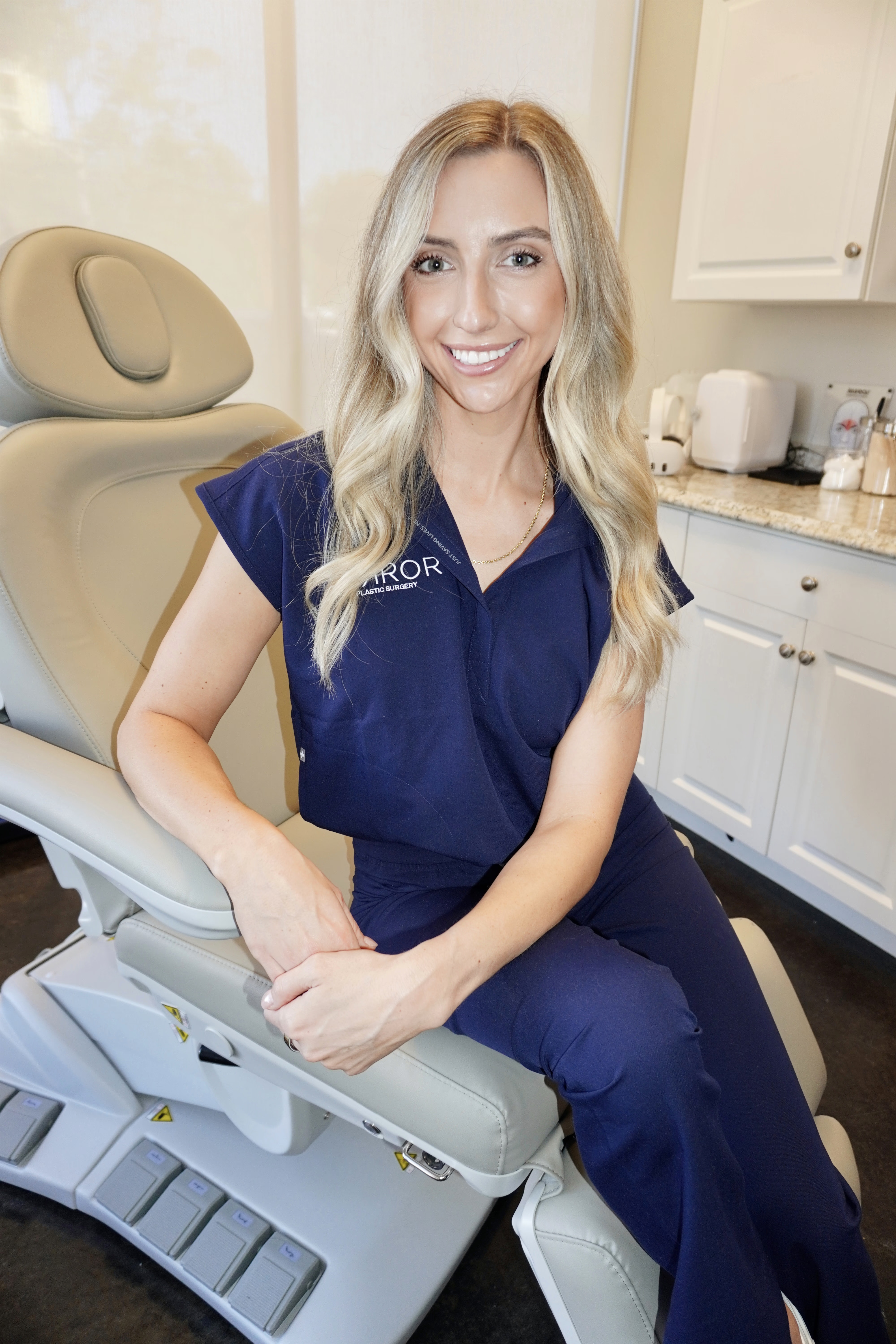
Radiesse is a calcium hydroxylapatite-based filler with an established safety profile in soft tissue augmentation. alloClae is an acellular dermal matrix product used for structural support and volumization in the buttocks and hip dips. Used together, they address volume, cellulite texture, stretch mark appearance, and symmetry within a single coordinated protocol.
Every patient undergoes a comprehensive hour-long consultation before any product is selected or administered. Ellie’s background, which includes four years in the Neuroscience ICU at Tampa General Hospital and advanced aesthetics training, informs her judgment on tissue depth, vascular anatomy, and patient-specific risk factors. Each treatment plan is customized.
How Florida Patients Weigh Safer BBL Alternatives
Florida’s regulatory environment has tightened considerably around BBL procedures. The Florida Board of Medicine introduced restrictions on surgical BBL practices after a documented cluster of South Florida fatalities, and enforcement actions against unlicensed injectable providers have increased through 2025 and 2026.
On the surgical side, evidence for technique-dependent safety is now substantial. The 7,000-case series mentioned earlier showed that strict protocol adherence, multimodal thromboembolism prophylaxis, and accredited facility standards can substantially reduce mortality risk. These conditions are not present across all providers.
With continued compliance to safe techniques, BBL mortality risk can decrease, which is meaningful but still represents a measurable risk. Many patients in Florida now compare that risk with non-surgical alternatives.
For patients who are not surgical candidates, who prefer to avoid general anesthesia and extended recovery, or who want a maintainable and reversible approach, the non-surgical BBL at Mirror Plastic Surgery offers a documented alternative with a distinct risk profile.
How to Vet a BBL Provider in Florida
Patients researching BBL options in Florida, whether surgical or non-surgical, can use the following criteria before committing to any provider:
-
Consultation length: A thorough provider spends at least 45–60 minutes on an initial assessment. Rushed consultations under 15 minutes are a red flag.
-
Anatomical assessment: The provider should evaluate tissue depth, skin quality, and vascular anatomy before recommending any product or technique.
-
Board-certified or credentialed oversight: Non-surgical injectable BBL should be performed by or under the direct supervision of a licensed, credentialed provider with documented training in body contouring anatomy.
-
Transparent risk discussion: A qualified provider discusses complications, contraindications, and realistic outcomes before treatment.
-
Supplier neutrality: Product recommendations should be based on anatomy and clinical evidence, not vendor incentives or upselling pressure.
-
Facility standards: Treatments should occur in a clinical setting that uses sterile technique and has emergency protocols available.
-
Long-term maintenance planning: A qualified provider explains what results look like at one, three, and five years, not just immediately after treatment.
Conclusion and Medical Disclaimer
Surgical BBL carries documented, life-altering risks that remain concentrated in high-volume, under-regulated settings, particularly in South Florida. The warning signs are identifiable, the regulatory context continues to evolve, and safer alternatives exist for patients who prioritize long-term outcomes over price or speed.
Mirror Plastic Surgery’s non-surgical BBL protocol, led by Ellie Pranckevicius, FNP-BC, with surgical oversight from Dr. Akash Chandawarkar, a Harvard- and Johns Hopkins-trained plastic surgeon, offers an individualized, evidence-based path for patients in the Tampa Bay and St. Petersburg area who want meaningful results without the risks of surgical fat grafting.
Patients who experience any of the warning signs listed in this report after a prior BBL procedure should seek medical evaluation promptly. Patients who are still researching options should treat a thorough consultation as the most important first step.
Disclaimer: Results may vary from person to person. Editorial content, before and after images, and patient testimonials do not constitute a guarantee of specific results.
Frequently Asked Questions
What is the difference between a surgical BBL and a non-surgical BBL?
A surgical BBL involves liposuction to harvest fat from one area of the body, which is then processed and injected into the buttocks. The procedure requires general anesthesia and a multi-week recovery period and carries risks such as pulmonary fat embolism, infection, asymmetry, and fat resorption over time.
A non-surgical BBL uses injectable biostimulatory fillers, at Mirror Plastic Surgery this means Radiesse and alloClae, to add volume, improve contour, and stimulate the body’s own collagen production in the gluteal region. It is performed in-office without general anesthesia, has no surgical recovery, and is tailored to each patient’s anatomy during a comprehensive consultation with Ellie Pranckevicius, FNP-BC.
How long do non-surgical BBL results last?
Results from biostimulatory fillers like Radiesse and alloClae develop gradually, because these products stimulate collagen and elastin production rather than only adding immediate volume.1 Most patients see continued improvement over three to six months after treatment, with results that can last one to two years or longer.1 Longevity depends on individual metabolism, lifestyle, and maintenance.1
Mirror Plastic Surgery builds a long-term maintenance plan into every non-surgical BBL protocol so patients understand what to expect at one, three, and five years.
Is the non-surgical BBL safe for all patients?
Non-surgical BBL injectables are not appropriate for every patient. Ellie Pranckevicius conducts the same thorough assessment described above, evaluating tissue depth, skin quality, vascular anatomy, and individual health history before recommending any treatment.
Contraindications may include certain autoimmune conditions, active infection at the treatment site, pregnancy, or unrealistic expectations about the degree of volume achievable non-surgically. Mirror Plastic Surgery recommends a procedure only when it is clinically appropriate, and Ellie frequently advises patients when a treatment is not yet necessary or not the right fit.
What should I do if I think I am experiencing a complication from a prior BBL?
Patients who experience sudden shortness of breath, chest pain, high fever, rapidly spreading redness, hard painful lumps, skin discoloration, or open wounds after any BBL procedure, surgical or injectable, should seek emergency medical care immediately.
These symptoms can indicate serious complications such as pulmonary fat embolism, systemic infection, or tissue necrosis, all of which require prompt clinical evaluation. Patients should not wait to see if symptoms resolve on their own. After receiving appropriate medical care, a consultation with a qualified provider can help clarify options for assessment and, when appropriate, corrective treatment.
Why does Mirror Plastic Surgery use Radiesse and alloClae specifically for non-surgical BBL?
As detailed earlier in this article, Radiesse and alloClae are both FDA-cleared biostimulatory agents that work by stimulating collagen and elastin production rather than simply displacing tissue.
Their use at Mirror Plastic Surgery reflects clinical evidence, safety data, and how well they pair with individualized anatomical planning. Product selection is based on patient anatomy and medical literature, not vendor incentives, which aligns with the practice’s supplier-neutral policy.
1 Results may vary from person to person. Editorial content, before and after images, and patient testimonials do not constitute a guarantee of specific results.