
Written by: Ellie Pranckevicius, FNP-BC, Aesthetic Nurse Practitioner & Aesthetic Injector | Facial Restoration & Regenerative Injectable Specialist, Mirror Plastic Surgery
Key Takeaways for Filler Aftercare and Safety
- The first 48 hours are critical because filler remains moldable and vulnerable to migration, swelling, and infection from blood flow, heat, or pressure.
- Patients should avoid strenuous exercise, heat exposure, facial pressure, and sleeping on the treated area for at least 48 hours to protect placement and reduce complications.
- Swelling and bruising usually peak in the first 2–3 days and improve by 7–10 days, while full integration and final results take one to two weeks depending on the treatment area.1
- Choosing a qualified, medically trained injector significantly lowers the risk of serious complications such as vascular occlusion, migration, or infection.
- At Mirror Plastic Surgery, patients receive personalized aftercare guidance and direct access to Ellie Pranckevicius, FNP-BC, throughout recovery; schedule your personalized treatment plan to discuss your specific goals and aftercare needs.
The First 48 Hours: Protecting Fresh Filler
Immediately after injection, filler remains malleable within the tissue planes. During this period, three physiological forces can compromise placement. Increased blood flow heightens bruising and migration risk before integration, elevated body temperature causes vasodilation that compounds circulation issues, and sweating introduces bacteria through puncture sites, raising infection risk. Each aftercare instruction in the first 48 hours is designed to counteract one or more of these mechanisms.
Exercise and Physical Activity in the First Two Days
Patients should avoid strenuous exercise such as running, HIIT, and heavy lifting for at least 48 hours after dermal filler injections. Intense activity increases blood flow to the treated area, which can cause the filler to shift, worsen swelling, and accelerate breakdown of fillers, reducing longevity. Many injectors recommend waiting until the next day before exercising or performing any strenuous activity. Light walking is generally acceptable after the first 24 hours, provided heart rate stays well below vigorous thresholds.
The exercise timeline varies by filler type.1 Biostimulatory fillers like Radiesse require a slower return to intense activity to allow proper deep tissue integration compared to standard products. Ellie selects products based on each patient’s anatomy, treatment area, and goals, and she adjusts aftercare guidance accordingly.
Heat Exposure and Filler Stability
Heat exposure presents another way to disrupt filler placement and increase swelling. Saunas, steam rooms, hot yoga, and prolonged hot showers are off-limits for the first 48 to 72 hours. Heat accelerates breakdown of fillers and increases swelling, while heat exposure after dermal filler injections increases swelling and inflammation and raises the risk of hyperpigmentation in inflamed skin. UV exposure adds another concern. UV exposure can degrade fillers, the primary component of most fillers, so daily broad-spectrum sunscreen becomes a non-negotiable part of post-treatment maintenance.
Sleeping Position and Overnight Swelling
Sleep position directly affects filler symmetry and swelling. Jessica Rohr, APRN, FNP-C states: “It is recommended to sleep on your back after dermal filler. Since most products are moldable for 48 hours, I encourage back sleeping to prevent the filler from becoming asymmetrical.” Patients should sleep on their back with the head elevated at a 30–45 degree angle using two firm pillows for the first two to three nights. Swelling after dermal filler injections peaks at 24–48 hours and is worse in the morning due to overnight fluid accumulation in the face; head elevation during sleep helps mitigate this effect.
Under-eye (tear trough) filler requires a longer elevation protocol. Patients should sleep on their back with head elevated for at least one week after tear trough fillers to minimize pressure on treated areas and reduce overnight fluid pooling that worsens swelling.
Touching, Massaging, and Facial Pressure
The treated area should not be touched, rubbed, or massaged for the first 24 to 48 hours unless the injector specifically instructs otherwise. Dermal filler results can be affected by pressure or massaging in the first 48 hours, so patients should avoid gua sha tools, facial rollers, aggressive cleansing, or resting the face in the hands. This guidance also includes avoiding face-down sleeping, which places direct pressure on injection sites.
One important exception involves poly-L-lactic acid fillers. The American Academy of Dermatology provides no specific massage instructions for this product category. Ellie will always clarify whether massage is indicated or contraindicated for your specific product and treatment area.
Days 3 Through 14: Swelling Resolution and Filler Settling
By day three, the peak swelling described earlier typically begins to subside. Bruising and swelling after dermal fillers typically peak in the first 2–3 days and improve by 7–10 days.1 The filler continues to integrate and soften throughout the first two weeks. A common post-dermal filler timeline includes days 1–3 (peak swelling with exaggerated appearance), days 3–7 (swelling resolves and the result may appear subtler), weeks 1–2 (product settling with texture softening and shape integration), weeks 2–4 (result approaching final state), and week 4 onward (fully expressed result suitable for assessment or touch-up).1.
During this integration phase, several additional restrictions help protect symmetry and reduce complications.
- Facial massages, microneedling, lasers, and facials should be avoided for the first 1–2 weeks because fillers require time to settle and integrate; early disturbance can affect symmetry, placement, or increase complication risk.
- Direct sun or UV tanning exposure should be avoided for at least 2 weeks after dermal filler treatment.
- Dental procedures should be performed at least two weeks before or after dermal filler injections to minimize the risk of hematogenous bacterial spread and biofilm development.
- Inverted yoga poses, contact sports, and any activity that places pressure on the face should be avoided during days 3–7, as these can increase blood flow, cause filler migration, and worsen residual swelling or bruising that may persist up to two weeks.
Complication Rates and Why Injector Choice Matters
Minor side effects are common and expected. Early expected complications from dermal fillers (0–14 days), including bruising, swelling, redness, and tenderness, occur in many treatments. Studies of FDA clinical trials involving over 2600 patients indicate that 67% of dermal filler patients experience bruising.
Serious complications occur infrequently but deserve careful attention. Vascular occlusion and vision complications following dermal filler treatment remain uncommon. Delayed complications such as granuloma formation after dermal fillers have reported incidences ranging from 0.02% to 1%, which quantifies the “rare” description often used in clinical discussions.
Migration risk varies significantly by anatomical site and technique. The lips, perioral area, and tear troughs are the anatomical sites most commonly affected by dermal filler migration because these areas experience constant movement, multiple muscle insertions, and gravitational pull on low-viscosity product, all forces that can displace filler before it fully integrates. Practitioner expertise can mitigate even high-risk anatomical factors. Jawline filler migration risk remains low when a trained injector uses appropriate placement techniques that account for the area’s mechanical stresses.
Many filler complications involve uncertified products or injections by non-medical practitioners. Choosing a qualified, medically trained injector is the single most impactful risk-reduction decision a patient can make.
Discuss your treatment options with Ellie, a board-certified Aesthetic Nurse Practitioner trained in advanced anatomy. The expertise that reduces complication risk starts with your first consultation.
Red-Flag Symptoms That Need Immediate Attention
Most post-treatment symptoms are mild and self-limiting, but some signs require urgent evaluation. The following symptoms are not normal and require immediate contact with your injector or emergency services:
- Skin blanching lasting more than a few minutes, livedo reticularis (dusky or mottled purple net-like discoloration), pain out of proportion that worsens over minutes, pain radiating to the eye, forehead, or nose, delayed capillary refill exceeding 2 seconds, skin turning grey, or vision changes are key red-flag signs of vascular occlusion requiring immediate care.
- Blurred vision, double vision, vision loss, severe headache, speech difficulty, weakness of the face, arm, or leg, or confusion after dermal filler are emergency symptoms requiring immediate emergency services.
- Fever, red streaks or hot spreading redness from the injection site, severe pain unrelieved by ice or over-the-counter medications, body aches, and difficulty breathing or wheezing may indicate allergic reaction or infection and require prompt medical evaluation.
For non-urgent concerns, contact your injector for lumps or asymmetry persisting beyond two weeks, significant bruising not improving after two weeks, unusual firmness or hardness, or results that differ significantly from the pre-treatment discussion.
In suspected arterial filler complications, the therapeutic time window for effective hyaluronidase therapy is measured in hours, not days. Early intervention often makes the difference between full recovery and permanent tissue damage.
Technique, Product Choice, and Their Impact on Recovery
Injection technique and product selection directly influence both safety and recovery. Gentle, low-pressure injections reduce inadvertent widespread intravascular filler dissemination by not exceeding mean arterial pressures, which limits retrograde filler migration and vascular occlusion risk. Larger cannulas are often recommended over smaller needles for filler injections to help lower vessel penetration risk.
Product selection also shapes recovery. RHA fillers are designed to flex naturally with facial movements, making them particularly effective for dynamic areas like laugh lines and lip lines. Biostimulatory fillers like Radiesse work differently, stimulating the body’s own collagen production, and they require specific aftercare timelines for deep tissue integration. Ellie works with a supplier-neutral product portfolio, selecting the most appropriate filler for each patient’s anatomy rather than defaulting to a single brand.
Individual patient factors also influence outcome and downtime. Patient variables including use of aspirin, NSAIDs, vitamin E, or herbal supplements with blood-thinning properties increase bruising and swelling risk after dermal filler injection; these should be avoided for 7–10 days prior to treatment. Patients with a history of cold sores require prophylactic antiviral treatment before lip augmentation to prevent reactivation.
The Mirror Plastic Surgery Aftercare Experience
At Mirror Plastic Surgery, aftercare receives the same attention as the injection itself. Ellie’s concierge approach means patients receive direct access via call, text, or email throughout their recovery, not just a generic instruction sheet and a follow-up appointment weeks later. The practice’s philosophy of safety first, function second, and aesthetics third encourages patients to reach out immediately if something looks or feels wrong rather than wait and worry.
Ellie’s dual background in esthetics and advanced nursing, including four years in the Neuroscience ICU at Tampa General Hospital, gives her a clinical foundation that extends well beyond cosmetic technique. She understands tissue physiology, vascular anatomy, and the physiological mechanisms behind every restriction she recommends. That depth of knowledge supports safer outcomes and more confident patients.
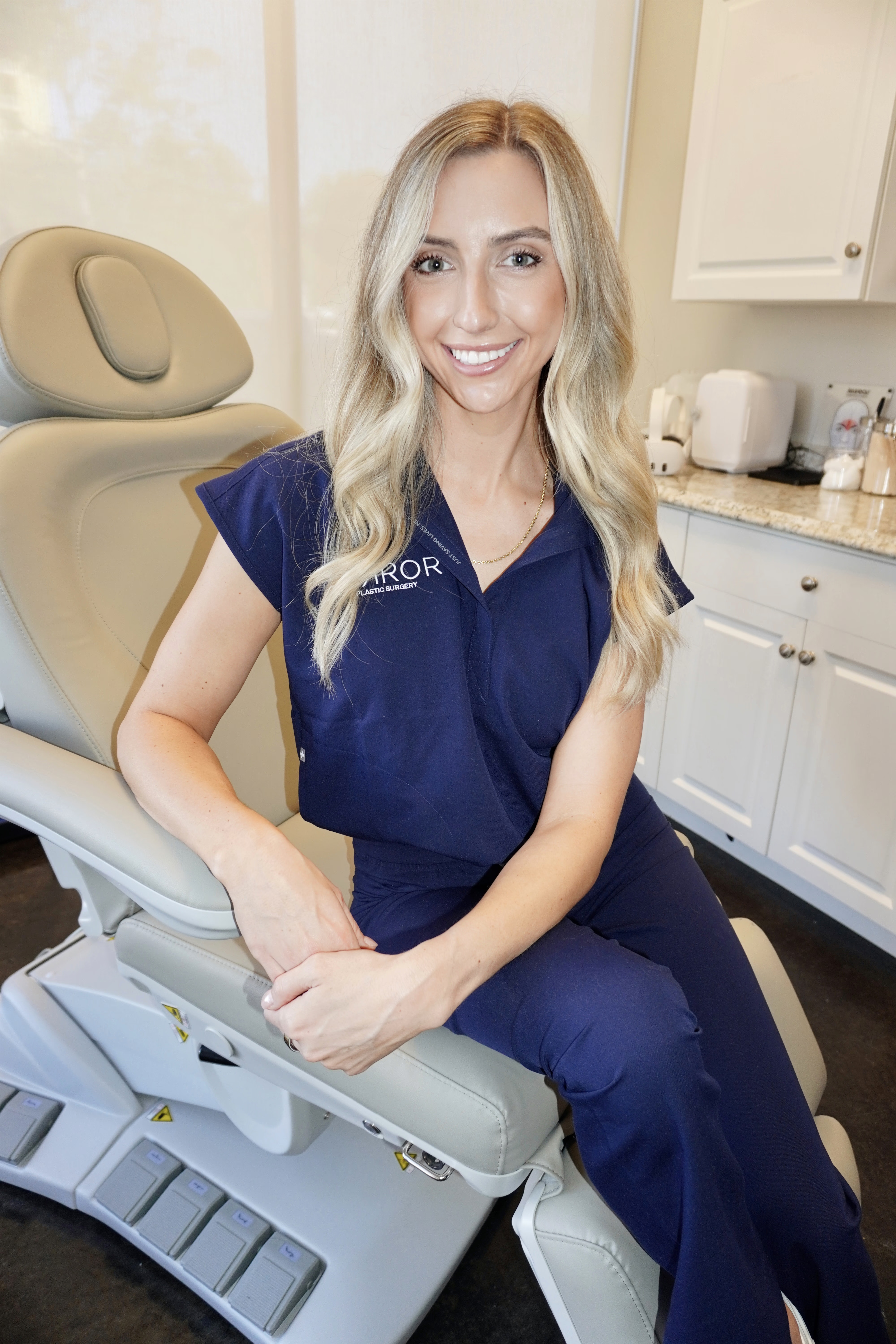
Experience Ellie’s concierge approach to injectable treatments in St. Petersburg, FL. Direct access to expert care starts with your first conversation.
Frequently Asked Questions About Filler Recovery
How long does it take for dermal fillers to fully settle?
Most dermal fillers take one to two weeks to fully settle, though the timeline varies by treatment area.1 Lips typically show their final shape within five to seven days.1 Cheeks and jawline contours generally require ten to fourteen days.1 Under-eye and non-surgical nose treatments can take up to two to three weeks because these areas tend to show swelling more visibly.1 The result you see immediately after treatment is not your final result, since initial swelling creates a temporarily exaggerated appearance that softens as the filler integrates with surrounding tissue.1 At Mirror Plastic Surgery, Ellie schedules follow-up assessments after the settling period to evaluate results accurately and determine whether any refinement is needed.
Is it normal to have lumps or asymmetry after filler injections?
Minor firmness, small lumps, and slight asymmetry in the first few days after treatment are common and usually self-correcting. As the filler integrates with tissue over one to two weeks, these irregularities typically smooth out. Slight asymmetry often reflects uneven swelling rather than uneven placement. Lumps or asymmetry that persist beyond two weeks, develop suddenly, or feel unusually hard warrant a call to your injector. At Mirror Plastic Surgery, Ellie’s top-to-bottom assessment approach and deep anatomical knowledge are designed to minimize these occurrences from the outset, and her availability means patients are never left guessing if something feels off during recovery.
Can I wear makeup or wash my face after dermal fillers?
Gentle face washing is generally acceptable after treatment, but scrubbing, aggressive cleansing, and any form of facial pressure on treated areas should be avoided during the first week. Makeup application is typically safe after the first 24 hours, provided it is applied gently without rubbing or pressing on injection sites. Gua sha tools, facial rollers, and similar devices should be avoided for at least 48 hours, as they can displace filler before it has fully integrated. Facials, microneedling, laser treatments, and chemical peels should be postponed for at least one to two weeks post-treatment. Ellie provides specific guidance based on the areas treated and products used, so aftercare instructions are always tailored rather than generic.
What makes Mirror Plastic Surgery’s injectable treatments different from other providers?
Mirror Plastic Surgery operates on a concierge medicine model that prioritizes depth of care over volume of patients. Ellie Pranckevicius, FNP-BC, brings a combination of esthetician training, advanced nursing expertise, and four years of critical care experience to every appointment. She is supplier-neutral, meaning product selection is based entirely on what is most appropriate for your anatomy, not on brand quotas or commissions. Her full-face approach to facial rejuvenation avoids the “overdone” appearance that can result from isolated, single-area injections. Initial consultations are comprehensive, covering your anatomy, goals, and the physiological rationale behind every recommended treatment. When surgical options are relevant, Ellie’s work can be complemented by Dr. Akash Chandawarkar, MD, a Harvard-educated, Johns Hopkins-trained plastic surgeon with fellowship training in aesthetic surgery at Manhattan Eye Ear and Throat Hospital.
What are the most important warning signs to watch for after filler treatment?
Most post-treatment symptoms, including mild swelling, tenderness, redness, and minor bruising, are expected and resolve within one to two weeks. The symptoms that require immediate action are distinct. Skin turning white, grey, or developing a mottled net-like pattern, severe pain that worsens rather than improves, any vision changes including blurring, double vision, or partial loss, pain radiating toward the eye, forehead, or nose, and signs of infection such as fever, spreading warmth, or pus all require urgent attention. These symptoms can indicate vascular occlusion, a rare but serious complication where filler affects blood supply to surrounding tissue. The treatment window for vascular complications is measured in hours, so prompt contact with your injector or emergency services is essential. At Mirror Plastic Surgery, patients have direct access to Ellie throughout their recovery, so there is never a barrier to reaching out when something feels wrong.
Disclaimer: Results may vary from person to person. Editorial content, before and after images, and patient testimonials do not constitute a guarantee of specific results.
1 Results may vary from person to person. Editorial content, before and after images, and patient testimonials do not constitute a guarantee of specific results.