
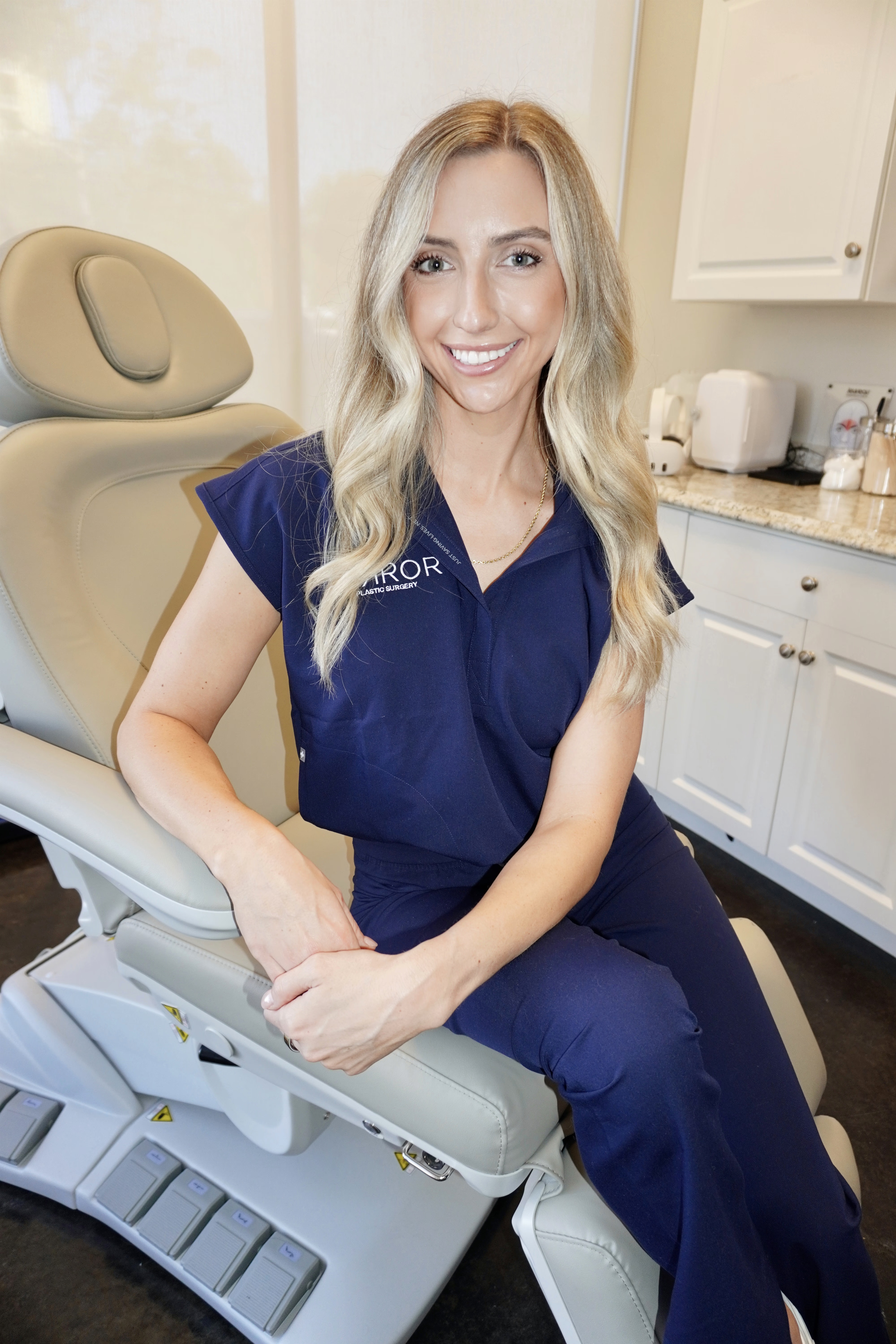
Written by: Ellie Pranckevicius, FNP-BC, Aesthetic Nurse Practitioner & Aesthetic Injector | Facial Restoration & Regenerative Injectable Specialist, Mirror Plastic Surgery
Key Takeaways
- Hip dips are tied to bone structure, so surgery can soften the contour but cannot erase the indentation completely.
- Fat transfer is the most common surgical approach, with stem cell-enriched protocols showing 75–85% long-term volume retention.1
- Non-surgical biostimulatory fillers such as Sculptra, Radiesse, and AlloClae offer a lower-commitment option with minimal downtime and results lasting 1–2 years.1
- Recovery after fat transfer involves 2–6 weeks of activity restrictions and compression garments, while fillers allow return to normal activities within 1–2 weeks.1
- At Mirror Plastic Surgery, patients can start a personalized consultation with Ellie for an honest, anatomy-first assessment of surgical or non-surgical options.
What Hip Dip Surgery Actually Involves
The two established surgical approaches are autologous fat transfer and silicone implants. Fat transfer, the far more common choice, harvests fat with liposuction, processes it, and reintroduces it into the lateral hip depression. A retrospective analysis of 112 consecutive women undergoing awake gluteal and hip stem cell-enriched fat grafting from 2016 to 2022 has been published. Most patients undergoing hip dip fat grafting achieve results with a single session, though optional touch-ups may be needed in some cases because of partial fat reabsorption.1
Implants are rarely used for lateral hip dips. Fat transfer is preferred over implants for hip dips because it creates soft, blended edges and avoids many foreign-body risks. Custom silastic hip implants remain an option only when bony anatomy is so structurally dominant that fat grafting alone cannot produce meaningful correction.
Is Hip Dip Surgery Risky?
The 112-patient study mentioned earlier reported a favorable safety profile. The authors attributed this to exclusive subcutaneous fat placement under intraoperative ultrasound guidance.
The risk of fat embolism in hip dip fat transfer becomes extremely low when fat is injected only into the subcutaneous plane with ultrasound-assisted technique and strict cannula control.1 Additional documented risks include fat necrosis forming firm nodules, contour irregularities, asymmetry, infection, and bleeding. A critical anatomical reality governs all outcomes. No procedure can change underlying bone structure such as pelvic shape or femur angle, so complete correction of prominent hip dips is not possible.
Schedule your risk assessment consultation to receive an honest, anatomy-first evaluation of whether surgery or a non-surgical approach is appropriate for your specific hip dip pattern.
Hip Dip Surgery Recovery Timeline
Recovery after hip dip fat transfer centers on protecting the grafted fat while it establishes a blood supply. Patients avoid direct pressure on the hips or glutes for the first 2 weeks, use a BBL pillow when sitting, and wear compression garments. Most patients return to desk work in 5–7 days and resume light cardio and strength after clearance around weeks 4–6. The following sequence reflects the evidence-based recovery framework:
- Weeks 1–2: Soreness, bruising, and swelling are expected. Patients avoid compressing grafted fat against a chair back for at least 2 weeks, preferably 4–5 weeks. Sleeping on the stomach or sides is recommended for the same period.
- Weeks 2–6: A compression garment is worn continuously over liposuction areas for about 1 month, then at night for an additional week. Lymphatic massage of liposuction sites begins a few days after surgery.
- Weeks 4–6: Light cardio and strength training can resume after medical clearance around weeks 4–6. High-impact activity may require additional time. Swimming and soaking remain restricted until incisions fully heal.
- Months 3–6: Final contour becomes visible around month 3 as swelling resolves, with ongoing changes up to 6 months. Large weight fluctuations can reverse results, so weight stability is essential.
Fat Transfer vs. Implants for Hip Dips
Fat transfer produces soft, naturally blended results and avoids foreign-body risks. Outcomes depend on how much harvestable donor fat a patient carries and how well the grafted cells establish a blood supply. Most studies show a fat survival rate of 50% to 80% after BBL, with many patients permanently retaining around 60% to 70% of transferred fat after the initial 3–6 month stabilization period.1 Surgeons routinely overcorrect at the time of surgery to compensate for anticipated resorption.
Silicone implants for the lateral hip are rare in practice. For deep structural hip dips driven by bony anatomy, enriched fat grafting alone may improve contour but often cannot fully correct the depression. Custom patient-specific silastic hip implants or composite augmentation are required in such cases. Implants carry their own risk profile, including capsular contracture, implant displacement, and longer revision considerations, so surgeons reserve them for patients whose anatomy makes fat grafting insufficient.
Non-Surgical Hip Dip Correction with Biostimulatory Fillers
Biostimulatory fillers work by stimulating the body’s own collagen and tissue matrix rather than simply occupying space. At Mirror Plastic Surgery, Ellie Pranckevicius uses Sculptra (poly-L-lactic acid), Radiesse (calcium hydroxylapatite), and AlloClae to address hip dip volume, symmetry, and skin quality without general anesthesia or weeks of restricted activity.
AlloClae recovery involves minimal downtime with 1 to 2 weeks of swelling. Sculptra Aesthetic is a long-lasting non-surgical option for hip dip contouring, with results that can last two years or more.1 These products offer results lasting 1–2 years without the need for general anesthesia or extended recovery.
Ellie’s dual background in esthetics and advanced nursing, combined with four years in a Neuroscience ICU, gives her a layered understanding of skin physiology and systemic safety that informs every product selection. Mirror Plastic Surgery is supplier-neutral, so product recommendations are driven by patient anatomy and goals, not brand quotas.
Explore non-surgical options with Ellie to determine whether biostimulatory fillers are the right first step for your hip contour goals.
Comparison of Fat Transfer and Non-Surgical Correction
The following table summarizes the key practical differences between surgical and non-surgical approaches so you can weigh downtime, longevity, and candidacy factors at a glance.
| Approach | Downtime | Longevity Considerations | Candidacy Factors |
|---|---|---|---|
| Fat Transfer (Surgical) | About 1 week to desk work, 4–6 weeks to exercise | 75–85% volume retention at 7 months in stem cell-enriched protocols, generally stable for years once established at 2–3 months | Sufficient donor fat, stable weight, good skin elasticity, realistic expectations; bone structure limits complete correction |
| Biostimulatory Fillers (Non-Surgical) | Minimal downtime with 1 to 2 weeks of swelling; avoid intense lower-body exercise for 1–2 weeks | Results typically lasting 1–2 years depending on collagen response, metabolism, and lifestyle1 | Well suited for patients wanting a smoother hip line without added buttock volume, or lean candidates lacking sufficient donor fat for meaningful surgical transfer |
How Ellie Structures a Safety-First Consultation
Every non-surgical body contouring consultation with Ellie at Mirror Plastic Surgery follows a structured, hour-long top-to-bottom assessment. The framework prioritizes safety first, function second, and aesthetics third. This sequence ensures no treatment is recommended before the patient’s anatomy, health history, and motivations are fully understood.
The assessment process includes:
- Review of skeletal anatomy to distinguish soft-tissue-dominant hip dips from structurally dominant dips that may not respond fully to any filler approach
- Evaluation of skin quality, elasticity, and existing volume distribution
- Discussion of realistic outcomes, including the limitations imposed by bone structure
- Supplier-neutral product selection based on individual anatomy and goals, not brand relationships
- Honest communication about whether a non-surgical approach is sufficient or whether a surgical referral to Dr. Akash Chandawarkar is the more appropriate path
This approach contrasts with high-volume practices that may move patients through consultations in minutes. Mirror Plastic Surgery performs only one to two procedures per day, so the entire clinical team can focus on each individual patient before, during, and after treatment.
Frequently Asked Questions
Who is a candidate for hip dip procedures?
Candidacy depends on the depth and cause of the hip dip, available donor fat for surgical options, skin elasticity, overall health, and weight stability. Patients with soft-tissue-dominant dips, where the depression is primarily due to fat and muscle distribution rather than pronounced bony anatomy, tend to respond best to both surgical fat transfer and biostimulatory fillers. Very lean patients who lack sufficient donor fat for meaningful surgical grafting are often better served by non-surgical biostimulatory fillers. Patients with structurally dominant dips driven by pelvic bone shape should expect softening rather than elimination of the contour. A thorough anatomical assessment is the only reliable way to determine which approach is appropriate for a given individual.
How many sessions are typically needed?
As noted earlier, most patients see meaningful improvement after one fat transfer procedure, with touch-ups available if desired. For non-surgical biostimulatory fillers, most treatment plans involve an initial session delivering the majority of the recommended volume, followed by a second session 4–8 weeks later to address any asymmetry and distribute downtime from swelling. Sculptra protocols for hip dips typically involve three to four sessions spaced four to six weeks apart. The exact number of sessions depends on the depth of the dip, the patient’s collagen response, and the product used.
Can hip dips be fully eliminated?
No. Hip dips are anchored to the skeletal gap between the iliac crest and the greater trochanter of the femur. Because the underlying bone structure cannot be altered by any injectable or surgical technique, complete elimination is not achievable. The realistic and evidence-supported goal is a smoother hip-to-thigh transition, a softening of the visible indentation rather than its erasure. Patients with very prominent bony hip dips should expect partial improvement. This limitation reflects fundamental anatomy, not provider skill, and any honest provider will communicate it clearly before treatment begins.
How do I choose a qualified provider?
Provider selection for hip dip procedures, surgical or non-surgical, should center on anatomical expertise, transparency about realistic outcomes, and a clear commitment to safety over volume. For non-surgical biostimulatory fillers, look for an injector with advanced nursing credentials and a deep understanding of subdermal anatomy, not just surface-level esthetics training. For surgical fat transfer, verify that the surgeon uses subcutaneous-only fat placement with ultrasound guidance, since this is the primary safety measure that mitigates fat embolism risk. Avoid providers who promise complete elimination of hip dips or who do not conduct a thorough pre-treatment anatomical assessment. A consultation that lasts less than 15 minutes is a meaningful warning sign.
Conclusion and Your Next Step
Surgery for hip dips can meaningfully soften trochanteric depressions, but it cannot alter the skeletal anatomy that defines them. Fat transfer carries documented complication and revision rates, variable fat survival, and a recovery period measured in weeks to months. Non-surgical biostimulatory fillers such as Sculptra, Radiesse, and AlloClae offer a lower-commitment, adjustable alternative with minimal downtime and results that last one to two years. These options often make sense as a first step for lean patients, those who want to avoid general anesthesia, or anyone unsure about committing to surgery.
At Mirror Plastic Surgery in St. Petersburg, Florida, Ellie Pranckevicius brings a rare combination of esthetician training and advanced nursing expertise to every non-surgical body contouring consultation. Her supplier-neutral approach, grounded in honest anatomical assessment, ensures that every recommendation serves the patient’s interests, not a product quota. When surgical intervention is the more appropriate path, Dr. Akash Chandawarkar’s Harvard and Johns Hopkins training provides a seamless continuum of care within the same practice.
Start with an evidence-based assessment at Mirror Plastic Surgery and receive a thorough evaluation of your hip dip anatomy and the options best suited to your goals.
Disclaimer: Results may vary from person to person. Editorial content, before and after images, and patient testimonials do not constitute a guarantee of specific results.
1 Results may vary from person to person. Editorial content, before and after images, and patient testimonials do not constitute a guarantee of specific results.