
Written by: Dr. Akash Chandawarkar, Board Certified Plastic Surgeon, Mirror Plastic Surgery | Last updated: September 9, 2026
Key Takeaways
- Laser pubic hair removal is an FDA-cleared method that can deliver 80–95% permanent hair reduction when a qualified professional uses the right laser for your skin type.1
- Most patients need 6–8 sessions spaced weeks apart because the laser only targets follicles in the active growth phase, and only 20–30% of follicles are active at a time.1
- Proper laser selection is critical for safety: Alexandrite works best for light skin, Diode for mid-range tones, and Nd:YAG for darker skin (Fitzpatrick IV–VI).
- Most patients experience moderate discomfort (2–4/10 for general areas, 6–8/10 for Brazilian), and pain often decreases when cooling technology, topical numbing, and conservative settings are used together.1
- Consultation with a board-certified physician is essential to confirm candidacy, review medical history, and create a tailored treatment plan.
How Laser Pubic Hair Removal Works
Laser hair removal uses selective photothermolysis, where a specific wavelength of light is absorbed by melanin in the hair follicle. The absorbed light converts to heat that disables the follicle while sparing the surrounding skin. The laser only affects follicles in the active growth phase (anagen). Since only 20–30% of follicles are in anagen at any given time, multiple sessions spaced weeks apart are needed to treat the full follicular population.
Laser wavelength selection is a clinical safety decision, not a preference. The table below summarizes the three primary laser types used for pubic hair removal and how they match different skin tones.
| Laser Type | Best For | Skin/Hair Compatibility | Notes |
|---|---|---|---|
| Alexandrite (755 nm) | Large areas, fast treatment | Fitzpatrick I–III (light skin) | Higher burn and pigmentation risk on darker skin |
| Diode (800–810 nm) | Deep penetration, all hair types | Fitzpatrick I–IV | Balanced efficacy and safety across mid-range skin tones |
| Nd:YAG (1064 nm) | Darker skin tones | Fitzpatrick IV–VI | Safest for melanin-rich skin and may require more sessions |
A 2025 study in Lasers in Medical Science of 55 women with Fitzpatrick skin types IV–VI showed that low-fluence 1064 nm Nd:YAG treatment was safe and effective, with no adverse events or paradoxical hypertrichosis.
Who Is A Good Candidate For Pubic Laser Hair Removal?
Ideal Hair And Skin Characteristics
The strongest candidates have dark, coarse hair on light-to-medium skin, which creates high contrast and allows precise targeting of follicles. White, gray, red, and very light blonde hair lack enough melanin for reliable laser targeting, so these hair colors respond poorly regardless of skin tone.
Medical History And Contraindications
The American Academy of Dermatology (AAD) advises that laser hair removal be performed by or under the supervision of a board-certified physician to reduce risk. A physician-led consultation is essential for assessing candidacy. Temporary contraindications include:
- Pregnancy, as most providers defer treatment due to limited safety data
- Active infection in the treatment area
- Recent sunburn or active tan
- Photosensitizing medications, including isotretinoin (Accutane) within the prior 6 months
- History of keloid scarring
- Eczema or psoriasis flares in the treatment zone
Pain Levels And Comfort Strategies For Pubic Laser Hair Removal
Most patients rate laser hair removal pain at 2–4 out of 10 and describe the sensation as a rubber-band snap.1 The pubic area usually feels more intense than legs or arms because the skin is thinner and nerve density is higher. A full Brazilian often rates 6–8 out of 10 for first-time patients.1
How We Minimize Discomfort At Mirror Plastic Surgery
Dr. Akash and the Mirror Plastic Surgery team use several measures together to keep you comfortable. Each layer targets a different source of discomfort. Cooling technology numbs the skin surface in real time. Topical numbing cream (lidocaine 4–5%) raises your pain threshold before treatment begins. Conservative fluence settings keep energy within your tolerance range and match your skin type. Deliberate pacing through sensitive zones prevents overwhelming the area.
A 2025 clinical study on menstrual-cycle timing and pain perception found that pain scores were lowest during the first three days of menstruation, which offers a useful scheduling tip for female patients. Discomfort usually decreases with each session as hair thins and follicular density drops.
How Many Sessions For Pubic Laser Hair Removal?
Most patients need 6–8 sessions spaced 4–8 weeks apart for strong results, including the 80–95% reduction mentioned earlier.1 The pubic area is hormonally influenced, so patients with conditions such as PCOS or those with darker skin (Fitzpatrick IV–VI) may require 10 or more sessions.1 A realistic session-by-session timeline looks like this:
- Session 1: 10–25% hair reduction1
- Sessions 3–4: Noticeable thinning and visible patches of permanent reduction1
- Sessions 6–8: High level of permanent reduction for most patients1
- Annual maintenance: 1–2 sessions per year to address hormonally stimulated new growth
Hair color and coarseness, Fitzpatrick skin type, hormonal status, and whether you choose a full Brazilian or a smaller bikini line all influence total session count. A personalized plan is created during your consultation at Mirror Plastic Surgery.
Pubic Hair Removal Laser Cost: What To Expect
Once you understand how many sessions you may need, cost becomes the next key question. Brazilian laser hair removal pricing varies by provider and location. At Mirror Plastic Surgery, pricing is personalized and shared during your consultation based on your anatomy and treatment goals.
Over a decade, the cost gap between temporary methods and laser grows significantly. Waxing requires appointments every 4–6 weeks with no reduction in hair growth. Shaving demands frequent maintenance and carries an ongoing risk of ingrown hairs and irritation. Laser, after a full series and occasional touch-ups, provides the long-term reduction described earlier with far less day-to-day upkeep.
Most patients reach the break-even point versus waxing in about 2–3 years. After that, laser usually becomes a net financial advantage each year.
Get a personalized treatment and pricing plan tailored by Dr. Akash.
Risks, Side Effects, And How To Stay Safe
Common, temporary side effects usually resolve within 24–72 hours and include:
- Redness and mild swelling that resemble a light sunburn
- Tingling or warmth in the treated area
- Minor follicular edema, which appears as small red bumps around follicles
Rare but serious risks occur more often with incorrect laser selection or undertrained providers. These risks include:
- Burns and blistering, especially with the wrong laser choice or recent sun exposure
- Post-inflammatory hyperpigmentation (PIH), which has higher risk in Fitzpatrick IV–VI skin
- Hypopigmentation (skin lightening), which can occasionally be permanent
- Paradoxical hypertrichosis, a rare increase in hair growth that appears more often at subtherapeutic energy levels
- Scarring and infection linked to poor aftercare or unqualified providers
A board-certified plastic surgeon reduces these risks through accurate Fitzpatrick skin typing, test patches before full treatment, calibrated and conservative settings, and immediate access to complication management. Many chain laser centers do not offer this level of oversight.
At-Home IPL Devices
At-home IPL devices often provide only 30–50% temporary hair reduction1 compared with the higher, more lasting reduction from professional clinical lasers. These devices lack the power, precision, and integrated cooling of medical-grade systems and carry a higher burn and PIH risk, especially on darker skin. The FDA does not recognize any at-home device for permanent hair removal. Electrolysis remains the only FDA-recognized method for truly permanent removal.
Preparation And Aftercare: Your Step-By-Step Guide
Clear preparation and aftercare, aligned with AAD aftercare guidelines, help you stay safe and get better results.
Before your session:
- Shave the area 24 hours prior; avoid waxing, plucking, or threading so the follicle remains intact for the laser to target
- Avoid sun exposure and tanning for 4–6 weeks before treatment
- Stop using retinoids, AHAs, and BHAs on the area 3–5 days prior
- Tell your provider about all medications and any history of cold sores, since antiviral prophylaxis may be recommended
After your session:
- Apply cool compresses to ease redness and swelling
- Avoid hot showers, saunas, and intense exercise for 24–48 hours
- Wear loose-fitting clothing to limit friction on the treated area
- Use broad-spectrum SPF 30+ sunscreen if the area will be exposed to sunlight
- Avoid scratching or picking at treated skin and moisturize with fragrance-free products
Laser Hair Removal For Men: What To Expect
While the aftercare steps above apply to everyone, male patients often have additional considerations. Demand for male pubic laser hair removal is growing steadily, and the treatment remains safe and effective when a provider understands male anatomy. Most men require 6–10 sessions for optimal results, with sessions spaced 6–8 weeks apart.1 Key considerations for male patients include:
- Coarser, denser hair that often needs more sessions than female pubic hair
- Scrotal skin that is thinner and more sensitive, which calls for a provider with specific expertise in male anatomy and conservative settings
- Common treatment areas such as the pubic mound, base of the penis, scrotum (with caution), and surrounding groin
- Preferred use of Nd:YAG lasers for darker skin tones in male genital laser hair removal to reduce pigmentation risk
A physician-led practice like Mirror Plastic Surgery provides anatomically informed, safe, and comfortable treatment for male patients through tailored settings and careful technique.
Laser Vs. Waxing Vs. Shaving: Long-Term Pubic Hair Solutions Compared
To see how common hair removal methods compare over a decade, the table below outlines long-term cost, pain level, and maintenance needs.
| Method | Long-Term Cost (10 Years) | Pain Level | Maintenance |
|---|---|---|---|
| Laser | Upfront investment plus minimal annual touch-ups | Moderate discomfort per session | Limited maintenance after full series, with high long-term reduction |
| Waxing | Regular appointments every 4–6 weeks indefinitely | Moderate-to-high pain at each visit | Regrowth within 3–6 weeks on an ongoing basis |
| Shaving | Frequent purchase of razors and shaving products | Low pain for most people | Frequent maintenance and higher risk of razor burn and ingrown hairs |
Laser often offers the best long-term value and convenience for the pubic area. The upfront investment is higher than shaving, yet the long-term reduction breaks the cycle of constant temporary hair removal. Electrolysis remains the only FDA-recognized method for truly permanent hair removal, but it is slower, more painful, and usually more expensive per hour than laser for larger areas like a full Brazilian.
Why Choose Mirror Plastic Surgery For Laser Pubic Hair Removal?
The St. Petersburg and Tampa Bay area has many laser hair removal providers, and Mirror Plastic Surgery stands out through physician-led, concierge-level care. A board-certified plastic surgeon personally performs every treatment with surgeon-level anatomical expertise.
What sets Mirror Plastic Surgery apart is that a board-certified plastic surgeon, Dr. Akash Chandawarkar, Harvard-educated and Johns Hopkins-trained with fellowship training in aesthetic surgery at the Manhattan Eye Ear & Throat Hospital/Lenox Hill Hospital, performs every laser session. This approach provides anatomical precision that technician-staffed clinics rarely match and supports a concierge philosophy that prioritizes your safety and comfort.
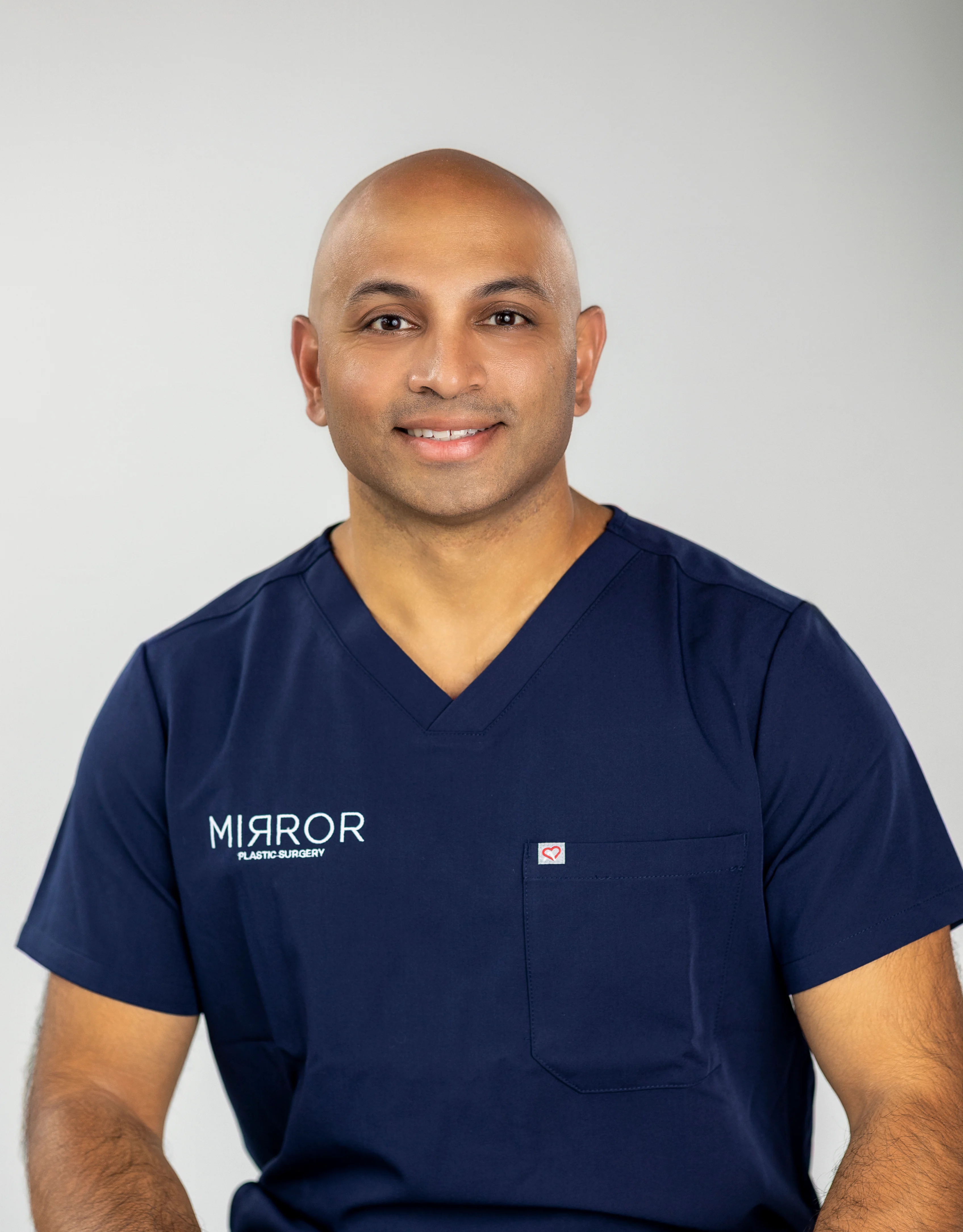
The practice also follows a safety-first, function-second, aesthetics-third framework, supported by hour-long consultations and a low patient-to-physician ratio. Mirror Plastic Surgery remains supplier-neutral and focuses on the right treatment for your anatomy rather than upselling or meeting quotas. The goal is a long-term partnership that supports maintenance and lasting results.
Schedule a consultation to experience physician-led laser care tailored to your needs.
Frequently Asked Questions
Is Laser Hair Removal Safe For The Pubic Area?
Laser hair removal is FDA-cleared for permanent hair reduction and is considered safe for the pubic area when a qualified professional uses the correct laser for your skin type. The main risks, such as burns, pigmentation changes, and scarring, usually relate to incorrect laser selection or undertrained providers. A physician-led practice reduces these risks through accurate Fitzpatrick skin typing, test patches, and calibrated settings. At Mirror Plastic Surgery, Dr. Akash’s surgical background in anatomy adds another layer of precision and safety.
How Many Sessions Will I Need?
As covered above, most patients need 6–8 sessions spaced 4–8 weeks apart for the level of reduction discussed earlier, and some hormonally influenced or darker skin types may need 10 or more. Hormonal changes, including pregnancy, menopause, and certain medications, can stimulate new follicular activity over time, so 1–2 annual maintenance sessions are common. Your exact session plan is customized during your consultation at Mirror Plastic Surgery.
How Much Does Pubic Laser Hair Removal Cost?
Brazilian laser hair removal costs vary with geographic location, provider credentials, and technology. Physician-led practices usually charge more than chain med spas because they offer a higher standard of care and oversight. Package pricing often lowers the per-session cost by 15–25%. Mirror Plastic Surgery provides individualized pricing after a consultation with Dr. Akash so your quote reflects your anatomy and goals rather than a generic menu price.
Can Men Get Laser Pubic Hair Removal?
Men increasingly choose laser pubic hair removal, and the treatment is safe and effective when the provider understands male anatomy. Male pubic hair is typically coarser and denser than female pubic hair, so many men need 6–10 sessions. The scrotal area has thinner, more sensitive skin and requires conservative settings and careful technique. At Mirror Plastic Surgery, Dr. Akash’s surgical training supports anatomically appropriate, safe treatment across all male pubic treatment zones.
Will My Pubic Hair Grow Back?
Laser hair removal provides permanent reduction rather than complete removal. After a full series, most patients experience a significant drop in hair density and regrowth, and any returning hair is usually finer and lighter.1 Hormonal changes from PCOS, pregnancy, menopause, or other endocrine shifts can trigger new follicular activity in treated areas. For that reason, 1–2 annual maintenance sessions help sustain results. The FDA-cleared term for laser outcomes is “permanent hair reduction,” defined as a long-term, stable reduction in the number of hairs regrowing at 6, 9, and 12 months after treatment.
Does It Hurt?
Most patients rate laser pubic hair removal at 2–4 out of 10 for general body areas, and the pubic region often feels more intense because of thinner skin and higher nerve density. The sensation feels like a rubber-band snap. At Mirror Plastic Surgery, discomfort is reduced through advanced cooling, topical lidocaine numbing cream applied 30–60 minutes before treatment, and conservative settings tailored to your tolerance. Pain usually drops with each session as hair thins and follicular density decreases, and many patients skip numbing for later treatments.
Conclusion: Your Path To Smooth, Confident Skin
Laser pubic hair removal offers a safe, effective, and cost-conscious path to long-term hair reduction when a qualified physician uses the correct laser for your skin and hair. The pubic area needs specialized expertise because of its sensitivity, hormonal influences, and anatomical complexity. Choosing a board-certified plastic surgeon like Dr. Akash Chandawarkar at Mirror Plastic Surgery turns the process into a predictable, comfortable, and results-focused investment.
Take the next step toward long-term confidence by contacting Mirror Plastic Surgery in St. Petersburg, FL, to schedule your personalized consultation with Dr. Akash.
- Address: 780 4th Ave S, St. Petersburg, FL 33701
- Phone: 727-361-6515
- Email: hello@mirrorplasticsurgery.com
- Instagram: @mirrorplasticsurgery
Book your consultation at Mirror Plastic Surgery and experience physician-led care.
Disclaimer: Results may vary from person to person. Editorial content, before and after images, and patient testimonials do not constitute a guarantee of specific results.
1 Results may vary from person to person. Editorial content, before and after images, and patient testimonials do not constitute a guarantee of specific results.