

Written by: Dr. Akash Chandawarkar, Board Certified Plastic Surgeon, Mirror Plastic Surgery | Last updated: September 9, 2026
Key Safety Takeaways for Laser Hair Removal
- Laser hair removal is safe when a qualified professional uses FDA-cleared devices with settings tailored to your skin type and hair color. Serious complications are rare.
- Common side effects such as redness and swelling are mild and temporary. They usually resolve within hours to a few days with simple aftercare.
- Provider expertise is the most important safety factor. Florida law requires physician supervision, and board-certified plastic surgeons like Dr. Akash Chandawarkar deliver the highest standard of care.
- Thorough screening, including Fitzpatrick skin type assessment and medical history review, prevents most complications and guides the right laser choice for each patient.
- Schedule your personalized safety assessment at Mirror Plastic Surgery to experience concierge-level laser hair removal care in the St. Petersburg and Tampa Bay area.
What the Research Says About Laser Hair Removal Safety
Laser hair removal is safe when a trained professional uses FDA-cleared devices and settings matched to your skin type and hair color. Most side effects are mild and short-lived. Serious complications are uncommon and usually occur when inexperienced providers use incorrect techniques.
Laser hair removal devices are FDA-cleared via the 510(k) pathway for “permanent hair reduction,” which confirms safety and effectiveness when used correctly. The lasers operate at wavelengths of 755–1064 nm in the visible-to-near-infrared spectrum and emit non-ionizing light that cannot damage DNA, so current evidence does not link laser hair removal to cancer.
A 2026 prospective multi-center study in Lasers in Surgery and Medicine (Ugonabo et al.) followed 53 subjects with Fitzpatrick skin types I–VI and reported 6 treatment-related adverse events in 6 patients (11.3%), none of which were serious. A 2026 study in the Journal of Cosmetic Dermatology (Fernández Santos et al.) found that common transient effects such as erythema, perifollicular edema, and irritation resolved on their own. The American Academy of Dermatology (AAD) notes that side effects are rare when a dermatologist performs or directly supervises treatment and warns that the procedure “can be dangerous in inexperienced hands.”
Common Side Effects: What the Data Shows
The 2026 Ugonabo et al. study provides detailed incidence data, documenting the following across 230 treated sites from 53 patients:
- Erythema (redness): Trace to mild in 51.1% of treatment areas, with marked erythema in only 0.28%.
- Perifollicular edema (swelling around follicles): Trace to mild in 36.5% of areas, with marked edema in only 0.46%.
- Discomfort or pain: Mean pain score of 2.63 on a 0–10 scale during treatment.
- Temporary pigment changes: More common in darker skin types, up to 19% with shorter-wavelength devices compared with 2–3% with Nd:YAG lasers.
- Resolution timeline: Most effects resolve within a few hours to 2–3 days with appropriate aftercare.
Simple aftercare helps your skin recover quickly and comfortably.
- Apply cool compresses to calm redness and swelling.
- Use aloe vera or a soothing fragrance-free cream.
- Avoid sun exposure, hot showers, saunas, and exercise for 48 hours.
- Apply SPF 30+ sunscreen to any treated area exposed to daylight.
- Keep all recommended follow-up sessions so your provider can monitor your skin.
Most patients experience only these mild effects. A smaller group may face less common complications, which careful technique can often prevent.
Rare Risks and How Providers Prevent Them
Serious complications are uncommon in physician-supervised settings. The 2026 Ugonabo et al. study reported treatment-related adverse events at only 5 of 230 treated sites, all mild or moderate. Documented rare risks include:
- Burns and blistering: Usually linked to incorrect settings or recently tanned skin and largely preventable with proper training.
- Scarring: Very uncommon and typically associated with overtreatment or poor technique, which highlights the importance of provider skill.
- Pigment changes: Hyperpigmentation or hypopigmentation can occasionally be permanent, especially in darker skin or with sun exposure.
- Eye injury: Preventable with wavelength-specific protective eyewear and proper ocular shields near the eyelids.
- Paradoxical hypertrichosis: Occurs in about 3% of cases, almost entirely on the face and neck, and often improves with continued treatment.
As Dr. Akash Chandawarkar explains: “As a board-certified plastic surgeon, I recommend patients understand that the laser is only as safe as the person operating it. Proper training, correct settings, and protective protocols eliminate most serious risks.”
Who Should Avoid Laser Hair Removal
Certain conditions make laser hair removal inappropriate or unsafe, so full disclosure of medical history and medications is essential. Evidence-based contraindications include:
- Pregnancy: Most providers defer treatment because hormonal shifts alter hair growth and make results unpredictable.
- Active skin infections, eczema, or psoriasis flare-ups in the treatment area.
- Recent tanning or significant sun exposure within 2–4 weeks: raises burn risk across all skin types.
- Photosensitizing medications: including doxycycline and other tetracyclines, some diuretics, and St. John’s wort.
- Isotretinoin (Accutane): wait at least 6 months after stopping before treatment.
- History of keloid scarring.
- Very light hair (blonde, gray, red, white): insufficient melanin for the laser to target effectively.
- Suspicious lesions or prior skin cancer in the treatment area, which require dermatologist clearance first.
Matching Laser Type to Skin Type and Hair Color
Safety and results depend heavily on Fitzpatrick skin type (I–VI) and hair color. Using the wrong device can waste money, reduce effectiveness, or cause pigment changes that take months to fade. Clinical evidence supports the following wavelength choices:
- Fitzpatrick I–III (fair to light-medium skin): Alexandrite (755 nm) and diode (810 nm) lasers provide effective treatment with low risk.
- Fitzpatrick IV–V (medium to dark skin): Nd:YAG (1064 nm) is preferred because its longer wavelength penetrates 5–7 mm into the dermis while limiting epidermal melanin absorption.
- Fitzpatrick VI (deeply pigmented skin): the 1064 nm Nd:YAG is the only commonly used wavelength considered appropriate, with conservative fluence and strong cooling.
- Hair color: dark, coarse hair responds best, while blonde, red, gray, or white hair usually does not respond well.
A 2026 prospective study showed that dual-wavelength systems using customized Alexandrite-to-Nd:YAG ratios achieved 84.6% hair reduction with simultaneous emission and low adverse-event rates across skin types I–VI.1 At Mirror Plastic Surgery, providers assess your Fitzpatrick type and hair characteristics before selecting a device.
How to Choose a Safe Laser Hair Removal Provider
Provider qualifications directly influence your safety and results. Florida classifies laser hair removal as a medical procedure, so only physicians, PAs, APRNs under delegated authority, and licensed electrologists under physician supervision may perform it. Cosmetologists and estheticians cannot legally perform it in Florida. Use this research-based checklist when evaluating a clinic:
- Verify board certification: the AAD recommends choosing a board-certified dermatologist for laser hair removal.
- Confirm who performs treatment: ask whether a physician, PA, or supervised electrologist will treat you and review their training.
- Ask about experience with your skin type: the provider should reference your Fitzpatrick type and explain their laser choice. If they cannot, choose another provider.
- Ensure FDA-cleared devices: request the device brand and model and confirm clearance in the FDA 510(k) database.
- Expect a thorough consultation: this should include medical history, skin assessment, a patch test, and a clear review of risks and benefits.
- Watch for red flags: skipped medical history, no patch test, pressure for same-day treatment, “guaranteed permanent results,” or refusal to share device details all suggest poor safety practices.
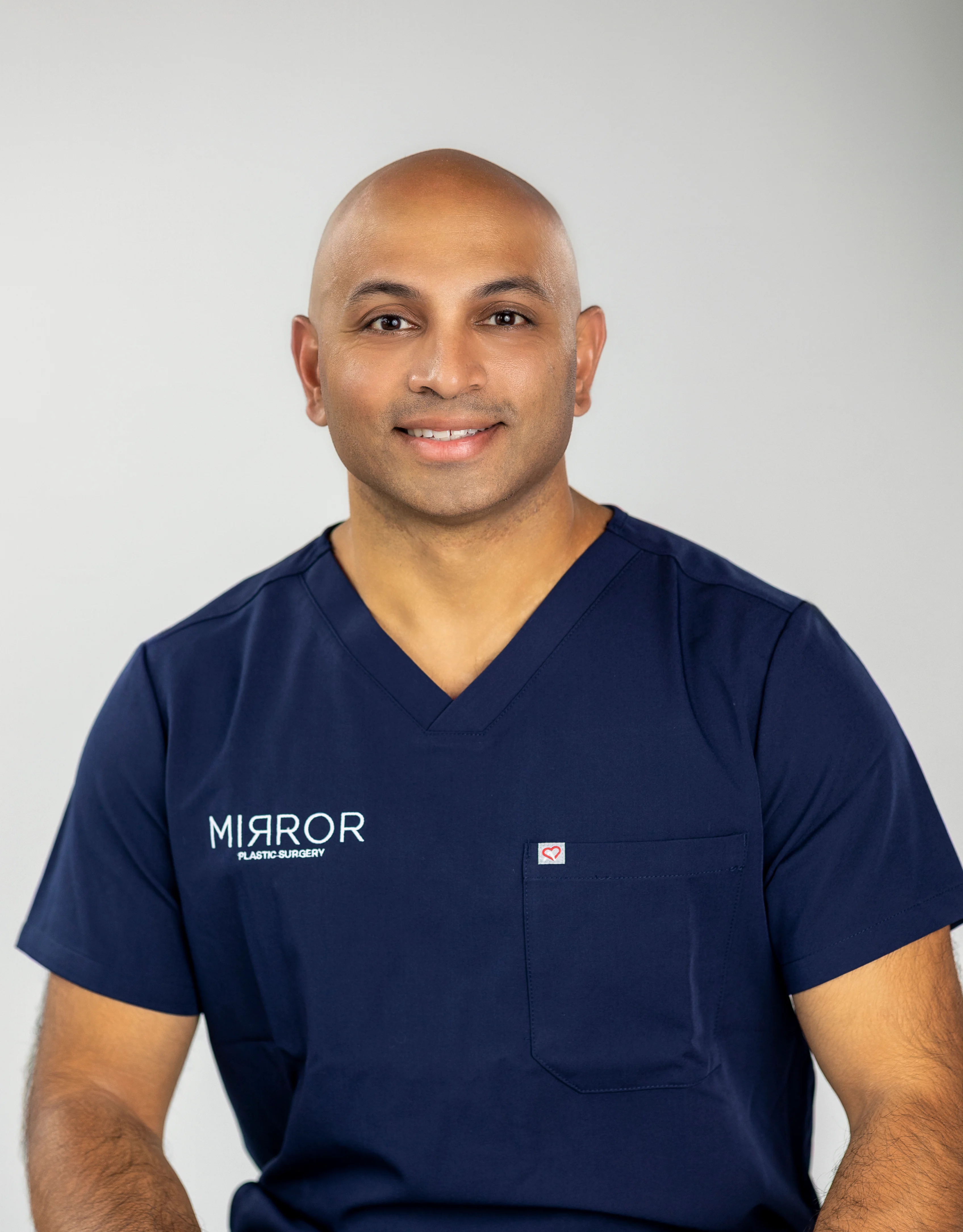
Dr. Akash Chandawarkar is a board-certified plastic surgeon with Harvard education and Johns Hopkins training who personally performs or supervises all laser treatments at Mirror Plastic Surgery. His concierge approach places patient safety ahead of speed or volume. Each patient receives up to an hour in consultation, including detailed skin-type assessment and a customized plan.
What to Expect Before, During, and After Treatment
Preparation, in-office care, and aftercare all work together to keep your treatment safe and comfortable.
Before treatment: Proper prep reduces burn risk and improves results.
- Avoid UV exposure and tanning for at least 4–6 weeks so your skin is at its natural tone.
- Stop waxing, plucking, and threading for 4–6 weeks, because these remove the hair root that the laser targets. Shaving is allowed and encouraged.
- Pause retinoids and exfoliating acids on the treatment area for 1 week to avoid extra sensitivity.
- Shave the area with a fresh blade 24–48 hours before treatment so the laser can focus energy at the follicle.
- Share all medications and your full medical history with your provider.
During treatment: The visit is brief and structured for safety.
- Both you and your provider wear protective eyewear.
- The provider adjusts settings based on your Fitzpatrick type and hair characteristics.
- Most people describe the sensation as warm pinpricks or a quick rubber band snap on the skin.
After treatment: Gentle care supports healing.
- Use cold compresses for the first 48 hours and avoid heat from hot showers, saunas, and exercise for two days.
- Apply broad-spectrum SPF 30+ sunscreen to any treated area exposed to daylight.
- Expect treated hairs to appear to grow for 5–14 days, then shed. This represents normal shedding, not new growth.
Laser hair removal reduces hair long term rather than eliminating every follicle forever. Most patients see a 70–90% reduction in visible hair after a full series of 5–8 sessions, and regrowth tends to be finer and lighter.1 Many people need 6–8 sessions spaced 4–8 weeks apart, depending on the area and hormonal influences.
Addressing Cancer, Fertility, and Regret Concerns
Cancer risk: Laser hair removal uses non-ionizing radiation that cannot break DNA bonds or cause the mutations that lead to cancer. Confusion often comes from grouping cosmetic lasers with radiation therapy, which uses ionizing radiation at very different energy levels. A study in Lasers in Medical Science found that laser or IPL at typical cosmetic settings does not cause skin cancer or increase melanoma risk.
Infertility concerns: Current evidence does not show any effect on reproductive organs. The laser’s thermal effect remains confined to the skin and does not reach internal organs.
Regret stories: Many negative experiences trace back to poor provider selection rather than the procedure itself. A 2026 study reported that 100% of participants would recommend laser hair removal, with 84.62% satisfied and 7.69% very satisfied at 6-month follow-up.
Long-term safety: A widely cited review by Lim and Lanigan in Lasers in Medical Science (2006) examined the two largest safety studies and found low adverse-effect rates, mostly “transient and minor,” with no long-term side effects or scarring. A 2026 study confirmed no unexpected adverse effects at 2- and 6-month follow-ups.1
Why Mirror Plastic Surgery Prioritizes Laser Safety
Mirror Plastic Surgery, located at 780 4th Ave S, St. Petersburg, FL 33701, serves the greater Tampa Bay area with a concierge model of care. The practice emphasizes patient safety before functional and aesthetic goals. Dr. Akash Chandawarkar brings a rare combination of training to every laser session:
- Board-certified by the American Board of Plastic Surgery
- Harvard-educated physician and Johns Hopkins-trained plastic surgeon
- Fellowship-trained in aesthetic surgery at Manhattan Eye Ear & Throat Hospital (MEETH)/Lenox Hill Hospital
- Medical innovation training at Stanford University
- Personally performs or supervises all laser procedures
Mirror Plastic Surgery limits itself to one to two procedures per day so the team can focus fully on each patient before, during, and after treatment. Consultations can last up to an hour and include detailed skin-type assessment, medical history review, and a realistic discussion of expected results.
To learn more or schedule a consultation, contact Mirror Plastic Surgery at 727-361-6515, email hello@mirrorplasticsurgery.com, or visit the practice at 780 4th Ave S, St. Petersburg, FL 33701.
Frequently Asked Questions
Is Laser Hair Removal Safe for the Face?
Laser hair removal is safe for the face when a qualified professional uses settings tailored to your skin type. Facial skin needs careful wavelength selection and precise fluence. Patients with a history of cold sores (herpes simplex) should tell their provider before facial treatment, because heat can trigger an outbreak and providers often prescribe a short antiviral course. Treatment near the eyelids requires specialized ocular shields rather than standard eyewear and belongs in the hands of an experienced clinician. At Mirror Plastic Surgery, Dr. Akash Chandawarkar’s surgical knowledge of facial anatomy guides every facial laser plan.
Is Laser Hair Removal Safe at Home?
At-home laser and IPL devices are generally safe when used as directed, but they are far less powerful than clinical systems and still carry risks if misused. Home devices work best for touch-ups between professional sessions instead of serving as a complete treatment course. Most consumer devices are not suitable for darker skin types (Fitzpatrick IV–VI) because they lack the wavelength control and cooling needed for higher melanin levels. Always follow manufacturer instructions, including built-in skin-tone checks. For your initial series, a physician-supervised clinic offers stronger results and a more controlled safety environment.
Is Laser Hair Removal Permanent?
The FDA clears laser devices for “permanent hair reduction,” which reflects real-world outcomes. As noted earlier, most patients see a 70–90% reduction in hair density after a full series of sessions, and any regrowth tends to be finer and lighter.1 Electrolysis remains the only method the FDA recognizes as truly permanent hair removal. Hormonal factors such as polycystic ovarian syndrome (PCOS) can continue to recruit new follicles, so areas like the chin, upper lip, and bikini line may need periodic maintenance. A consultation at Mirror Plastic Surgery sets expectations based on your hair pattern and hormonal profile.
What Are the Risks of Laser Hair Removal?
Common side effects include temporary redness, swelling around hair follicles, and mild treatment discomfort, which usually resolve within hours to a few days. Rare risks include burns, blistering, scarring, and pigment changes such as hyperpigmentation or hypopigmentation. A trained professional can prevent most of these issues by choosing appropriate settings for your skin type. Paradoxical hypertrichosis, or increased hair growth in or near the treated area, occurs in about 3% of cases and appears most often on the face and neck. Proper protective eyewear prevents eye injury. Serious complications remain uncommon in physician-supervised settings and tend to occur when unqualified providers use incorrect settings.
How Many Sessions Will I Need?
Many patients need 6–8 sessions spaced 4–8 weeks apart, depending on the area, hair characteristics, and hormonal influences. Laser energy only affects follicles in the active growth (anagen) phase, and only a portion of follicles are in that phase at any time. Facial and hormonally active areas such as the chin, upper lip, and bikini line often require extra sessions or occasional maintenance. Patients with conditions like PCOS usually need more treatments than the standard range. At Mirror Plastic Surgery, Dr. Chandawarkar provides an individualized session estimate based on your Fitzpatrick type, hair density, and goals.
Conclusion: The Safety Verdict on Laser Hair Removal
Current evidence shows that laser hair removal is safe when a qualified professional uses FDA-cleared devices and protocols tailored to the patient’s skin type and hair color. Common side effects are mild and short-lived. Serious complications are rare and largely preventable with careful provider selection, thorough screening, and adherence to evidence-based settings. Research supports a strong long-term safety record, with no evidence that treatment causes cancer or affects fertility.
Provider expertise remains the key variable. At Mirror Plastic Surgery, Dr. Akash Chandawarkar’s board certification, Harvard education, Johns Hopkins training, and concierge approach ensure highly personalized, physician-directed care for patients in the St. Petersburg and Tampa Bay area.
Disclaimer: Results may vary from person to person. Editorial content, before and after images, and patient testimonials do not constitute a guarantee of specific results.
1 Results may vary from person to person. Editorial content, before and after images, and patient testimonials do not constitute a guarantee of specific results.


