
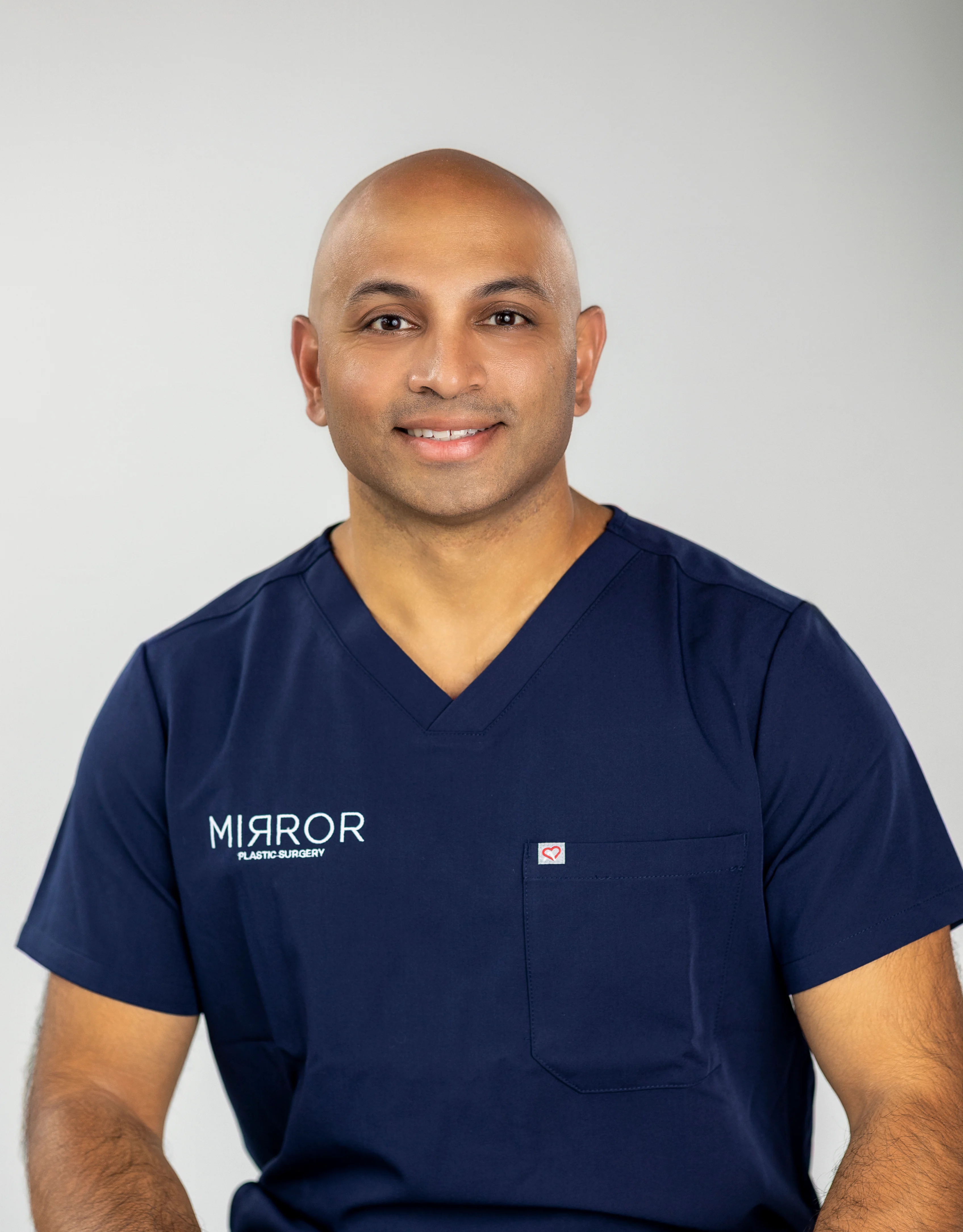
Written by: Dr. Akash Chandawarkar, Board Certified Plastic Surgeon, Mirror Plastic Surgery | Last updated: September 9, 2026
Key Takeaways
- Laser hair removal usually takes 6–8 sessions over several months, and most people need yearly maintenance.1
- Results depend heavily on hair and skin color. Blonde, red, gray, or white hair responds poorly, and darker skin tones have higher risks of burns and pigment changes.1
- Most side effects are mild and temporary, but rare complications like burns, scarring, and paradoxical hypertrichosis can occur, especially with inexperienced providers.1
- Cost and time add up. Many patients spend more than $1,000 and stop early because of expense or unmet expectations.
How To Think About The Main Cons Of Laser Hair Removal
Before you commit, weigh the tradeoffs of laser hair removal against your goals, budget, and tolerance for risk. The biggest drawbacks involve time, cost, permanence, color limitations, and side effects. Each of these factors should play a role in your decision.
- Multiple sessions required – typically 6–8 treatments spaced 4–8 weeks apart to target hairs in different growth phases.
- Permanent reduction only – laser achieves permanent reduction, not complete removal. Maintenance sessions are typically needed annually.
- Color limitations – lasers target melanin, so blonde, red, gray, or white hair responds poorly.
- Skin tone risks – darker skin tones have higher risks of burns and pigment changes, though newer Nd:YAG lasers improve safety.
- Side effects – temporary redness, swelling, and discomfort are common. Rare complications include burns, scarring, and paradoxical hypertrichosis (increased hair growth).
- Cost accumulates – multiple sessions plus maintenance create a significant financial commitment with no guarantee of complete clearance.
- Strict preparation – sun avoidance and shaving protocols apply for weeks before and after each session.
The Cost And Time Commitment: What The Research Shows
Clinical evidence shows that most patients need 6–8 sessions for meaningful, lasting hair reduction.1 Sessions are spaced 4–8 weeks apart to catch follicles in the active anagen phase. A 2026 study in the Journal of Cosmetic Dermatology across 13 body areas found that 8 sessions produced hair clearance rates of 83–91%, depending on technique.1 A typical 8-session course takes about 6–9 months to complete,1 with timing influenced by body area and individual factors.
The financial burden often becomes a barrier. In a 2026 survey of 110 US adults, 67% cited cost or lack of insurance coverage as a barrier, 63% spent more than $1,000 out of pocket, and 38% stopped treatment early, most often because of cost. Many people invest in several sessions yet never finish the full course, which limits their results.
Discount, high-volume clinics can seem appealing but often create new problems. Inexperienced operators may choose incorrect settings for your skin type, which can lead to poor results or complications that later require expensive corrective care. Mirror Plastic Surgery addresses this risk with a concierge model that limits daily procedures and focuses on detailed, physician-led assessment at every visit.
Why Results Fade Over Time
The FDA distinguishes permanent hair reduction from permanent hair removal. Laser hair removal is cleared for permanent reduction, defined as a statistically significant drop in terminal hair count at 12 months after treatment. Electrolysis remains the only FDA-recognized method for permanent hair removal.
Hair grows in three phases: anagen (active growth), catagen (transition), and telogen (resting). Laser energy only damages follicles in anagen, when the hair shaft holds enough melanin to absorb light. Because only a fraction of follicles are in anagen at any time, several sessions are needed to treat the full follicle population. The procedure permanently reduces active follicles but cannot guarantee that every follicle stays inactive forever.
Hormonal shifts such as pregnancy, menopause, thyroid disease, and polycystic ovarian syndrome (PCOS) can recruit new follicles from precursors. Hormonally active areas like the chin, upper lip, and bikini line often need extra sessions or periodic touch-ups. Most patients should plan on maintenance once or twice a year as part of long-term hair management.
Skin And Hair Color Limitations
Laser hair removal works through selective photothermolysis. Light energy is absorbed by melanin in the hair follicle and converted to heat, which disables the follicle. Melanin comes in two main forms: eumelanin (dark brown or black pigment) and pheomelanin (red or blonde pigment). Eumelanin absorbs near-infrared and visible light far more efficiently, so darker hair responds most predictably. Blonde, red, or grey hair absorbs laser energy less efficiently, which makes outcomes less reliable. Gray hair contains sparse, reduced melanin, and white hair is almost devoid of melanin, with only occasional residual pigment.
For darker skin tones (Fitzpatrick types IV–VI), the laser also interacts with melanin in the surrounding skin. A review in Lasers in Medical Science (Lim & Lanigan, 2006) reported pigment changes in up to 19% of cases with shorter-wavelength devices, compared with 2–3% using the longer-wavelength Nd:YAG laser (1064 nm), which bypasses more epidermal melanin.
Modern platforms and Nd:YAG lasers have expanded safe treatment options for Fitzpatrick types IV–VI. Even with these advances, results in darker skin remain less predictable than in light skin with dark hair. Patients with very dark skin have fewer device options and benefit from careful laser selection and realistic counseling. The most favorable candidates still tend to have lighter skin and dark, coarse hair.
Side Effects And Risks: What Clinical Data Shows
Perifollicular edema and erythema are the most common early reactions. They usually resolve within 2–24 hours. A 2026 Journal of Cosmetic Dermatology study found transient erythema and perifollicular edema in about 20% of participants, resolving within 24 hours, with no burns, pigment changes, blistering, or scarring.1 Case series report that 92–96% of properly counseled patients experience no side effects beyond expected redness over a six-session course.1
Post-inflammatory hyperpigmentation occurs in about 2–4% of melanin-rich skin (Fitzpatrick IV–VI) when treated conservatively.1 Paradoxical hypertrichosis, a rare increase in hair density at the edges of treated areas, appears in well under 1% of patients overall and is reported more often in Mediterranean and South Asian women, especially on the face and lateral neck. Blistering can occur at higher fluences, and pustular folliculitis may appear 48–72 hours after treatment.
Serious complications such as burns, scarring, and permanent pigment changes are largely preventable. Three common triggers for post-inflammatory hyperpigmentation include excessive fluence, a pre-existing tan, and sun exposure after treatment. Risks drop when a physician personally controls the handpiece and adjusts fluence in real time instead of delegating decisions to a technician. This difference defines physician-led care and separates a medical procedure from a salon service.
Why Some People Regret Laser Hair Removal
A 2026 cross-sectional study of 400 dermatology patients found that overall anxiety about laser hair removal was low, but 32.2% reported moderate-to-severe anxiety, and only 39.5% had adequate knowledge about the procedure.1 Misconceptions shaped how people viewed risk, delayed treatment, and interpreted normal effects as problems.
Based on patient reports and clinical experience, regret usually comes from four sources:
- Results that do not match expectations, especially when patients assume “permanent” means “no hair ever again.”
- High cost without complete clearance, including ongoing maintenance.
- Pain during treatment, which varies by technique and body area.
- Unexpected side effects, particularly paradoxical hypertrichosis on the face.
Adequate knowledge about laser hair removal is independently linked to lower anxiety, so informed patients feel calmer about their decision. A 2026 Journal of Cosmetic Dermatology study reported that 92% of patients were satisfied or very satisfied at 6-month follow-up, and 100% would recommend the procedure.1 These patients all received thorough counseling and physician-led care. Mirror Plastic Surgery mirrors this approach with a top-to-bottom assessment that can take up to an hour and covers your goals, medical history, and emotional drivers before any treatment begins.
Arrange a candidacy and expectations consult with Ellie so you can decide without regret later.
Who Is Not A Good Candidate For Laser Hair Removal
Clear contraindications include pregnancy, active infections at the treatment site, and a history of keloid scarring. Patients with photosensitivity disorders or active herpes simplex at the treatment site need physician clearance before proceeding.
Oral isotretinoin (Accutane) requires at least a 6‑month gap before starting laser hair removal, because it makes skin more fragile and increases the risk of scarring and pigment change. Photosensitizing antibiotics, some antidepressants, certain diuretics, and herbs like St. John’s wort also require disclosure and possible setting adjustments. Gold-based medications remain a permanent contraindication because of chrysiasis risk.
A physician-led consultation protects you from these issues. A board-certified surgeon can identify contraindications, review your full medication list, and match your skin type and hair characteristics to the right device and settings. Medication screening should happen before every session, because new prescriptions or supplements can change your risk profile. Mirror Plastic Surgery reviews your medical history at each visit, not just the first.
Questions To Ask Your Laser Hair Removal Provider
Arrive at your consultation with a clear checklist. These questions help you gauge expertise and safety:
- “How many sessions will I need for my skin type and hair color?” A qualified provider tailors the estimate to your features instead of offering a generic package.
- “What are the specific risks for my Fitzpatrick skin type?” They should clearly explain pigment and burn risks for your tone.
- “What laser wavelength will you use, and why is it appropriate for my skin?” The answer should reference your skin type and hair characteristics.
- “How do you handle complications like burns or pigment changes?” Look for a clear, medical protocol and access to physician care.
- “Can you show me before-and-after photos of patients with similar skin and hair to mine?” This confirms real experience with your profile.
- “Who will actually perform my treatment?” Ideally, a physician or highly trained clinician works under direct physician supervision.
Frequently Asked Questions
Do People Ever Regret Laser Hair Removal?
Some people do. Regret usually relates to unrealistic expectations about permanence, the total cost without full clearance, unexpected side effects such as paradoxical hypertrichosis, or pain during treatment. Research shows that better knowledge about the procedure lowers anxiety, even though current data does not directly link knowledge to satisfaction. Patients who receive detailed, physician-led counseling before starting tend to report the highest satisfaction.
Why Am I More Hairy After Laser?
This rare outcome often reflects paradoxical hypertrichosis, a documented increase in hair density at the edges of treated areas. As discussed in the side effects section, it occurs in well under 1% of patients overall and appears more often in Mediterranean and South Asian women, especially on the face and lateral neck. It is more common with IPL devices and certain skin types. If you notice this pattern, contact your provider promptly to adjust your plan or consider alternatives.
How Long Does Laser Hair Removal Last?
Laser hair removal provides permanent hair reduction rather than complete removal. Studies show significant reduction at 12 months, but many people need yearly maintenance. Hormonal changes, including pregnancy, menopause, and PCOS, can stimulate new growth, especially on hormonally active areas like the chin, upper lip, and bikini line. Plan for periodic touch-ups as part of your long-term strategy.
Can Laser Hair Removal Cause Cancer?
Laser hair removal uses non-ionizing light at wavelengths of 755–1064 nm, which cannot break DNA bonds or cause the mutations that lead to cancer. These photons carry far less energy than X-rays. The real risks involve burns, blistering, or pigment change from incorrect settings, not cancer or fertility problems. No credible evidence links laser hair removal to cancer or infertility.
Is Laser Hair Removal Safe On The Face?
Facial laser hair removal can be safe with a qualified provider, but it needs extra caution. The face is hormonally active, so results may fade faster and require more maintenance. Paradoxical hypertrichosis appears more often on the face, particularly in women with Mediterranean or South Asian backgrounds. A physician-led consultation helps determine whether your skin type, hair color, and hormonal history make you a suitable candidate.
The Bottom Line: Making An Informed Decision
Laser hair removal has real downsides, including multiple sessions, significant cost, non-permanent results, color limitations, possible side effects, and the potential for regret. At the same time, research shows that many patients are happy with their outcomes when they receive proper counseling and physician-led care. Standardized, physician-led protocols reduce adverse events such as burns, hyperpigmentation, and irritation while improving satisfaction. The most reliable path involves clear expectations and a provider who values safety over volume.
Mirror Plastic Surgery exemplifies this physician-led standard. Dr. Akash Chandawarkar, the practice’s founder, is a Harvard-educated, Johns Hopkins-trained plastic surgeon with fellowship training in aesthetic surgery. His philosophy places safety first, function second, and aesthetics third. Every patient receives a comprehensive assessment, and the practice limits daily procedures to maintain personalized attention.
Disclaimer: Results may vary from person to person. Editorial content, before and after images, and patient testimonials do not constitute a guarantee of specific results.
1 Results may vary from person to person. Editorial content, before and after images, and patient testimonials do not constitute a guarantee of specific results.