

Written by: Dr. Akash Chandawarkar, Board Certified Plastic Surgeon, Mirror Plastic Surgery | Last updated: September 9, 2026
Key Takeaways
- Waxing removes hair from the root but leaves the follicle intact, so you need repeat sessions every 4–6 weeks indefinitely.
- Laser hair removal damages the follicle with targeted light energy and delivers about 70–90% permanent hair reduction after 6–8 sessions.1
- Over five years, bikini-area laser hair removal costs about $2,350–$2,750 including maintenance, compared to roughly $4,225 for ongoing professional waxing.
- Laser hair removal reduces ingrown hairs and irritation over time, while waxing commonly triggers ingrowns, burns, and post-inflammatory hyperpigmentation.1
- Mirror Plastic Surgery offers physician-supervised laser hair removal for Tampa Bay patients, with personalized plans to determine whether laser is right for you. Book a consultation with Ellie to get started.
How Waxing And Laser Hair Removal Actually Work
Waxing Removes The Hair Shaft, Not The Follicle
Waxing applies heated wax to the skin, then uses cloth strips or hard wax to pull hair out from the follicle, removing the entire hair shaft including the root. Results last three to six weeks because the follicle remains intact and continues to produce new hair. Waxing does not damage the follicle’s ability to regrow hair and simply removes the hair that is present at that moment.
Laser Hair Removal Targets And Disrupts The Follicle
Laser hair removal directs concentrated beams of light at specific wavelengths, commonly Alexandrite (755 nm), diode (810 nm), or Nd:YAG (1064 nm), into the hair follicle. The follicle’s melanin absorbs the light and converts it to heat, which damages the follicle’s ability to produce new hair. The FDA classifies this as “permanent hair reduction”, meaning a long-term, stable reduction in the number of hairs that regrow. Some hair can return over time, especially with hormonal changes. Laser hair removal is a medical procedure that requires professional oversight and a careful candidacy assessment.
Laser Vs. Waxing: Key Differences At A Glance
| Factor | Waxing | Laser Hair Removal |
|---|---|---|
| Mechanism | Pulls hair from root, follicle remains intact | Damages follicle with targeted light energy to inhibit regrowth |
| Result Duration | 3–6 weeks | 70–90% permanent reduction after a full course |
| Session Frequency | Every 4–6 weeks, indefinitely | 6–8 initial sessions, then 1–2 touch-ups per year |
| 5-Year Cost (Bikini Area) | ~$4,225 | ~$2,350–$2,750 including maintenance |
Here are a few more practical differences:
- Pain over time: Waxing causes a sharp pull at every visit with no improvement from session to session. Laser discomfort usually decreases as hair becomes finer and sparser.
- Skin impact: Waxing frequently triggers ingrown hairs. Laser tends to reduce ingrowns over time by weakening the follicle.
- Hair color limits: Waxing works on all hair colors, while laser does not work on blonde, red, gray, or white hair because those hairs lack enough melanin for the laser to target.
Cost And Time Investment Over The Long Term
Comparing Upfront And Ongoing Costs
Waxing looks affordable per visit, but costs add up quickly. At about 13 bikini waxes per year, you spend roughly $845 annually and around $4,225 over five years. When you add legs, underarms, and bikini, professional waxing can reach about $12,000–$18,000 over ten years.
A full bikini-area laser course typically costs about $2,350–$2,750 over five years, including the initial series and one maintenance session per year. Treating common areas together usually totals about $2,000–$4,000 with minimal ongoing maintenance. Laser often becomes more cost-effective than waxing after about two to three years.
Time Commitment For Each Method
Waxing sessions are short, usually 15–45 minutes, but they require regular scheduling, travel, and recovery every four to six weeks for life. Over a decade, that can mean roughly 120–170 waxing appointments.
Laser usually involves 6–8 initial sessions spaced four to eight weeks apart, followed by one or two touch-ups per year. Laser also cuts down on daily or weekly maintenance like shaving between waxes and managing visible regrowth.
Pain And Discomfort During Waxing And Laser
Waxing Pain Feels Like A Strong Rip
Waxing pain feels like a sharp, mechanical ripping as hair is pulled from the root. Pain levels stay similar at every visit because hair grows back with the same thickness. Sensitive areas such as the Brazilian region, underarms, and upper lip usually hurt the most. Redness and tenderness often last 24–48 hours, and follicular swelling can persist up to 72 hours. Ingrown hairs may appear several days later without careful aftercare.
Laser Pain Feels Like A Quick Snap
Most patients describe laser as a brief snapping or stinging sensation, similar to a rubber band on the skin. Modern devices use cooling methods such as cryogen spray or chilled sapphire tips, which help reduce discomfort. A 2026 multi-center clinical study reported an average pain score of 2.63 out of 10 across Fitzpatrick skin types I–VI.1 Discomfort usually decreases with each session as hair becomes finer and sparser.
Effectiveness And Skin Impact For Different Hair Types
Matching Hair And Skin Types To Each Method
Waxing works on all hair colors and all skin types, which is a genuine advantage. Laser targets melanin, so it works best on darker hair. However, modern dual-wavelength systems that combine Alexandrite (755 nm) and Nd:YAG (1064 nm) are FDA-cleared for Fitzpatrick skin types I–VI. These systems make laser safe and effective for darker skin tones when an experienced physician performs the treatment.
The Nd:YAG wavelength is preferred for Fitzpatrick types IV–VI because its longer wavelength bypasses much of the epidermal melanin and lowers the risk of burns and post-inflammatory hyperpigmentation. Blonde, red, gray, or white hair does not contain enough melanin for laser to work well, so waxing or electrolysis usually makes more sense for those hair colors.
Ingrown Hairs And Overall Skin Health
Ingrown hairs are one of the most frequent complaints from regular waxers. One survey found that nearly 60% of women who remove pubic hair experience at least one complication, and about 33% report ingrown hairs. Waxing can cause ingrowns when hair breaks below the skin surface or when repeated trauma irritates the follicle.
Laser hair removal targets the follicle directly and significantly reduces ingrown hairs over time.1 Many patients also notice smoother, calmer skin because they no longer expose the area to frequent waxing, which can cause post-inflammatory hyperpigmentation, especially in darker skin tones.
Side Effects, Risks, And Safety Considerations
Waxing Risks To Be Aware Of
Waxing carries several real risks. Research on commercial wax warmers found surface temperatures above 227°F (108°C), with nearly one-third of readings above 90°C, which represents a clear burn risk. Other complications include skin tearing or lifting, folliculitis, contact dermatitis from wax ingredients, and post-inflammatory hyperpigmentation.
The FDA warns that waxing while on isotretinoin (Accutane), or within six months of stopping it, can cause severe skin damage and scarring because the drug thins the skin and slows healing.
Laser Risks And How To Lower Them
Laser hair removal also has risks, but proper supervision keeps them manageable. The American Academy of Dermatology (AAD) notes that the most common side effects, such as discomfort, swelling, and redness, are mild and last one to three days. More serious issues, including burns, blistering, pigmentation changes, and scarring, are uncommon when a qualified physician performs treatment.
The AAD also warns that laser hair removal can be dangerous in inexperienced hands, with a higher risk of burns, permanent color changes, and scars. The main drawbacks of laser are the upfront cost, the need for multiple sessions, and its ineffectiveness on light-colored hair. The American Society for Dermatologic Surgery reports 95% patient satisfaction, and a 2024 RealSelf survey shows a 92% “Worth It” rating.1 Dissatisfaction usually occurs when unqualified providers treat poor candidates.
Common Reasons You May Need To Delay Laser
Some factors can delay or prevent laser hair removal, which matters especially in sunny Florida. Common contraindications include:
- Active tanning or recent sun exposure, which usually requires two to four weeks of strict sun avoidance before treatment
- Pregnancy, due to limited safety data and increased skin sensitivity
- Active skin infections or open lesions in the treatment area
- Photosensitizing medications, including isotretinoin within the past six months
- History of keloid scarring
Hormonal conditions such as PCOS do not disqualify you, but they usually require more sessions and ongoing maintenance because elevated androgens keep stimulating new follicles.
Book a consultation with Ellie so Dr. Chandawarkar can review your medical history and confirm that laser is appropriate for you.
Choosing Between Laser Hair Removal And Waxing
Your ideal option depends on hair color, skin type, budget, and how permanent you want your results to be. Use this simple guide.
Waxing usually makes sense if:
- You have light blonde, red, gray, or white hair that laser cannot effectively target
- You prefer low upfront cost and feel comfortable with ongoing appointments
- You are currently pregnant or planning pregnancy soon
- You enjoy the salon experience and do not mind the long-term expense
Laser hair removal usually makes sense if:
- You have dark or medium hair and feel tired of the constant waxing cycle
- You struggle with ingrown hairs, folliculitis, or irritation from waxing
- You want lasting hair reduction and long-term savings
- You are ready to commit to 6–8 initial sessions with a qualified physician
- You have sensitive skin that reacts poorly to repeated pulling or friction
An in-person consultation with a qualified provider remains essential before starting laser. Your hair type, skin tone, medications, and sun exposure history all need a careful review, and a test spot may be recommended.
Why Tampa Bay Patients Choose Mirror Plastic Surgery
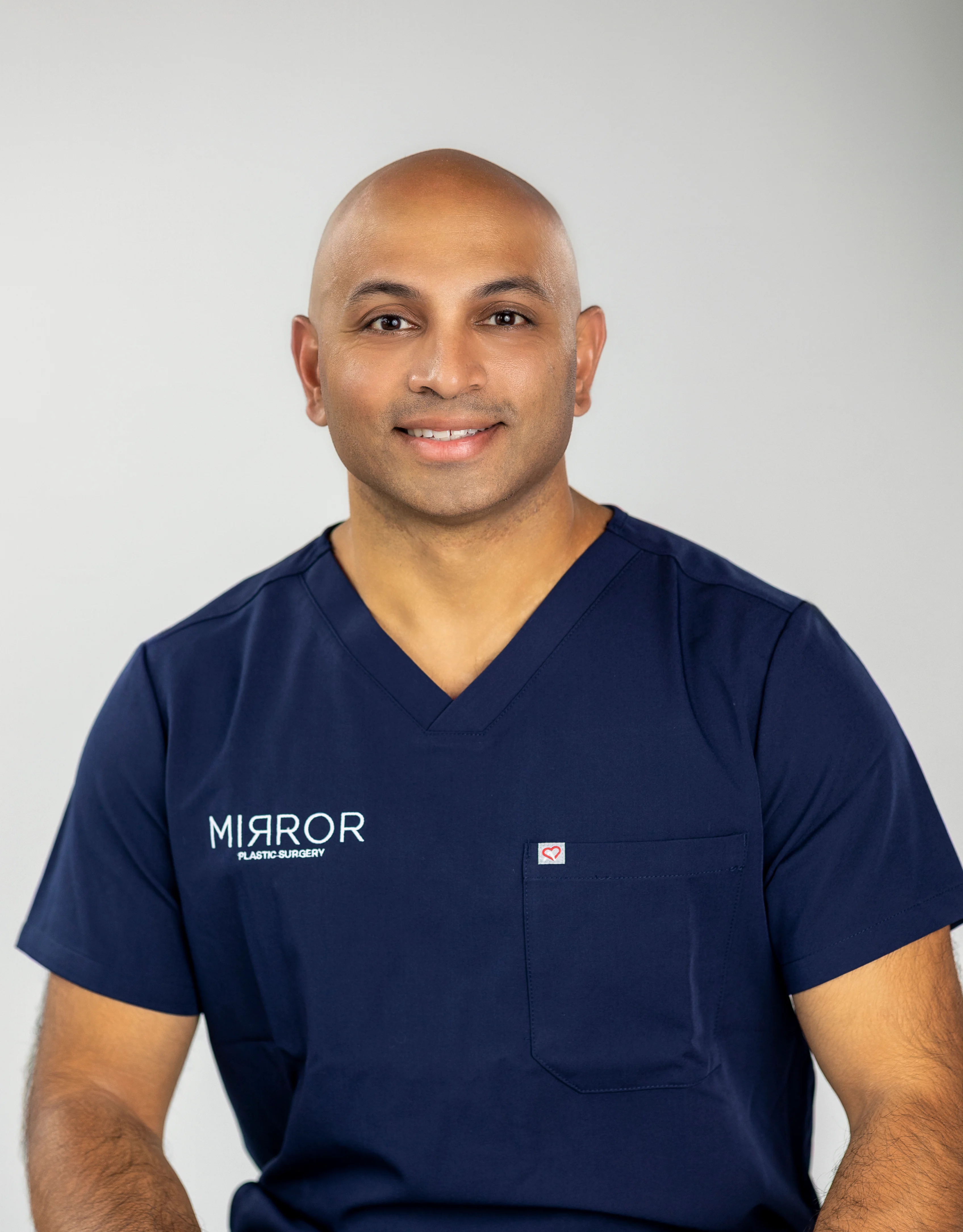
Mirror Plastic Surgery serves the Tampa Bay area from its St. Petersburg office and offers laser hair removal under the direct supervision of Dr. Akash Chandawarkar. He is a Harvard-educated, Johns Hopkins-trained, board-certified plastic surgeon with fellowship training in aesthetic surgery at Manhattan Eye Ear & Throat Hospital (MEETH)/Lenox Hill Hospital.
Laser hair removal at Mirror is a personalized medical service rather than a high-volume spa treatment. The concierge-style approach includes a detailed consultation of up to an hour to assess candidacy, choose the right wavelength for your skin type, and design a tailored treatment plan. This philosophy prioritizes safety, function, and then aesthetics, which differs from many high-volume clinics where technicians with variable training may perform treatments after only a brief screening.
For Tampa Bay residents who face intense sun exposure and a wide range of skin types, physician-supervised laser treatment offers a meaningful safety advantage.
Frequently Asked Questions
Is Laser Hair Removal Better Than Waxing?
Laser hair removal usually works better for people who want long-term hair reduction. Laser hair removal can provide about 70–90% permanent reduction after a full course, while waxing requires appointments every four to six weeks without end.1 Laser does not work on blonde, red, gray, or white hair, so waxing or electrolysis is better for those colors. The right choice still depends on your hair type, skin tone, and goals, which a physician can review with you.
What Are The Negatives Of Laser Hair Removal?
Laser hair removal requires an upfront investment, several sessions, and does not work on light-colored hair. Some patients notice temporary redness and swelling that usually fades within one to three days. Rare complications such as burns, blistering, or pigment changes occur more often when inexperienced providers treat patients or when candidacy is not properly assessed. Choosing a board-certified physician with appropriate equipment and a thorough intake process greatly reduces these risks.
Do People Regret Laser Hair Removal?
Some people feel disappointed when results are incomplete or when they were not ideal candidates. Overall satisfaction remains high. The American Society for Dermatologic Surgery reports 95% patient satisfaction, and a 2024 RealSelf survey shows a 92% “Worth It” rating. Regret tends to appear when light-colored hair is treated, when too few sessions are completed, or when hormonal conditions such as PCOS are not factored into the plan.
Is Laser Hair Removal Safe For All Skin Tones?
Laser hair removal can be safe for all skin tones when the right device and settings are used by a qualified provider. Modern dual-wavelength systems that combine Alexandrite (755 nm) and Nd:YAG (1064 nm) are FDA-cleared for Fitzpatrick skin types I–VI. The Nd:YAG wavelength is preferred for darker skin because it bypasses much of the epidermal melanin and lowers the risk of burns and post-inflammatory hyperpigmentation. IPL devices, which some offices market as laser hair removal, carry a higher risk of pigment issues in darker skin and usually are not appropriate for Fitzpatrick types V–VI.
What Disqualifies You From Laser Hair Removal?
Common reasons to delay or avoid laser include active tanning or recent sun exposure, pregnancy, active infections or open lesions in the treatment area, photosensitizing medications such as isotretinoin within the past six months, and a history of keloid scarring. Hormonal conditions like PCOS call for a modified plan with more sessions and maintenance rather than full exclusion. A physician consultation remains the most reliable way to confirm candidacy.
Making A Confident Choice For Your Skin
Waxing and laser hair removal both have a place in hair management, but they serve different needs. Waxing offers a flexible, temporary option that works for every hair color. Laser hair removal offers longer-lasting, often more cost-effective results for many people when used on the right candidate with the right technology.
For Tampa Bay residents, the most important factor is the expertise guiding your treatment. A board-certified plastic surgeon brings deep knowledge of skin anatomy, a clear understanding of medical contraindications, and the judgment to match each patient with the safest and most effective approach.
Ready To Move Beyond Constant Waxing?
Mirror Plastic Surgery is located at 780 4th Ave S, St. Petersburg, FL 33701, and serves patients throughout the Tampa Bay area. To find out whether laser hair removal fits your skin type, hair color, and goals, schedule a personalized consultation with Dr. Chandawarkar’s team. You can call or text 727-361-6515, or book online below.
Book a consultation with Ellie and take the first step toward long-term hair reduction under physician supervision.
Disclaimer: Results may vary from person to person. Editorial content, before and after images, and patient testimonials do not constitute a guarantee of specific results.
1 Results may vary from person to person. Editorial content, before and after images, and patient testimonials do not constitute a guarantee of specific results.


