
Written by: Dr. Akash Chandawarkar, Board Certified Plastic Surgeon, Mirror Plastic Surgery | Last updated: September 9, 2026
Key Takeaways
- Most people schedule laser hair removal every 4 to 8 weeks and need 6 to 8 sessions for long-lasting reduction.1
- Face and underarms are usually treated every 4 to 6 weeks, while legs, arms, and back are spaced 6 to 8 weeks apart.
- Skin tone, hair color, hair thickness, and hormonal conditions can increase the number of sessions and change maintenance needs.
- Maintenance touch-ups every 6 to 12 months help keep results, with hormone-sensitive areas often needing more frequent visits.
- For a personalized laser hair removal plan, book a consultation with Mirror Plastic Surgery.
Step 1: Why Timing Between Sessions Matters
Laser hair removal works best when hair is in the active growth, or anagen, phase. In this stage, the follicle is attached and rich in melanin, the pigment the laser targets. During the catagen phase, the follicle shrinks and detaches. In the telogen phase, the follicle rests and sheds, so it responds poorly to treatment.
Laser energy primarily damages follicles in the anagen phase, when they are most sensitive. About 80% to 90% of scalp follicles are in anagen at any time, while the rest are in catagen or telogen and resist treatment.
This growth cycle explains why one session cannot clear an area and why spacing sessions correctly is essential. A clinical study showed that 6-week intervals produced an average 81% hair reduction, compared with 57% at 2-week intervals.1 Sessions that are too close together waste treatments on follicles that are not yet treatable. Gaps longer than about 3 months during the initial series allow treated follicles to recover and dormant follicles to cycle through untreated.
Step 2: Recommended Intervals By Body Area
Each body area has its own hair growth rhythm, so ideal timing changes by location. Hormone-sensitive areas such as the face and underarms usually need sessions every 4 to 6 weeks, while bikini areas often follow a 6 to 8 week schedule. Non-hormonal areas like legs, arms, and back are typically treated every 6 to 8 weeks, and some providers lengthen back intervals to 12 to 16 weeks as treatment progresses.
The table below summarizes common clinical reference ranges based on NCBI Bookshelf, peer-reviewed laser medicine literature, and clinical practice guidelines.
| Body Area | Recommended Interval | Typical Sessions Needed |
|---|---|---|
| Face (upper lip, chin) | Every 4–6 weeks | 6–10 sessions |
| Underarms | Every 4–6 weeks (some protocols 6–8 weeks) | 6–8 sessions |
| Bikini / Brazilian | Every 4–6 weeks | 6–8 sessions (bikini), 8–10 sessions (Brazilian) |
| Arms | Every 6–8 weeks (some clinics 4–6 weeks initially) | 6–8 sessions |
| Legs | Every 6–8 weeks | 6–10 sessions |
| Back / Chest | Every 6–8 weeks | 6–10 sessions (back), 6–8 sessions (chest) |
Note: These are general guidelines. Your exact schedule is set during a personalized consultation.
For a custom laser hair removal schedule, book a consultation with Mirror Plastic Surgery.
Step 3: Estimate How Many Sessions You Will Need
Most people need 6 to 8 sessions for significant, long-lasting reduction.1 Several personal factors can raise or lower that number.
Hair color and texture strongly influence results. Dark, coarse hair with high melanin absorbs laser energy well and responds more consistently, especially on lighter skin types (Fitzpatrick I–IV). Fine, light, red, gray, or white hair often contains too little melanin to respond, regardless of the device.
Skin tone also shapes your treatment course. Patients with Fitzpatrick I–III and dark, coarse hair usually respond fastest because contrast between hair and skin is highest. Fitzpatrick IV–VI often require lower energy and longer pulses to protect the skin, which can mean more sessions for similar reduction.
Hormonal influence plays a major role in some areas. Patients with PCOS or other hyperandrogenic conditions often need 8 to 12 sessions or more, plus maintenance every 3 to 6 months. One study of women with PCOS found that average hair reduction after 6 treatments was 31%, but hair-free intervals nearly doubled after 10 treatments, and after about 12 treatments, 31% of patients went longer than 6 weeks without significant regrowth, compared with 2.6% after 6 sessions.
Many patients notice the biggest visible change between sessions 4 and 5, when up to 80% of active follicles have been treated. Laser hair removal provides permanent hair reduction, with typical reductions of about 60% to 90% after a full series.1 The FDA term “permanent hair reduction” describes a lasting decrease in regrowth, not complete removal for every follicle.
Step 4: Plan Maintenance And Touch-Ups
Finishing your initial 6 to 8 sessions sets the foundation, and maintenance keeps results stable. Hormonal shifts from pregnancy, perimenopause, menopause, medication changes, or PCOS can activate dormant follicles and create new growth in treated areas. Aging also changes hormone levels over time.
Most patients maintain results with touch-ups every 6 to 12 months. Hormone-sensitive areas like the face may need 2 to 4 sessions per year. Stable areas like the legs often need only 1 to 2 sessions per year, and some patients go 12 to 18 months or longer between leg touch-ups.
The most reliable signal for a touch-up is your regrowth pattern. Schedule a session when you see clusters of fine or coarse regrowth in a previously clear area, which indicates follicles are back in anagen. A few scattered hairs can be shaved while you watch for patterns.
Many patients maintain smooth results with yearly touch-ups. At Mirror Plastic Surgery, maintenance plans are tailored to your response rather than a fixed calendar.
To design a long-term maintenance plan, book a consultation with Mirror Plastic Surgery.
Step 5: Personal Factors That Change Your Schedule
Several personal variables can shift your ideal timing and total sessions.
Fitzpatrick skin type guides safe laser choice. Nd:YAG (1064 nm) is safest and recommended for darker skin types IV–VI, while alexandrite (755 nm) is preferred for lighter types I–III. Diode lasers (800–810 nm) work across many tones and are also recommended for darker skin. Incorrect wavelength selection is a common cause of pigmentation changes.
Sun exposure affects safety for every skin tone. Avoid sun and tanning beds before treatment, and protect treated areas for six weeks afterward with daily broad-spectrum SPF 30+. Recent tanning increases melanin in the skin and raises the risk of burns or pigment changes.
Pre-treatment preparation helps the laser reach its target. Stop waxing, plucking, threading, and electrolysis for 4 to 6 weeks before treatment, and shave the area 24 to 48 hours before each session. Shaving keeps the follicle in place for the laser. Waxing and plucking remove the root and remove the target.
Hormonal conditions and medications can extend your treatment or increase maintenance needs. A sudden rise in facial hair, for example, may signal a hormonal shift that deserves evaluation before adding more sessions.
A personalized consultation with a board-certified physician accounts for these variables. Schedules that ignore your skin type, hair pattern, and medical history often produce weaker results.
Common Laser Hair Removal Mistakes To Avoid
- Plucking or waxing between sessions: These methods remove the follicle the laser needs. Shaving is the only recommended method between visits because it leaves follicles intact.
- Expecting full results after one session: Each visit treats only follicles in active growth, which is why 6 to 8 sessions are standard.
- Assuming it works on every hair color: Blonde, red, gray, white, and very fine vellus hairs usually lack enough melanin for effective treatment.
- Booking sessions too close together: Weekly or biweekly sessions do not speed results because follicles have not re-entered anagen.
- Stopping the series early: Missing one session does not erase progress, but long gaps during the initial series let treated follicles recover and new ones cycle in. Your provider may suggest an extra session if you fall behind.
Why Work With A Board-Certified Plastic Surgeon
Most online advice about laser hair removal timing comes from med-spas and high-volume clinics, not from board-certified plastic surgeons. That gap can leave patients following generic schedules that ignore their biology.
The founder of Mirror Plastic Surgery in St. Petersburg brings a Harvard education, Johns Hopkins plastic surgery training, and advanced aesthetic expertise to each case. He evaluates Fitzpatrick type, hair pattern, hormonal history, and long-term goals before recommending treatment. He also adjusts settings over time instead of using a one-size-fits-all protocol.
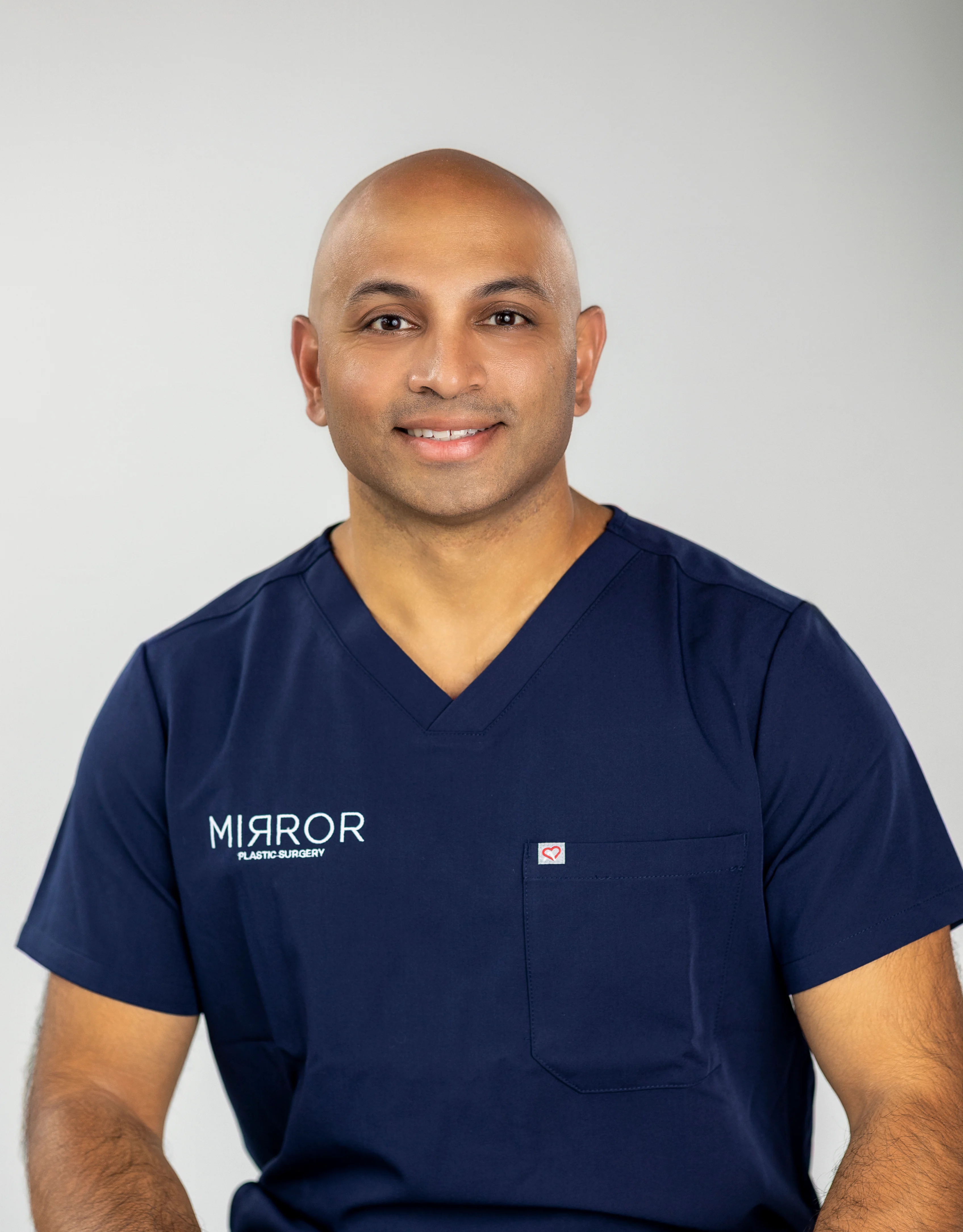
Mirror Plastic Surgery often spends up to an hour in consultation to understand your anatomy, motivations, and medical background. You leave with a plan designed for your skin and hair, not a generic brochure schedule.
Conclusion: Build Your Laser Hair Removal Timeline
Most laser hair removal plans use 4 to 8 week intervals, 6 to 8 initial sessions, and touch-ups every 6 to 12 months. Your exact schedule depends on body area, hair type, skin tone, and hormones.
A consultation with an experienced provider offers the clearest path to a precise, personalized plan. If you are in the St. Petersburg or Tampa Bay area, book a consultation with Mirror Plastic Surgery and take the first step toward smoother, longer-lasting hair reduction.
Frequently Asked Questions
What Happens If I Shave 3 Days After Laser Hair Removal?
Shaving three days after laser hair removal is usually safe once redness and irritation have resolved. Many providers recommend waiting 24 to 48 hours, or up to 72 hours if your skin still feels sensitive. When you shave, use a clean, sharp razor and light pressure. Shaving between sessions is recommended because it manages stubble without disturbing the follicle, unlike waxing or plucking.
Why Do I Look More Hairy After Laser Hair Removal?
Shedding and rare paradoxical hypertrichosis can both make hair look thicker after treatment. In the first two to three weeks, damaged hairs are pushed out of the follicle and can look like new growth, even though they are actually shedding. A rare reaction called paradoxical hypertrichosis can cause true increased hair density in treated areas.
Paradoxical hypertrichosis appears most often on the face and neck, especially in darker skin types III–VI and in people with hormonal imbalances. It occurs in both women and men. If you notice dense, consistent new growth rather than shedding, contact your provider so they can adjust settings or evaluate for hormonal causes.
Can I Get Laser Hair Removal While Pregnant?
Most medical organizations advise avoiding laser hair removal during pregnancy as a precaution. No studies have proven harm to a fetus, but pregnancy hormones change hair growth and skin sensitivity, which can increase side effects and make results unpredictable. Many providers recommend waiting until after pregnancy and, if you are breastfeeding, about 3 to 6 months postpartum. This delay allows hormones and hair cycles to stabilize.
How Long Do Laser Hair Removal Results Last?
After 4 to 6 sessions, many patients see 70% to 90% hair reduction that can last for months or years.1 Laser devices are cleared for “permanent hair reduction,” which means a stable decrease in terminal hair, not guaranteed lifelong removal.
Dormant follicles can reactivate with age, hormonal shifts, pregnancy, or certain medications. Most people maintain results with one touch-up every 6 to 12 months, and hormone-sensitive areas like the face may need touch-ups every 3 to 6 months.
Is Laser Hair Removal Safe For All Skin Tones?
Laser hair removal is safe for all skin tones when performed by a qualified provider using the right technology and settings. Nd:YAG lasers are designed to treat darker skin types IV–VI safely by targeting deeper structures with less surface absorption. Risks for darker skin usually come from mismatched devices, incorrect settings, or poor training.
Choose a provider who checks your Fitzpatrick type at every visit and adjusts settings based on your skin’s response instead of using a fixed protocol.
Disclaimer: Results vary from person to person. Editorial content, before and after images, and patient testimonials do not guarantee specific outcomes.
1 Results may vary from person to person. Editorial content, before and after images, and patient testimonials do not constitute a guarantee of specific results.