
Written by: Ellie Pranckevicius, FNP-BC, Aesthetic Nurse Practitioner & Aesthetic Injector | Facial Restoration & Regenerative Injectable Specialist, Mirror Plastic Surgery
Laser hair removal for the pubic area has become one of the most requested cosmetic treatments. Many patients feel excited about long-term hair reduction but understandably worry about safety, pain, and how hormones or skin tone affect results. This guide explains what to expect, which risks matter most, and how to choose a provider who treats your bikini area with the same care as any other medical procedure.
Key Takeaways
- Laser pubic hair removal is generally safe and effective for permanent hair reduction when licensed professionals use appropriate devices and settings.1
- Multiple sessions spaced weeks apart are required because only active-growth follicles are affected, with total treatment usually spanning six to nine months.
- Side effects are typically mild and temporary, and provider expertise in device selection and skin-type assessment is critical to minimizing risks such as burns or paradoxical hypertrichosis.
- The 1064 nm Nd:YAG laser is the safest choice for darker skin tones, and treatment should pause during pregnancy or major hormonal fluctuations until levels stabilize.
- Choosing the right provider is the single most important decision, so schedule your personalized consultation with Mirror Plastic Surgery to review your skin type, hormonal history, and treatment goals.
Session Count for Bikini Line and Brazilian Areas
Most patients need multiple sessions spaced several weeks apart for the bikini line and full Brazilian area. That schedule usually creates a total course of roughly six to nine months. When the laser device, skin tone, and hair type are well matched, patients often see significant permanent hair reduction after this initial series.1
Multiple sessions are necessary because only a portion of follicles in the bikini area are in the anagen (active growth) phase at any given time. Laser energy disables follicles only during that active phase. Spacing sessions allows the laser to catch different follicles as they cycle into anagen.
That baseline session count assumes stable hormonal conditions. In practice, hormones are the single biggest variable affecting how many treatments you need. Conditions like PCOS, pregnancy, menopause, or thyroid disorders can activate dormant follicles and require more initial sessions plus more frequent maintenance. A 2024 systematic review in JAMA Dermatology examined laser-based hair removal for hirsutism in women with PCOS and supports this need for ongoing care. After completing the initial series, many patients benefit from occasional maintenance sessions to sustain long-term hair reduction in the pubic region.1
Pain Levels During Pubic Laser Hair Removal
The bikini area and inner thighs have thinner skin and more nerve endings than non-hormonal zones like the legs or underarms, which increases discomfort during laser hair reduction and calls for specialized protocols rather than one-size-fits-all approaches. Most patients describe the sensation as similar to a rubber-band snap against warm skin, with intensity around 4 to 7 out of 10 in the most sensitive zones.1
Qualified providers reduce discomfort with topical anesthetic creams applied before treatment and integrated cooling systems in modern laser handpieces. Anesthetic cream or local anesthesia may be needed during pubic-area laser treatment, particularly in the peri-anal region, due to heightened sensitivity. After treatment, a warm, mild sunburn-like sensation is common and usually fades within a few hours.
Common and Uncommon Side Effects in the Pubic Area
Normal responses after laser hair removal include redness and swelling around hair follicles that usually resolve within 24 to 72 hours, a warm mild sunburn-like sensation for a few hours, and temporary bumpiness around treated follicles. Serious complications remain uncommon when providers use appropriate devices and conservative settings.
While most side effects resolve quickly, four rarer complications require careful provider management and upfront patient awareness:
- Hyperpigmentation: In studies of Nd:YAG laser hair removal in Fitzpatrick VI skin, hyperpigmentation occurred in a small number of patients and resolved quickly, with no cases of hypopigmentation, blistering, or scarring observed.
- Paradoxical hypertrichosis: A 2021 systematic review and meta-analysis of over 9,700 patients estimated a pooled prevalence of paradoxical hypertrichosis around 3% after laser or IPL treatments, which represents an unexpected increase in hair density caused by sublethal heat stimulating dormant follicles. Risk is higher in patients with PCOS or Fitzpatrick skin types III and IV.
- Burns and hyperpigmentation in darker skin: Side effects in pubic-area laser treatments can include sensitivity, burns, and hyperpigmentation, and some participants experience multiple side effects. These findings highlight the importance of device selection and conservative settings.
- Infection risk: Patients with a history of herpes simplex in the treatment area face elevated risk of outbreak and should discuss prophylactic antiviral therapy with their provider before starting treatment.
Temporary side effects such as erythema occur in the majority of fractional laser treatments, and pigmentary changes reach up to 19% after some hair-removal lasers, although permanent complications remain uncommon.
Safety for Darker Skin and During Hormonal Changes
For darker skin in the pubic region, the 1064 nm Nd:YAG laser is an FDA-cleared safe option that reduces the risk of post-inflammatory hyperpigmentation or scarring. Darker skin types need more conservative laser settings for pubic-area treatment, including longer pulse durations, lower fluence, and enhanced cooling to lower thermal injury risk.
Patient satisfaction with the Nd:YAG approach in darker skin is well documented in peer-reviewed studies.
Regarding fertility, laser hair removal does not affect fertility because light energy penetrates only millimeters into the skin, deep enough to target hair follicles but not close to the ovaries, uterus, or other reproductive structures. Laser hair removal does not affect hormones, fertility, cause cancer, or impact the endocrine system because it does not go past the skin and only affects the hair follicle.
During pregnancy, risk tolerance and evidence thresholds change. Pregnant patients are routinely excluded from cosmetic laser trials, so no direct clinical trial evidence confirms safety in pregnancy. The responsible evidence-based approach is to defer elective treatment during pregnancy and resume postpartum, once hormone levels and hair-growth cycling have stabilized and after breastfeeding has ended if applicable.
Discuss your hormonal history and skin type with Ellie to determine the safest protocol for your individual needs.
Who Should Skip or Delay Pubic Laser Hair Removal
Some patients should avoid or delay laser hair removal in the pubic area. Contraindications include pregnancy, currently tanned or sunburned skin in the treatment area, and active inflammatory skin conditions in the treatment area. Photosensitizing medications, including certain antibiotics and retinoids, also require a pause before treatment.
When there are safety considerations such as uncertainty about skin tone or a new treatment area, test spots should be placed before full treatment, with full treatment following at least three days later. The American Academy of Dermatology notes that laser hair removal will not work on blonde, white, gray, or red hair because lasers cannot effectively target light-colored hair. In those cases, electrolysis is the evidence-based alternative.
Choosing a Pubic Laser Hair Removal Provider in Tampa Bay
Provider selection determines outcomes more than any other single variable because the quality of your pre-treatment assessment directly predicts complication risk and long-term results. A safety-first provider will conduct a thorough evaluation that includes:
- Fitzpatrick skin-type assessment: A reputable clinic should assess skin type using the Fitzpatrick scale before treatment and select the appropriate laser type accordingly, since treating without this assessment increases the risk of adverse effects, particularly for clients with medium to dark skin tones.
- Device selection matched to skin tone: Nd:YAG for Fitzpatrick IV through VI and alexandrite or diode for lighter tones, rather than a single device for every patient.
- Anatomical expertise in sensitive areas: The pubic region includes variable skin thickness, mucosal transitions, and heightened nerve density. Providers without specific training in this anatomy are more likely to apply uniform settings that increase complication risk.
- Honest, unbiased communication: A qualified provider discusses realistic outcomes, maintenance timelines, and contraindications without quota-driven upselling.
- Limited daily procedure volume: High-volume settings that cycle through dozens of patients daily leave little room for individualized assessment. Practices that deliberately limit their daily caseload maintain the focused attention that complex cases demand.
- Proper hygiene protocols: Skin-contact surfaces and handpieces should be properly sanitized between every appointment using hospital-grade disinfectant.
At Mirror Plastic Surgery in St. Petersburg, Ellie Pranckevicius, FNP-BC, combines esthetician training, 600 hours of hands-on aesthetics licensure, and advanced nursing expertise from four years of Neuroscience ICU practice at Tampa General Hospital. That clinical background, paired with a concierge philosophy that limits procedures to ensure undivided attention, gives every patient a top-to-bottom assessment instead of a rushed, quota-driven experience. The practice operates as a supplier-neutral medical office, recommending devices and protocols based on individual anatomy rather than commercial relationships.
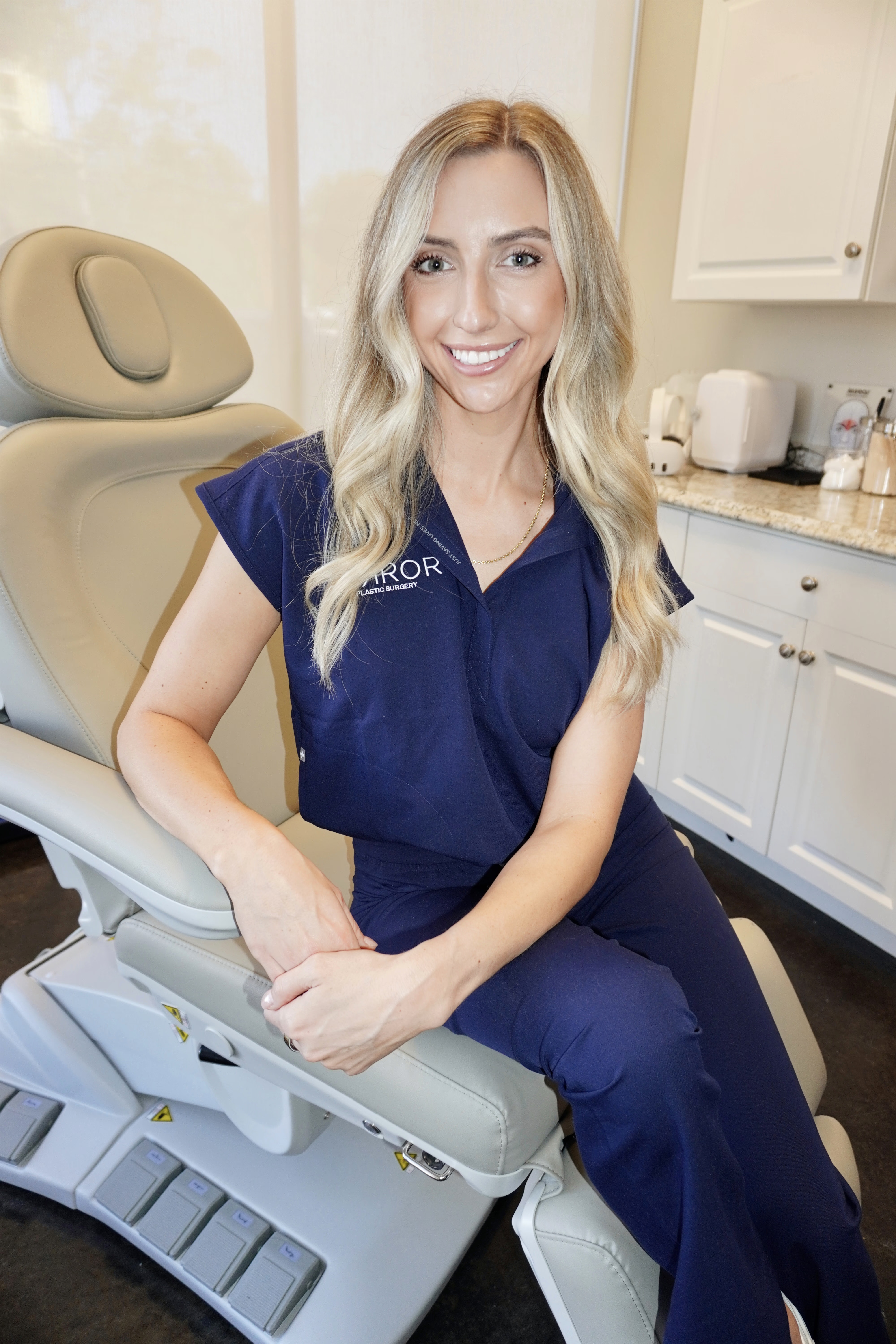
Experience a thorough, unhurried evaluation with Ellie and discuss your skin type, hormonal history, and treatment goals without the pressure of a high-volume clinic.
Realistic Timeline and Life-Stage Maintenance
The initial treatment series spans several months, and long-term maintenance depends heavily on life stage and hormonal stability. After completing that initial series, what comes next depends heavily on life stage:
- Stable hormonal baseline: Many patients choose at least one maintenance session per year in the bikini area to address follicles reactivated by normal hormonal cycling.
- Pregnancy and postpartum: Treatment should pause once pregnancy is confirmed. Pregnancy independently alters hair and skin via elevated estrogen and progesterone that prolong the anagen phase, which makes results less predictable. Resume postpartum after hormone levels stabilize and, if applicable, after breastfeeding ends, since prolactin also influences hair cycling during lactation.
- Menopause: Hormonal changes from menopause can activate dormant follicles or stimulate new coarse hairs, leading to delayed regrowth months or years later even after a good initial response to laser treatment. Maintenance frequency should be reassessed in coordination with any hormonal management plan.
- PCOS and thyroid conditions: As discussed earlier, PCOS and thyroid conditions often require 10 to 12 or more sessions plus ongoing maintenance because of androgen-driven follicle reactivation.
Clear discussion of these life-stage variables before beginning treatment, rather than discovering them mid-series, reflects a provider who prioritizes long-term outcomes over short-term appointment volume.
Build a personalized maintenance timeline with Ellie that accounts for where you are in your hormonal journey.
Frequently Asked Questions
Does laser pubic hair removal affect fertility or reproductive organs?
No. As noted earlier, laser energy penetrates only a few millimeters, enough to reach the follicle but nowhere near reproductive organs. The thermal effect remains localized to superficial skin tissue. Fertility concerns related to pubic-area laser treatment are theoretical rather than evidence-based. Most providers still recommend pausing elective laser treatment during pregnancy and fertility treatment cycles, not because of proven risk, but because hormonal fluctuations during those periods make results less predictable and because no clinical trials have been conducted in pregnant populations.
How many sessions will I need for a full Brazilian, and will I need touch-ups forever?
Most patients complete a full Brazilian series in 6 to 10 sessions spaced 4 to 6 weeks apart, with the total course running about six to nine months. After that, many patients need only 1 to 2 maintenance sessions per year to treat follicles reactivated by hormonal cycling. Patients with PCOS, menopause-related hormonal shifts, or thyroid conditions may need more sessions initially and more frequent maintenance. The goal is permanent hair reduction, meaning a significant lasting decrease in density and thickness, rather than complete lifelong elimination.1
Is laser hair removal safe for darker skin tones in the pubic area?
Yes, when the correct device and settings are used. As discussed earlier, the Nd:YAG laser is the established safe choice for Fitzpatrick IV to VI skin because its longer wavelength bypasses more epidermal melanin and targets the follicle more selectively, which reduces the risk of post-inflammatory hyperpigmentation or burns. Conservative settings with longer pulse durations, lower fluence, and enhanced cooling remain essential. Patient satisfaction with properly performed Nd:YAG treatment in darker skin is high, and in a peer-reviewed study of Fitzpatrick VI patients, all 50 participants said they would recommend the treatment, with a mean recommendation score of 91.5 out of 100. The critical factor is choosing a provider who conducts a formal Fitzpatrick assessment before selecting a device.
What is paradoxical hypertrichosis, and how can I reduce my risk?
Paradoxical hypertrichosis is an uncommon side effect in which laser treatment stimulates rather than destroys hair follicles, which results in increased hair density or spread into adjacent areas. Sublethal heat activates dormant follicles that were not visible at the time of treatment. A 2021 systematic review estimated a pooled prevalence of approximately 3 percent across laser and IPL treatments, with the face and neck most commonly affected. Risk is higher in patients with PCOS, menstrual irregularities, and Fitzpatrick skin types III and IV. Reducing risk requires precise device calibration, appropriate fluence for the individual skin and hair type, and a provider experienced in adjusting for these risk factors, not a standardized protocol applied uniformly across all patients.
What should I look for when choosing a provider in the Tampa Bay area?
The most important factors are anatomical expertise, device range, and the quality of the pre-treatment assessment. A qualified provider formally assesses your Fitzpatrick skin type, selects the appropriate laser for your tone and hair color, reviews your hormonal history, and explains realistic outcomes and maintenance timelines before a single pulse is delivered. Providers who limit their daily procedure volume can give each patient the individualized attention that sensitive-area treatments require. Avoid settings where consultations feel rushed, where the same device is used on every patient regardless of skin tone, or where maintenance needs and hormonal variables are not discussed upfront. At Mirror Plastic Surgery, the concierge model allows consultations of up to an hour, and treatment plans are built around your specific anatomy, life stage, and long-term goals rather than a standardized menu.
Disclaimer: Results may vary from person to person. Editorial content, before and after images, and patient testimonials do not constitute a guarantee of specific results.
1 Results may vary from person to person. Editorial content, before and after images, and patient testimonials do not constitute a guarantee of specific results.