

Written by: Dr. Akash Chandawarkar, Board Certified Plastic Surgeon, Mirror Plastic Surgery | Last updated: September 9, 2026
Counterfeit Botox has moved from rare headline to ongoing public health problem. Patients across the U.S. and UK have landed in hospitals after injections with unapproved products. This guide explains how counterfeit Botox shows up in real life, what it can do to your health, and the exact steps you can take to stay safe before, during, and after treatment.
Key Takeaways
- Counterfeit Botox is a documented public health crisis, with CDC reports confirming hospitalizations and severe complications from unapproved botulinum toxin products.
- Authentic Botox can be verified through a four-point checklist covering packaging, lot numbers, product appearance, and pricing.
- Choosing a board-certified plastic surgeon who sources products directly from manufacturers is the most effective protection against counterfeit Botox.
- Patients should ask specific questions about credentials, sourcing, and safety protocols before any Botox treatment and know the steps to take if they suspect exposure.
What Counterfeit Botox Is And Why It Exists
Counterfeit Botox refers to unapproved products that are illegally manufactured, imported, or repackaged and sold as authentic Botox (onabotulinumtoxinA). These products bypass every regulatory safeguard. They may contain incorrect dosages, bacterial contamination, unlabeled ingredients, or improperly formulated toxin with unpredictable potency.
The economic incentive is significant. Over 7.5 million botulinum toxin procedures were performed in the U.S. in 2023, and the market continues to grow. The FDA’s Office of Criminal Investigations has stated that the supply chain has been “infiltrated with counterfeit Botox, historically, presently, and will be in the future.” Counterfeit products reach patients through direct online importation from Asia-based websites, unauthorized domestic distributors, and administration in non-medical settings such as “Botox parties” or private homes.
The UK’s Medicines and Healthcare products Regulatory Agency (MHRA) launched criminal investigations into unlicensed botulinum toxin suppliers following a spike in hospital admissions in 2025. The UK Health Security Agency recorded at least 38 cases of botulism poisoning linked to unlicensed cosmetic products in the year prior to July 2026. This is a global problem with very local consequences.
The Health Risks: What Happens When You Receive Fake Botox
Counterfeit botulinum toxin can cause iatrogenic botulism, a condition in which the toxin spreads through the body and attacks the nervous system. The CDC reports that among documented patients, symptom onset occurred a median of three days after injection, with a range of zero to fourteen days. Reported symptoms included:
- Drooping eyelids (ptosis)
- Double or blurred vision (diplopia)
- Slurred speech (dysarthria)
- Difficulty swallowing (dysphagia)
- Shortness of breath
- Weakness in the arms and legs
In severe cases, botulinum toxin causes descending flaccid paralysis, starting with the eyes, face, and throat, then progressing to the trunk, extremities, and finally the respiratory muscles. Respiratory failure from diaphragm paralysis is the cause of death in untreated botulism. Treatment requires mechanical ventilation and heptavalent botulinum antitoxin (HBAT), which must be obtained from the CDC.
Counterfeit products also carry additional documented risks beyond botulism. The U.S. Department of Justice reported that clients of an unlicensed Massachusetts med spa owner suffered severe swelling, infections, facial drooping and paralysis, double vision, impaired eyesight, and hard lumps or nodules. Multiple clients were hospitalized, and others required corrective surgery.
One client spent weeks hospitalized after developing severe facial swelling, headaches, weakness, and fever-like symptoms. Another suffered impaired vision for approximately three months. The products used included bacteriostatic water contaminated with methylobacterium, a bacteria capable of causing serious infection. That med spa owner, Rebecca Fadanelli, was sentenced in September 2026 to 46 months in federal prison after performing more than 2,700 injection procedures using counterfeit products imported from China and Brazil.
Given these risks, your first line of defense is learning how to recognize a counterfeit product before it ever reaches your face.
Step 1: How To Spot Fake Botox With A Four-Point Checklist
Authentic Botox Cosmetic has specific, verifiable security features. Use this checklist before every treatment.
Check The Packaging
Authentic Botox Cosmetic packaging displays all of the following:
- Manufacturer listed as “Allergan Aesthetics, an AbbVie Company”
- Active ingredient printed as “OnabotulinumtoxinA”
- A translucent silver Allergan hologram on the box and a holographic Allergan film on the vial label
- U.S. License number 1889 on both the box and the vial
- Matching lot numbers and expiration dates on the carton and vial
- Clear text with no spelling errors, unusual fonts, or foreign-language-only labeling
AbbVie does not manufacture Botox in 150-unit doses. A 150-unit vial is a confirmed counterfeit indicator. Authentic Botox Cosmetic comes only in 50-unit and 100-unit single-dose vials.
Verify The Lot Number
Every authentic Botox vial carries a unique lot number traceable through AbbVie’s official channels. Ask your provider to show you the vial before injection. If the lot number cannot be verified or does not match between the carton and vial, do not proceed. If you suspect a counterfeit product, AbbVie can be contacted directly at 1-800-678-1605.
Examine The Product Itself
Authentic Botox Cosmetic is supplied as a vacuum-dried white powder in a single-dose vial. It must be reconstituted with sterile saline before injection. The CDC advises patients to watch the provider draw the product from the labeled vial into the syringe. If the product appears pre-mixed, has an unusual color, or does not require reconstitution, treat it as a red flag.
Be Wary Of Unusually Low Prices
Authentic Botox is expensive to manufacture and distribute through regulated channels. Pricing below $9 per unit in 2026 is a strong counterfeit signal. Prices far below the market average cannot support genuine, refrigerated, single-use product sourced through a regulated supply chain.
Step 2: Why Your Injector Choice Matters Most
Choosing the right provider is the single most effective safeguard against counterfeit Botox. Product verification helps, and provider selection creates the safety foundation for every treatment.
Board-certified plastic surgeons bring a surgeon’s command of facial and subdermal anatomy to every injection. This depth of training reduces the risk of injecting into incorrect anatomical planes and supports immediate recognition of complications. It also aligns with consistent sourcing through legitimate, traceable channels. A board-certified plastic surgeon operating a reputable practice has every incentive to source products through legitimate, traceable channels.
The CDC specifically warns against receiving injections in the following settings:
- “Botox parties” in homes or non-medical venues
- Med spas where unlicensed staff perform injections
- Providers who cannot or will not verify their license
- Injectors who do not show product packaging before treatment
- Mobile injectors who bring product to you
At Mirror Plastic Surgery in St. Petersburg, Florida, Dr. Akash Chandawarkar, a Harvard-educated, Johns Hopkins-trained, board-certified plastic surgeon, personally performs every neuromodulator and dermal filler injection. He sources all products directly from manufacturers and opens each vial in front of the patient, ensuring complete transparency at every step. His role as an advisory board member for Merz Aesthetics and Tiger Aesthetics shows deep engagement with leading manufacturers. It also reflects his commitment to evidence-based, authenticated product use.
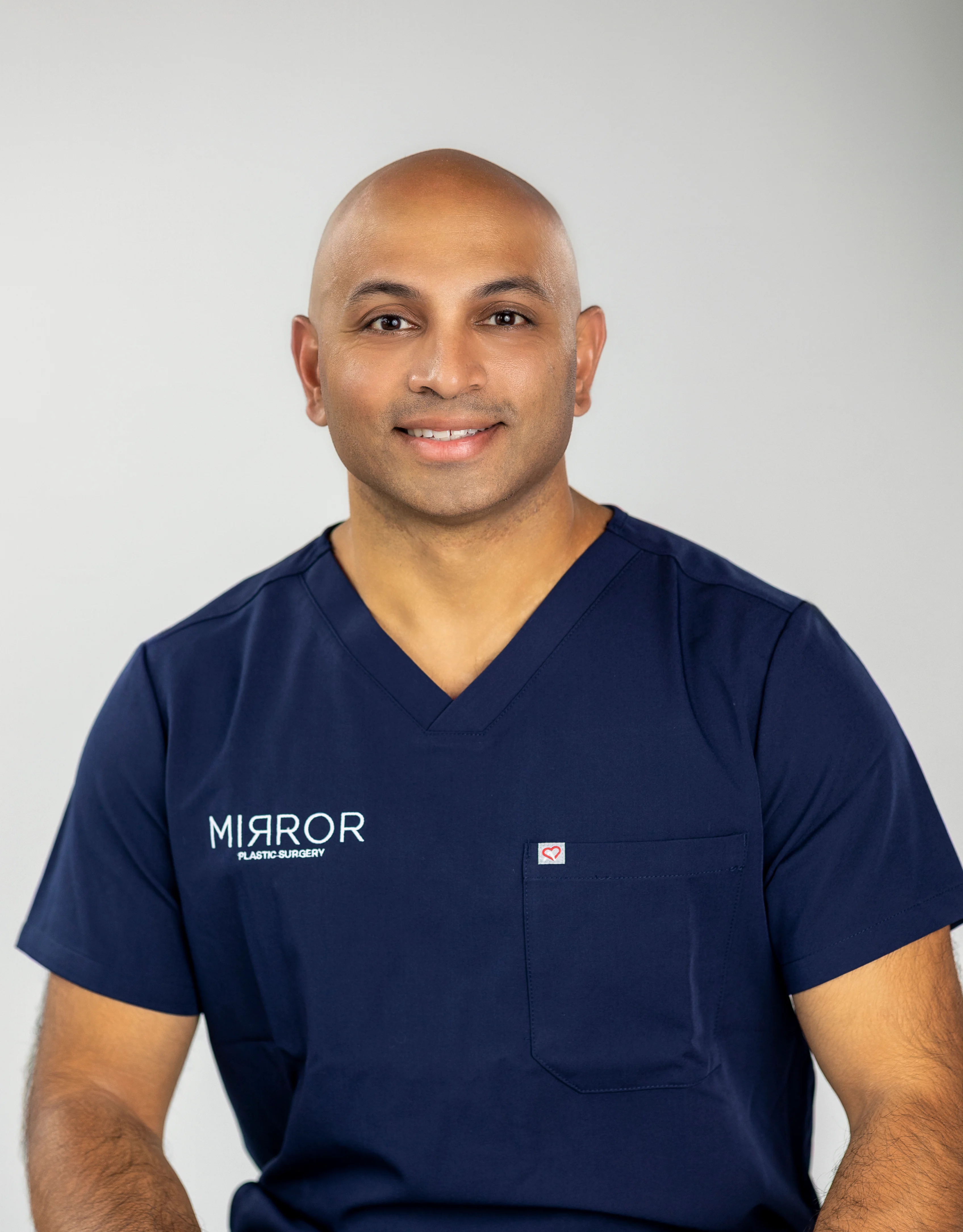
Schedule your consultation with Dr. Akash to discuss injectable treatment options in a fully licensed medical setting using verified, manufacturer-sourced product.
Step 3: Questions To Ask Before Any Botox Treatment
Ask these questions and make sure you feel comfortable with the answers before any injection appointment proceeds.
- Are you a board-certified plastic surgeon or dermatologist? Verify credentials through the American Board of Plastic Surgery (abplasticsurgery.org) or American Board of Dermatology (abderm.org).
- Do you purchase your Botox directly from the manufacturer or an authorized distributor? Direct sourcing reduces the risk of diverted or counterfeit product entering your treatment.
- Can you show me the sealed vial and packaging before injection? A reputable provider will show you the unopened vial without hesitation. Hesitation or refusal is a disqualifying red flag.
- Will you reconstitute the product in front of me? You should observe the powder being mixed with sterile saline before it enters a syringe.
- What is your protocol if I experience an adverse reaction? A responsible provider has a clear, practiced response plan for complications, not a vague reassurance.
Step 4: What To Do If You Suspect Counterfeit Botox
If you are experiencing unusual symptoms after a Botox injection, or have reason to believe the product used was not authentic, act quickly and follow these steps.
Seek Emergency Medical Attention Immediately
Anyone who develops progressive weakness, difficulty swallowing, drooping eyelids, double vision, or shortness of breath after any cosmetic injection should seek emergency medical care immediately and inform the treating physician of what was injected, by whom, and when. Botulism is a time-sensitive medical emergency, so prompt evaluation is critical.
Report The Incident
Reporting a suspected counterfeit injection protects you and helps authorities track and shut down dangerous supply chains. Take these steps as soon as possible:
- Contact the FDA through the MedWatch program at 1-800-332-1088
- Notify your state health department, as botulism is a notifiable disease in the United States
- Report the provider to your state medical board
- Contact AbbVie’s product safety line at 1-800-678-1605 if you suspect a counterfeit vial
Preserve All Evidence
Evidence supports accurate medical evaluation, formal reporting, and any potential legal action. Document everything you can and keep it organized.
- Keep the packaging and any remaining product
- Photograph the vial, lot number, and any packaging irregularities
- Document the date, time, and location of your injection
- Save all receipts, consent forms, and communications with the provider
The Bottom Line: Safety Over Savings
Counterfeit Botox is a serious and ongoing public health threat, yet patients can greatly reduce their risk with the right knowledge and the right provider. The safest path combines product verification, careful injector selection, clear pre-treatment questions, and a plan for what to do if something feels wrong. The CDC’s guidance is unambiguous: botulinum toxin injections should only be administered by licensed healthcare professionals using FDA-approved products in appropriate medical settings.
At Mirror Plastic Surgery, patient safety is the highest priority, placed above function and above aesthetics. As described earlier, Dr. Akash’s approach of personally performing every injection and opening each vial in front of you represents the standard of care at this practice. Take the first step toward safe, verified treatment and book your consultation now.
Frequently Asked Questions
What Are The First Symptoms Of Counterfeit Botox?
Symptoms of botulism from counterfeit or mishandled botulinum toxin typically appear within one to fourteen days of injection, with a median onset of three days. As detailed in the health risks section, symptoms include drooping eyelids, double or blurred vision, difficulty speaking or swallowing, shortness of breath, and limb weakness. In severe cases, paralysis reaches the respiratory muscles and creates a life-threatening emergency. Any of these symptoms following a Botox injection warrants immediate emergency medical evaluation.
How Can I Verify My Botox Is Real?
Authentic Botox Cosmetic has specific security features that fit into the four-point checklist in Step 1. That checklist covers packaging details, lot number verification, product appearance, and realistic pricing. Key red flags include a 150-unit vial, missing holograms, mismatched lot numbers, or product that arrives pre-mixed instead of as a white powder. Ask your provider to show you the sealed vial, walk you through the label, and reconstitute the product in front of you. Lot numbers can be verified directly with AbbVie at 1-800-678-1605.
Can Counterfeit Botox Cause Permanent Damage?
Counterfeit Botox can cause lasting harm in documented cases, even when patients receive treatment. Reported long-term consequences include permanent facial asymmetry, scarring from infections, impaired vision lasting months, and the need for corrective surgery to address complications such as hard lumps or nodules from contaminated filler products. Some patients have experienced vision problems that persisted well beyond the acute phase of their illness. Outcomes depend on the specific product, the dose received, how quickly treatment was started, and the individual patient’s health status.1
Is It Safe To Get Botox At A Med Spa?
Safety at any facility depends on who is performing the injection and how the product is sourced. The CDC warns against receiving injections in non-healthcare settings and from providers who cannot verify their license or the FDA-approval status of the product. The safest setting is a licensed medical practice where a board-certified plastic surgeon or dermatologist personally performs the injection using product sourced directly from an authorized manufacturer. When evaluating any provider, verify their board certification, confirm direct manufacturer sourcing, and ask to see the sealed vial before treatment.
What Should I Do If I’ve Already Received A Counterfeit Injection?
Seek medical evaluation immediately, particularly if you are experiencing any symptoms, even mild ones. Botulism can progress rapidly, and early treatment with antitoxin is significantly more effective than delayed intervention. Report the incident to the FDA’s MedWatch program at 1-800-332-1088 and notify your state health department, as botulism is a notifiable disease. Report the provider to your state medical board. Preserve all packaging, receipts, and documentation related to your treatment, and photograph any visible symptoms or packaging irregularities. A board-certified plastic surgeon can evaluate your condition, assess for complications, and coordinate appropriate follow-up care or referral.
Disclaimer: Results may vary from person to person. Editorial content, before and after images, and patient testimonials do not constitute a guarantee of specific results.
1 Results may vary from person to person. Editorial content, before and after images, and patient testimonials do not constitute a guarantee of specific results.


