

Written by: Dr. Akash Chandawarkar, Board Certified Plastic Surgeon, Mirror Plastic Surgery | Last updated: September 9, 2026
Key Takeaways
- Botox is the #1 minimally invasive cosmetic procedure in the U.S., with nearly 10 million injections performed annually and a strong safety record when administered correctly.1
- Most side effects are mild, localized, and temporary. Redness, swelling, and bruising usually resolve within hours to days, while rare complications like eyelid drooping occur in only 1–5% of cases.1
- The FDA boxed warning applies to all neuromodulators, yet serious distant toxin spread has not been reported with standard cosmetic doses. The risk is overwhelmingly tied to high-dose medical uses.
- Long-term studies spanning more than 15 years show no cumulative toxicity, neurological damage, or permanent side effects from repeated cosmetic Botox use at appropriate doses and intervals.1
- Choosing an experienced, board-certified injector is the most important factor in minimizing risks. You can schedule your personalized consultation with Dr. Akash Chandawarkar to review your anatomy and goals.
Common Botox Side Effects by Treatment Area
Most Botox side effects are mild, stay near the injection site, and fade on their own within hours to days. Fewer than 1% of patients experience side effects significant enough to stop treatment.1 Here is what typically happens in each area.
Injection Site Reactions Across All Areas
These universal reactions are expected and usually short-lived:
- Redness and mild swelling that usually resolve within a few hours1
- Bruising, which clears in 2–5 days, sometimes up to 10 days1
- Mild tenderness or pain at the injection point that settles within 1–2 days
Forehead and Glabella (Frown Lines)
- Headache: Occurs in about 9% of patients when the forehead and glabella are treated together and usually resolves within 24–48 hours.1
- Brow heaviness or “frozen” feeling: More common with higher doses or injections placed too low. A skilled injector leaves some muscle movement to avoid this.
- Eyelid ptosis (drooping): Occurs in roughly 1–5% of cases1, depends on dose and technique, and typically resolves within 2–4 weeks.
- Brow ptosis: Reported in about 2% of patients1 when the forehead and glabella are treated together and caused by over-relaxation of the frontalis muscle.
Crow’s Feet (Periorbital Area)
- Eyelid swelling or a temporary “tired” look
- Eyelid edema in approximately 1% of cases1
- Asymmetry or difficulty fully closing the eye if injected too close to the eyelid, a complication that is strongly technique-dependent
Masseter (Jaw)
- Temporary weakness when chewing, which improves as the treatment wears off
- Possible short-term changes in the smile from unintended effects on nearby muscles
These effects are expected, manageable, and temporary. Knowing they may occur and that they resolve on their own helps you feel prepared.
Rare but Serious Side Effects and the FDA Boxed Warning
The FDA “black box warning” on Botox often causes confusion, yet it has a clear explanation. It highlights a theoretical risk that looks very different from standard cosmetic use.
The boxed warning applies to every botulinum toxin product on the U.S. market, including Botox, Dysport, Xeomin, Jeuveau, and Daxxify. It warns that the toxin’s effects could, in theory, spread beyond the injection site and cause symptoms similar to botulism.
Symptoms of distant toxin spread include:
- Generalized muscle weakness
- Difficulty swallowing (dysphagia)
- Difficulty speaking or slurred speech (dysarthria)
- Double vision (diplopia)
- Difficulty breathing
- Urinary incontinence
Severe allergic reactions such as hives, significant facial swelling, or trouble breathing are also possible, though extremely rare.
Here is the key context. The BOTOX Cosmetic prescribing information states that no definitive serious adverse event reports of distant spread of toxin effect have been associated with dermatologic use at labeled cosmetic doses, which range from 20 to 64 units for standard facial treatments. The serious events that drove the 2009 FDA warning were predominantly associated with high-dose medical treatments, often in children treated for limb spasticity. These doses and uses were not approved at the time and are far removed from standard cosmetic injections. A typical cosmetic session uses 20–60 units, which is approximately 35–50 times lower than the estimated toxic dose for a 150-pound adult.
The warning exists because the molecule is the same regardless of dose. Understanding the difference between the theoretical label risk and the real-world risk at cosmetic doses helps you make calm, informed decisions.
Long-Term Botox Effects and What Happens When You Stop
Long-Term Safety of Cosmetic Botox
Clinical studies spanning more than 15 years have found no cumulative toxicity or organ damage from repeated cosmetic Botox use at standard doses.1 A 2023 systematic review in the Aesthetic Surgery Journal analyzing 36 clinical trials reported a serious adverse event rate of less than 0.001%.1
Muscle atrophy at injection sites can occur with repeated treatment. A 2016 narrative review in the Aesthetic Surgery Journal found that botulinum toxin-induced muscle atrophy is generally temporary and reversible after treatment stops. Some imaging studies show measurable reductions in muscle volume with prolonged use, yet long-term treatment at appropriate doses and intervals has not been shown to cause permanent muscle damage in commonly treated areas.
Multiple long-term studies, including a 2021 review in Toxins, confirm that cosmetic Botox does not cross the blood-brain barrier at therapeutic doses. This indicates no evidence of neurological damage from standard cosmetic use.
What to Expect When You Stop Botox
Stopping Botox does not cause rebound wrinkling or accelerated aging.1 Muscles gradually return to pre-treatment activity over 3–6 months, and there is no withdrawal effect or dependency. Wrinkles reappear as they would have naturally, not faster or deeper than they would have been without treatment.
Long-term data even suggests a protective effect. A 2006 study in the Journal of Dermatologic Surgery followed identical twins over 13 years and found that the twin who received Botox consistently had fewer and shallower wrinkles than the untreated twin.1
Antibodies and Reduced Response
Some patients develop neutralizing antibodies that make Botox less effective over time. This occurs in an estimated 1–3% of patients and is more common with higher medical doses than with standard cosmetic doses. Injection intervals shorter than 12 weeks raise the risk of antibody formation. A skilled injector uses the lowest effective dose and spaces treatments appropriately to protect your long-term response.
Risk Factors and How to Minimize Botox Side Effects
The injector’s skill and anatomical knowledge are the strongest safeguards against Botox side effects. Injection depth, placement, and dose all influence results and side effects, and an injection placed too close to a neighboring muscle can temporarily affect unintended movement.
A board-certified plastic surgeon brings a surgeon’s command of facial and subdermal anatomy to every injection. This includes precise awareness of where the levator palpebrae, the muscle that lifts the eyelid, sits in relation to the glabella and placing product with that in mind. It also includes understanding how the frontalis interacts with the brow depressors and dosing conservatively to preserve natural movement. A few millimeters in the wrong direction can dramatically change appearance, which makes anatomical expertise a true prerequisite.
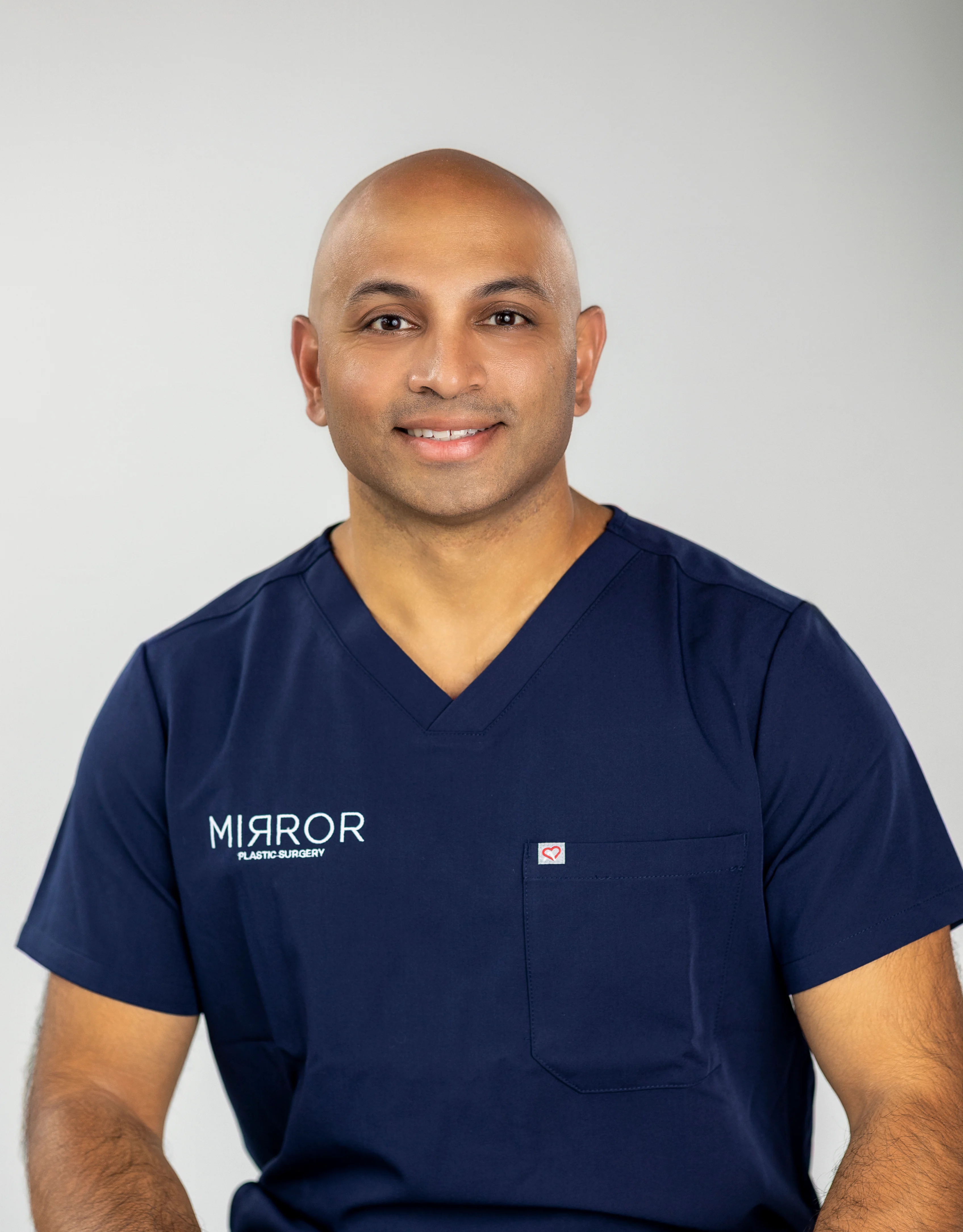
This is the expertise Dr. Akash Chandawarkar brings to every injection at Mirror Plastic Surgery, where he personally performs each treatment. His philosophy of safety first, function second, and aesthetics third means your treatment plan is built around your unique anatomy rather than a standardized injection map.
Schedule your comprehensive assessment to experience a top-to-bottom evaluation that can take up to an hour and clarifies your anatomy, goals, and individual risk profile before any product is placed.
Aftercare Steps to Protect Your Results
What you do in the first 24 hours after treatment influences both your results and your risk of side effects. Follow these evidence-based steps:
- Avoid rubbing or massaging the treated area for at least 24 hours, as this may encourage migration of the toxin.
- Stay upright for 4 hours after treatment to help keep the product where it was placed.
- Avoid strenuous exercise, saunas, hot yoga, and alcohol for 24 hours to reduce flushing and bruising risk.
- Avoid blood-thinning supplements such as fish oil, vitamin E, aspirin, and ibuprofen for 24–48 hours before and after treatment to limit bruising.
- Share your full medical history during your consultation, especially neuromuscular conditions, current medications, and prior reactions, so your injector can tailor your plan safely.
When to Call Your Doctor About Botox Side Effects
Most Botox side effects are minor and resolve on their own. Certain symptoms, however, require urgent medical attention and should never wait for a routine follow-up.
- Difficulty breathing, swallowing, or speaking
- Muscle weakness in areas far from the injection site
- Signs of a severe allergic reaction such as hives or swelling of the face, lips, or throat
- Blurred or double vision
- Drooping that affects your ability to blink or protect your eye
If a symptom affects swallowing, speech, breathing, or general strength after Botox, patients should not wait for a follow-up appointment, as these overlap with the FDA boxed warning for spread of toxin effect. Call your provider immediately or seek emergency care.
Debunking Common Myths About Botox Side Effects
Myth 1: “Botox will make me look frozen.” A frozen appearance comes from poor technique, usually over-treating the frontalis muscle without balancing the brow depressors. The current goal of botulinum toxin use is to modulate muscle activity and selectively weaken facial muscles to maintain movement control and achieve symmetrical, well-balanced facial recontouring. A skilled injector focuses on softening lines while preserving natural expression.
Myth 2: “Botox is a toxic poison.” Botox is derived from botulinum toxin, yet it is FDA-approved, highly purified, and administered in microscopic, targeted doses. As noted earlier, the cosmetic dose sits far below the toxic threshold for a 150-pound adult, and over 100 million vials have been sold worldwide since its approval.
Myth 3: “Botox is addictive.” Botox has no physically addictive properties. There is no withdrawal effect when treatment stops, and muscles gradually return to pre-treatment activity over 3–6 months with no dependency. Patients return because they like their results, not because their body craves the product.
FAQ: Botox Side Effects in Everyday Language
How Long Do Botox Side Effects Last?
Side effect duration depends on the type of reaction. Injection-site redness, swelling, and mild tenderness usually fade within a few hours to a couple of days. Bruising can take 5–10 days to clear. Headache or muscle tenderness often settles within 1–2 days. Rare issues like eyelid or brow drooping typically appear a few days after treatment and resolve on their own within 2–4 weeks. All Botox effects are temporary, and the muscle-relaxing effect itself wears off over 3–4 months as nerve signaling returns.
Can Botox Cause Neurological Damage?
Current evidence does not show neurological damage from cosmetic Botox at standard doses. Multiple long-term studies confirm that cosmetic Botox does not cross the blood-brain barrier at therapeutic doses. Some research has identified measurable changes in brain activity patterns related to emotional processing after frown-area injections, yet the clinical significance of these findings at cosmetic doses remains unclear. No study has demonstrated harmful neurological effects from cosmetic Botox use at labeled doses.
Is Botox Safe for Long-Term Use?
Long-term cosmetic Botox use appears safe when performed correctly. As discussed earlier, long-term studies show no cumulative toxicity or organ damage, and serious adverse events remain extremely rare. Many patients receive Botox for 10–20 years or more without problems. Safe long-term use depends on working with a qualified injector who uses the lowest effective dose, spaces treatments at least every three months, and reassesses your anatomy before each session.
Can Botox Cause Drooping Eyelids?
Eyelid ptosis is a possible temporary side effect in upper-face treatments. It occurs when the toxin diffuses toward the levator palpebrae superioris, the muscle that lifts the eyelid. It usually appears a few days after treatment and resolves within 2–4 weeks. During that time, a physician may prescribe apraclonidine or oxymetazoline eye drops to temporarily lift the eyelid. As mentioned earlier, careful placement and deep anatomical knowledge significantly reduce this risk.
Are There Any Permanent Side Effects of Botox?
Current cosmetic data has not established permanent side effects at labeled doses. Muscle activity returns as the toxin wears off, typically over 3–4 months. Even the muscle atrophy seen in long-term imaging studies appears reversible after treatment stops. Choosing a board-certified injector who uses appropriate dosing and spacing gives you the best chance of a safe, predictable long-term experience.
Making an Informed Choice for Your Face
Botox is a safe, effective, and extensively studied treatment when used properly. Learning about side effects should give you clarity and confidence rather than fear. Common reactions are mild and short-lived. Rare complications are real yet linked mainly to doses and contexts very different from standard cosmetic practice. Long-term data across decades of use continues to support a favorable safety profile.
The research also shows that your injector plays a central role in your outcome. Technique, anatomical knowledge, dose selection, and a commitment to your individual anatomy, rather than a one-size-fits-all protocol, separate a smooth experience from a preventable complication.
Experience the Mirror Plastic Surgery Difference
At Mirror Plastic Surgery in St. Petersburg, FL, Dr. Akash Chandawarkar personally performs every injection. His philosophy is clear: safety first, function second, aesthetics third. Each treatment begins with a comprehensive, top-to-bottom assessment that often lasts up to an hour and explores your anatomy, motivations, and long-term goals before any product is placed.
Dr. Akash’s background as a Harvard-educated, Johns Hopkins-trained plastic surgeon with fellowship training at Manhattan Eye Ear & Throat Hospital means he approaches neuromodulator injections with the same level of anatomical precision he uses in the operating room.
Ready to learn more about safe, natural-looking Botox? Start your journey with a board-certified plastic surgeon who puts your well-being first. Call 727-361-6515 or email hello@mirrorplasticsurgery.com. The practice is located at 780 4th Ave S, St. Petersburg, FL 33701.
Disclaimer: Results may vary from person to person. Editorial content, before and after images, and patient testimonials do not constitute a guarantee of specific results.
1 Results may vary from person to person. Editorial content, before and after images, and patient testimonials do not constitute a guarantee of specific results.


