Written by: Dr. Akash Chandawarkar, Board Certified Plastic Surgeon, Mirror Plastic Surgery | Last updated: September 9, 2026
Key Takeaways
- Natural-looking Botox softens wrinkles while preserving your ability to express emotions and avoiding a frozen or overdone appearance.1
- Results vary by treatment area, so forehead, frown lines, and crow’s feet each require tailored dosing to maintain movement and facial balance.1
- Authentic before-and-after photos must show consistent lighting, angles, expressions, and timing (10–14 days post-treatment) to be trustworthy.
- Provider skill, conservative dosing, and anatomical understanding are the key factors in achieving safe, natural results that improve over time.
- Ready to explore natural-looking Botox? Schedule a personalized consultation with Ellie at Mirror Plastic Surgery for a surgeon-led assessment.
What Natural-Looking Botox Really Means
Natural Botox results are defined by what they preserve, not only by what they soften. A good result softens lines while preserving natural expression, rather than removing all movement from the face.1 That requires treatment planning that accounts for facial balance, muscle strength, and how the face moves as a whole. Dynamic lines relax enough to prevent deep creasing, while facial movement remains intact.1
Here is what natural results look like in the three most commonly treated areas:
- Forehead: Horizontal lines are softened, but the forehead still moves naturally when you raise your eyebrows. There is no shiny, waxy immobility.
- Frown Lines (The “11s”): The vertical creases between your brows are relaxed, so you look approachable rather than angry, and you can still make a subtle frown expression.
- Crow’s Feet: The fine lines fanning from your eyes are reduced when you smile, but your smile still reaches your eyes. You keep the genuine crinkle of a real smile.
The key principle is simple: natural results enhance your features without changing your identity. You should still look like you, just more rested, more refreshed, and less visibly stressed. Results vary based on individual anatomy, muscle strength, and provider skill, so personalized treatment planning matters.1
Natural Botox Before And After Examples By Treatment Area
Every face is unique, so no single photo can predict your results. Clear examples by area help you understand what natural outcomes look like and set realistic expectations. Here is what Dr. Akash Chandawarkar looks for when reviewing before-and-after photos with patients at Mirror Plastic Surgery.
Forehead Lines: Before And After
Before: Dynamic horizontal creases deepen noticeably when you raise your eyebrows. The lines may be visible at rest if they have been developing for years.
After (Natural Result): The forehead appears smoother, but you can still see subtle movement when you raise your brows.1 The skin does not look tight or shiny. You can express surprise, concern, or excitement without deep furrows.
Why It Looks Natural: The injector used a conservative dose distributed strategically across the frontalis muscle, the only muscle that lifts the brow. Enough muscle fibers remain active to allow natural brow elevation. Over-treating the forehead commonly causes a “frozen” look, because too much relaxation drops the brow, while undertreating leaves visible banding. Typical forehead dosing ranges from 10 to 30 units, adjusted for each patient’s anatomy.
Frown Lines (Glabella): Before And After
Before: Harsh vertical “11” lines between the brows are prominent when you frown or concentrate. They can make you look perpetually angry or worried, even when relaxed.
After (Natural Result): The lines are significantly softened.1 You look more approachable and rested. When you try to frown, you feel resistance but can still create a slight expression.
Why It Looks Natural: The FDA-approved starting dose for glabellar lines is 20 units distributed across five injection points. One point is placed in the procerus, two in the medial corrugators, and two in the lateral corrugators. Treating the glabella alone can create a subtle brow lift, since relaxing the brow depressors allows the frontalis to work unopposed.
Crow’s Feet: Before And After
Before: Deep radial lines fan from the outer corners of your eyes and are visible when you smile or squint. Over time, these can become etched into the skin even at rest.
After (Natural Result): The lines are softened when you smile, but your eyes still crinkle naturally.1 You do not look surprised or wide-eyed. Your smile reaches your eyes, but it no longer creates deep furrows.
Why It Looks Natural: The injector used a lighter dose, typically 6 to 15 units per side, placed superficially in the lateral orbicularis oculi muscle. The goal is to soften lines rather than eliminate them completely, which prevents an unnaturally smooth eye area.
Expert Insight From Dr. Akash Chandawarkar: “The difference between natural and frozen results comes down to understanding facial anatomy, specifically the agonist-antagonist relationships between muscles. Treating the forehead without addressing the brow depressors can cause heaviness or ptosis. Treating the crow’s feet too aggressively can change your smile. A surgeon’s command of this anatomy is what makes injectable treatment both safer and more precise.”
How To Spot Authentic Before And After Photos
Before-and-after images are powerful in aesthetic medicine, yet they are lightly regulated and carefully curated. Learning to read them helps you separate marketing from reality. Use these checks when you review any gallery:
- Check For Consistent Lighting. Both photos should use diffused, neutral-white light at the same color temperature, brightness, and angle. Dramatic lighting changes can make skin look smoother without any treatment.
- Verify Matching Angles And Distance. Photographs cannot be fairly compared if the head is not in the same position across all three axes. A jawline can be made to look sharper with a quarter turn and a slightly raised chin, no operation required.
- Look For Consistent Facial Expression. For neuromodulator documentation, the before photo should capture the maximum frown to show baseline lines, and the after photo should repeat the identical expression. The effect is often invisible in a relaxed face. A “before” photo with a furrowed brow and an “after” photo at rest exaggerates results.
- Confirm No Filters Or Heavy Retouching. A useful sign of an unedited image is that skin texture and minor pre-existing asymmetries remain visible in both photos. When these are smoothed away, the photograph has likely been post-processed.
- Check For Matching Makeup And Grooming. Patient preparation should be standardized. All facial makeup is removed, hair is pulled back the same way, and a neutral drape covers clothing at every visit.
- Ask About Timing. For Botox, after photos should be captured at 10 to 14 days post-treatment, when results are fully settled. Photos taken earlier may not show the final outcome.
Reputable providers show multiple angles, close-ups, and both resting and animated expressions. If a gallery only shows “after” photos at rest, you cannot judge whether natural movement was preserved.
How To Get Natural-Looking Botox Results
Natural results should be the standard outcome for Botox. The result depends on provider skill, dosing strategy, and injection technique.
Natural Botox results come from an individualized assessment of facial anatomy, movement patterns, and muscle strength rather than template-based dosing. No two foreheads are identical, so a cookie-cutter injection pattern rarely produces a natural look.
A skilled injector starts with conservative doses for first-time patients, such as 16 to 20 units in the forehead and 20 to 25 units in the glabella, and offers a two-week follow-up touch-up to correct any underdose. This “start low, adjust later” approach is safer precisely because Botox cannot be reversed and must wear off naturally over 3 to 4 months, so starting conservatively reduces the risk of an unwanted outcome.
Dr. Akash Chandawarkar’s philosophy at Mirror Plastic Surgery is “safety first, function second, aesthetics third.” He evaluates how your facial muscles work together before determining where and how much to inject, treating the face as an interconnected system rather than isolated zones. This approach helps prevent the asymmetry and heaviness that come from single-area injections.
Request a surgeon-led consultation with Ellie to experience injectable treatment built on anatomical expertise rather than unit quotas.
What Long-Term Botox Use Looks Like
Many people worry that long-term Botox use will make them look “done” or speed up aging. Current evidence points in the opposite direction.
Consistent, well-managed Botox over a decade can actually prevent wrinkles from becoming permanently etched into your skin.1 By relaxing the muscles that cause dynamic lines, Botox reduces the repetitive folding of skin that leads to deep static wrinkles. Natural-result Botox often improves over multiple treatment cycles because treated muscles gradually atrophy from disuse.1 Later treatments can sometimes use slightly lower doses for the same effect, which supports more natural-looking results.
If you stop Botox after years of use, your wrinkles gradually return to their natural state. They do not suddenly worsen or “catch up.” The American Academy of Dermatology states that botulinum toxin therapy is safe when administered by a board-certified dermatologist or appropriately trained clinician in a medical setting, with no serious side effects reported for cosmetic use, and cautions against receiving injections outside such settings.
How To Choose A Provider For Natural Results
Your injector’s skill matters more than the brand of neuromodulator used. Focus on these qualities when you choose a provider:
- Board Certification: Choose a board-certified plastic surgeon or dermatologist with extensive training in facial anatomy.
- Specialized Injectable Experience: Ask how many neuromodulator treatments they perform and whether they have fellowship training in aesthetic medicine.
- Consultation Approach: Mirror Plastic Surgery offers comprehensive consultations that can extend up to an hour, including a top-to-bottom assessment and a focus on understanding patient needs.
- Before-And-After Gallery: Review their photos critically using the criteria above. Ask about their philosophy on preserving movement.
- Follow-Up Care: A reputable provider offers a two-week follow-up appointment to assess symmetry and efficacy and to administer touch-up injections if indicated.
Red flags to avoid:
- High-volume practices that rush consultations
- Providers who push excessive units or upsell unnecessary treatments
- Lack of a before-and-after gallery or reluctance to show results
- One-size-fits-all treatment plans that do not account for your anatomy
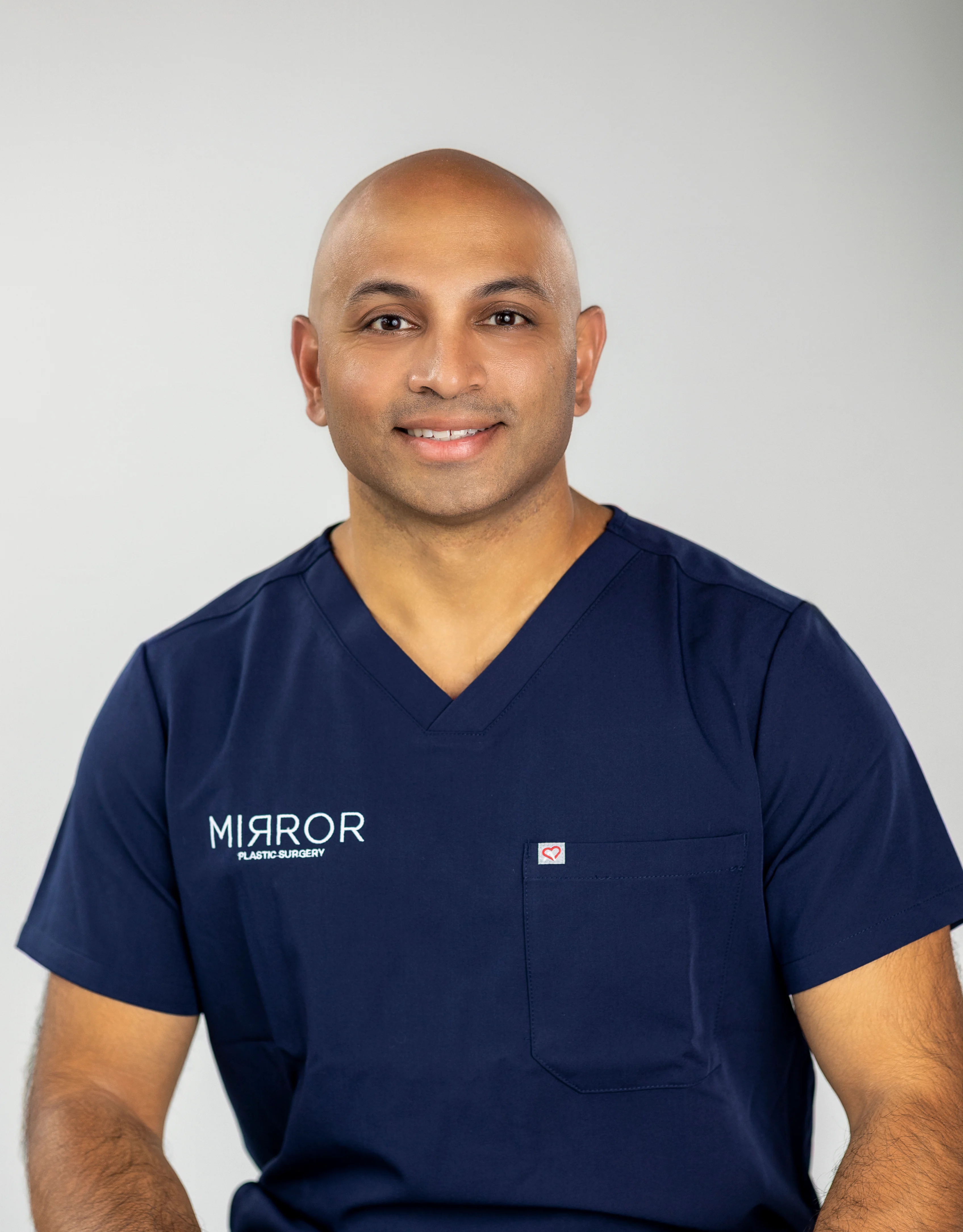
In contrast, at Mirror Plastic Surgery, Dr. Akash Chandawarkar is a board-certified plastic surgeon with fellowship training in aesthetic surgery at the Manhattan Eye Ear & Throat Hospital. He personally performs every injection, offers hour-long consultations, and conducts a top-to-bottom facial assessment to create a personalized treatment plan. His approach is grounded in education, and he explains the “why” behind every recommendation so you can make informed decisions.
Common Signs Of Overdone Botox And How To Avoid Them
Recognizing overdone Botox helps you spot natural work more easily and guides your questions during consultation. When you review before-and-after photos or your own reflection, watch for these warning signs that indicate over-treatment rather than subtle enhancement:
- Frozen Forehead: Complete immobility when you try to raise your eyebrows creates a mask-like appearance. This happens when too many units are placed across the entire frontalis muscle, treating the forehead as one flat target rather than mapping areas that should retain movement.
- “Spock” Eyebrows: Dramatically arched brows look perpetually surprised. This occurs when the provider relaxes the center of the forehead but leaves the outer portions untreated, allowing the unopposed outer forehead muscle to pull the lateral brows upward.
- Brow Ptosis (Drooping): Heavy, hooded eyelids result from over-relaxing the frontalis without adequate treatment of the brow depressor complex, which leaves the depressors unopposed.
- Shiny, Waxy Skin: Excessive dosing across the entire forehead combined with thin skin eliminates micro-movements and gives the skin a polished, artificial quality.
- Asymmetry: Uneven results arise when the injector fails to account for natural facial asymmetry or uses uneven dosing.
The “frozen” look almost always results from too much product, wrong placement, or treating muscles that did not need treatment. It is not an unavoidable side effect of the medication itself. Botox is a prescription medication that relaxes the specific muscles it is injected into. When those muscles are chosen incorrectly or dosed excessively, the result looks unnatural.
The Science Behind Natural Botox Results
Botox (onabotulinumtoxinA) acts at the neuromuscular junction by inhibiting the release of acetylcholine, which is required for muscle contraction. This temporarily reduces muscle activity and softens dynamic wrinkles such as glabellar lines, forehead lines, and crow’s feet.
Most patients begin to notice early effects within 2 to 4 days post-treatment, with full results typically developing at 10 to 14 days.1 This timing reflects the period needed for complete neuromuscular blockade at the treated sites. Results last approximately 3 to 4 months, after which nerve signaling gradually recovers and muscle activity returns.1
Several neuromodulator brands are FDA-approved for cosmetic use, including Botox, Dysport, Xeomin, Jeuveau, Daxxify, and Letybo, all with official indications for moderate to severe glabellar lines. They work in similar ways but have subtle differences in onset, duration, and diffusion characteristics. Dr. Akash is experienced with all brands and selects based on your individual needs rather than inventory quotas or supplier incentives.
Botulinum toxin products can be safe and effective when obtained from authorized suppliers of FDA-approved products and administered by licensed and trained providers. Patients should never receive injections from unlicensed sources or self-inject with products purchased online.
Frequently Asked Questions
How Long Does Botox Last?
Most patients enjoy results for 3 to 4 months.1 The duration varies by treatment area, dose, and individual metabolism. Crow’s feet often respond quickly and last well, while stronger glabellar muscles may require higher doses and wear off sooner. Many patients schedule maintenance treatments several times per year. With consistent treatment over time, some patients find they need slightly less product to achieve the same effect, as treated muscles gradually reduce in activity.
Will I Look “Frozen” After Botox?
You should not look frozen when your provider prioritizes natural results. A frozen appearance usually results from excessive dosing or improper placement and reflects technique rather than the product itself. A skilled injector uses conservative doses placed strategically to soften wrinkles while preserving natural movement. You should still be able to raise your eyebrows, smile fully, and show surprise. The hallmark of a well-executed treatment is that people notice you look refreshed, not that they notice you have had Botox.
Does Botox Hurt?
Most patients describe the sensation as a brief pinch. Dr. Akash uses bacteriostatic saline for reconstitution, which a randomized controlled trial published in JAMA Dermatology showed significantly reduces injection discomfort compared to preservative-free saline, with equivalent efficacy. No topical anesthetic is typically required for standard cosmetic areas, though it can be offered for sensitive patients.
Are There Side Effects?
Common temporary side effects include mild bruising, redness, and swelling at injection sites, which typically resolve within 24 to 48 hours. Headaches occasionally occur in the first 24 to 48 hours. Eyelid ptosis occurs in approximately 2 to 3% of glabellar treatments but is largely preventable with proper technique, specifically by keeping injections at least 1 cm above the bony supraorbital ridge. Serious complications are rare when a qualified professional performs treatment using FDA-approved products from authorized suppliers. Patients with pre-existing neuromuscular conditions such as myasthenia gravis or Lambert-Eaton syndrome should disclose these to their provider, as they carry elevated risk.
How Do I Find A Qualified Provider?
Look for a board-certified plastic surgeon or dermatologist who performs injections personally, offers thorough consultations, and can show you a gallery of natural-looking results, including photos taken while the patient is making expressions, not only at rest.
Ask about their dosing philosophy, whether they treat the face as an interconnected system rather than isolated zones, and whether they offer two-week follow-up appointments.
A provider who is transparent about their approach, willing to answer detailed questions, and focused on your long-term well-being rather than maximizing units sold is the right choice. Trust your instincts and seek a second opinion if a consultation feels rushed or sales-driven.
Ready To See Natural-Looking Results?
Natural-looking Botox is achievable with the right provider. The photos you see online can mislead or inform, depending on your ability to read them critically. The questions you ask during a consultation can protect you from over-treatment and guide you toward exceptional care.
At Mirror Plastic Surgery, Dr. Akash Chandawarkar brings surgeon-level anatomical expertise to every injection. His philosophy, the same one mentioned earlier, ensures your treatment enhances your natural beauty without compromising your ability to express yourself. Every patient receives an hour-long, top-to-bottom facial assessment, a personalized treatment plan, and honest guidance on what you need and what you do not.
Call 727-361-6515 or get started with a consultation at Mirror Plastic Surgery to begin your treatment journey.
Disclaimer: Results may vary from person to person. Editorial content, before and after images, and patient testimonials do not constitute a guarantee of specific results.
1 Results may vary from person to person. Editorial content, before and after images, and patient testimonials do not constitute a guarantee of specific results.