
Written by: Dr. Akash Chandawarkar, Board Certified Plastic Surgeon, Mirror Plastic Surgery | Last updated: September 9, 2026
Key Takeaways
- Most Botox complications come from injector error, misplaced injections, or counterfeit products rather than the medication itself.
- Common issues like eyelid ptosis, frozen brows, and crooked smiles are technique-related and largely preventable with board-certified expertise.
- Systemic reactions almost always involve unlicensed or counterfeit botulinum toxin, not FDA-approved products used by licensed professionals.
- Choosing a board-certified plastic surgeon who personally performs every injection reduces complication rates and protects delicate facial anatomy.
Real Stories Of Botox Gone Wrong With A Surgeon’s Analysis
Stories in “botox gone wrong reddit” threads often share the same anatomical patterns. A surgeon’s perspective turns those fears into clear, practical guidance.
The Droopy Eyelid (Ptosis) Story
A familiar scenario unfolds when a patient receives forehead or frown-line injections and, days later, notices one eyelid sitting lower than the other. The result is a tired, asymmetrical look that feels alarming.
The toxin has diffused to the levator palpebrae superioris, the muscle that lifts the eyelid. True eyelid ptosis occurs when the toxin crosses the orbital septum and reaches the levator palpebrae superioris, typically appearing 2–10 days post-treatment, most often following glabellar injections placed too close to the orbital rim or too deep over the corrugator supercilii at its medial origin. In the randomized, placebo-controlled registration trials supporting BOTOX Cosmetic approval for frown-line treatment, eyelid drooping occurred in 3% of treated subjects versus 0% in the placebo group.1 However, peer-reviewed data reports that this rate falls below 1% when the injection is performed by an experienced injector.1 This complication reflects technique rather than product quality. Most cases of Botox-induced eyelid ptosis resolve in 3–6 weeks as the levator palpebrae superioris regains function.1
The “Frozen Face” Or “Spock Eyebrow” Story
Many first-time patients worry about losing expression or ending up with a sharply arched “villain” brow. These outcomes come from how and where the injector places the product.
A “frozen” look results from over-treating the frontalis muscle, the primary elevator of the brow. The “Spock brow” is a specific variant. It occurs when the central frontalis is relaxed but the lateral fibers above the brow tail remain active, pulling the brow tail up unopposed. Over-treating the middle of the frontalis creates a medial brow ptosis with lateral brow lift, while over-treating the whole muscle leaves the patient looking tired. These are dosing and placement precision issues that a board-certified plastic surgeon can usually prevent through detailed anatomical planning.
The Crooked Smile Story
Comedian Hannah Berner described how injections for jaw clenching left her unable to smile normally, with asymmetry starting around day ten and resolving after approximately five months, with dermatologists estimating smile asymmetry may take approximately 3–5 months to fade.
The anatomy of the jaw explains this pattern. The medial masseter is a hazard zone because toxin can spread to the risorius muscle, producing a crooked or limited smile. Dr. Louis Malcmacher, President of MAGD, stated that when Botox injection reaches the risorius, “It will look like she’s got a Bell’s palsy,” emphasizing the severity of smile distortion from incorrect placement. Higher-risk situations include injections placed too anteriorly, too superficially, or too close to the oral commissure, where diffusion into smile-elevating muscles is more likely. Deep anatomical knowledge serves as the safety system in this region.
The Systemic Reaction Story And Counterfeit Product Risk
The most alarming stories involve patients developing botulism-like illness after what seemed like routine cosmetic treatment. These events almost always trace back to counterfeit or unlicensed products.
During a recent 10-month period, state health departments reported 13 patients who became severely ill with suspected botulism after using botulinum toxin products from unlicensed sources. All were hospitalized and received botulism antitoxin. Some required intubation and mechanical ventilation. In April 2024, the FDA issued an alert confirming that counterfeit versions of Botox had been found in multiple US states and administered to patients for cosmetic purposes, causing systemic botulism symptoms. These stories involve an entirely different and dangerous category of product than FDA-approved Botox used by qualified physicians.
Schedule your consultation with Dr. Akash to discuss your injectable goals in a safe, physician-led environment.
Why Do These Complications Happen? The Anatomy Of Risk
Complications often arise from how complex and variable facial anatomy can be. The human face contains around 30 muscles on each side, layered and highly individual, all contributing to expression.
A millimeter of placement error can separate a smooth forehead from a drooping eyelid. The procerus muscle varies enormously between patients, ranging from essentially absent to being the dominant muscle in the frown complex, so injecting the same number of units on every patient guarantees either wasted product or under-treatment.
Neuromodulators like Botox block acetylcholine release at the neuromuscular junction, temporarily relaxing the targeted muscle. Dermal fillers add volume beneath the skin. They behave differently, carry different risks, and demand distinct anatomical skill sets. Treating them as interchangeable encourages many of the “botox horror stories” patients share online.
A board-certified plastic surgeon spends years mastering subdermal facial anatomy used in reconstructive surgery. Serious side effects from Botox occur in less than 1% of cases when administered by board-certified medical professionals, compared to materially higher rates among non-medical providers.1 That gap reflects the impact of anatomical expertise on real-world safety.
The Highest-Risk Botox Areas And How Skilled Injectors Reduce Complications
Certain anatomical zones carry higher risk than others. The three most sensitive areas are the periorbital region, the masseter, and the neck, and each requires specific technique to stay safe.
The Periorbital Zone (Around The Eyes)
Botulinum toxin injected close to the orbital rim or in excessive dose can diffuse toward the levator palpebrae superioris and extraocular muscles, causing eyelid ptosis or diplopia. A safety margin of approximately two centimetres from the orbital rim should be maintained when injecting the frontalis to prevent brow ptosis. To further reduce risk, a skilled injector uses conservative dosing, photographs baseline anatomy before every session, and avoids maximum frontalis dosing on first-time patients.
The Masseter (Jaw)
Jaw slimming and TMJ treatment rank among the most requested off-label neuromodulator uses and among the most technically demanding. Anterior facial expression muscles, including the risorius, lie close to the masseter’s forward border, so overly anterior injection placement increases the risk of smile asymmetry.
Risk mitigation focuses on precise placement within the posterior and inferior masseter body, conservative dosing tailored to muscle size, and careful pre-treatment assessment of smile movement and baseline symmetry.
The Neck (Platysma)
Injections into neck muscles carry a higher likelihood of temporary swallowing or breathing difficulty than the small, superficial doses used for forehead lines or crow’s feet. Platysmal band treatment requires superficial placement and cautious dosing to prevent spread into deeper strap muscles that support swallowing and speech.
Long-Term Effects: Does Botox Age You?
Long-term outcomes depend heavily on how aggressively and how often Botox is used. Technique and philosophy shape the way a face ages with treatment.
A 2022 review reported that repeated Botox injections can cause persistent changes in muscle composition, function, and appearance that last up to four years after the last injection, with contractile fibers partially replaced by fatty tissue.1 A systematic review of imaging and tissue studies found that in one study, the glabellar complex lost approximately 50% of its volume after years of repeated treatment. Aggressive dosing that pursues complete paralysis drives these changes.
Conservative, well-planned treatment tells a different story. In clinical studies, people who received Botox over a year or more did not develop new side effects or have them more often than people treated once.1 The FDA sets a maximum cumulative dose of 400 units of Botox in any three-month period for adults, while a typical cosmetic session uses between 20 and 60 units total, keeping cosmetic users well below established safety limits.
Dr. Akash’s philosophy focuses on natural balance and long-term skin health. He aims to restore and harmonize, treating the full face as an integrated system. This approach helps patients avoid the “flat” or “overdone” appearance that long-term over-treatment can create.
How To Avoid Bad Botox: Your Prevention Checklist
Prevention starts before you sit in the treatment chair. Use this checklist as a filter when choosing where and with whom to book.
- Verify Board Certification: Ensure your injector is a board-certified plastic surgeon or dermatologist. This credential reflects years of anatomy training that directly reduces complication rates.
- Confirm The Injector: Certification alone does not guarantee who holds the syringe. Ensure the physician, not a nurse or aesthetician, performs the injection. At Mirror Plastic Surgery, Dr. Akash personally administers every neuromodulator and filler.
- Avoid “Botox Parties” And Bargain Deals: The CDC advises against receiving injections at home, “Botox parties,” or from providers who cannot verify their license and the FDA-approval status of the product being injected.
- Ask About The Product: Confirm that the injector uses an FDA-approved brand. FDA-approved botulinum toxin products for cosmetic use include Botox Cosmetic (onabotulinumtoxinA), Dysport (abobotulinumtoxinA), Xeomin (incobotulinumtoxinA), and Jeuveau (prabotulinumtoxinA), all of which require a prescription. Mirror Plastic Surgery also offers Daxxify. Ask to see the unopened, labeled vial.
- Demand A Full Consultation: A thorough assessment includes a full facial evaluation and a detailed discussion of your goals, anatomy, and medical history. Mirror Plastic Surgery dedicates up to an hour to this process.
- Inquire About Complication Protocols: A safe practice has a clear plan for managing adverse events, including access to prescription treatments like apraclonidine for ptosis.
- Trust Your Instincts: Walk away if you feel rushed or pressured or if the price seems implausibly low.
Experience a physician-led, anatomy-first injectable assessment and see how a careful consultation changes your treatment plan.
What To Do If You Experience Complications
Prompt communication with a qualified provider can keep most cosmetic complications manageable. Contact your injector immediately if something feels off after treatment.
Most cosmetic issues such as asymmetry, brow heaviness, or a Spock brow are temporary. Most Botox side effects appear within the first week and fade as the medicine wears off over about three months.
If you are not satisfied with your injector’s response, seek a second opinion from a board-certified plastic surgeon. Do not attempt to self-treat. If you experience difficulty swallowing, shortness of breath, progressive muscle weakness, or worsening drooping beyond the treated area, seek emergency medical care immediately and inform the treating physician of what was injected, by whom, and when. The best protection is still choosing your injector wisely from the start, which makes provider selection a central safety decision.
Why Choose A Plastic Surgeon For Injectables?
Injector choice directly affects safety, outcomes, and complication rates. A plastic surgeon’s training aligns closely with the anatomical demands of injectable treatments.
Dr. Akash Chandawarkar brings a surgeon’s command of facial and subdermal anatomy to every injectable treatment at Mirror Plastic Surgery. His background includes board certification by the American Board of Plastic Surgery, Harvard medical education, Johns Hopkins plastic surgery training, and fellowship training in aesthetic surgery at the Manhattan Eye Ear & Throat Hospital (MEETH)/Lenox Hill Hospital. He also holds medical innovation training from Stanford University and serves on advisory boards for Merz Aesthetics and Tiger Aesthetics.
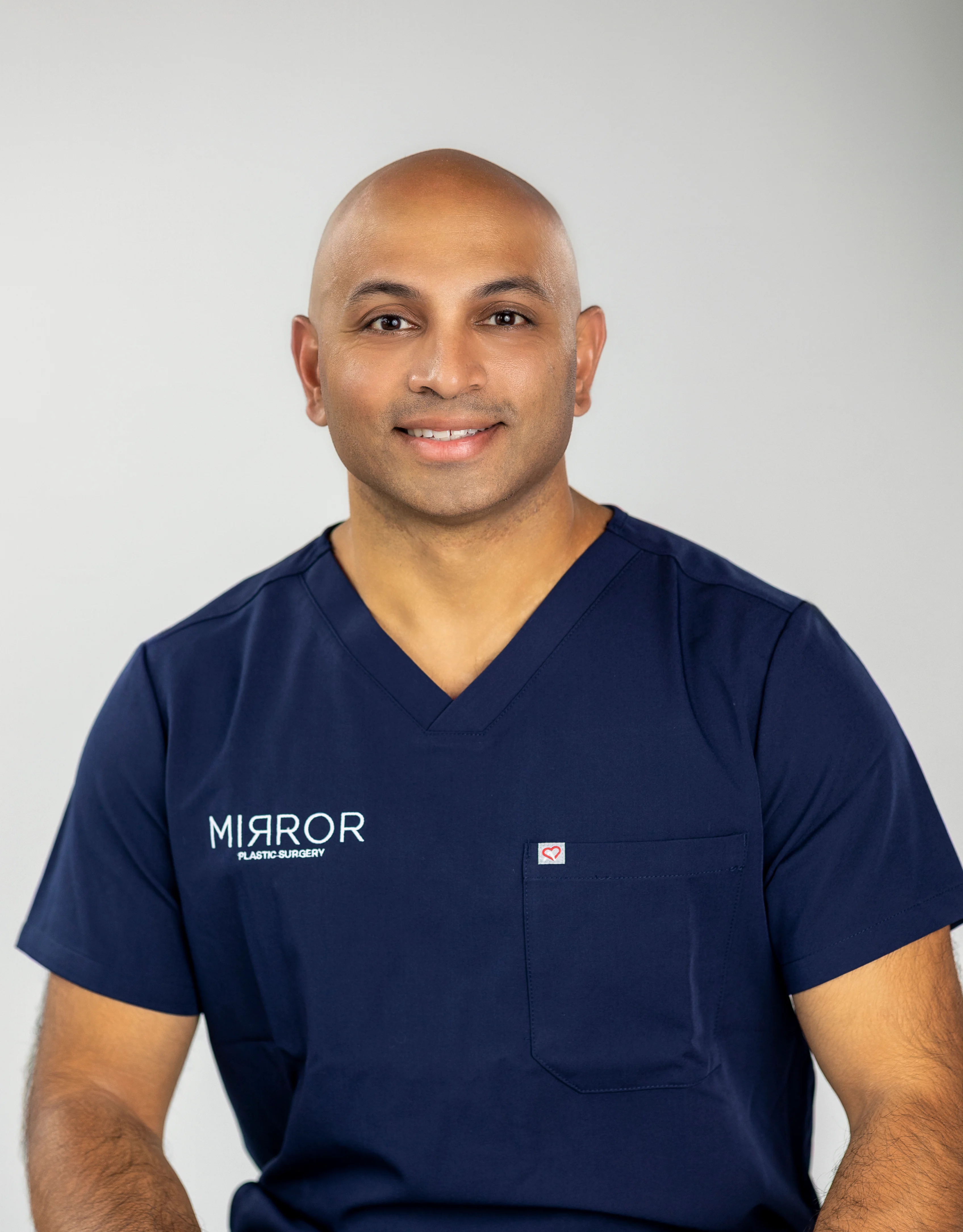
This depth of training functions as a primary safety mechanism. The same anatomical knowledge used in surgical reconstruction guides every injection decision in the treatment room.
Mirror Plastic Surgery follows a concierge medicine model, limiting procedures to one or two per day so each patient receives focused attention. Consultations can extend up to an hour. The practice is supplier-neutral, so product recommendations reflect evidence and individual anatomy rather than quotas or commissions. Dr. Akash often advises patients when an expensive treatment is not yet necessary, which builds long-term trust.
Book your consultation at Mirror Plastic Surgery, located at 780 4th Ave S, St. Petersburg, FL 33701, or reach the practice directly at 727-361-6515 or hello@mirrorplasticsurgery.com.
Frequently Asked Questions
Can Botox Cause A Droopy Eyelid?
Yes. Eyelid ptosis is a recognized complication, occurring in approximately 3% of cases in clinical trials and dropping to under 1% with experienced injectors. The mechanism involves toxin diffusing to the levator palpebrae superioris, usually when injections sit too close to the orbital rim or too deeply over the corrugator supercilii. The issue is almost always temporary, typically resolving within 3–6 weeks as the neuromodulator wears off. Prescription apraclonidine eye drops can provide partial, temporary relief in the interim.
What Is The Riskiest Place For Botox?
The periorbital zone around the eyes carries the highest risk of ptosis and diplopia because of its proximity to the levator palpebrae superioris and extraocular muscles. The masseter region carries a high risk of smile asymmetry if toxin spreads to the risorius or zygomaticus muscles that control the mouth corners. The neck (platysma) can affect swallowing or breathing if injected incorrectly. In all three zones, deep anatomical training, conservative dosing, and precise placement significantly reduce risk.
What Happens After 10 Years Of Botox?
Long-term effects depend on dosing strategy and treatment goals. Over-treatment that aims for complete muscle paralysis can lead to measurable muscle atrophy, with imaging studies showing thinning and volume loss in repeatedly injected muscles. When used conservatively, Botox limits repetitive muscle contractions that etch wrinkles into the skin and can act as a preventative tool. Clinical studies of patients treated over a year or more did not show new or more frequent side effects compared to single-treatment patients, and typical cosmetic doses remain well below the FDA’s 400-unit limit. The safest approach focuses on natural balance rather than maximum paralysis.
How Long Does It Take For Botox Side Effects To Go Away?
Minor side effects such as bruising, swelling, redness, and tenderness at the injection site usually resolve within 24 to 48 hours. Headaches occur in roughly 9% of forehead-line patients in clinical trials. Cosmetic complications such as ptosis or a Spock brow typically resolve within 3–6 weeks as the neuromodulator wears off, though some cases can last up to three months. There is no reversal agent for botulinum toxin, which makes prevention through a qualified provider the most important safety measure.
Is It Safe To Get Botox From A Med Spa?
Safety at a med spa depends on who performs the injections and which product they use. If a board-certified physician personally administers an FDA-approved product in a properly licensed medical setting, the risk profile matches other qualified practices. Concerns arise when med spas rely on non-physician injectors who lack extensive anatomical training. Always confirm the injector’s credentials, ask to see the labeled product vial, and verify that the setting is a licensed medical facility.
What Should I Do If I Think My Botox Is Botched?
Contact your injector immediately and document your concerns with photographs. Many cosmetic complications are temporary and can be managed with expert guidance. If you feel uncertain about the response, seek a second opinion from a board-certified plastic surgeon who can determine whether interventions such as prescription eye drops for ptosis or conservative balancing injections for asymmetry are appropriate. Avoid self-treatment. If you experience difficulty swallowing, shortness of breath, progressive muscle weakness, or worsening neurological symptoms, seek emergency medical care immediately.
How Do I Find A Qualified Botox Injector?
Look for a board-certified plastic surgeon or dermatologist who personally performs injections rather than delegating to non-physician staff. Confirm that the practice uses FDA-approved products from authorized distributors. Prioritize providers who offer an unhurried consultation with a full facial assessment and a clear discussion of anatomy, goals, risks, and realistic outcomes. Be cautious of dramatically low pricing, vague answers about credentials or complication protocols, and any setting that cannot verify product sourcing. A provider who sometimes advises against treatment often demonstrates trustworthy judgment.
Conclusion: Your Safety Starts With Your Injector Choice
“Botox gone wrong stories” usually involve injector error, poor anatomical understanding, or counterfeit products rather than FDA-approved Botox used by qualified physicians. Your choice of injector plays the central role in avoiding these outcomes.
Botox has an excellent safety record when a board-certified plastic surgeon with deep facial anatomy training places verified FDA-approved product in a licensed medical setting. That combination represents the standard of care every patient should expect.
Mirror Plastic Surgery follows this standard. Dr. Akash Chandawarkar personally performs every injectable treatment, applies decades of surgical anatomy training to each placement decision, and runs a concierge practice that prioritizes long-term well-being over volume.
Ready for safe, natural-looking results? Start your journey with a consultation at Mirror Plastic Surgery. Call 727-361-6515 or email hello@mirrorplasticsurgery.com. Book your consultation today and take the first step toward confident, physician-led care.
Disclaimer: Results may vary from person to person. Editorial content, before and after images, and patient testimonials do not constitute a guarantee of specific results.
1 Results may vary from person to person. Editorial content, before and after images, and patient testimonials do not constitute a guarantee of specific results.