
Written by: Ellie Pranckevicius, FNP-BC, Aesthetic Nurse Practitioner & Aesthetic Injector | Facial Restoration & Regenerative Injectable Specialist, Mirror Plastic Surgery
Key Takeaways
- Botox temporarily blocks nerve signals to targeted muscles and produces predictable, reversible cosmetic results when a trained provider injects it correctly.1
- Common side effects such as bruising, swelling, and headache are usually mild and clear within days to two weeks.1 Serious complications like ptosis are rare when technique is careful and anatomy-based.1
- Provider expertise in facial anatomy, thorough pre-treatment assessment, and individualized dosing are the main factors that reduce risk and support natural-looking outcomes.
- Aftercare focuses on avoiding rubbing or pressure on treated areas for several hours after injections to reduce toxin migration and unwanted effects.
- Patients who want careful, anatomy-focused Botox treatment in the Tampa Bay area can schedule a personalized consultation at Mirror Plastic Surgery with Ellie Pranckevicius.
How Botox Works and Why Side Effects Happen
Botox is a purified form of botulinum toxin type A, a protein that temporarily blocks acetylcholine release at the neuromuscular junction. This pause in signaling prevents targeted muscles from contracting. At cosmetic doses, the effect stays localized, remains reversible, and uses much smaller amounts than doses for conditions such as chronic migraine or spasticity.
Understanding how Botox works at the neuromuscular level helps clarify the key terms you will see when you research side effects and safety.
Neuromodulator: The broader category that includes Botox and its FDA-approved counterparts. This term refers to any agent that changes how nerve signals travel.
Migration: The diffusion of toxin beyond the intended injection site. This spread can affect nearby muscles and cause unintended effects such as eyelid drooping.
Ptosis: Drooping of the upper eyelid. It is the most frequently described clinically significant complication after glabellar (between-the-brows) injections and is usually temporary, although duration can vary.
Systemic effects: Rare events in which the toxin’s influence extends beyond the local injection site. Analyses of cosmetic botulinum toxin adverse event reports indicate that systemic events are uncommon, although some are classified as serious.
| Category | Examples | Typical Timeline |
|---|---|---|
| Mild / Self-Resolving | Bruising, swelling, redness, headache, tenderness at injection site | Hours to 1–2 weeks |
| Serious / Requires Evaluation | Ptosis, diplopia, facial asymmetry, dysphagia, systemic weakness | Days to weeks, medical review advised |
How Mirror Plans Botox Treatments for Safety
A thorough pre-treatment assessment is the main way risk is reduced. At Mirror Plastic Surgery, Ellie Pranckevicius often spends up to an hour on consultation. That visit covers facial mapping, goal discussion, anatomical evaluation, candidacy screening, and informed consent.
Facial mapping identifies the precise muscle groups related to each patient’s concerns. Once those target muscles are clear, anatomical evaluation accounts for individual variation in brow position, eyelid function, and muscle depth, which directly influence where and how deeply injections can be placed safely. Before any injection plan is finalized, candidacy screening rules out contraindications including pregnancy, breastfeeding, and certain neurological conditions.
Only after these safety checks are complete does informed consent confirm that patients understand the realistic range of outcomes before treatment begins. Each of these steps follows a deliberate priority order: safety first, function second, aesthetics third. This sequence forms the structural foundation of every treatment plan at Mirror.
Book a consultation with Ellie to start with a comprehensive anatomical assessment tailored to your face.
Current Botox Products and Safety Trends
The FDA has approved six botulinum toxin type A formulations for cosmetic use: Botox (onabotulinumtoxinA), Dysport (abobotulinumtoxinA), Xeomin (incobotulinumtoxinA), Daxxify (daxibotulinumtoxinA-lanm), Jeuveau (prabotulinumtoxinA), and Letybo (letibotulinumtoxinA-wlbg). Each product has its own protein complex, unit dosing, and diffusion profile. No single formulation works best for every situation. The right choice depends on treatment area, patient anatomy, and clinical goals.
Evolving safety protocols reflect growing patient demand for natural results and clear risk communication. Experienced injectors now routinely include baseline functional screening, which means assessing brow position and eyelid function before any injection, as a standard precaution. Prevention of eyelid ptosis focuses on baseline assessment of brow position and eyelid function, conservative placement and dosing, and avoiding injection patterns that increase diffusion risk based on individual patient anatomy.
What to Look For Before You Book Botox
Provider anatomical training is the most consequential variable a patient can evaluate before scheduling treatment. The most frequently cited risk-reducing factors in the clinical literature are patient selection, detailed knowledge of facial anatomy, appropriate dosing, and meticulous injection technique.
A quality-over-volume approach matters in real outcomes, not just in marketing language. High-volume clinics that run on tight schedules have less time for baseline assessments that catch contraindications and anatomical risk factors before they become complications. Post-treatment protocols, long-term maintenance planning, and honest communication about realistic timelines are hallmarks of a concierge-level practice and support results that age well.
Risks, Limitations, and Tradeoffs With Botox
Mild, self-resolving effects include bruising, swelling, redness, and headache at or near the injection site. Common side effects of Botox injections are usually minimal and local, including pain, bruising, inflammation, bleeding, redness, and swelling at the injection site. These effects usually clear within days to two weeks without treatment.
Serious risks include ptosis, diplopia, facial asymmetry, and rare systemic effects described earlier in this guide. Upper eyelid ptosis after glabellar injections is uncommon, particularly in treatments performed by experienced injectors. Injector technique largely explains the difference in risk.
Contraindications include pregnancy, breastfeeding, and certain neurological conditions. Medical consensus is clear on this point: individuals who are pregnant, breastfeeding, or managing specific neurological conditions should not receive Botox.
The 4-hour rule refers to a cluster of post-treatment precautions covering the first four hours after injection. Patients are advised to remain upright, avoid rubbing or massaging the injected area, and refrain from strenuous exercise for 24 hours, with light activity permitted after four hours. Major medical sources including the Mayo Clinic continue to advise avoiding lying down for 2–4 hours post-Botox as a precautionary measure, although this is described as belt-and-braces advice rather than strongly evidence-based. The most consistently supported aftercare instruction is avoiding rubbing, pressing, or applying pressure to treated areas, including with facial tools, heavy makeup application, or tight headwear, for the first several hours to minimize diffusion-related complications.
Common Botox Myths, Clarified
“Botox is permanent.” It is not permanent. The therapeutic effects of Botox are temporary and last three to six months depending on the indication and individual patient factors.1
“Cosmetic doses are toxic.” Systemic toxicity is rare at standard cosmetic doses. Muscle function fully returns between treatments, which supports reversibility rather than cumulative neurologic harm.
“Botox causes dependency.” Botox does not accumulate in the body, and its effects naturally wear off within several months as normal nerve signaling resumes. Patients who continue treatment usually do so because they prefer the results, not because stopping causes harm.
“Overdone results are inevitable.” They are not inevitable. They reflect injector choices. An anatomy-first approach that treats the full face as an integrated system, rather than chasing single lines in isolation, helps prevent the disproportionate or frozen appearance that patients often fear.
How Choosing the Right Provider Lowers Risk
The gap between a 14% ptosis rate and a sub-1% ptosis rate reflects technique, not product differences. Risk of toxin-induced upper eyelid ptosis increases with injections placed close to the supraorbital margin, higher injection volumes, or deeper placement, and an anatomically trained injector manages each of these variables deliberately.
Ellie Pranckevicius, FNP-BC, brings a clinical background that aligns directly with this standard. Before joining Mirror Plastic Surgery, she spent four years in the Neuroscience ICU at Tampa General Hospital, where she managed critically ill patients with complex neurological presentations. That experience, which includes understanding how the nervous system responds under stress, how to recognize early signs of neurological compromise, and how to act on that recognition, informs the judgment she applies during every injection assessment.
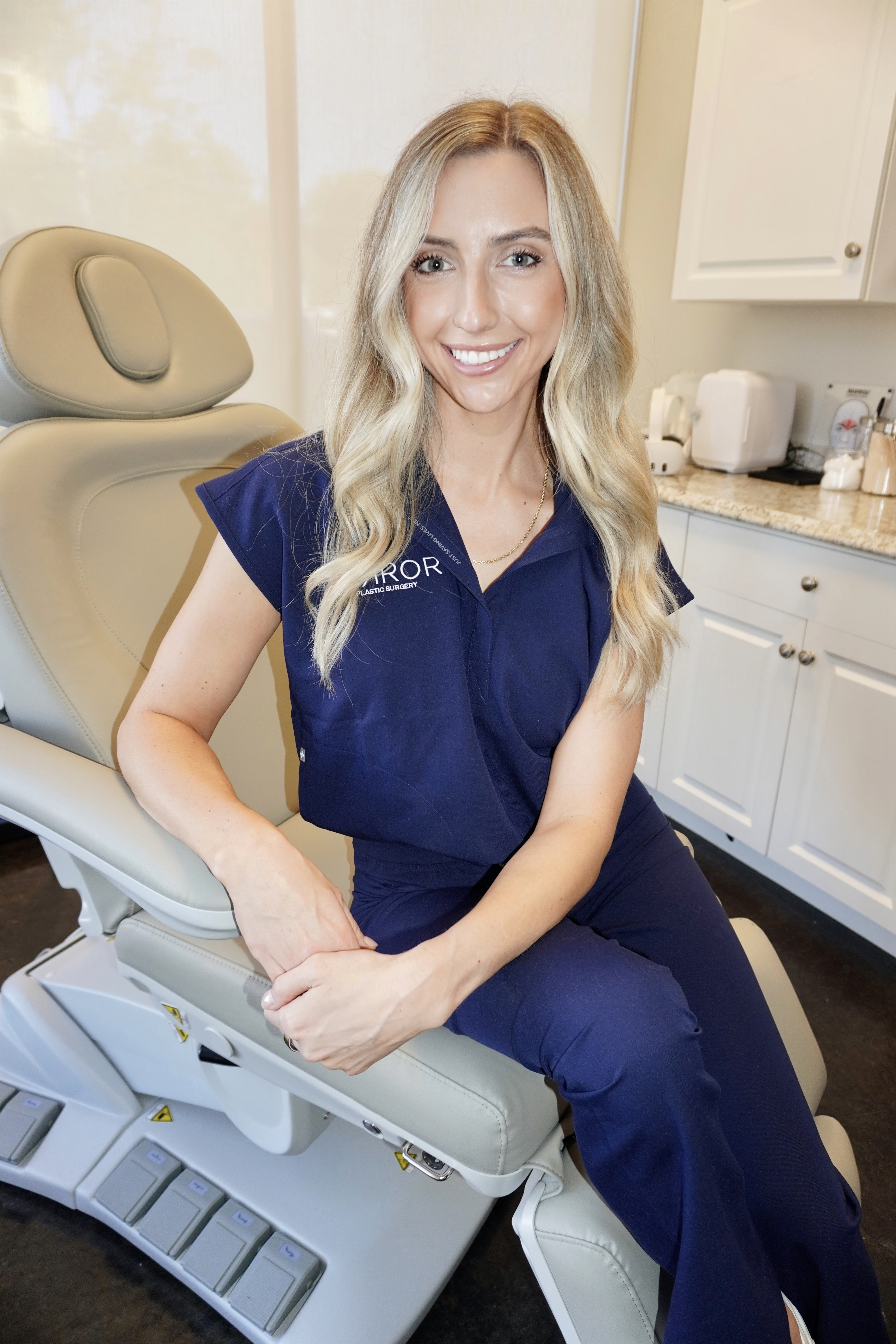
Combined with 600 hours of hands-on aesthetics training and a Master’s in Nursing from the University of South Florida, her dual background in esthetics and advanced nursing supports a level of anatomical and physiological literacy that high-volume practices rarely match. This anatomy-first philosophy, introduced earlier in this guide, shapes every clinical decision she makes.
Mirror’s supplier-neutral model reinforces this approach. Ellie selects among Botox, Dysport, Xeomin, Daxxify, and Jeuveau based on what is clinically appropriate for each patient’s anatomy and goals, not on volume commitments or product quotas.
Book a consultation with Ellie and experience the anatomy-focused, safety-first assessment described throughout this guide.
Frequently Asked Questions
What are the worst side effects of Botox?
The most serious side effects from cosmetic Botox include upper eyelid ptosis (drooping), diplopia (double vision), significant facial asymmetry, and rare systemic effects such as difficulty swallowing, muscle weakness, or flu-like illness. These events are uncommon, especially when an experienced, anatomically trained injector performs treatment. Ptosis, which this guide defined earlier as the most frequently reported clinically significant complication, typically resolves within two to four weeks.1 Any symptom that extends beyond the treated area, affects swallowing or breathing, or does not resolve within the expected timeframe needs prompt medical evaluation.
What is the 4-hour rule for Botox?
The 4-hour rule summarizes the early aftercare steps already outlined in the risks section. Patients remain upright, avoid rubbing or massaging the treated area, and skip strenuous physical activity during the first hours after injections. The goal is to reduce the chance of toxin migrating from the intended injection site to nearby muscles. Avoiding direct pressure on treated areas, including from facial tools, tight headwear, or heavy makeup application, is the most consistently supported part of this guidance. Evidence for the lying-down restriction is limited, and some major medical sources describe it as a precaution rather than a strict requirement. Strenuous exercise is usually avoided for a full 24 hours.
Do Botox side effects go away?
Most Botox side effects are temporary. Mild local effects such as bruising, swelling, redness, and tenderness usually clear within days to two weeks. Ptosis, when it occurs, most often resolves within two to four weeks. Because Botox does not build up in the body and its neuromuscular effects wear off as normal nerve signaling resumes, typically within three to six months for cosmetic use, even effects that last longer than expected usually resolve as the treatment wears off. Systemic effects are rare and, when they occur, are also temporary.
What are Botox side effects on the forehead?
Forehead Botox targets the frontalis muscle, which lifts the brows. Side effects specific to this area include heaviness or a feeling of pressure across the brow, temporary brow ptosis (lowering of the brow position rather than the eyelid), and sometimes a flattened or overly smooth look if dosing does not match the patient’s anatomy. These outcomes relate closely to injection placement and dose. Patients with a naturally low brow position or those who use their forehead muscles to compensate for upper eyelid laxity need particularly careful baseline assessment before forehead treatment. An experienced injector evaluates these factors before placing any units in this area.
What are Botox neurological side effects?
At cosmetic doses, Botox does not cause permanent neurological damage. The toxin acts locally at the neuromuscular junction, and its effects reverse as the nerve terminal restores its signaling capacity over months. Rare neurological-adjacent side effects reported in pharmacovigilance data include headache, muscle weakness beyond the treated area, and in very rare cases, symptoms that resemble a mild flu-like illness. Current evidence does not support cumulative long-term neurological harm from repeated cosmetic use at standard doses. Individuals with pre-existing neuromuscular conditions, such as myasthenia gravis or Lambert-Eaton syndrome, are contraindicated for Botox and should not receive treatment.
Who should avoid Botox?
Botox is contraindicated in individuals who are pregnant or breastfeeding. People with certain neuromuscular disorders, including myasthenia gravis, Lambert-Eaton syndrome, and amyotrophic lateral sclerosis (ALS), should not receive botulinum toxin injections because of the risk of worsening muscle weakness. Patients with known hypersensitivity to botulinum toxin or any component of the formulation are also excluded. A thorough candidacy screening during the initial consultation is the correct way to identify these contraindications, and this step should never be abbreviated or skipped.
How do you minimize Botox side effects?
The most effective way to reduce risk is to choose an injector with verified anatomical training, strong clinical judgment, and a practice model that allows enough time for pre-treatment assessment. Technical choices that reduce local adverse effects include use of fine-gauge needles, slow injection speed, small injection volumes, and brief pressure after each injection. Following post-treatment instructions, especially avoiding rubbing or pressing the treated area for several hours, lowers diffusion risk.
Disclosing all medications, supplements, and medical history during the consultation allows the provider to identify and manage factors that increase bruising or contraindicate treatment. Patients should avoid antithrombotic medications when clinically appropriate and only as directed by their provider in the days before treatment.
Conclusion: Putting Botox Risks in Context
Botox side effects exist on a spectrum from mild and self-resolving to rare and serious. Understanding that spectrum, and recognizing that injector expertise largely determines where your experience falls on it, gives patients a practical way to evaluate treatment. The clinical literature is consistent: detailed anatomical knowledge, careful patient selection, appropriate dosing, and meticulous technique separate a 14% ptosis rate from a sub-1% rate. Those variables live in the provider, not the product.
At Mirror Plastic Surgery, Ellie Pranckevicius brings neuroscience ICU clinical judgment, advanced nursing credentials, and 600 hours of hands-on aesthetics training to every assessment. The practice’s concierge model, which includes up to an hour per consultation, supplier-neutral product selection, and a safety-first philosophy, exists because these details matter.
Book a consultation with Ellie at Mirror Plastic Surgery in St. Petersburg, FL, and receive the anatomy-based assessment described throughout this guide, built around your face, your goals, and your safety.
Disclaimer: Results may vary from person to person. Editorial content, before and after images, and patient testimonials do not constitute a guarantee of specific results.
This content is for educational purposes only and does not replace personalized medical advice. Consult a qualified healthcare provider before any treatment.
1 Results may vary from person to person. Editorial content, before and after images, and patient testimonials do not constitute a guarantee of specific results.