

Written by: Dr. Akash Chandawarkar, Board Certified Plastic Surgeon, Mirror Plastic Surgery | Last updated: September 9, 2026
Introduction To Safe Botox Choices
Safe Botox treatment depends on who injects you, where they treat you, and how they handle emergencies. The phrase “medical grade Botox” sounds reassuring, yet it has no regulatory meaning. This guide explains what truly protects your health, how to spot red flags, and why many patients choose physician-led practices like Mirror Plastic Surgery for injectables.
Key Takeaways
- “Medical grade” Botox is a marketing term with no FDA definition. All FDA-approved botulinum toxin products follow the same manufacturing standards.
- Safety comes from injector training, on-site physician oversight, and clear emergency protocols, not from a marketing label.
- Medical clinics typically use authentic product from authorized sources and maintain equipment and expertise to manage complications quickly.
- Warning signs include very low prices, non-clinical locations, unclear credentials, and refusal to show the product vial before injection.
- Schedule a comprehensive consultation at Mirror Plastic Surgery for physician-led injectable care grounded in surgical-level anatomical knowledge.
Step 1: What “Medical Grade” Botox Really Means
The term “medical grade Botox” has no official FDA definition. The FDA does not recognize “medical grade” as a category for botulinum toxin products. The agency classifies drugs and biologics by product identity and approved use, so “medical grade” functions as marketing language, not a safety guarantee.
Every botulinum toxin product approved by the FDA for cosmetic use is manufactured to rigorous medical standards. As of 2026, seven product families hold FDA approval: Botox/Botox Cosmetic (onabotulinumtoxinA), Dysport (abobotulinumtoxinA), Xeomin (incobotulinumtoxinA), Jeuveau (prabotulinumtoxinA-xvfs), Daxxify (daxibotulinumtoxinA-lanm), Letybo (letibotulinumtoxinA-wlbg), and Myobloc (rimabotulinumtoxinB). Each has its own label, clinical trials, and safety data.
For example, Letybo received FDA approval on February 29, 2024, after three randomized, double-blind, placebo-controlled trials involving 1,271 patients. That level of review applies to every product on the list. None carries a higher “grade” than the others. Safety rests on the injector’s skill and the clinical environment, not on a marketing phrase.
Step 2: Compare Medical Settings And Spas For Safety
Provider Qualifications: Who Is Actually Injecting You
The American Academy of Dermatology states that botulinum toxin injections are a medical procedure. They recommend treatment only in a medical office by board-certified dermatologists or appropriately trained non-physician clinicians under direct on-site supervision.
Board-certified plastic surgeons complete at least five years of surgical residency training. For example, the Independent pathway includes five years of general surgery plus three years of plastic surgery, while the Integrated pathway spans six years. In contrast, dermatologists complete a one-year clinical internship plus three years of dermatology residency, which focuses less on surgery. In medical clinics, nurse practitioners or physician assistants may inject under direct physician supervision.
Estheticians and medical assistants cannot legally inject Botox in any U.S. state. Botox is a prescription drug, and injection counts as practicing medicine. In many spas, injector credentials vary widely, and physician supervision may be remote or absent.
Medical Oversight And Emergency Preparedness
Physician-led practices create protocols for rare but serious complications such as allergic reactions, vascular occlusion, or toxin spread. All FDA-approved botulinum toxin products carry a boxed warning, the strongest FDA warning. This warning notes the potential for botulism-like symptoms, including muscle weakness that can impair breathing and become life-threatening. Managing that risk requires on-site medical expertise and emergency equipment that many spas lack.
Product Sourcing And Authenticity
Licensed medical practices purchase FDA-approved products directly from manufacturers or authorized distributors. This approach supports proper storage, handling, and chain-of-custody tracking. The CDC warns that products from unlicensed sources may be misbranded, adulterated, counterfeit, contaminated, improperly stored, ineffective, or unsafe. During a recent 10‑month period, state health departments reported 13 patients severely ill with suspected botulism after using products from unlicensed sources. All required hospitalization, and some needed mechanical ventilation.
An April 2026 FDA warning letter to Pure Indulgence Aesthetics, a Texas medical spa, showed how sourcing can go wrong. Investigators found the spa had dispensed far more Botox units than it purchased from AbbVie, which indicated unauthorized sourcing. They also discovered an unlabeled vial of botulinum neurotoxin type A in the trash, with a shape that did not match authentic AbbVie packaging.
Complication Management
In a medical clinic, the injector can evaluate and treat adverse events immediately. A board-certified plastic surgeon understands facial and subdermal anatomy in depth and can recognize problems such as vascular compromise early. Many spas respond to complications by sending patients elsewhere, which wastes crucial time when minutes matter.
Consultation Depth
Medical practices typically begin with a thorough consultation that reviews medical history, medications, and aesthetic goals before drawing any product. For example, at Mirror Plastic Surgery, Dr. Akash Chandawarkar’s comprehensive assessment can last up to an hour. In contrast, spa consultations are often brief and sales-driven, with more focus on booking the appointment than confirming that treatment is appropriate.
| Factor | Medical Clinic (e.g., Mirror Plastic Surgery) | Spa Or Med Spa |
|---|---|---|
| Injector qualifications | Board-certified plastic surgeon or physician-supervised clinician; physicians hold broadest legal authority in all 50 states | Variable staff training; estheticians cannot legally inject in any U.S. state |
| Medical oversight | Physician-led care with direct on-site supervision and emergency protocols | Oversight may be minimal or remote; enforcement varies by state |
| Product sourcing | Direct from manufacturer or authorized distributor with verified chain of custody | Higher risk of unauthorized sourcing; FDA documented one Texas med spa dispensing more Botox than it purchased |
| Complication management | Immediate on-site diagnosis and treatment by a physician with surgical anatomical training | Often requires referral to an outside facility; antitoxin access runs through health departments or the CDC |
Schedule your physician-led injectable consultation to see how a detailed medical assessment shapes your treatment plan.
Step 3: Recognize The Safety Risks Of Spa Botox
Gaps in oversight, sourcing, and emergency readiness in many spas translate into real-world dangers. The following risks appear frequently in reports from the FDA and CDC.
Counterfeit Products
A CDC Health Alert Network advisory documented 22 people with adverse effects across 11 states after injections from unlicensed or untrained individuals in homes and spas. Eleven required hospitalization. An April 2024 FDA alert identified counterfeit Botox lot C3709C3 in several states. The packaging listed a 150‑unit dose AbbVie does not manufacture, misspelled the Irish manufacturing location, and listed the active ingredient incorrectly.
Unqualified Injectors
The AAD warns that counterfeit or improperly obtained product can cause serious complications. These include long-term muscle paralysis, Bell’s palsy, and permanent eye damage. Limited anatomical training also increases the risk of eyelid droop, uneven results, or vascular occlusion, where product enters a blood vessel and can damage tissue.
Lack Of Emergency Care
Treatment for botulism often requires mechanical ventilation and heptavalent botulinum antitoxin (HBAT) from the CDC. Early recognition of progressive weakness after cosmetic injections is a true emergency. A spa typically lacks the staff, equipment, and protocols to start that response.
Inadequate Hygiene And Storage
FDA-approved Botox must be stored at 2–8°C and used within 24 hours of reconstitution. The Pure Indulgence Aesthetics warning letter flagged pre-filled 10‑unit syringes held on-site. That practice raised concerns about product integrity and patient safety.
Step 4: Walk Away From These Red Flags
Several warning signs should prompt you to leave and seek another provider. Each one signals a breakdown in safety standards.
- Prices that seem too good to be true. Authentic FDA-approved products follow consistent pricing. Deep discounts often suggest counterfeit or diluted product.
- Injections at “Botox parties” or in non-clinical settings. The AAD explicitly advises against injections in non-medical spas, parties, salons, or private homes.
- Provider refuses to show the product vial or explain the brand. The CDC recommends watching as the provider draws product from the labeled vial into the syringe.
- No medical history or consultation. Safe Botox treatment requires screening for pregnancy, neuromuscular disorders, and medication interactions before injection.
- Injector lacks appropriate medical credentials. The injector should be a licensed physician or nurse working under direct, on-site physician supervision. Always verify credentials.
- No clear plan for complications. Ask how the team handles problems. They should describe an immediate, on-site response, not a vague referral.
Step 5: Use This Pre-Treatment Safety Checklist
Applying a simple checklist before you book helps you choose a safer provider with confidence.
- Verify the injector’s credentials. Confirm board certification in plastic surgery or dermatology through the American Board of Plastic Surgery or American Board of Dermatology.
- Ask about the product brand and see the vial. Confirm FDA approval and check the lot number against manufacturer information when possible.
- Confirm a licensed medical setting. Make sure the facility has emergency equipment and written response protocols on-site.
- Schedule a full consultation. Expect a medical history review, risk discussion, and personalized plan, not a quick sales-focused visit.
- Discuss the provider’s experience with complications. A qualified injector can explain how they manage vascular occlusion, toxin spread, and other adverse events.
Why A Board-Certified Plastic Surgeon Is The Safest Choice
When you apply this checklist, board-certified plastic surgeons consistently meet the highest safety standards. Dr. Akash Chandawarkar, founder of Mirror Plastic Surgery, holds certification from the American Board of Plastic Surgery. He completed surgical training at Johns Hopkins and an aesthetic surgery fellowship at Manhattan Eye, Ear & Throat Hospital. This background provides a surgeon’s command of facial anatomy, which supports both precise and safer injectable placement.
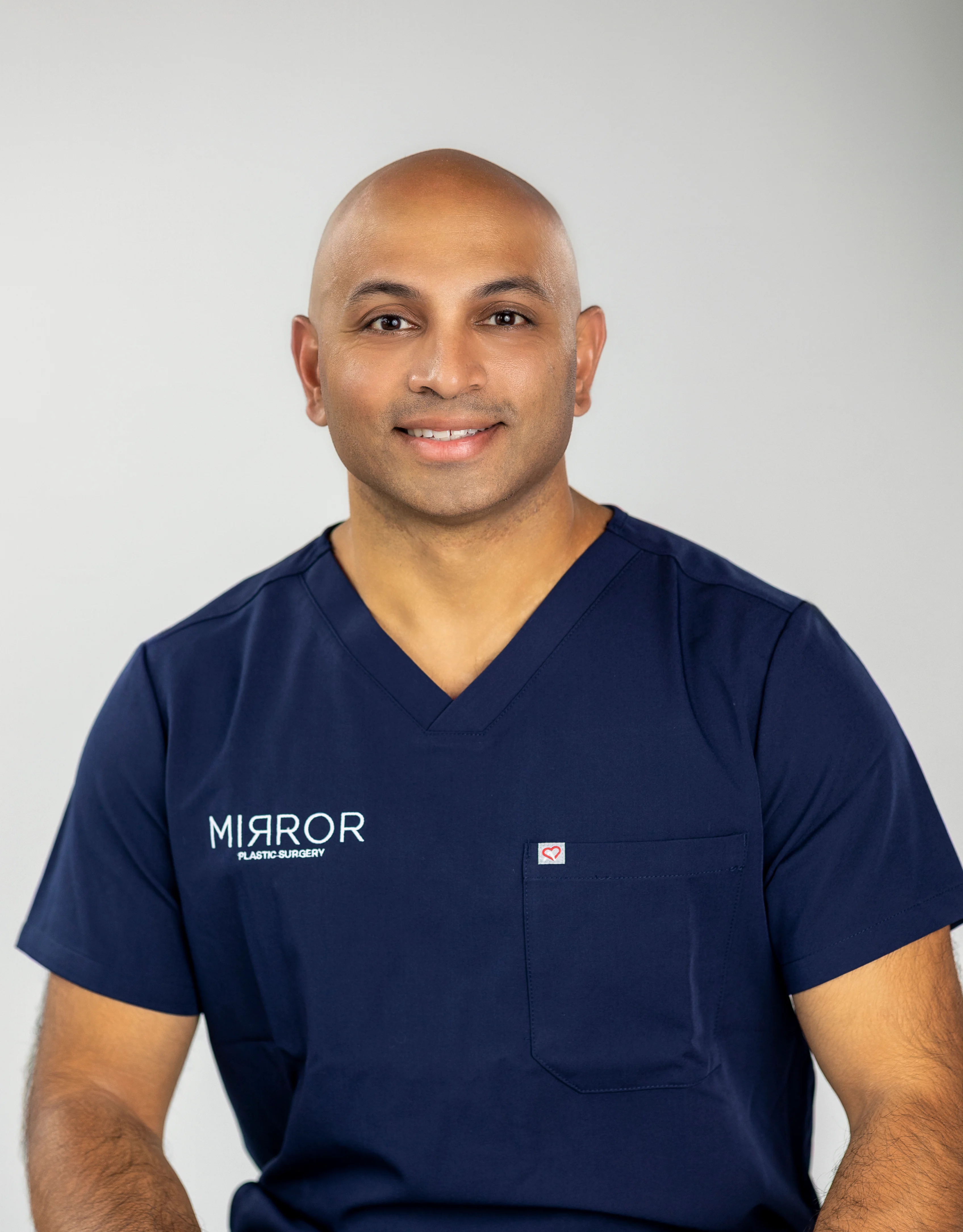
Dr. Akash personally performs every neuromodulator and dermal filler treatment at Mirror Plastic Surgery. He does not delegate injections to less-trained staff. He also serves on advisory boards for several injectable product companies, including Merz Aesthetics, which keeps his practice aligned with current evidence and innovation. His approach follows a clear priority order: safety first, function second, and aesthetics third.
Mirror Plastic Surgery’s concierge model limits the schedule to one or two procedures per day. This structure gives each patient the full attention of the clinical team before, during, and after treatment. Many high-volume practices emphasize speed, while this practice emphasizes careful, individualized care.
Request an appointment with Dr. Chandawarkar to begin your injectable journey with a surgeon who brings advanced anatomical expertise to every treatment.
Frequently Asked Questions
Is It Safe To Get Botox At A Medical Spa?
Safety at a medical spa depends on physician oversight and injector training at that specific location. The American Academy of Dermatology recommends Botox only in medical offices under direct, on-site physician supervision. Some medical spas follow this model with qualified injectors, while others do not. Protect yourself by verifying credentials, confirming that a supervising physician will be physically present, and asking to see the product vial before injection.
What Is The Safest Form Of Botox?
All FDA-approved botulinum toxin products, including Botox, Dysport, Xeomin, Jeuveau, Daxxify, and Letybo, meet the same manufacturing standards. Each product is safe when a qualified professional injects it in an appropriate clinical setting. The injector’s expertise, the environment, and secure product sourcing matter more than the brand name. “Medical grade” does not represent a real regulatory category.
Can Botox Be Counterfeit?
Counterfeit Botox exists in the United States. The FDA and CDC have documented fake or improperly sourced products sold online and used in non-medical settings. The 13 hospitalized patients mentioned earlier illustrate how dangerous unlicensed sources can be. The counterfeit Botox alert discussed earlier also showed how packaging details may reveal a fake product. Always ask to see the vial and confirm that the clinic buys directly from manufacturer-authorized channels.
What Should I Ask Before Getting Botox?
Ask about the injector’s credentials and board certification, the exact product brand and lot number, and the type of facility where treatment occurs. Request details about emergency protocols and the provider’s experience managing complications. The CDC advises watching as the injector draws product from the labeled vial into the syringe. Also confirm that a physician will be physically present, not just available by phone.
How Do I Know If My Injector Is Qualified?
Check board certification in plastic surgery or dermatology through the appropriate specialty board. Confirm that the injector is a licensed physician or works under direct, on-site physician supervision rather than remote oversight. Ask about specific training in facial anatomy and experience treating complications such as ptosis, asymmetry, and vascular occlusion. As noted earlier, estheticians cannot legally inject Botox, and registered nurses need a physician’s order and delegation.
Conclusion: Take Control Of Your Botox Safety
“Medical grade Botox” functions as a marketing phrase, not a safety guarantee. Every FDA-approved botulinum toxin product follows the same manufacturing standards. Your safety depends on the injector’s qualifications, the medical setting, the authenticity of the product, and the team’s ability to manage complications on-site.
By using the framework in this guide, you can evaluate any provider with clarity. You now know how to look past marketing language, compare medical clinics with spas, recognize red flags, and apply a practical safety checklist. At Mirror Plastic Surgery, Dr. Akash Chandawarkar’s board certification, Johns Hopkins training, and concierge model support surgical-level precision and comprehensive safety for every injection.
Start your injectable journey with a physician-led consultation and experience the difference that expert, safety-focused care provides.
Disclaimer: Results may vary from person to person. Editorial content, before and after images, and patient testimonials do not constitute a guarantee of specific results.


