

Written by: Dr. Akash Chandawarkar, Board Certified Plastic Surgeon, Mirror Plastic Surgery | Last updated: September 9, 2026
Key Takeaways
- A medically trained Botox injector is a licensed healthcare provider with formal education in facial anatomy who personally performs your injections. Many med-spa staff complete only brief certification courses.
- Board certification by the American Board of Plastic Surgery or Dermatology serves as the first screening step. It confirms years of accredited residency training and ongoing medical education that short courses cannot match.
- In Florida, physicians must personally examine patients and write orders before any injection. This is why the safest choice is a board-certified plastic surgeon who performs every injection rather than delegating to nurses or aestheticians.
- Major red flags include Botox parties in non-clinical settings, refusal to show product packaging, rushed consultations under five minutes, pressure to add extra units, and undisclosed or unknown products.
- Choosing a board-certified plastic surgeon protects both your appearance and health.1 Schedule a consultation at Mirror Plastic Surgery to experience this level of expertise firsthand.
Step 1: Verify Board Certification As Your First Filter
Start by confirming that your injector is board-certified by the American Board of Plastic Surgery or the American Board of Dermatology. Board certification means the physician has completed an accredited residency, passed comprehensive oral and written examinations, and maintains ongoing continuing medical education. Both boards offer public verification portals, and you can check credentials in minutes.
The CDC advises patients to receive botulinum toxin injections only from a provider with a valid healthcare license and training to administer FDA-approved products correctly. Board certification represents the highest verifiable standard of that training. A board-certified plastic surgeon has completed four years of medical school and at least six years of surgical training. That training may follow one of two paths: six years in an integrated plastic surgery residency, or five years of prerequisite surgical training plus three years of plastic surgery fellowship. Either path covers head and neck anatomy and often includes additional fellowship training in aesthetic surgery, which far exceeds the preparation offered by a weekend aesthetics course.
Board certification in plastic surgery or dermatology shows advanced training in specialties that frequently include aesthetic procedures. Focused hands-on training in Botox techniques still builds on that foundation. This is why choosing a surgeon who performs injections daily, rather than occasionally, makes a meaningful difference in your results.
Step 2: Compare Physician And Med-Spa Injector Training
The term “medically trained” often includes anyone with a nursing license and a seminar certificate. The actual training gap between physicians and many med-spa injectors is substantial.
| Credential | Board-Certified Plastic Surgeon | Med-Spa Nurse Injector |
|---|---|---|
| Education | 4 years medical school + 6–8 years surgical residency | Nursing degree (ADN or BSN) |
| Anatomy Training | Intensive head & neck anatomy throughout residency | Limited to brief aesthetics certification courses |
| Board Certification | American Board of Plastic Surgery or Dermatology | None required |
| Supervision (Florida) | Independent practice | Requires physician delegation and order |
The table above summarizes this credential gap, using data from the American Board of Plastic Surgery and IAPAM state regulation summaries.
This gap becomes especially important in Florida. Registered nurses may administer Botox only under physician delegation, and the physician must examine the patient and write the order first. The key issue is whether that physician is actually on site. Many med-spas list a “medical director” who has never met the staff or examined a patient. The American Academy of Dermatology Association advises that Botox injections occur in a medical office, performed by board-certified dermatologists or an appropriately trained non-physician clinician under direct on-site supervision. When you choose a practice where the physician personally performs your injection, you remove any uncertainty about supervision.
Step 3: Use Your Consultation To Assess Expertise
A consultation lets you evaluate the provider’s expertise and approach before treatment begins. The CDC recommends confirming that your provider has a valid healthcare license and training specific to Botox administration. Arrive with clear questions so you can judge both knowledge and communication style.
- Who will actually perform my injection? The answer should be the physician you consulted with, not a new face who appears only when the needle comes out.
- What is your board certification, and can I verify it? A reputable physician welcomes verification.
- How do you determine the right dose for my facial anatomy? Look for an explanation that includes muscle strength, facial symmetry, and expression patterns, rather than a fixed protocol.
- What is your philosophy on natural results? Skilled injectors soften lines while preserving your ability to express emotion.
- How do you handle complications? A physician should describe a clear protocol for managing rare events such as vascular occlusion or ptosis.
At Mirror Plastic Surgery, Dr. Akash Chandawarkar often spends up to an hour with each patient. He performs a top-to-bottom evaluation that considers how the upper, middle, and lower face work together. This holistic approach helps prevent isolated treatments that create imbalance or an “overdone” look.1
Schedule your consultation to experience this comprehensive assessment firsthand.
Step 4: Watch For Red Flags That Put You At Risk
Knowing what to avoid protects you from preventable complications. The CDC has documented severe illnesses, including cases requiring mechanical ventilation, linked to unlicensed providers and counterfeit botulinum toxin products. Treat the following warning signs as serious reasons to pause.
- “Botox parties” in homes or non-clinical settings. A published case report describes a severe botulism-like illness after cosmetic botulinum toxin injections from an unlicensed individual at a home “Botox party.” The patient suffered hospitalization-level harm: bulbar paralysis, dysphagia, ptosis, and respiratory symptoms. These environments lack sterile protocols and emergency equipment.
- Refusal to show product packaging. The CDC recommends watching your provider draw the product from a labeled vial into the syringe. If the product arrives pre-drawn or the provider will not show you the packaging, choose a different practice.
- High-volume practices that rush your consultation. A consultation under five minutes signals a problem, especially when a sales coordinator conducts it instead of the injector.
- Pressure to add more areas or units than you discussed. A trustworthy provider recommends only what your anatomy needs and may advise against extra treatments.
- Undisclosed or unknown products. A cross-sectional survey of 919 adults in Clinical and Experimental Dermatology (July 2026) found that patients who reported unknown or undisclosed botulinum toxin products experienced markedly poorer outcomes across multiple adverse events.
Step 5: Weigh Expertise Against Cost
Board-certified plastic surgeons and dermatologists often charge higher Botox rates because of their deeper anatomical knowledge. That expertise matters most for complex areas, corrective work, or large multi-area first-time treatments. The real value extends beyond the per-unit price.
A poor outcome carries financial and emotional costs. Correcting an asymmetrical brow, treating eyelid ptosis, or managing a misplaced injection usually costs more than any savings from a discount provider. A skilled injector may also use fewer units with better results by placing the product at the ideal depth and location. The American Society of Plastic Surgeons advises patients considering botulinum toxin treatment to consult a board-certified plastic surgeon about their medical history and options before treatment.
Clinics staffed by board-certified physicians who follow hospital-grade protocols report serious adverse events from Botox in fewer than 0.5% of procedures.1 When you invest in a board-certified plastic surgeon, you pay for safety, precision, and natural results that support both your appearance and your health.1
Conclusion: Your Face Deserves A Surgeon’s Expertise
Choosing the best medically trained Botox injector near you means prioritizing safety, skill, and natural-looking results. By following this five-step checklist, you can verify board certification, understand the training gap, ask targeted questions, spot red flags, and evaluate the true value of expertise. Evidence consistently shows that board-certified physicians with surgical training in facial anatomy provide the safest care and the most natural outcomes.
At Mirror Plastic Surgery, Dr. Akash Chandawarkar personally performs every injection and brings a surgeon’s command of anatomy to each treatment. His concierge approach, clear communication, and safety-first mindset make him a leading choice for patients in St. Petersburg and Tampa.
Why St. Petersburg And Tampa Patients Choose Mirror Plastic Surgery
Mirror Plastic Surgery, located at 780 4th Ave S in St. Petersburg, FL 33701, aligns with every standard in this checklist. Dr. Akash Chandawarkar is board-certified by the American Board of Plastic Surgery, Harvard-educated, and Johns Hopkins-trained, with fellowship training in aesthetic surgery at the Manhattan Eye Ear & Throat Hospital. He personally performs every injection, so patients are never handed off to a nurse or delegate. His advisory roles with companies such as Merz Aesthetics and Tiger Aesthetics keep him current on injectable advances.
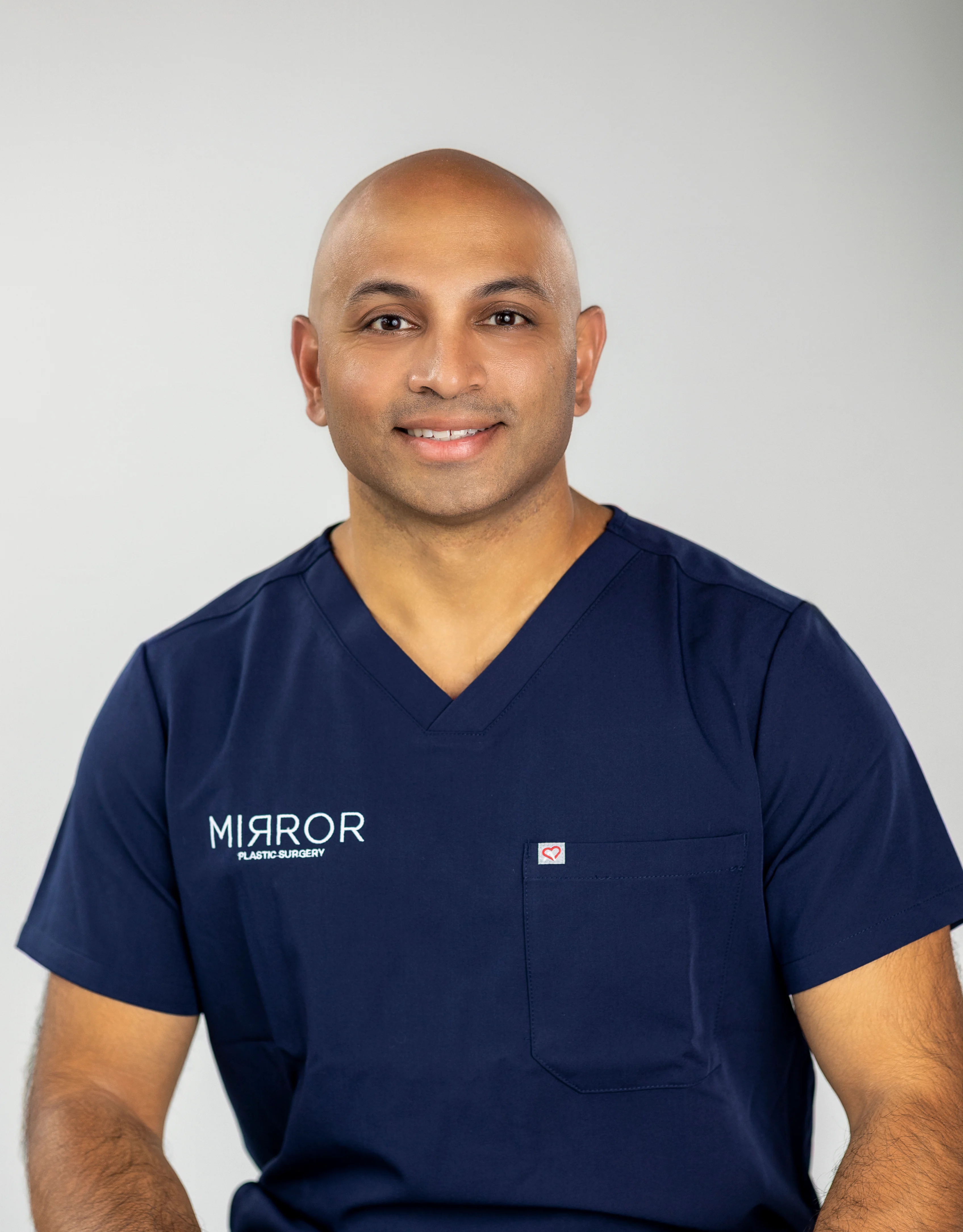
Mirror’s concierge philosophy means patients receive unhurried, thorough care. Dr. Akash’s approach, described earlier, ensures a comprehensive assessment that prioritizes safety, function, and then aesthetics. He is known for honest guidance and often tells patients when a costly treatment is unnecessary. This supplier-neutral, evidence-based mindset keeps recommendations focused on your anatomy and goals rather than sales targets.
Plan your visit to Mirror Plastic Surgery and see why patients across Tampa Bay trust Dr. Akash with their injectable treatments. You can also reach the practice at 727-361-6515 or by emailing hello@mirrorplasticsurgery.com.
Frequently Asked Questions
Who Is The Best Person To Inject Botox?
A board-certified plastic surgeon or dermatologist is the best person to inject Botox. These physicians complete years of residency training focused on facial anatomy, which gives them a deep understanding of muscle placement, nerve pathways, and complication management. Their training equips them to evaluate patients independently, identify contraindications, and manage adverse events at a level that non-physician injectors cannot match. The American Academy of Dermatology recommends verifying that any provider performing cosmetic procedures holds board certification in dermatology or plastic surgery before treatment.
How Long Does Botox Last?
Most patients enjoy Botox results for three to four months.1 First-time patients often metabolize the product faster, with results closer to two to three months.1 Consistent treatment every three to four months can gradually reduce the units needed as targeted muscles weaken from reduced use.1 Duration varies based on metabolism, treatment area, number of units, and the injector’s technique and placement.
Is Botox Safe?
Botox is considered safe when a qualified physician administers it under proper protocols. As noted earlier, serious adverse events are rare, occurring in fewer than 0.5% of procedures in clinical settings with board-certified physicians.1 Risks rise when unlicensed or undertrained providers perform injections, when treatments occur outside clinical settings, or when products come from unlicensed suppliers.1 Absolute contraindications include pregnancy, breastfeeding, neuromuscular disorders such as myasthenia gravis, active skin infections at the injection site, and known allergies to botulinum toxin components. A careful medical history review before treatment forms a core part of safe practice.
What Questions Should I Ask Before Choosing A Botox Injector?
Ask who will personally perform your injection and what board certification they hold, then verify it. Request an explanation of how they determine the correct dose for your facial anatomy and what protocol they follow if a complication occurs. Confirm that you can see the product packaging before they draw the syringe. A provider who answers clearly, encourages verification, and avoids pressure toward extra treatments demonstrates the transparency that defines a trustworthy practice. Hesitation, evasive answers, or rushed responses signal a need to reconsider.
What Are The Biggest Red Flags When Choosing A Botox Provider?
Major red flags include Botox parties or injections outside a licensed clinical setting, pre-drawn product without visible packaging, consultations under five minutes or handled by sales staff, pressure to add areas or units beyond your request, and prices that seem unrealistically low. In Florida, any provider who cannot clearly explain the supervising physician’s role, on-site presence, and complication management protocol should be avoided. A legitimate practice welcomes these questions and responds with specific, direct information.
Disclaimer: Results may vary from person to person. Editorial content, before and after images, and patient testimonials do not constitute a guarantee of specific results.
1 Results may vary from person to person. Editorial content, before and after images, and patient testimonials do not constitute a guarantee of specific results.


