
Written by: Ellie Pranckevicius, FNP-BC, Aesthetic Nurse Practitioner & Aesthetic Injector | Facial Restoration & Regenerative Injectable Specialist, Mirror Plastic Surgery | Last updated: July 4, 2026
Key Takeaways for Choosing a Botox Injector
- The injector’s anatomical knowledge and clinical training matter far more than the neuromodulator brand chosen.
- Verify an active professional license, hands-on live-patient training, and documented facial-anatomy education before booking.
- Insist on a full-face, individualized consultation rather than rushed, one-size-fits-all treatments.
- Avoid alcohol, blood thinners, and strenuous exercise for 24 hours before and after treatment to minimize bruising.
- Schedule your personalized assessment with Ellie Pranckevicius, FNP-BC at Mirror Plastic Surgery to ensure every safety and technique criterion is met.
Step-by-Step Checklist for Finding a Skilled Botox Injector
Patients who choose skilled injectors follow a clear verification process instead of relying on social media popularity or price alone. Social media has given patients a benchmark for what good work looks like, which encourages them to ask for proof of credentials and anatomical expertise. Use the following checklist before committing to any provider.
- Verify an active, unrestricted professional license. Authority to inject Botox comes from the practitioner’s state license and scope of practice, not a separate Botox-specific credential. Contact the Florida Department of Health directly to confirm the license is current and in good standing.
- Confirm hands-on, live-patient training. In-person training with live patient models is the gold standard for Botox certification, allowing injection under direct supervision with immediate feedback on technique. Online-only courses rarely satisfy malpractice carriers, hospital credentialing committees, or medical boards.
- Assess facial anatomy curriculum depth. Quality Botox training programs provide detailed instruction in facial anatomy, including muscles of facial expression, nerve pathways, vascular anatomy, and danger zones that help prevent complications.
- Ask about complication management training. Botox training should cover complication recognition and management, including ptosis, diplopia, and allergic reactions, along with prevention strategies. Confirm the practice maintains on-site emergency protocols.
- Evaluate consultation length and philosophy. High-quality Botox providers conduct thorough consultations and create customized treatment plans rather than offering rushed or one-size-fits-all procedures. A concierge practice may spend up to an hour on a full-face assessment, while a high-volume clinic may allocate fewer than ten minutes.
- Confirm a full-face, restorative approach. One-size-fits-all treatment plans, such as administering a fixed unit count to every patient without individualized evaluation of muscle mass, asymmetry, or gender differences, indicate formula-based practice rather than anatomical expertise.
- Check for supplier neutrality. A practice tied to a single product line may recommend treatments based on inventory rather than patient need. Supplier-neutral practices select the most appropriate neuromodulator or filler brand for each person’s anatomy and goals.
- Request proof of aesthetic malpractice coverage. Malpractice insurance covering aesthetic procedures is essential before any practitioner treats patients, and insurers typically expect proof of competency training in facial anatomy and complication management.
High-volume clinics may process five to ten procedures daily, which compresses consultation time and limits individualized assessment. Concierge practices that cap daily procedures at one or two can dedicate their entire clinical team’s focus to each patient before, during, and after treatment.
Which Medical Professionals Commonly Inject Botox
Once you have clear evaluation criteria, the next step is understanding which license types can legally perform Botox injections. Medical doctors and doctors of osteopathic medicine have the broadest scope of practice for Botox injections, which allows them to work independently and supervise other qualified providers such as NPs and PAs. As of early 2026, nurse practitioners in approximately 30 states plus Washington, D.C. can independently evaluate patients, prescribe, and administer Botox without physician supervision after completing appropriate training. Florida is among the states granting NPs significant practice authority when proper training and collaborative agreements are in place.
Physician assistants can perform Botox injections in the majority of states under physician supervision, with the required level of supervision determined by each state’s medical board regulations. Registered nurses can administer Botox only under physician delegation and supervision in all states, and a physician must evaluate the patient and write the order. Estheticians and medical assistants cannot legally inject Botox in any U.S. state because Botox injection constitutes the practice of medicine or nursing.
License type alone does not determine injector quality. A board-certified nurse practitioner who spent years in a neuroscience ICU, developing granular knowledge of human physiology, neuromuscular function, and critical-care judgment, brings a depth of anatomical understanding that a newly licensed provider of any credential level cannot match. As noted in the training verification checklist, hands-on experience under supervision remains the industry standard, regardless of the practitioner’s base license type. The combination of advanced nursing credentials, specialized aesthetics licensure, and clinical ICU experience represents a particularly rigorous preparation for injectable work.
Night-Before Botox Habits to Avoid
Pre-treatment behavior directly affects bruising risk, treatment efficacy, and recovery time. Avoid the following in the 24 hours before your appointment so your skin and circulation are in the best possible condition:
- Alcohol consumption. Alcohol acts as a vasodilator and blood thinner, which increases bruising risk at injection sites. Abstain for at least 24 hours prior.
- Blood-thinning medications and supplements. Like alcohol, these substances increase bleeding risk by impairing platelet aggregation. Aspirin, ibuprofen, fish oil, vitamin E, and St. John’s Wort all fall into this category. Discuss any prescription anticoagulants with your provider well in advance, because these require individualized guidance rather than blanket discontinuation.
- Strenuous exercise. Elevated heart rate and blood pressure increase bruising likelihood, especially around delicate facial vessels. Avoid intense workouts the evening before and the day of treatment.
- Topical retinoids or exfoliants. Active exfoliating agents can sensitize skin and increase post-injection irritation. Discontinue use the night before so the skin barrier remains calm.
- Scheduling without disclosing full medical history. Providers who skip reviewing a patient’s full medical history, including medications, neuromuscular conditions, and past procedures, present a serious safety concern. Arrive prepared to share a complete medication list and relevant health history.
Why Mirror Plastic Surgery Recommends Ellie Pranckevicius, FNP-BC
Patients in Tampa Bay who want medically grounded, natural-looking Botox results can look to Ellie Pranckevicius, FNP-BC, as a benchmark for the checklist above.1 She serves as Mirror Plastic Surgery’s lead aesthetic injector and embodies each safety and training standard described in this guide.
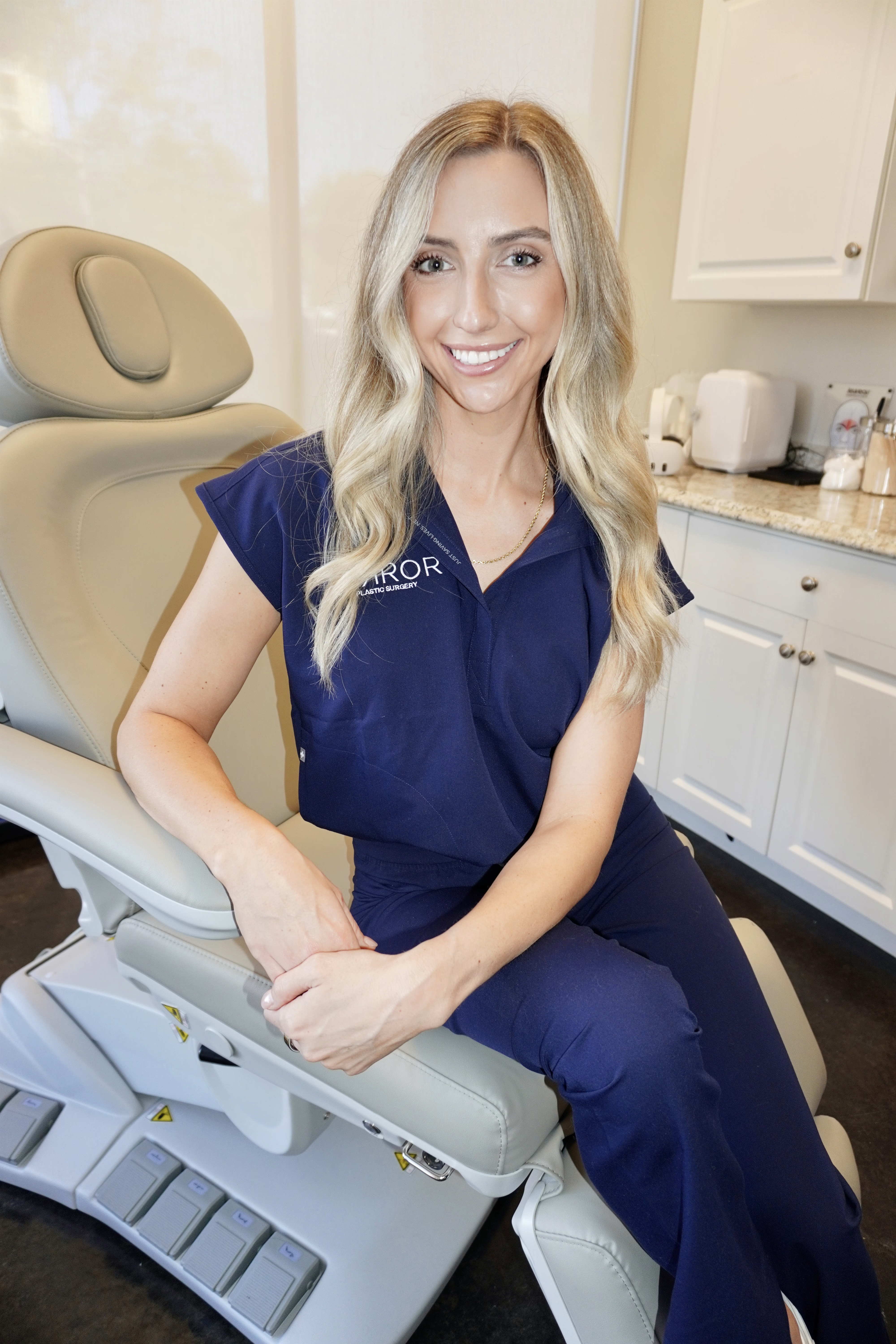
- Active, board-certified license. Ellie is a licensed nurse practitioner in Florida.
- Neuroscience ICU background. Four years in the Neuroscience ICU at Tampa General Hospital sharpened her clinical judgment and produced a working, applied understanding of human physiology, the same system Botox acts upon.
- Dual esthetics and advanced nursing training. Ellie completed a 600-hour aesthetics licensure program in addition to her Bachelor’s and Master’s degrees in Nursing from the University of South Florida and a Bachelor’s in Health Science from Boston University. This dual background provides comprehensive knowledge of both surface and subdermal anatomy.
- Full-face restorative philosophy. Ellie’s approach addresses the upper, middle, and lower facial regions as an integrated system. This strategy helps prevent the asymmetry and overdone appearance that isolated, single-area injections frequently produce.
- Supplier-neutral product selection. Mirror Plastic Surgery works with multiple neuromodulator brands, including Botox, Dysport, Xeomin, Daxxify, and Jeuveau. The team selects products based on individual patient anatomy and goals rather than supplier quotas.
- Concierge procedure limits. Mirror Plastic Surgery limits itself to performing only one to two surgeries per day, which helps ensure undivided clinical attention for every patient.
- MD oversight available. When surgical complement is appropriate, Ellie’s work can be supported by Dr. Akash Chandawarkar, MD, a Harvard-educated, Johns Hopkins-trained plastic surgeon with fellowship training at Manhattan Eye Ear & Throat Hospital.
Book a consultation with Ellie at Mirror Plastic Surgery, located at 780 4th Ave S, St. Petersburg, FL 33701.
Red Flags When Choosing a Botox Provider
- Opaque or suspiciously low pricing. Prices that seem too good to be true often signal diluted product, gray-market sourcing, or injectors lacking proper experience.
- Single-area focus without full-face evaluation. Treating one zone in isolation without assessing the entire face risks asymmetry and an unnatural transition between facial regions.
- No displayed medical credentials. No medical credentials displayed is a serious red flag because Botox affects neuromuscular activity and requires in-depth knowledge of vascular pathways, muscle origin and insertion points, and nerve branches.
- Rushed consultations. Providers who move directly from greeting to injection without asking about your medical history, goals, or concerns are prioritizing throughput over safety.
- Pressure to add unnecessary treatments. Pressure to add treatments without clear medical rationale suggests a sales-driven environment rather than patient-focused care.
- Overpromised permanence. Botox effects are temporary and typically last three to four months as nerve signaling returns. Any claim of permanent results is a disqualifying red flag.
- No emergency preparedness. No visible emergency equipment or refusal to discuss complication protocols signals inadequate preparation for adverse events.
Pre- and Post-Treatment Safety Checklist
Before your appointment:
- Disclose full medical history, including all medications, supplements, and neuromuscular conditions.
- Avoid alcohol, NSAIDs, and blood-thinning supplements for at least 24 hours.
- Skip strenuous exercise the evening before and day of treatment.
- Discontinue topical retinoids and exfoliants the night before.
- Arrive with a clean face, free of makeup.
- Confirm the injector’s license status with the Florida Department of Health.
After your appointment:
- Remain upright for at least four hours post-injection and avoid lying flat.
- Do not rub or massage treated areas for 24 hours.
- Avoid strenuous exercise, saunas, and excessive heat for 24–48 hours.
- Skip alcohol for at least 24 hours post-treatment.
- Follow up with your injector at the two-week mark to assess results and address any concerns.
- Adhere to the maintenance schedule recommended during your consultation for consistent, natural-looking results.1
Frequently Asked Questions
How long should a Botox consultation last?
A thorough Botox consultation should last a minimum of 30 minutes, with comprehensive assessments at concierge practices extending up to an hour. During that time, the injector should evaluate facial movement, muscle mass, skin quality, symmetry, and volume distribution across all three facial zones, upper, middle, and lower. The consultation should also include a review of medical history, a discussion of realistic outcomes, and an explanation of the proposed treatment rationale. Consultations that last fewer than ten minutes and proceed directly to injection without individualized assessment represent a meaningful quality concern. At Mirror Plastic Surgery, Ellie Pranckevicius conducts a full top-to-bottom assessment before any treatment recommendation is made.
Does an NP need MD oversight for Botox in Florida?
Florida nurse practitioners operate under a collaborative practice model that requires a written protocol with a supervising or collaborating physician for prescribing and administering controlled or prescription substances, including neuromodulators like Botox. This structure means a board-certified FNP-BC practicing in Florida works within a defined physician-collaborative framework rather than with full independent authority. At Mirror Plastic Surgery, Ellie Pranckevicius practices within this framework alongside Dr. Akash Chandawarkar, MD, which ensures that physician oversight is structurally embedded in the practice and not an afterthought. Patients should always confirm that their injector’s collaborative agreement is current and that a supervising physician is accessible.
How often should Botox be maintained for natural results?
Botox effects are temporary, and most patients experience results that last approximately three to four months before nerve signaling gradually returns and muscle activity resumes.1 For consistently natural results, many patients maintain a treatment schedule of three to four sessions per year.1 The exact interval varies based on individual metabolism, the muscle groups treated, the units administered, and the neuromodulator brand used. Some patients on consistent schedules find that their intervals extend over time as treated muscles become conditioned to reduced activity.1 Ellie Pranckevicius develops individualized maintenance plans during consultation rather than applying a uniform schedule to every patient.
What training distinguishes a medically trained injector?
A medically trained injector holds an active professional license, such as MD, DO, NP, PA, or RN, and has completed formal training that includes didactic instruction in facial anatomy, pharmacology, and complication management, combined with supervised hands-on practice on live patients across multiple facial treatment areas. The industry standard of care effectively requires documented training in facial anatomy, injection techniques, patient assessment, and complication management. Beyond baseline certification, distinguishing factors include clinical background in relevant medical specialties, such as neuroscience, emergency medicine, or dermatology, dual training in both esthetics and advanced nursing, board certification, and a verifiable record of continuing medical education. Professional society certifications from organizations such as the American Academy of Facial Esthetics carry more weight than simple course-completion certificates because they require documented training, examination, and ongoing continuing education.
Putting It All Together
Finding the best medically trained Botox injector near you works best as a process of systematic verification. Confirm licensure, assess anatomy training depth, evaluate consultation philosophy, and determine whether the practice prioritizes individualized care over procedure volume. The eight-point checklist in this article provides a replicable framework for that evaluation. In the St. Petersburg and Tampa Bay market, Ellie Pranckevicius, FNP-BC, at Mirror Plastic Surgery satisfies each criterion, from her neuroscience ICU clinical foundation and 600-hour aesthetics licensure to the practice’s concierge limit of one to two surgeries per day and its supplier-neutral product philosophy.
Book a consultation with Ellie at Mirror Plastic Surgery, 780 4th Ave S, St. Petersburg, FL 33701. Call or text 727-361-6515, or email hello@mirrorplasticsurgery.com.
Disclaimer: Results may vary from person to person. Editorial content, before and after images, and patient testimonials do not constitute a guarantee of specific results.
1 Results may vary from person to person. Editorial content, before and after images, and patient testimonials do not constitute a guarantee of specific results.