
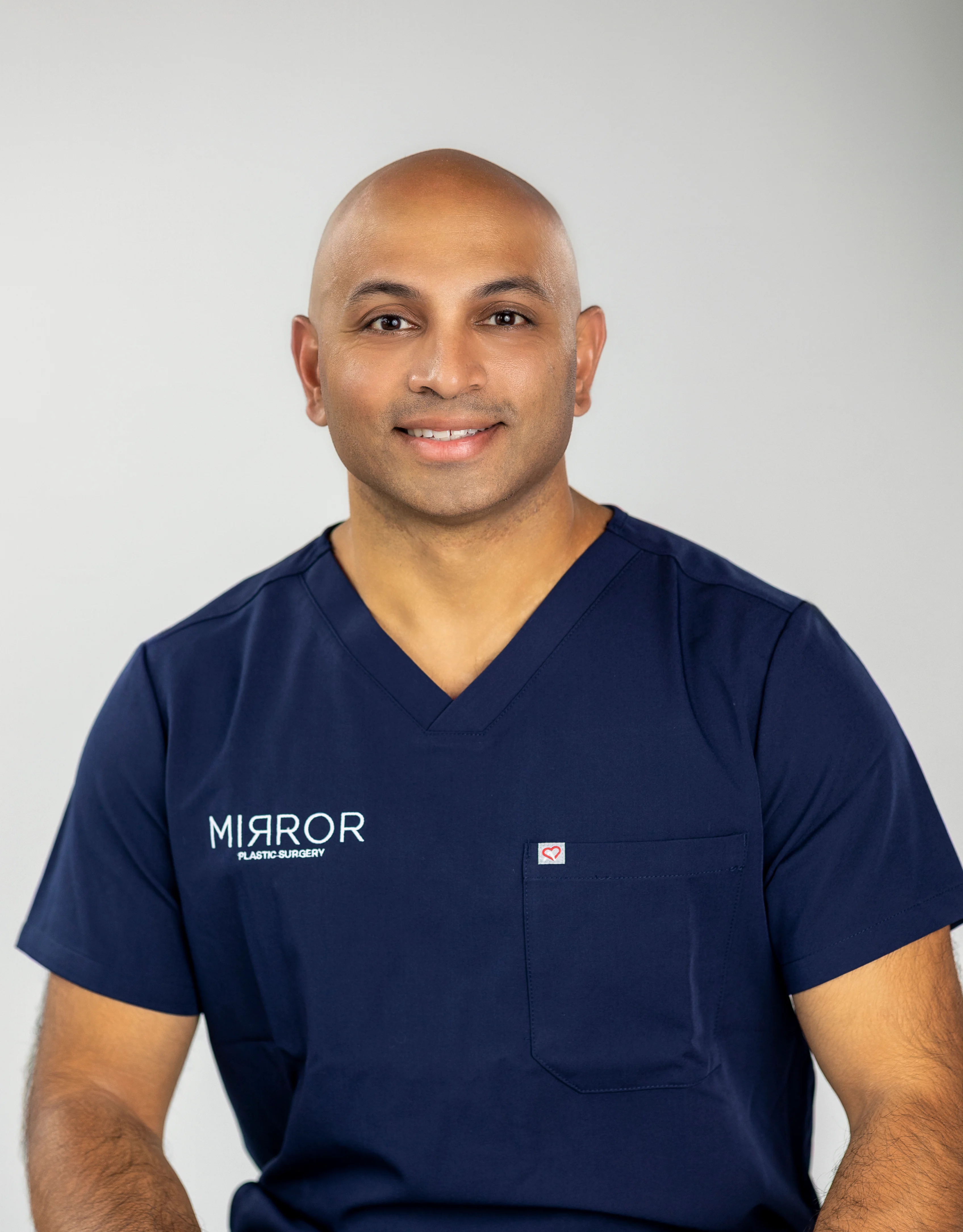
Written by: Dr. Akash Chandawarkar, Board Certified Plastic Surgeon, Mirror Plastic Surgery | Last updated: September 9, 2026
Key Takeaways From The 2026 Botox Research
- Physician credentials and direct oversight correlate with lower complication rates and higher patient satisfaction for Botox injections.1
- Board-certified plastic surgeons like Dr. Akash Chandawarkar complete the most extensive anatomical training and outperform med-spa providers without physician supervision.
- Comprehensive consultations lasting 30–60 minutes, including dynamic facial assessment, strongly predict natural-looking, satisfactory results.
- Warning signs such as rushed consultations, below-market pricing, or lack of a named medical director often indicate unsafe or sales-driven practices.
- Patients seeking safe, natural Botox results in St. Petersburg and Tampa can schedule a consultation at Mirror Plastic Surgery with Dr. Akash Chandawarkar.
Research Finding #1: Neuromodulator Injections Are Surging, So Qualified Injectors Matter More
The American Society of Plastic Surgeons reported 9,883,711 neuromodulator injections in the United States in 2024, up 4% year over year, making neuromodulators the top minimally invasive aesthetic procedure category. Minimally invasive procedures represented 78% of all aesthetic treatments in the U.S. in 2023.
As procedure volume climbs, the provider pool grows and quality varies more widely. That variation has real consequences. A 2023 study published in the Aesthetic Surgery Journal found that complications from nonsurgical cosmetic procedures increased 78% between 2018 and 2023, driven largely by the expansion of providers with insufficient training. The gap between qualified and underqualified injectors widens in direct proportion to market growth, so credential verification becomes critical.
Dr. Akash Chandawarkar’s board certification by the American Board of Plastic Surgery, fellowship training at Manhattan Eye Ear & Throat Hospital (MEETH)/Lenox Hill Hospital, and medical innovation training at Stanford University together form a gold-standard credential set for patients in St. Petersburg and Tampa.
Research Finding #2: Physician-Led Injection Settings Have Fewer Complications Than Med Spas
Board-certified dermatologists achieve Botox complication rates below 0.5%.1 Those outcomes occur when qualified providers perform the injections. That qualification gap is stark. Studies show that 70% of med spas operate without a board-certified physician on site, and lack of direct physician oversight raises complication rates. A 2022 survey in the Journal of the American Academy of Dermatology found that nearly 25% of med spas had no board-certified physician overseeing clinical procedures.
Common complications from inexperienced injectors include ptosis (drooping eyelid) occurring in approximately 1–5% of forehead and glabellar injections, asymmetry requiring correction, and over-treated “frozen” appearances.1 Fixing uneven or unnatural results from an inexperienced injector can end up costing more than paying for an experienced provider from the start.
At Mirror Plastic Surgery, Dr. Akash personally performs all injections and never delegates them to a nurse or esthetician. Every treatment benefits from physician-level anatomical expertise, which sets the practice apart from typical med-spa models in the Tampa Bay market.
Research Finding #3: Credential Hierarchies Show Why Plastic Surgeons Offer Safer Care
Dermatologists complete four years of medical school, a dermatology residency, and board certification through the American Board of Dermatology, giving them deep knowledge of facial anatomy and how to handle complications. Board-certified plastic surgeons like Dr. Akash complete medical school, surgical residency, and specialized fellowship training in aesthetic surgery. Med spa staff requirements vary by state and can range from licensed nurses to aestheticians with far less medical training.
The table below shows how training depth and anatomical expertise decline sharply from board-certified plastic surgeons to estheticians, which explains why physician-led care is safer:
| Provider Type | Core Training | Anatomical Depth | Credential Verification |
|---|---|---|---|
| Board-Certified Plastic Surgeon | Medical school + surgical residency + aesthetic fellowship | Highest, with surgical command of facial and subdermal anatomy | American Board of Plastic Surgery (certificationmatters.org) |
| Board-Certified Dermatologist | Medical school + dermatology residency | High, with deep skin and facial anatomy expertise | American Board of Dermatology (certificationmatters.org) |
| Nurse Practitioner / Physician Assistant | Graduate nursing or PA program; aesthetic training varies | Moderate, with substantially less anatomical training than physicians | State nursing or PA board; supervising physician agreement required |
| Esthetician | Cosmetology or esthetics program; no medical training | None, and injecting constitutes a medical act outside their scope in most states | State cosmetology board only; not qualified to inject |
Dr. Akash’s credentials extend beyond board certification. He serves on advisory boards for Merz Aesthetics (biostimulatory fillers such as Radiesse) and Tiger Aesthetics (AlloClae adipose fillers and Avéli for cellulite), which reflects active leadership at the frontier of injectable innovation. Patients can verify board certification through certificationmatters.org and confirm that a physician is actively involved in their care.
Research Finding #4: Thorough Consultations Predict Satisfaction More Than Price
A 2023 survey of cosmetic patients found that injector skill ranked higher than price, brand, or facility type as the driver of repeat bookings. The consultation is where injector skill first becomes clear.
“The single most predictive factor for Botox satisfaction is not the brand of toxin — it is whether your injector spent time looking at your face before injecting it.” — Dr. Joseph Castellano, Castellano Cosmetic Surgery Center
A comprehensive consultation with a qualified practitioner typically lasts 30–45 minutes and includes detailed medical history review, facial assessment, discussion of treatment goals, and explanation of potential risks and benefits. A good Botox provider observes facial movement through multiple expressions, clearly states their licensure and supervising physician, explains the limits of Botox, and offers a standard two-week follow-up visit.
Mirror Plastic Surgery’s top-to-bottom assessment can last up to one hour. Dr. Akash evaluates the full face holistically before making any recommendation. He assesses dynamic muscle movement, natural asymmetry, skin quality, and the patient’s long-term goals. His philosophy of safety first, function second, and aesthetics third ensures that every injection has a clear clinical rationale.
To help you evaluate any provider, here are five questions that reveal whether a practice meets these evidence-based standards:
- Who will personally perform my injection, and what are their specific credentials?
- Is a board-certified physician on-site during my treatment and directly overseeing care?
- How will you assess my facial muscle movement before determining dosage and placement?
- What is your protocol if I experience ptosis, asymmetry, or another complication?
- Is a two-week follow-up included, and what happens if I need a small adjustment?
Research Finding #5: How Botox Pricing Works In St. Petersburg & Tampa
Botox pricing in the St. Petersburg and Tampa market varies based on individual anatomy and treatment goals. The consultation provides a personalized quote that reflects the precise amount of product appropriate for each patient, rather than volume quotas or upselling incentives. As a supplier-neutral practice, Dr. Akash selects from the full range of FDA-approved neuromodulators — Botox, Dysport, Xeomin, Daxxify, and Jeuveau — based solely on clinical fit.
Research Finding #6: Natural Results Depend On Micro-Dosing And Dynamic Assessment
Micro-dosing injectable techniques use smaller-than-standard doses of botulinum toxin, often 30–50% lower than conventional treatment, placed at multiple precisely targeted points to achieve subtle softening while preserving natural facial movement. The most common causes of unnatural-looking Botox are improper injection techniques, incorrect dosage, and poor placement.
“The real challenge of micro-dose neurotoxin treatment is not how many units to use — it is knowing which muscle needs 70% of its movement preserved and which should be softened by 50%. That level of judgment comes only from a physician who has assessed thousands of faces. No protocol can replace it.” — Dr. Dan Xu, M.D., Allergan/Juvéderm North America Official Trainer
This same philosophy guides Dr. Akash’s technique, prioritizing safety and function before aesthetics. His initial focus is on revitalizing inherent facial characteristics and considering volume augmentation only after foundational restoration. This sequencing helps prevent an “overdone” appearance and supports natural balance across the full face.
Research Finding #7: Red Flags In The St. Pete/Tampa Botox Market
The FDA issued a warning in 2024 about unapproved injectable products sold to U.S. med spas. A 2023 patient safety study in Dermatologic Surgery (n=1,245) found that clinics with structured complication protocols had 40% fewer adverse outcomes needing correction.
Clinical safety research highlights the following warning signs of an unsafe or sales-driven provider:
- No named medical director and inability to identify who will perform the injection and their credentials
- Botox priced significantly below $10–$12 per unit, which may indicate diluted or counterfeit product
- Quoting a unit count before examining the face
- Pressure to treat the same day as consultation, with no meaningful consultation or intake process
- Offering to “use up the rest of the syringe” on a different area, even though neuromodulators require precise dosing calibrated to specific muscles
- No emergency protocols, including lack of hyaluronidase for filler complications and epinephrine for allergic reactions
Mirror Plastic Surgery was built to be the direct opposite of every red flag above. Dr. Akash emphasizes transparency and often advises patients when an expensive service is not yet necessary, which builds the long-term trust that defines his patient relationships. Concierge-level support allows patients to reach the practice by call, text, or email and receive prompt responses.
Research Finding #8: Realistic Expectations For Botox Results
Botox is FDA-approved for dynamic wrinkles such as forehead lines, crow’s feet, and frown lines, but it does not treat static wrinkles or volume loss. Results typically appear within 3–7 days, reach full effect at 14 days, and last 3–4 months; with consistent treatment every 3–4 months, many patients find results extend to 4–6 months as treated muscles weaken over time.1
Botox has no antidote, unlike hyaluronic acid fillers, which can be dissolved with hyaluronidase, so injector precision matters from the first treatment. A placement error usually means waiting three to four months for the product to wear off.
Botox relaxes muscle activity but does not restore lost volume, tighten loose skin, remove lines etched into the skin at rest, or improve skin texture and pigmentation. Honest providers communicate these limits clearly and adjust plans when a patient’s expectations exceed what the treatment can deliver.
Dr. Akash’s holistic approach places Botox within a comprehensive facial restoration strategy rather than as an isolated intervention. This approach helps prevent asymmetry and the “overdone” appearance that can arise when single areas are treated without regard for the full face.
Research Finding #9: How Mirror Plastic Surgery Aligns With Every Evidence-Based Standard
Each research finding in this report maps directly to a structural feature of Mirror Plastic Surgery’s practice model:
- Physician-Led Setting: Dr. Akash Chandawarkar, MD, board-certified by the American Board of Plastic Surgery, personally performs every injection and never delegates to a nurse or esthetician.
- Deep Anatomical Training: Harvard-educated and Johns Hopkins-trained, with fellowship training at MEETH/Lenox Hill Hospital and medical innovation training at Stanford, reflecting the credential set that clinical evidence identifies as the gold standard.
- Comprehensive Consultation: Up to one hour of top-to-bottom assessment, dynamic facial evaluation, full medical history review, and honest discussion of what treatment can and cannot achieve.
- Supplier-Neutral, Transparent Approach: Personalized quotes based on each patient’s anatomy, with no quota-driven upselling and no commission-based product selection.
- Natural-Results Philosophy: A treatment strategy that places safety and function before aesthetics, using micro-dosing and dynamic assessment techniques that preserve facial expression and avoid a frozen look.
- Concierge-Level Support: Accessible follow-up via call, text, or email, a two-week post-treatment assessment, and a practice culture that prioritizes long-term patient relationships over one-off volume.
- Industry Leadership: Advisory board roles with Merz Aesthetics and Tiger Aesthetics position Dr. Akash as a contributor to emerging trends rather than a passive follower.
To experience the evidence-based difference of physician-led care, book your consultation with Ellie at Mirror Plastic Surgery.
Frequently Asked Questions
Here are answers to the questions patients most often ask about Botox and choosing a provider.
How Much Does Botox Cost In St. Petersburg, FL?
Botox pricing in St. Petersburg varies based on individual patient needs and treatment plans. Mirror Plastic Surgery provides personalized quotes during consultation that reflect the precise amount of product appropriate for each patient’s anatomy rather than a one-size-fits-all pricing structure.
Is It Better To See A Plastic Surgeon Or Dermatologist For Botox?
Both board-certified plastic surgeons and dermatologists are qualified to administer Botox and represent a meaningfully higher standard of care than non-physician injectors. Plastic surgeons complete medical school, a surgical residency, and specialized fellowship training in aesthetic surgery, which provides surgical command of facial and subdermal structures. Dermatologists complete medical school and a dermatology residency, with deep expertise in skin and facial anatomy. The key factor in either case is that a physician with advanced anatomical training personally performs your injection rather than a nurse or esthetician working without direct physician oversight. At Mirror Plastic Surgery, Dr. Akash Chandawarkar, a board-certified plastic surgeon, performs every injection himself.
What Is The Riskiest Place For Botox Injections?
The periocular area (around the eyes) carries the highest risk because of its proximity to the levator palpebrae muscle that lifts the eyelid, and improper placement can cause ptosis, or drooping of the eyelid. The glabella (between the brows) also carries elevated risk of ptosis if toxin spreads beyond the intended muscle. A 2025 clinical study found that periocular botulinum toxin injections produce measurable changes in ocular surface parameters, including decreased tear film stability, which underscores the need for medically trained injectors near sensitive structures. These areas highlight where a board-certified plastic surgeon’s surgical command of facial anatomy provides the greatest safety advantage over less-trained providers.
How Long Does Botox Last?
Botox results typically last 3 to 4 months. Results begin appearing within 3–7 days and reach full effect at approximately 14 days. With regular maintenance every 3–4 months, many patients find results last longer over time as treated muscles gradually weaken.1 A reputable provider should offer a two-week follow-up to assess results and make small adjustments if any area is under-treated or asymmetrical. Micro-dosing techniques, which use lower doses at multiple precisely targeted points, may produce results that fade slightly sooner, typically every 2.5 to 4 months, because of the lower total dose.
Is Botox Safe After 60?
Yes. The American Society of Plastic Surgeons reports that the number of patients over 65 undergoing cosmetic procedures has been rising steadily, and age alone does not disqualify someone from treatment. Older patients may present with thinner skin, more static wrinkles, and different muscle dynamics that require adjusted dosing and placement strategy. A thorough consultation with a physician who assesses individual anatomy, rather than applying a standard protocol, is essential for safe, natural-looking results at any age. Dr. Akash’s comprehensive top-to-bottom assessment accounts for these variables and calibrates treatment to each patient’s unique facial structure and goals.
Conclusion: Evidence Favors Physician-Led Botox Care
The research findings in this report converge on a clear conclusion. Neuromodulator injections are at record volume. Physician oversight correlates with lower complication rates. Credential hierarchies are real and measurable. Thorough consultations predict satisfaction. Natural results require advanced technique and anatomical judgment that short training courses cannot match.
For patients in St. Petersburg and Tampa who are evaluating their options, the evidence supports choosing a board-certified plastic surgeon who personally performs every injection, conducts a comprehensive facial assessment, and works within a practice culture that places safety above volume.
Mirror Plastic Surgery and Dr. Akash Chandawarkar meet every evidence-based criterion identified in this report. The practice is located at 780 4th Ave S, St. Petersburg, FL 33701, and can be reached by phone at 727-361-6515 or by email at hello@mirrorplasticsurgery.com.
Schedule your consultation with Ellie at Mirror Plastic Surgery today to see how physician-led care makes a difference.
Disclaimer: Results may vary from person to person. Editorial content, before and after images, and patient testimonials do not constitute a guarantee of specific results.
1 Results may vary from person to person. Editorial content, before and after images, and patient testimonials do not constitute a guarantee of specific results.